
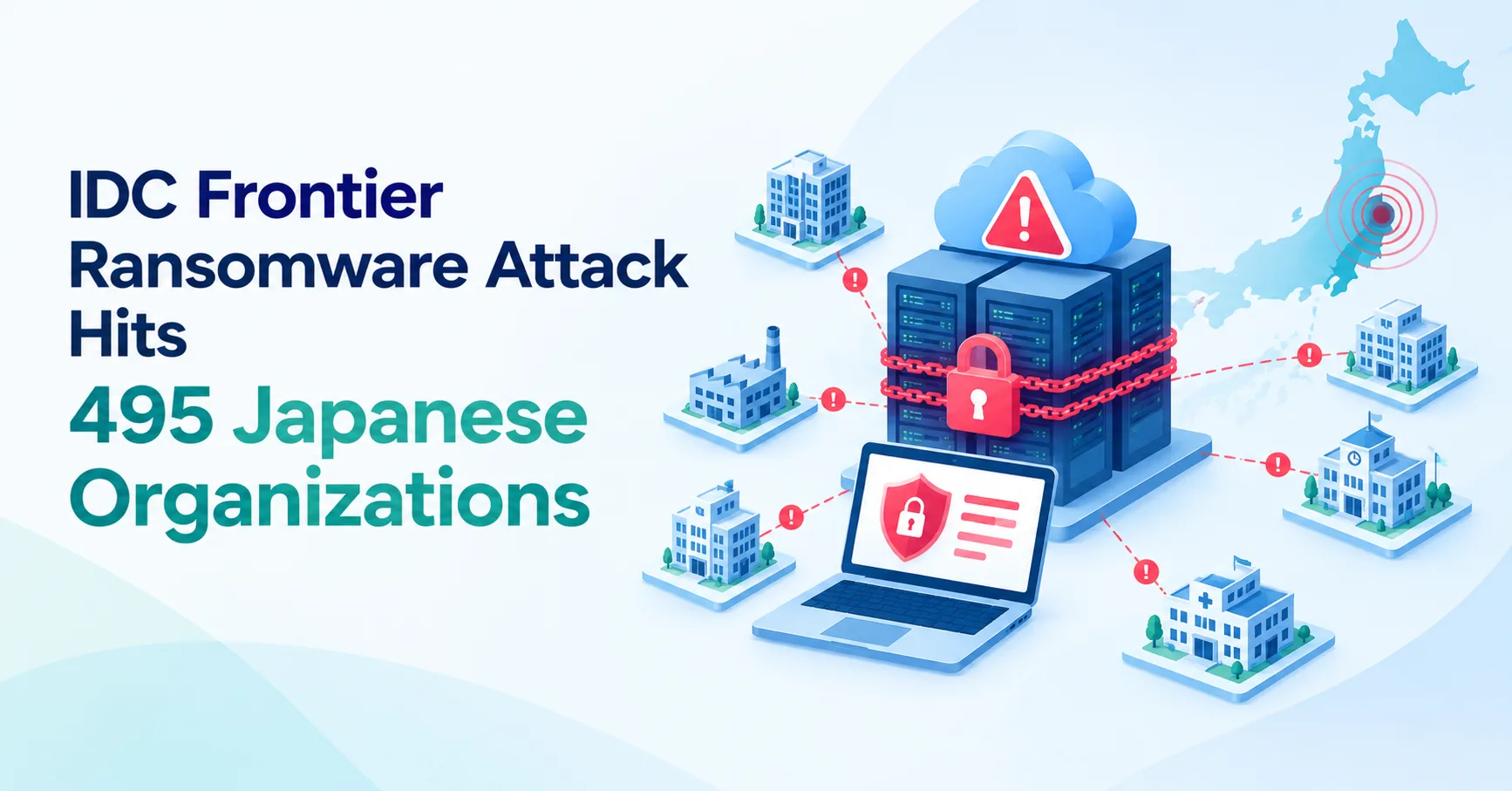
A ransomware attack targeting IDC Frontier’s IDCF Cloud platform in Japan has highlighted the risks organizations face when critical services depend on cloud infrastructure. The incident, reported on October 7, 2026, affected 495 companies and local governments using the provider’s East Japan Region 1, according to IDC Frontier’s official announcement.
The incident disrupted services and prompted the provider to isolate the affected region while investigating the intrusion. Subsequent reporting also indicated that recovering some customer data could be difficult, underscoring the importance of independent backups and tested recovery procedures.
Why this incident matters
Cloud adoption allows organizations to scale their operations without maintaining all infrastructure themselves. However, relying on a cloud provider does not eliminate the need for an independent security and continuity strategy.
This incident highlights several important considerations:
1. Cloud security requires shared responsibility
Organizations should understand which security controls are managed by their cloud provider and which remain their own responsibility. Access management, secure configurations, monitoring, and incident-response planning remain essential.
2. Backups must support real recovery
Maintaining backups is not enough if they are inaccessible during an incident or stored within the same affected environment. Organizations should maintain isolated or immutable backups where appropriate and regularly test whether critical systems and data can be restored.
3. Business continuity needs to account for provider outages
A disruption affecting one cloud region can impact websites, applications, internal tools, and customer-facing services. Businesses should identify critical dependencies, define recovery priorities, and evaluate alternative hosting or recovery arrangements according to their operational requirements.
4. Security needs to extend beyond infrastructure
Organizations should also review identity controls, administrative access, monitoring, vulnerability management, and incident-response procedures. For websites and online services, protecting data in transit with correctly configured SSL/TLS certificates is an important part of a broader security strategy, although certificates alone cannot prevent ransomware attacks.
Preparing for the next incident
The IDC Frontier incident is a reminder that cybersecurity planning must cover both prevention and recovery. Organizations should regularly review their cloud dependencies, test their backup and restoration processes, and ensure that technical teams know how to respond when a critical service becomes unavailable. Reviewing backup strategies, strengthening access controls, and testing business continuity plans can help businesses improve their resilience against future incidents.
For a closer look at the incident, its reported impact on 495 Japanese organizations, and the developing cybersecurity implications, read the full report from Certera:
Full report: https://certera.com/blog/idc-frontier-ransomware-attack-495-japanese-organizations/
As investigations continue, organizations can use incidents like this to reassess their own resilience strategies before a disruption affects their operations.