This year, Form I-9 compliance has become a more urgent issue for employers. Immigration and Customs Enforcement’s (ICE) current inspection rules link violations to civil penalties adjusted for inflation. And, as per USCIS, paperwork fines now range from $288 to $2,861 per form.
Recent ICE guidance that treats more common Form I-9 errors as substantive violations rather than correctable technical issues has also been a warning for business owners. Mistakes that many employers once treated as minor can now carry more immediate financial consequences.
This article explains what has changed with ICE i9 inspections in 2026, why I-9 audit risk is rising, how ICE penalties are assessed, and what employers should do before an inspection begins.
Form I-9 Compliance: What Changed in 2026
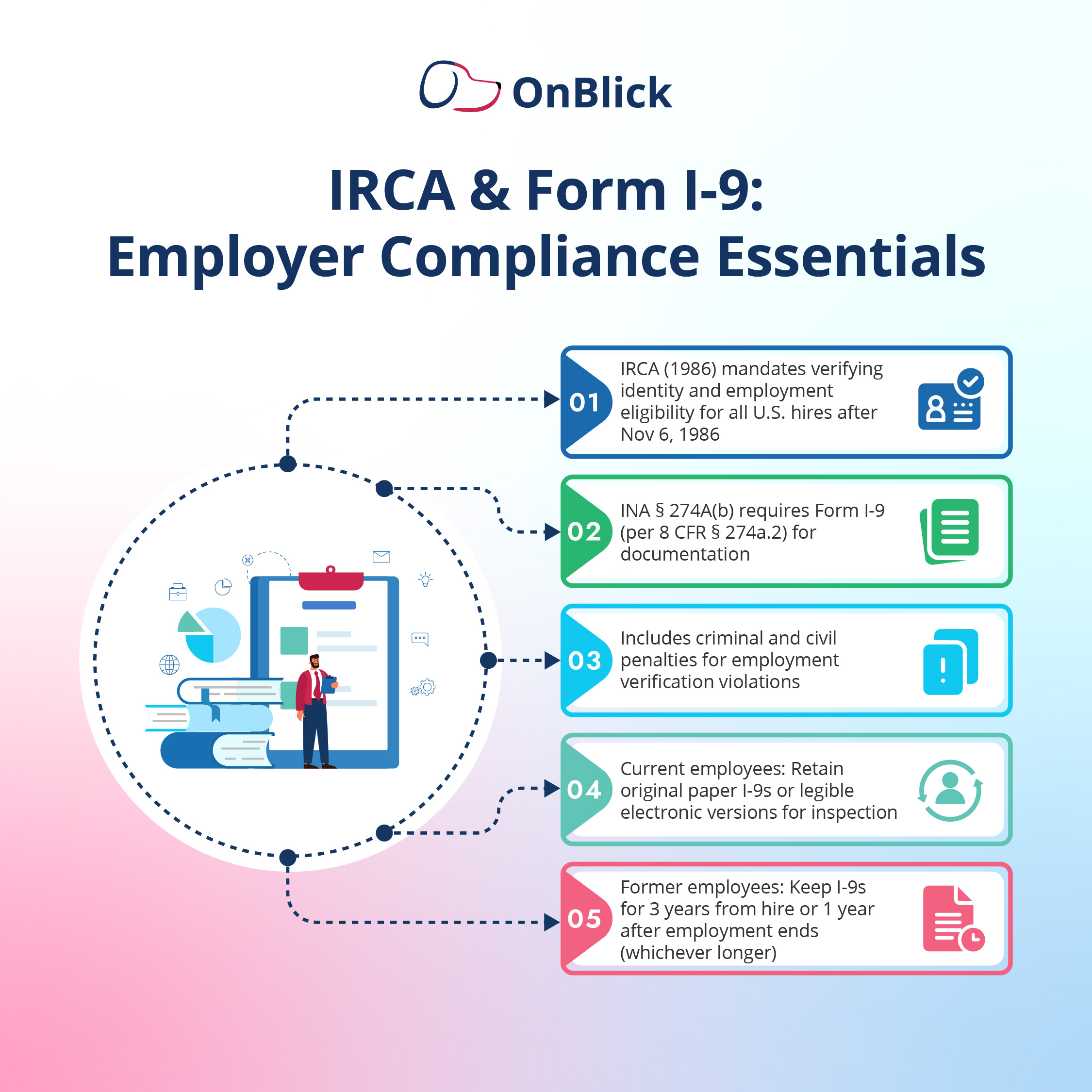
Form I-9, Employment Eligibility Verification, has been one of the major employer compliance requirements since the Immigration Reform and Control Act of 1986 (IRCA). Section 274A(b) of the Immigration and Nationality Act mandates employers to verify the identity and employment authorization of individuals hired in the U.S. after November 6, 1986, and 8 C.F.R. § 274a.2. Form I-9 is the record used to document that process.
Original Form I-9, either on paper or in an electronic system, must be maintained by employers for their current employees. They are required to retain it for former employees for three years from the date of hire or one year after employment ends, whichever is later. Needless to say, Form I-9 is not a new requirement. What has caught our attention lately is the level of risk linked to going wrong with the i9 process.
In 2026, employers have been seen facing stricter enforcement. Reports have stated that there is:
- Less flexibility around administrative errors: This year, employers need to refrain from committing common Form I-9 mistakes. Recent ICE guidance emphasizes more errors being treated as substantive violations rather than correctable technical issues.
- More exposure in remote and distributed hiring: Cases where hiring is handled across locations or through remote onboarding workflows are more prone to Form I-9 errors. In such contexts, verification steps, document review practices, and recordkeeping standards must be applied consistently.
- Stronger need for centralized process control: Employers that use multiple HR teams, hiring managers, or electronic systems need to ensure that Form I-9 completion, retention, and correction practices are standardized. Audit risk increases when there’s weak process control, especially where the same compliance steps are handled differently across teams or locations.
What is an i9 form?
Form I-9 Penalties in 2026: A Reminder for Employers
One of the biggest reasons why employers need to pay attention is that the cost of going wrong with Form I-9 compliance has increased. Now there’s less room to treat errors as minor.
- As per USCIS penalty summaries and recent employer-guidance sources, i9 paperwork violations can now result in civil fines ranging from $288 to $2,861 per Form I-9.
- For knowingly hiring, recruiting, referring, or continuing to employ unauthorized workers, first-offense penalties currently range from $716 to $5,724 per worker.
- Second-offense penalties range from $5,724 to $14,308 per worker
- Third or subsequent offenses range from $8,586 to $28,619 per worker.
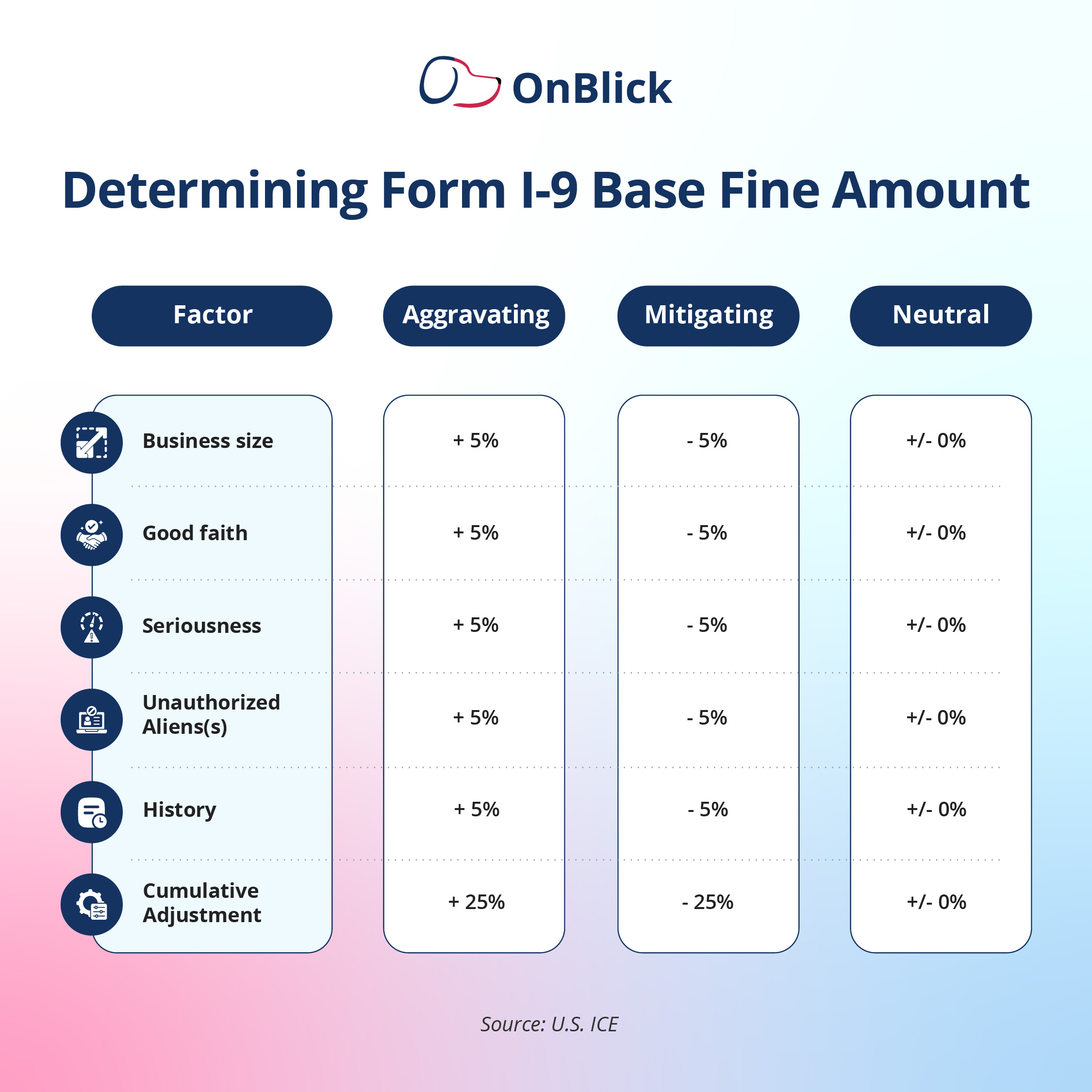
However, penalties are not assessed by ICE by looking at the published minimum and maximum ranges alone. As per the ICE Section 274A penalty explanation, the agency first determines a base fine amount by calculating the employer’s violation percentage. To do that, the number of substantive violations and uncorrected technical or procedural failures, along with knowingly hiring or continuing to employ violations, are divided by the number of Forms I-9 that should have been available for inspection. That percentage helps determine the base fine range. And this range could vary based on whether the case involves a first, second, or third-or-higher offense.
Form I-9 Base Fine Amount Calculation
After the base fine amount is determined, ICE considers five statutory factors to decide whether the penalty should be increased, reduced, or left unchanged. They are:
- Business size
- Good faith
- Seriousness of the violation
- Involvement of unauthorized workers
- History of previous violations
The ICE penalty framework explains that these factors are used to enhance, mitigate, or treat the base fine as neutral.
These numbers explain why the penalty for hiring illegal immigrants is so often discussed in employer compliance planning. Besides civil fines, employers could also be debarred from federal contracts. And in more serious cases, they could face criminal exposure for a pattern or practice of knowingly employing unauthorized workers.
To put it in simple terms, form i9 penalties are not limited to a single type of mistake. Employers may be penalized for anything from missing forms, incomplete records, uncorrected technical failures and substantive violations to knowingly employing unauthorized workers. That is why internal review/ internal i9 audits, timely correction, and defensible documentation matter long before an ICE inspection notice arrives.

Form I-9 Penalty
Form I-9 Technical and Substantive Violations
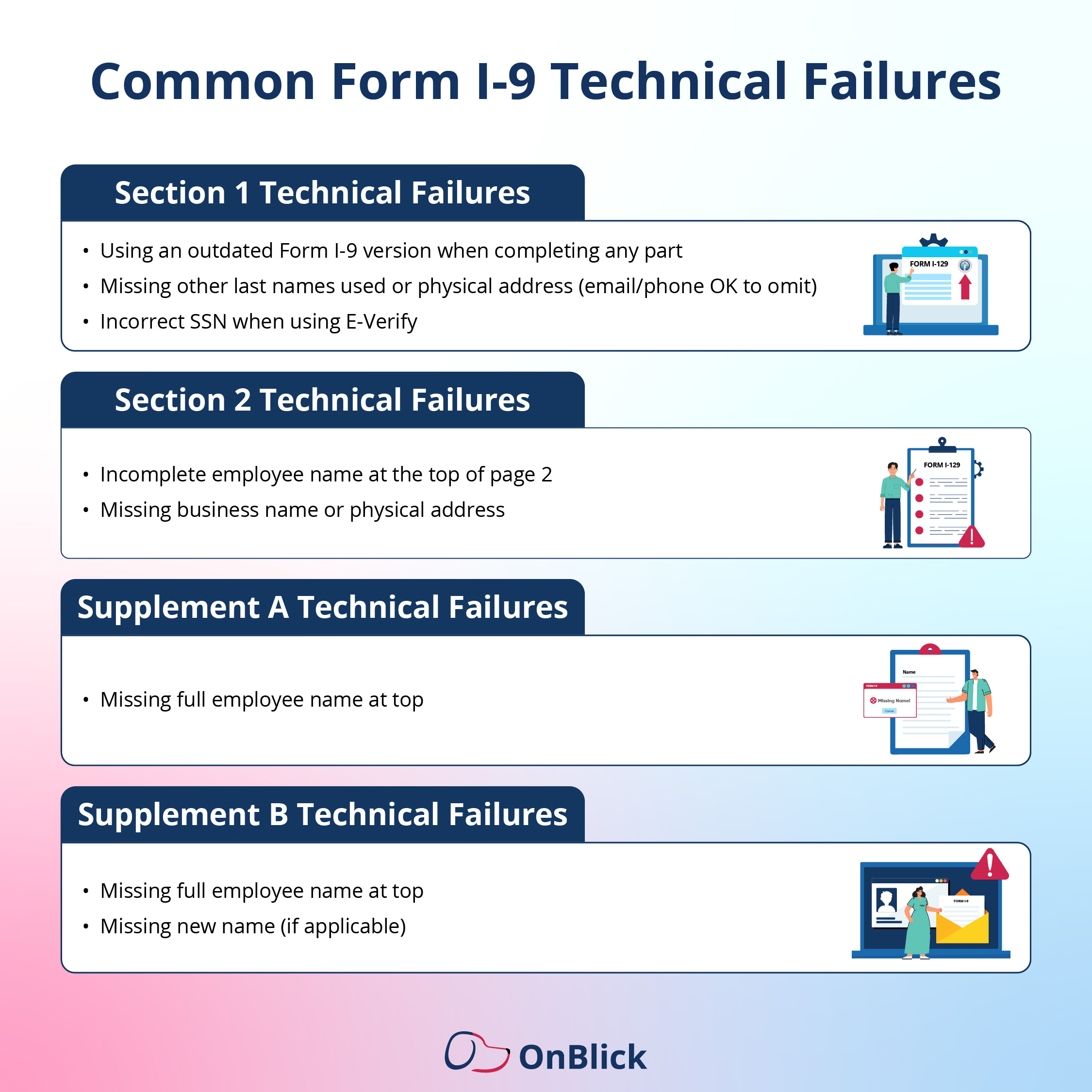
As discussed earlier, different Form I-9 mistakes or issues carry different weights. Form I-9 violations have been broadly classified by ICE into technical or procedural failures and substantive violations.
As per ICE’s fact sheet summaries, when technical or procedural failures are identified, the employer receives at least 10 business days to make corrections. If those failures remain uncorrected in time, they can become substantive violations.
Technical issues may involve correctable errors in the form. But, substantive violations are more serious as they affect whether the form was properly completed or whether the employer met the legal verification requirement.
Form I-9 Technical Violations
Important Update: ICE Expands the List of Substantive Violations
As per recent reporting on the March 2026 ICE fact sheet update, some errors once viewed as technical may now be treated more strictly as substantive violations.
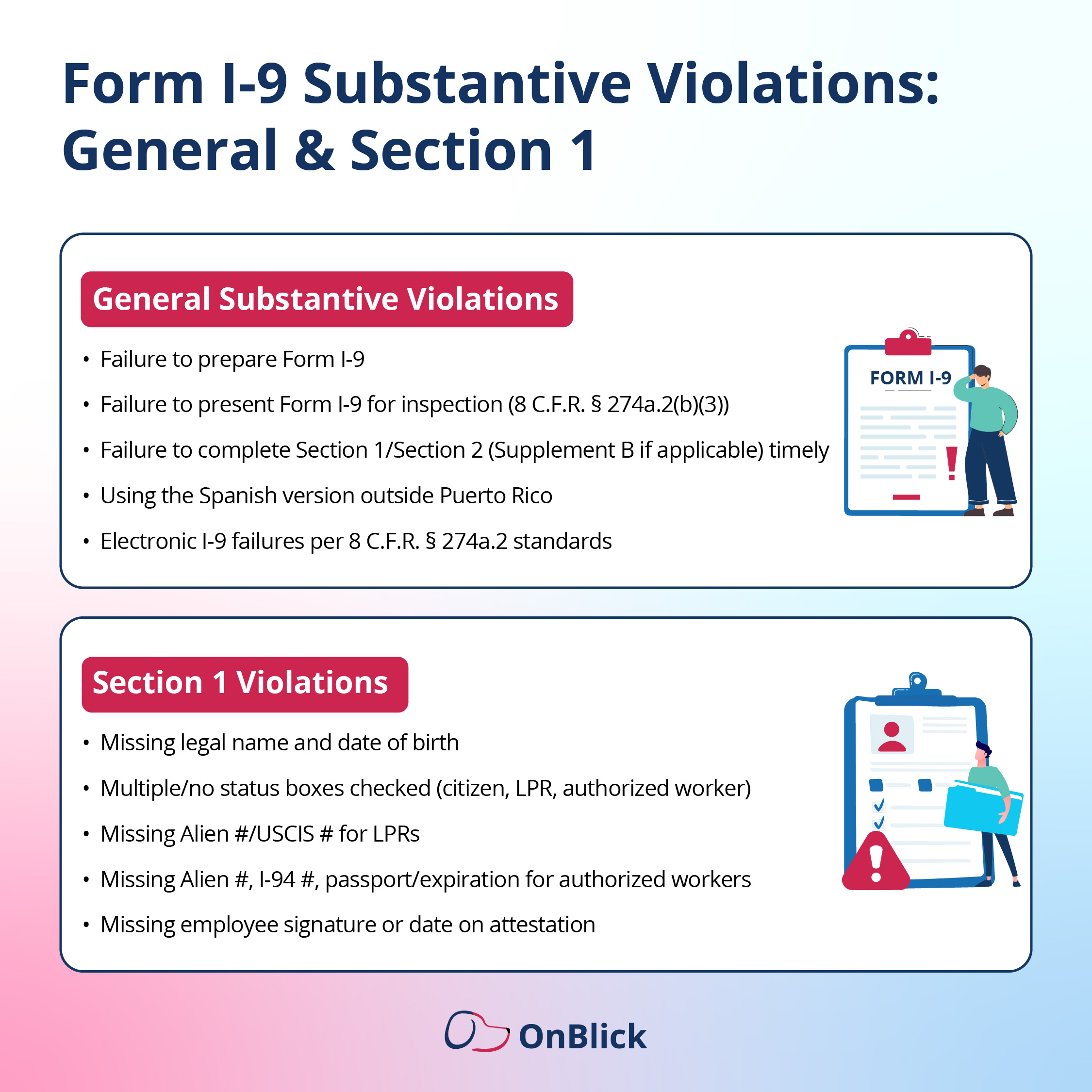
Here are some items considered substantive Form I-9 violations:
- Missing date of birth
- Missing date of hire
- Incorrect use of the Spanish-language Form I-9 outside Puerto Rico
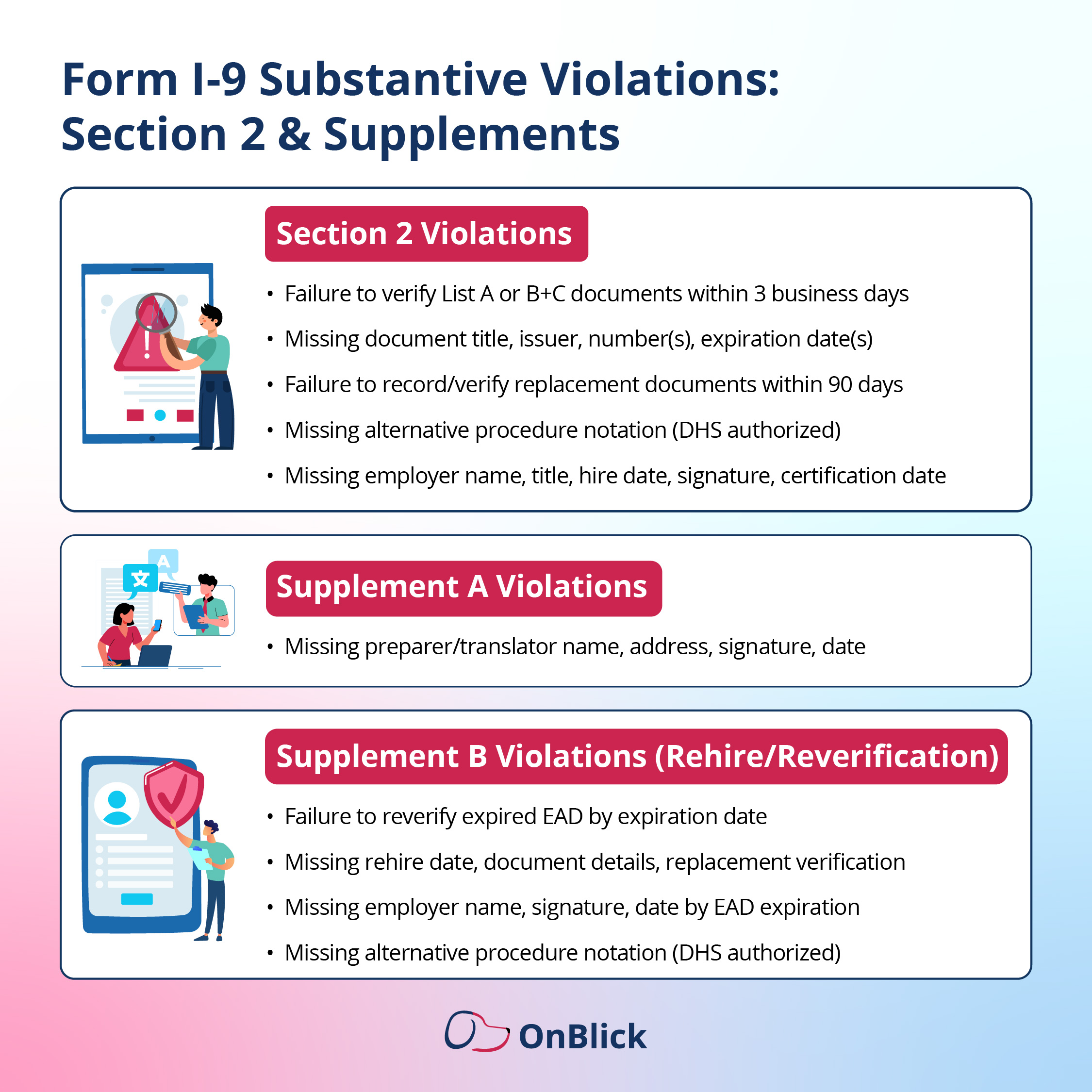
- Preparer and/or translator errors, including failure to provide the preparer or translator’s complete name, address, signature, and date in Supplement A at the time of completion
- Missing title of the employer or authorized representative
- Failure to date Section 1 or Section 2
- Failure to enter the rehire date in Supplement B
- Remote-verification procedure failures tied to the 2023 alternative procedure, including failing to check the alternative procedure box in Section 2 or Supplement B when remote review was used
- Using the alternative remote procedure without being an active E-Verify participant in good standing at the time it was used
This has been viewed by compliance experts as a significant update since substantive violations do not carry the same correction protection that employers have traditionally relied on for technical or procedural failures.
Employers should note that missing dates, incomplete preparer details, or remote-verification process gaps will not be treated as minor clerical issues during an ICE inspection.
Form I-9 Substantive Violations
Form I-9 Substantive Violations
Form I-9: Risk Areas Employers Should Review
Besides the points mentioned earlier, the updated ICE guidance has increased exposure in other related compliance areas. Rather than looking for missing fields or signature issues, employers need to pay closer attention to how Form I-9 processes are being handled across remote hiring, electronic systems, and long-term record accuracy.
- Remote verification procedures: Remote document review errors can create extra risk, especially when employers do not fully follow the DHS-authorized alternative procedure or related E-Verify requirements. In such cases, these issues are more likely to be treated as substantive violations rather than minor process gaps.
- Electronic Form I-9 systems: Digital I-9 systems are being closely reviewed by ICE. Weaknesses in audit trails, electronic signatures, access controls, or system integrity could create compliance concerns and lead to violations depending on the nature of the deficiency.
- Original form accuracy: It has been reinforced by the agency that compliance is assessed based on how the form was completed at the time of hire. Although corrections may be permitted in appropriate situations, they aren’t enough to remove the risk if the original form was materially deficient.
Form I-9 Inspection Process Explained
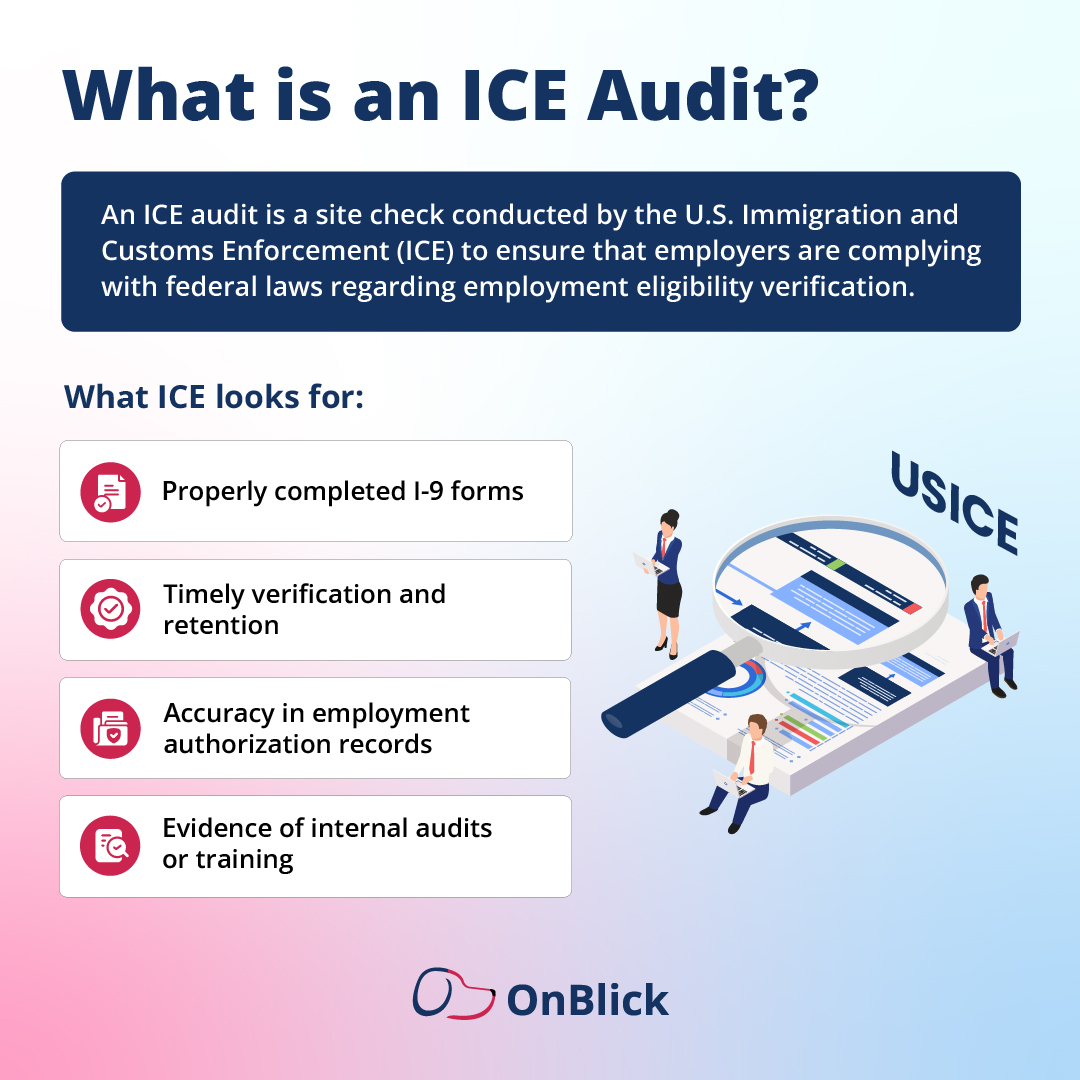
A Form I-9 inspection is a government review of an employer’s Form I-9 records and related employment documentation. U.S. ICE uses this process to assess whether an employer has properly completed and retained the required forms, reviewed acceptable documents in line with the rules, and followed the employment eligibility verification process consistently across its workforce.
This process is often referred to as an i9 audit, although ICE generally uses the term “inspection.” The review may include not only Form I-9 itself, but also supporting business records that help confirm whether verification and retention obligations have been met.
The inspection helps the federal agency to determine whether the employer’s i9 verification process is compliant, whether the correct current i9 form was used, whether i9 documents were handled properly, and whether there are errors that could lead to warnings, fines, or further enforcement action.
ICE Form I-9 Audit
How an ICE Inspection Begins
An ICE inspection typically begins when Homeland Security Investigations (HSI) serves a Notice of Inspection (NOI). ICE’s fact sheet and related summaries state that this notice requires employers to produce Forms I-9 and various employment-related records for review. Employers are generally given three business days to produce the requested documents.
The request is not always limited to the forms themselves. ICE may also ask for supporting business records, such as payroll information, employee lists, and other records that help confirm whether the employer’s verification process has been carried out consistently. That is why a response plan matters just as much as the forms themselves.
Form I-9 Audit: ICE I-9 Inspection
What ICE Reviews During the Inspection
Once the records are produced, ICE reviews the employer’s Form I-9s for completeness, accuracy, and retention compliance. The inspection focuses on whether the employer properly completed the form, examined documentation that reasonably appeared genuine, and maintained the records as required by law.
This review usually covers several areas:
- whether the employer used the current i9 form
- whether Sections 1 and 2 were completed on time
- whether the employer accepted valid form i9 acceptable documents
- whether the employer properly handled reverification when required
- whether the employer retained forms for the correct period
- whether there are signs of unauthorized employment or inconsistent i9 verification practices
As per the USCIS website, the current Form I-9 edition is dated 01/20/25. The agency also notes that the 08/01/23 form remains valid until July 31, 2026, for employers using that version in certain systems. Employers are required to confirm which version applies to their process; thus, ensuring the form in use is valid and up to date.
Possible Outcomes After an ICE Inspection
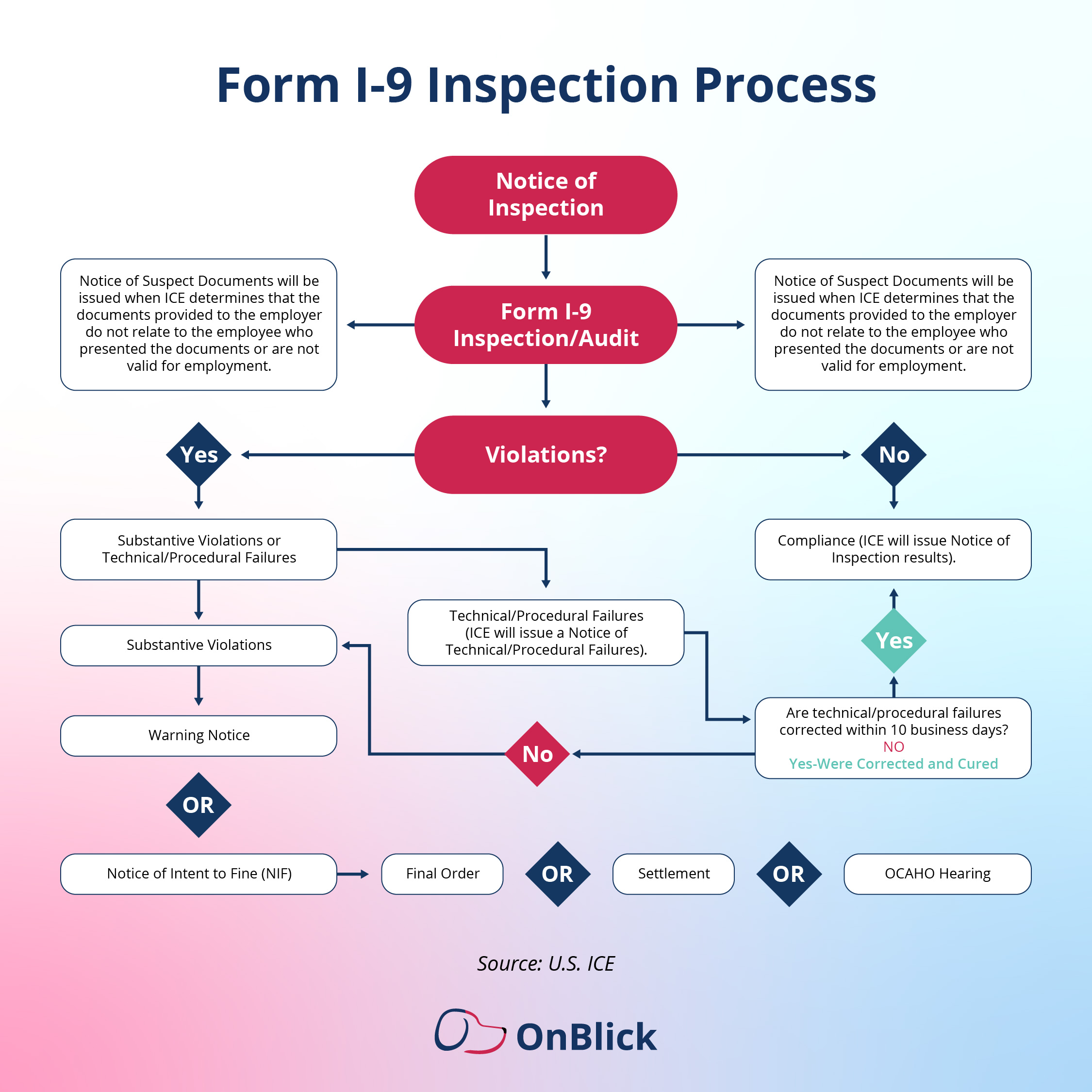
An ICE inspection can end in several different notices. The current ICE fact sheet consistently lists the following outcomes:
1. Compliance Letter
If ICE determines the employer complies, it may issue a compliance letter or a notice of inspection results indicating that no further action is currently required.
2. Notice of Technical or Procedural Failures
This notice identifies technical or procedural issues and gives the employer at least 10 business days to correct them. If the employer does not correct the issues properly or on time, they may become substantive violations.
3. Notice of Suspect Documents
This notice is issued when ICE determines that the documents presented do not appear to relate to the employee or otherwise do not establish work authorization. ICE’s inspection-process summary mentions the issuance of this notice when suspect documents are identified.
4. Notice of Discrepancies
A notice of discrepancies means ICE could not determine work authorization based on the records reviewed. In this case, employers need to provide the employee with the notice and allow them an opportunity to present additional documentation.
5. Warning Notice
ICE may issue a warning notice when violations are found, but it decides not to impose a fine in that instance. However, a warning notice must be treated seriously since it shows the employer has already been placed on notice.
6. Notice of Intent to Fine
If ICE identifies substantive paperwork violations, uncorrected technical failures, or knowingly hiring or continuing to employ unauthorized workers, it may issue a Notice of Intent to Fine. Employers usually have the right to negotiate or request an Office of the Chief Administrative Hearing Officer (OCAHO) hearing.
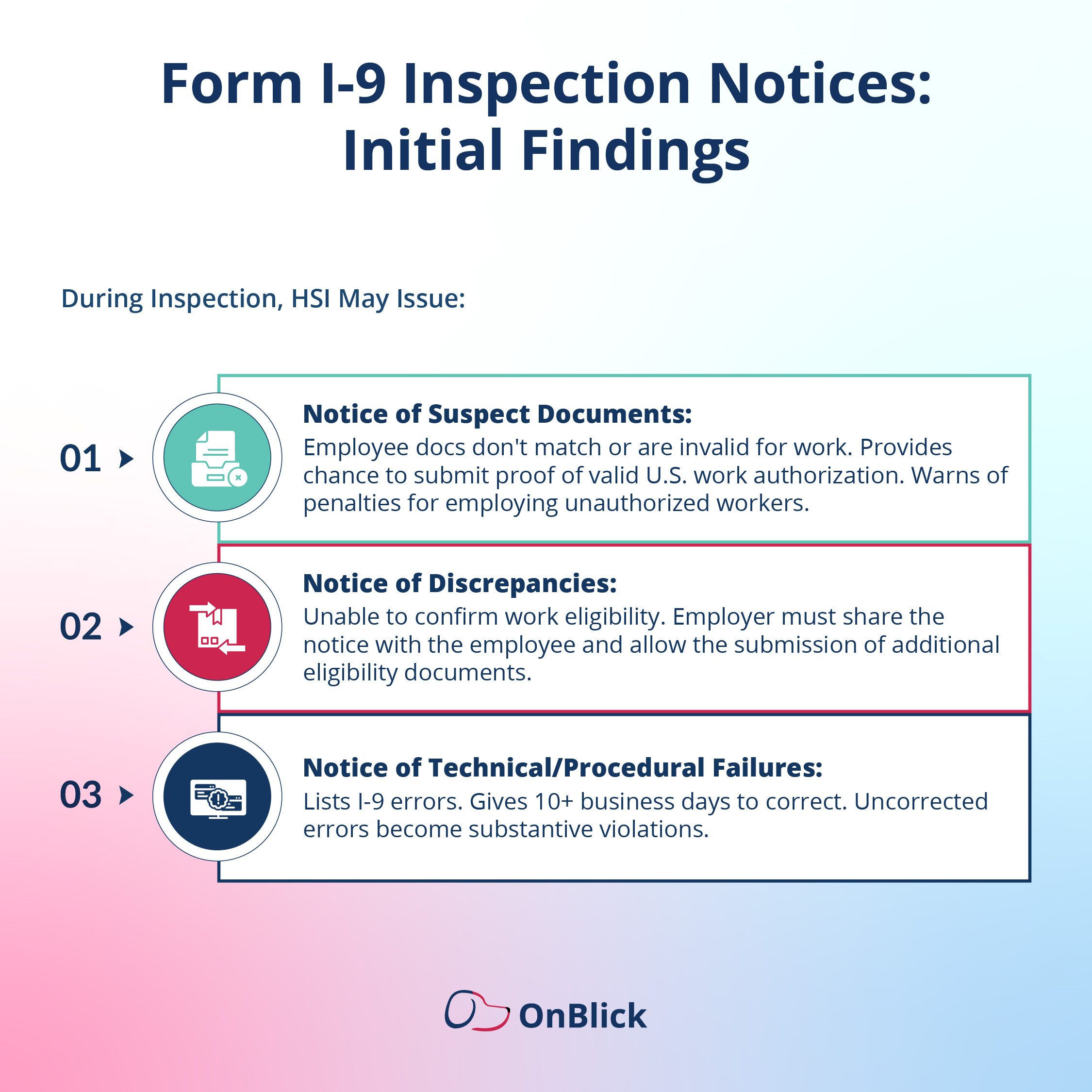
Form I-9 Inspection Notice
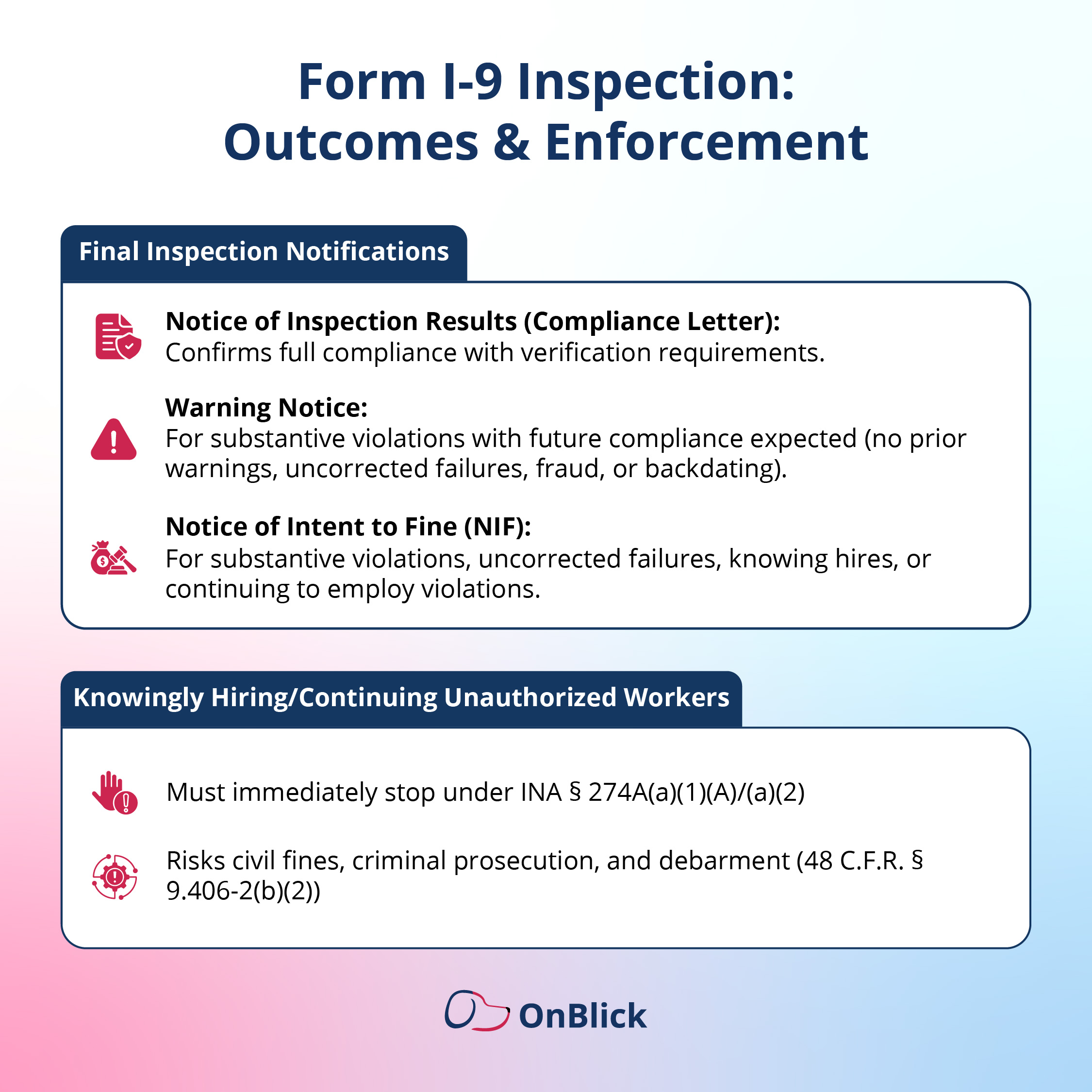
Form I-9 Inspection Outcomes
Why I-9 Retention and Record Quality Matter
A common mistake employers commit is assuming that the main risk lies only in wrong documents or unauthorized workers. The reality is that missing forms, late completion, inconsistent dates, and poor retention practices can also create significant exposure. Employers must retain a Form I-9 for three years after the date of hire or one year after employment ends, whichever is later.
That is why a defensible process for auditing i9 forms should include retention review, storage standards, and a plan for responding quickly when a notice of inspection arrives.
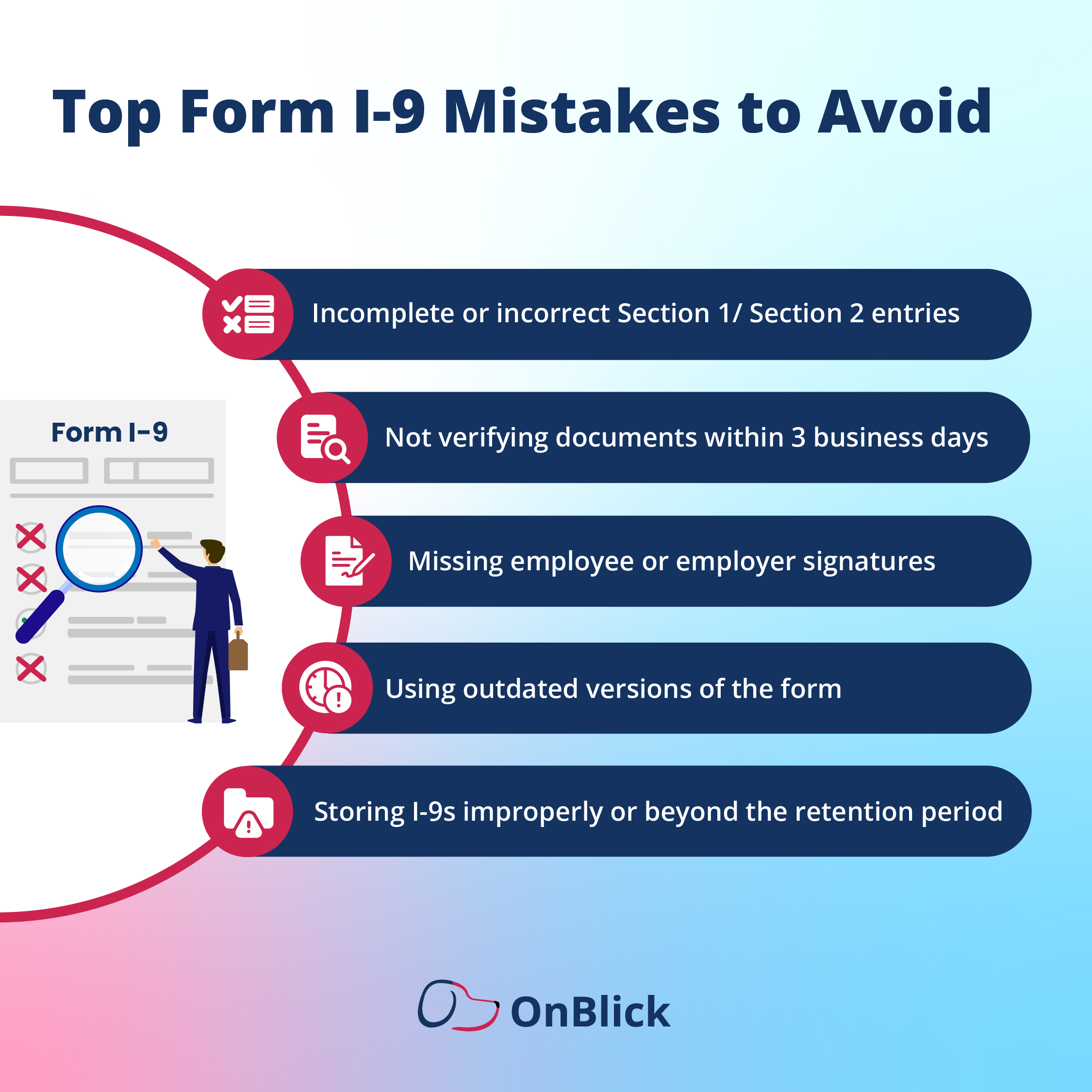
Form I-9 Mistakes to Avoid
I-9 Documents and Verification Rules Employers Should Follow
Employers must allow employees to choose which acceptable documents to present. Under USCIS rules, an employee may present one List A document or a combination of one List B and one List C document, and all documents must be unexpired unless a specific receipt rule applies. Employers may not tell workers which document to bring.
This is why teams that handle i9 documents should be trained carefully. Even well-meaning staff can create risk if they ask for the wrong document, fail to review the document properly, or apply verification practices inconsistently. Good i9 verification is not about over-documenting. It is about following the rules correctly and consistently.
For remote hires, employers need to distinguish between ordinary physical inspection rules and the DHS-authorized alternative procedure. USCIS states that only employers enrolled in E-Verify and in good standing may use the optional remote examination procedure, which includes reviewing document copies, conducting a live video interaction, and retaining clear copies of the documents reviewed.
That means remote hiring is not an excuse for weaker compliance. If your organization uses remote onboarding, the process should be documented clearly, and your teams should know when physical inspection is required and when the alternative procedure is permitted.
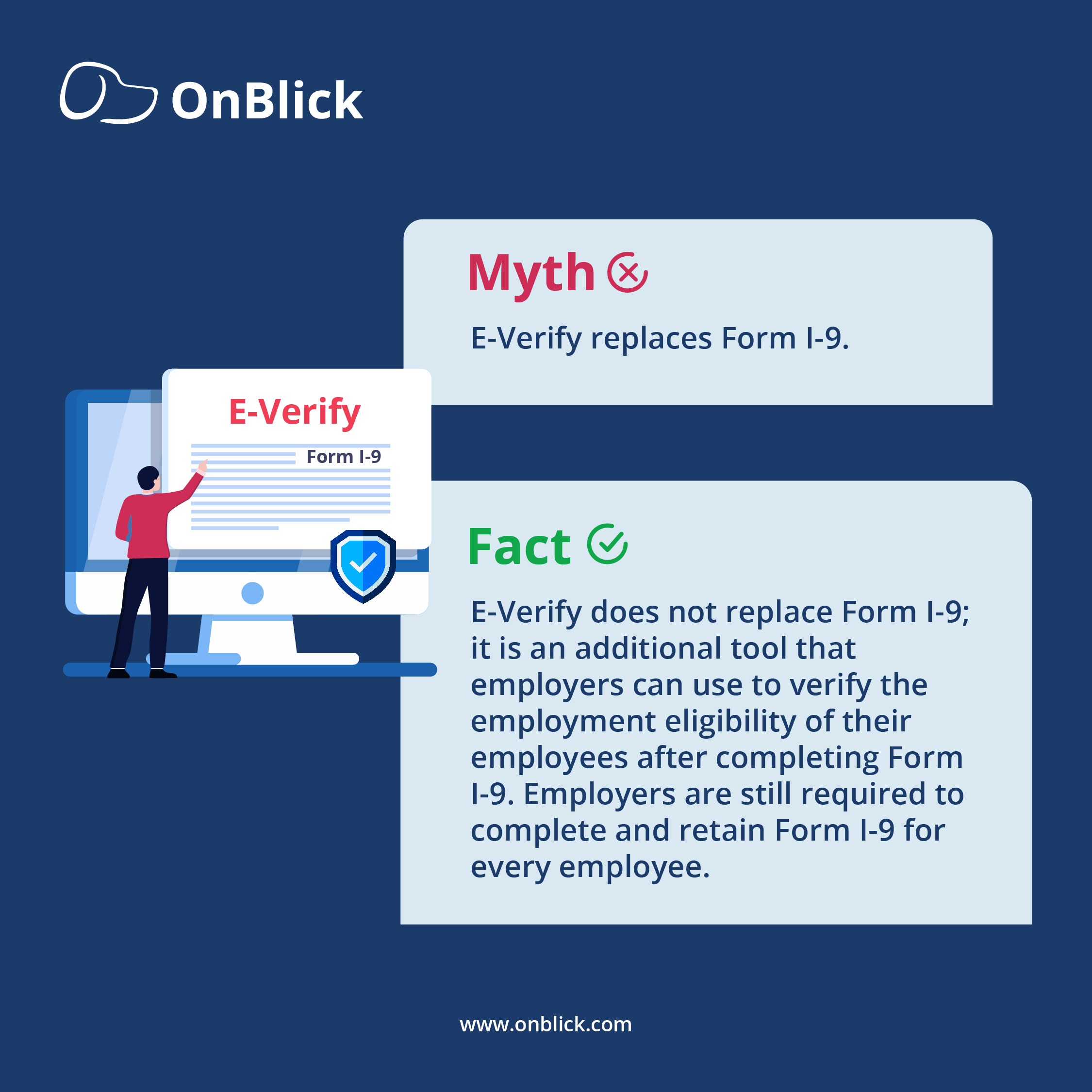
Form I-9 and E-Verify
How Employers Can Prepare Before an I-9 Inspection
Experts recommend employers have a strong I-9 Audit Preparation Plan. It usually includes these steps:
- Confirm that the valid current i9 form is being used across the organization
- Conduct a proactive internal i9 audit to identify missing information, errors, and process gaps
- Review all active and retained forms for completeness and accuracy
- Confirm retention periods and remove forms only when the retention period has lawfully expired
- Retrain HR personnel and hiring managers on proper completion of required fields, dates, and certifications
- Reinforce correct review of form i 9 acceptable documents and consistent handling of i9 documents during onboarding
- Review electronic I-9 systems to confirm compliance with DHS requirements for audit trails, electronic signatures, and recordkeeping
- Evaluate remote verification procedures to ensure alignment with DHS-authorized alternative procedures and E-Verify requirements
- Compare remote and in-person verification practices to confirm they are being handled consistently
- Correct technical issues where permitted and document those corrections properly
- Document and maintain an internal i 9 audit checklist for ongoing review
- Strengthen onboarding controls and implement standardized processes to improve accuracy at the point of hire
- Prepare a response protocol for a future notice of inspection, including ownership of document collection and internal coordination steps
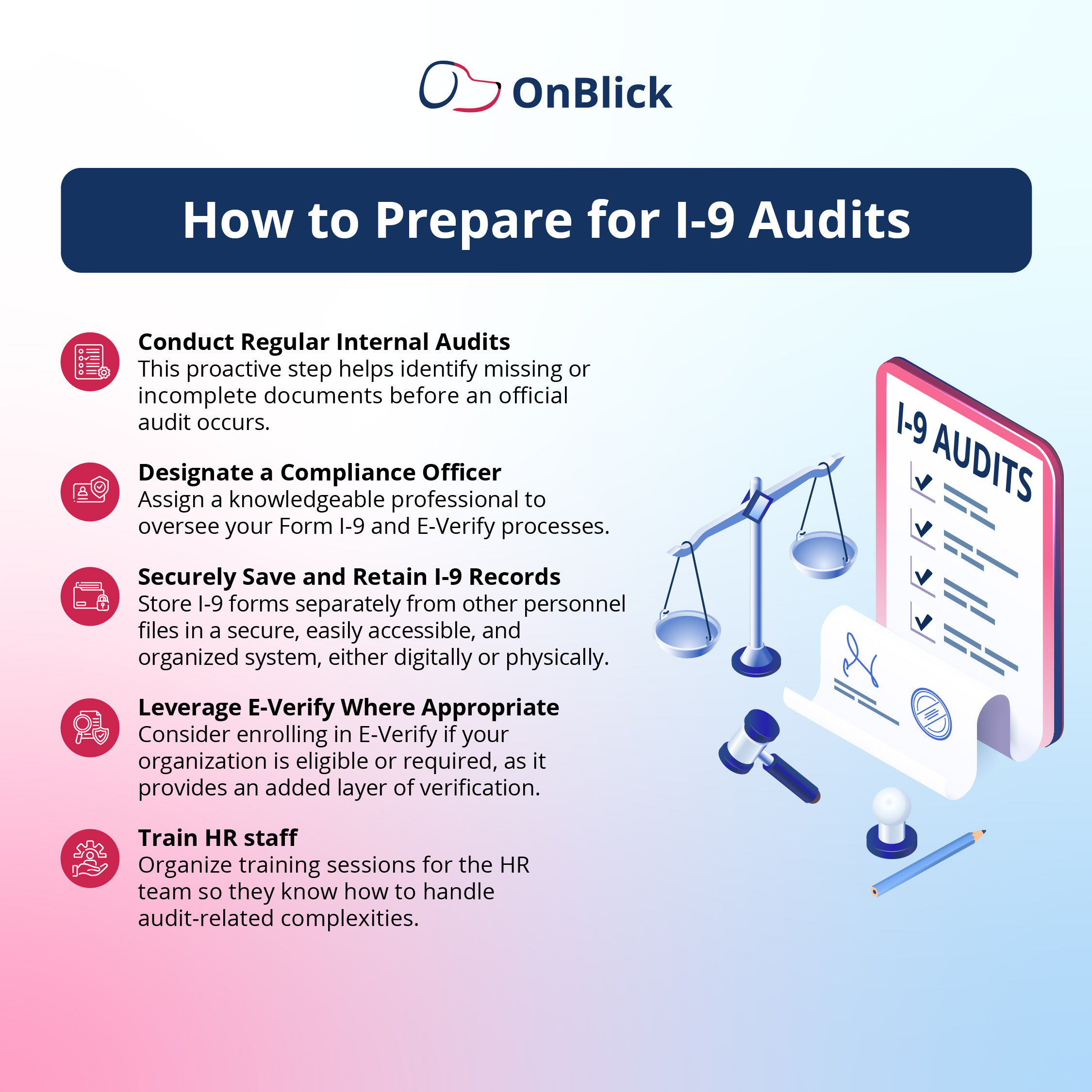
I-9 Audit Preparation: 5 Tips
Document Fraud Under INA § 274C
Document fraud carries its own enforcement risk beyond standard Form I-9 paperwork violations. Under INA § 274C, codified at 8 U.S.C. § 1324c, Homeland Security Investigations may initiate administrative proceedings against individuals or entities that knowingly commit or attempt document fraud to obtain an immigration benefit or satisfy a requirement under the Immigration and Nationality Act.
Where ICE believes a violation has occurred, it may issue a Notice of Intent to Fine, outline the alleged conduct, and state the proposed civil penalty. The charged party may request a hearing before an Administrative Law Judge. If no timely hearing request is made, ICE may issue a final order. In serious cases involving unauthorized individuals, a final order may also lead to removal consequences and a permanent bar on reentry.
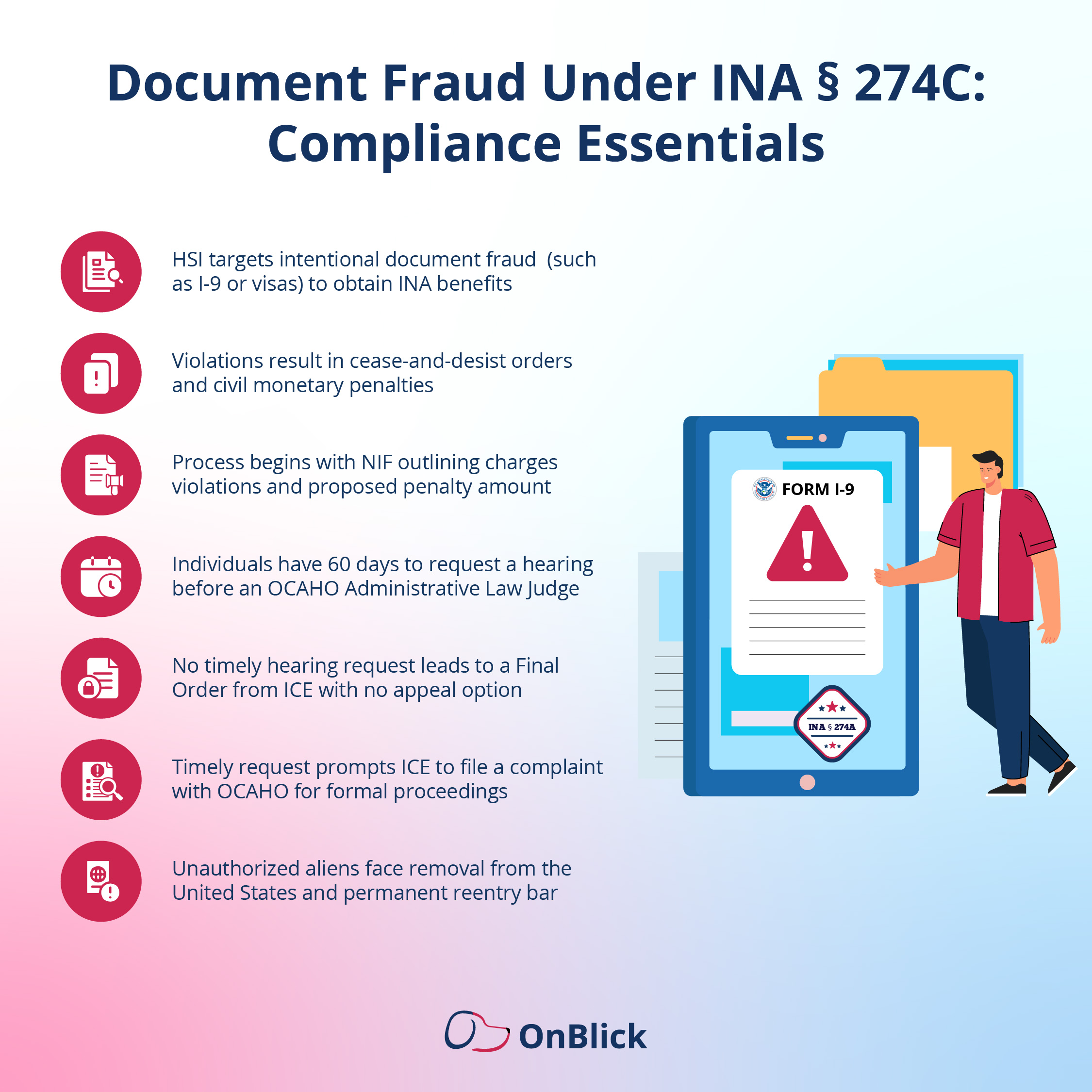
i9 Document Fraud
Activities Prohibited Under INA § 274C
INA § 274C prohibits a range of acts involving fraudulent or improper documents. These include forging, altering, counterfeiting, or falsely making documents for immigration or employment-related purposes, as well as using or providing documents that do not lawfully relate to the person presenting them.
The provision also covers accepting such documents, assisting in the preparation or filing of applications based on false documents, and using documents in ways that misrepresent identity or eligibility. For employers, the practical point is clear: compliance is not limited to completing Form I-9 correctly. It also requires careful review of documents, consistent verification practices, and processes that help prevent misuse, misrepresentation, or document-related fraud.
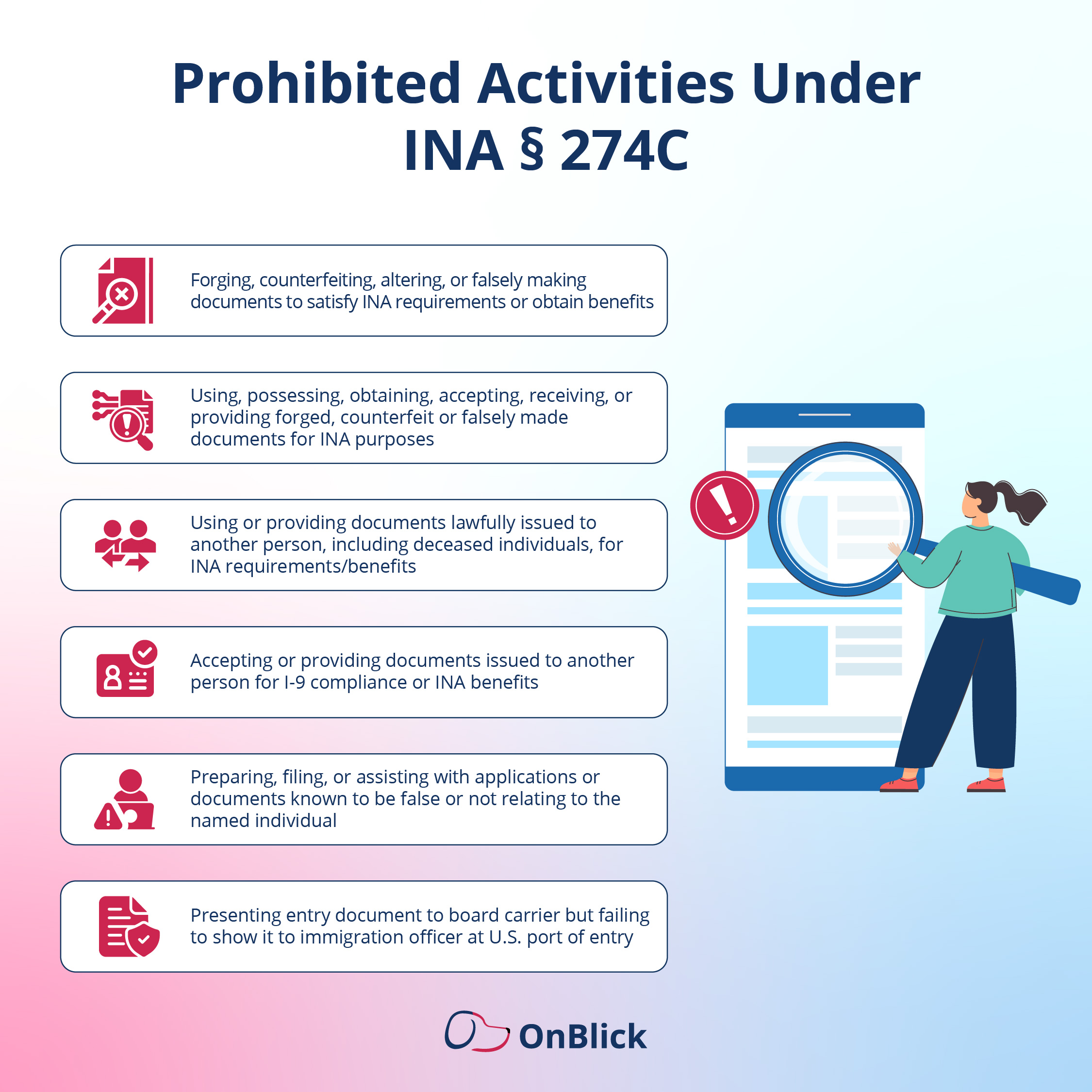
Form I-9: Prohibited Activities
How OnBlick Helps Employers With I-9 Audits
With form i9 penalties now higher and more errors being treated as substantive violations, employers need more than a last-minute response plan. OnBlick helps employers take a more proactive approach through structured i9 audit support designed to identify gaps before they become costly violations.
Our I-9 audit services help organizations review forms for completeness, check retention practices, evaluate remote and in-person verification workflows, and strengthen internal processes around i9 documents and compliance tracking. That helps reduce the risk of fines, improve audit readiness, and build a more defensible response if a notice of inspection is ever served.
For employers managing high hiring volume, distributed teams, or legacy records, OnBlick offers the solution for ongoing Form I-9 compliance.
Our electronic Form I-9 software helps employers maintain cleaner records, improve audit visibility, and manage verification workflows with greater consistency.
Book a free OnBlick demo now.
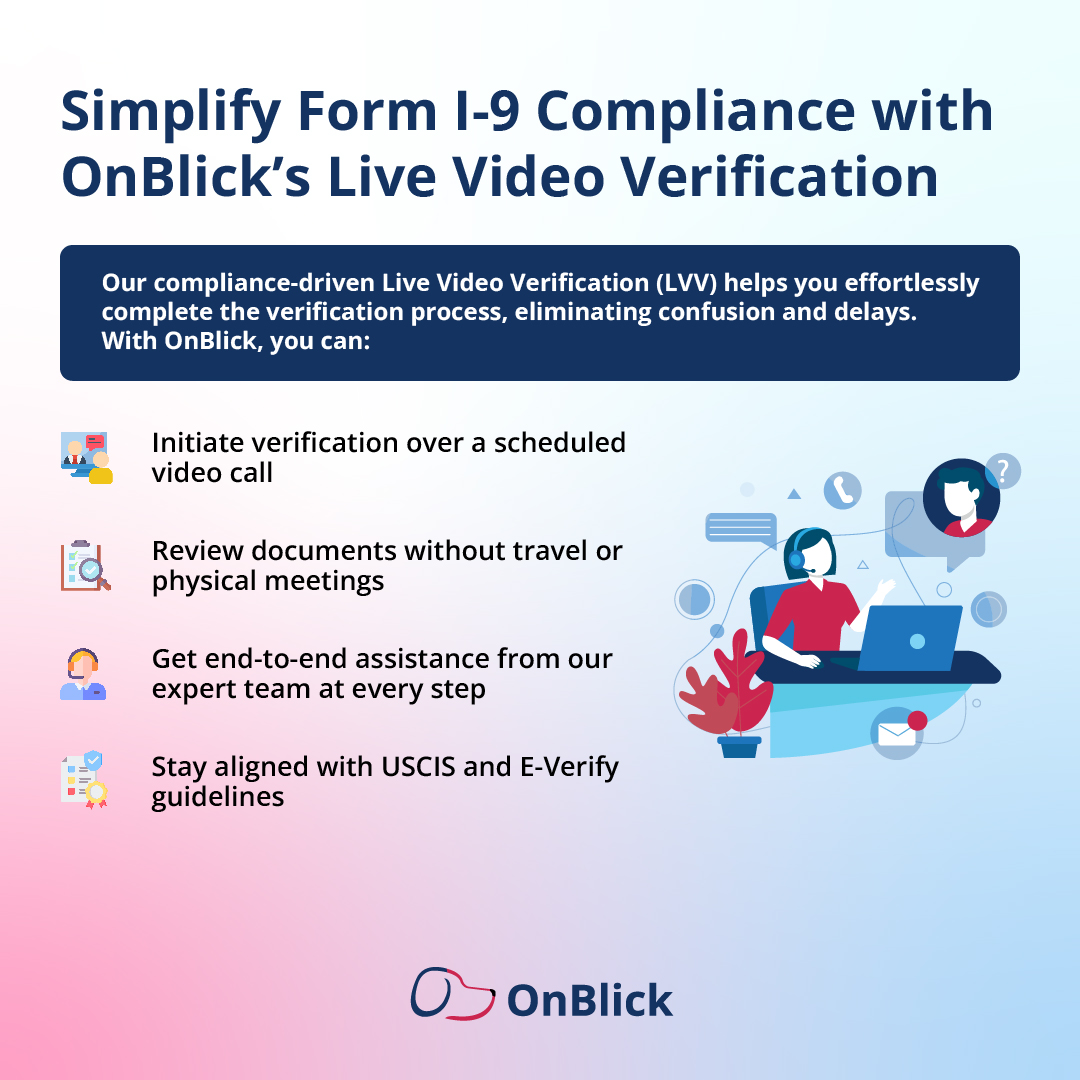
Form i9 Alternative Procedure: Live Video Verification Software
Final Thoughts
ICE inspections remain one of the most important enforcement tools in the realm of employer compliance. A business does not need to be intentionally noncompliant to face risk. Incomplete forms, poor retention, inconsistent verification practices, and unresolved technical errors can all create exposure.
We urge employers to treat Form I-9 compliance as an ongoing process, not a one-time form. A disciplined internal review process, a reliable i9 audit checklist, and a clear plan for handling USCIS i-9 and ICE inspection requirements can make a major difference when scrutiny arrives.
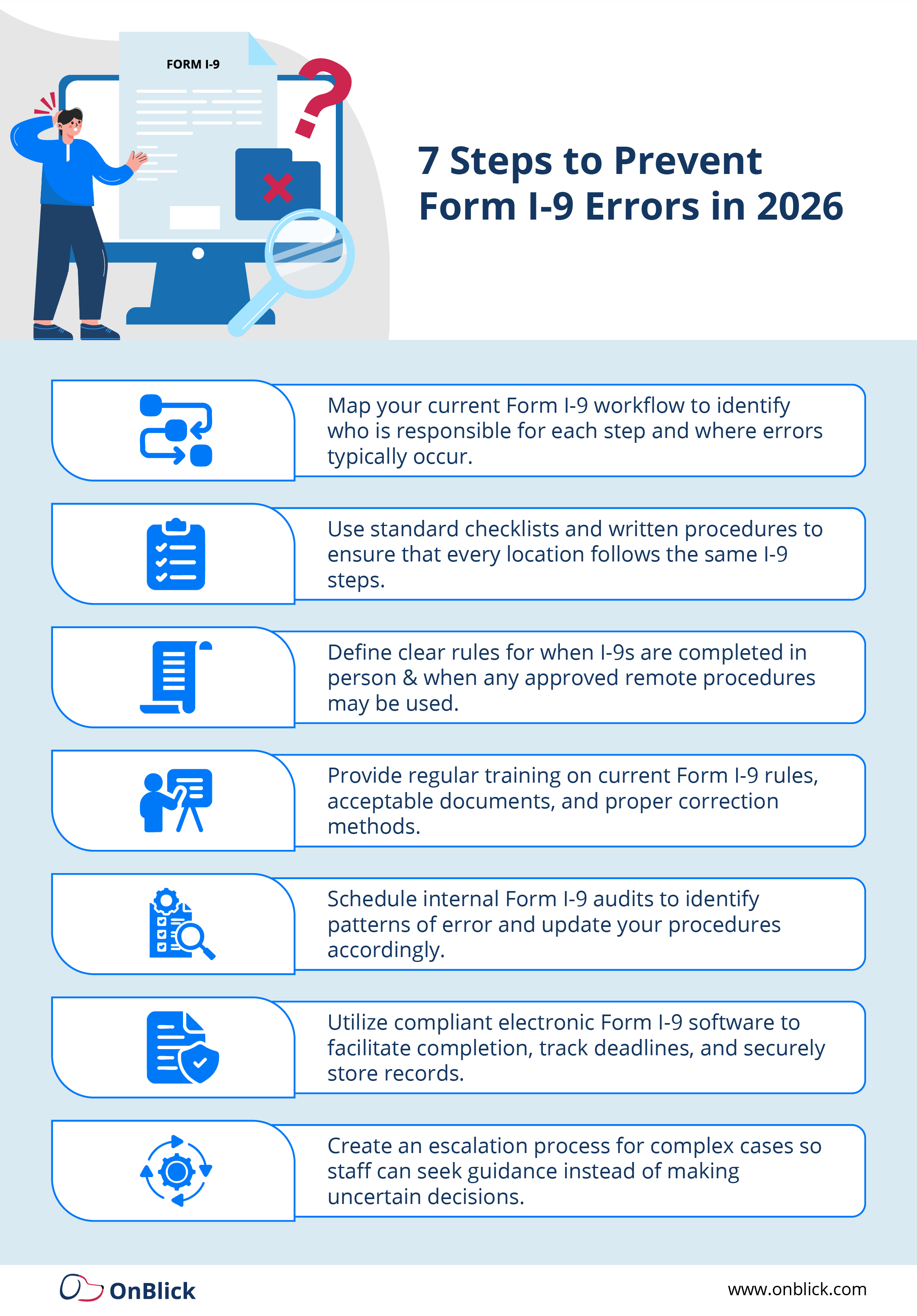
How to Prevent Form I-9 Errors: 7 Tips
Form I-9 Audits: FAQs
1. What is I-9 paperwork?
I-9 paperwork generally refers to Form I-9 itself and the employer’s related compliance records, including retention records, reverification entries where needed, and any process documentation tied to employment eligibility verification.
2. What is I-9 documentation?
I-9 documentation usually means the records and acceptable identity and work authorization documents used in the Form I-9 process. Employees present either one List A document or one List B and one List C document.
3. What triggers an I-9 audit?
There is no single trigger listed in the fact sheet, but ICE inspections can arise from enforcement priorities, investigative leads, compliance reviews, or broader worksite enforcement activity. Employers should not assume only high-risk industries are affected.
4. What are the fines for I-9 violations?
Paperwork violations currently range from $288 to $2,861 per form. Knowingly hiring or continuing to employ unauthorized workers can lead to fines from $716 to $5,724 per worker for a first offense, rising substantially for repeat violations.
5. How to fill out an I-9 form?
The employee completes Section 1 no later than the first day of employment, and the employer completes Section 2 within three business days by reviewing acceptable documents or using a permitted alternative procedure if eligible.
6. How long to retain I-9?
Employers must retain a Form I-9 for three years after the date of hire or one year after employment ends, whichever is later.
7. How to inspect I-9 documents for remote employees?
Only employers enrolled in E-Verify and in good standing may use the DHS-authorized I-9 remote alternative procedure. That process includes reviewing document copies, conducting a live video interaction, indicating the alternative procedure on the form, and retaining clear copies of the documents.
8. How to fix I-9 mistakes online?
There is no single government “fix online” process for all errors. Corrections depend on the type of error, the format in which the form is stored, and whether the issue is technical, procedural, or substantive. ICE states that technical or procedural failures identified during an inspection generally receive at least 10 business days for correction.
9. How to report I-9 violations?
Potential Form I-9 or worksite violations are generally reported through federal enforcement channels, including ICE or related government complaint pathways, depending on the issue involved. Employers should use official government reporting channels and document the facts carefully.
10. What is the penalty for hiring illegal immigrants?
The penalty for hiring illegal immigrants depends on the offense level. Current civil fines for knowingly hiring or continuing to employ unauthorized workers range from $716 to $5,724 per worker for a first offense, with higher penalties for repeat offenses, and possible debarment or criminal exposure in more serious cases.