IBM i Modernization: When Should You Modernize an AS400 System?
Many businesses in the United States still depend on IBM i systems, often referred to as AS400, to run important business applications. These systems are known for reliability, security, and long-term performance. However, older applications and outdated development methods can make it difficult for businesses to respond to changing customer and technology needs.
This is where IBM i modernization becomes important.
Modernization does not always mean replacing your existing IBM i system. In many cases, businesses can modernize their AS400 applications while keeping the reliable IBM i platform that supports their core operations.
For companies considering IBM I AS400 modernization services, the first question is often: When is the right time to modernize?
What Is IBM i Modernization?
IBM i modernization is the process of improving existing IBM i or AS400 applications, technology, user interfaces, databases, integrations, and development processes.
A modernization project can include:
- Updating legacy applications
- Modernizing RPG applications
- Improving user interfaces
- Integrating APIs
- Connecting IBM i with cloud applications
- Improving database performance
- Modernizing business workflows
- Adding web and mobile access
- Improving security
- Integrating ERP and third-party applications
The goal is not simply to make an old system look newer. The goal is to make the existing business technology more flexible, connected, secure, and easier to maintain.
Why Are US Businesses Considering AS400 Modernization?
Many American businesses have built critical business processes around IBM i over several decades. Manufacturing, distribution, logistics, finance, retail, and other industries continue to rely on IBM i applications.
However, business requirements have changed.
Customers now expect digital experiences, employees need remote access, and businesses need real-time information across multiple systems.
A legacy AS400 application may still work well, but it can become difficult to integrate with modern technologies.
This creates a common situation:
The IBM i system isn't necessarily the problem. The problem may be the way the system and applications are being used.
Modernization can help businesses extend the useful life of their existing IBM i investment.
7 Signs Your AS400 System May Need Modernization
1. Your Applications Are Difficult to Maintain
If your organization depends on old RPG, COBOL, or other legacy applications that only a small number of employees understand, maintenance can become a challenge.
An experienced IBM i consultant service can review the existing environment and identify applications that should be modernized first.
Modern development practices can also make applications easier for future developers to understand and maintain.
2. You Are Struggling to Find IBM i Skills
One of the biggest challenges for organizations using AS400 systems is finding experienced professionals with the right technical knowledge.
Businesses may have employees who understand the existing applications but are approaching retirement or moving into other roles.
This creates a knowledge gap.
Modernization can help reduce dependence on outdated development practices and make it easier for modern developers to work with IBM i applications.
Working with an experienced IBM i consulting services provider can also help businesses maintain critical applications while developing a long-term modernization strategy.
3. Your IBM i System Cannot Easily Integrate With Modern Applications
Modern businesses use many different platforms:
- CRM systems
- Cloud applications
- ERP systems
- E-commerce platforms
- Mobile applications
- Business intelligence tools
- Payment platforms
- Third-party APIs
If your AS400 application operates as an isolated system, employees may need to manually transfer information between systems.
IBM i modernization can introduce APIs and integration technologies that allow IBM i applications to communicate with modern platforms.
This can reduce manual work and improve data availability.
4. Your User Interface Looks Outdated
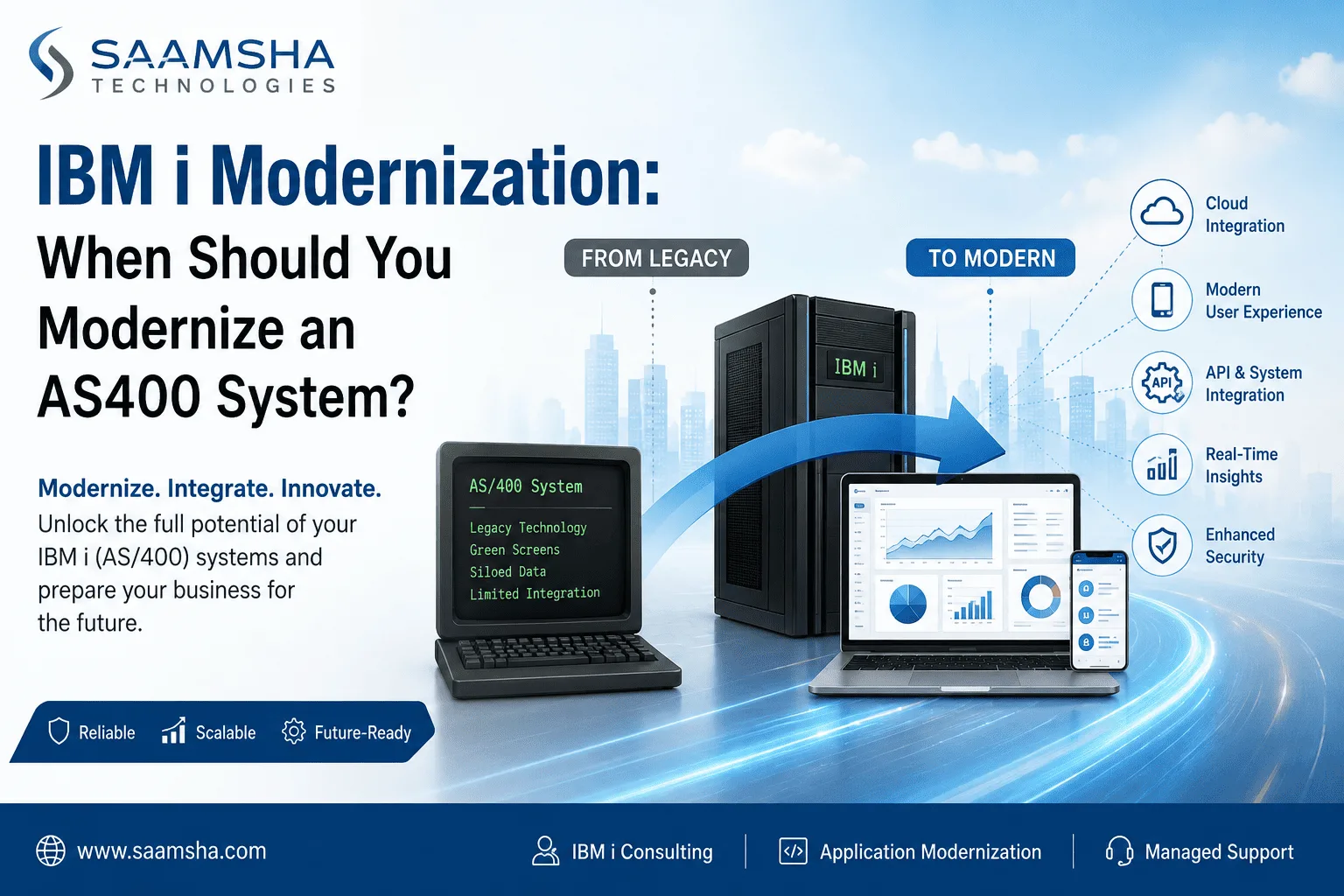
Many legacy AS400 applications use traditional green-screen interfaces.
While these interfaces can be efficient for experienced employees, they may be difficult for new employees to learn.
A modernization project can introduce:
- Web-based interfaces
- Modern dashboards
- Responsive applications
- Browser-based access
- Mobile-friendly interfaces
The underlying IBM i business logic can often remain in place while the user experience is improved.
5. Your Business Needs Real-Time Data
Business leaders increasingly expect fast access to operational information.
For example, a distribution company may want to monitor:
- Inventory
- Orders
- Shipping
- Customer information
- Sales
- Warehouse activity
Modern integration and reporting technologies can make IBM i data easier to access and analyze.
This can help management make faster and more informed decisions.
6. Your Business Is Moving Toward Cloud Technology
Cloud adoption is increasing across US businesses.
However, moving to the cloud does not necessarily mean abandoning IBM i.
Businesses can explore hybrid modernization strategies where IBM i continues to run critical workloads while cloud services are used for applications, analytics, integration, backup, or other business requirements.
A qualified IBM i consultant can evaluate the existing environment and recommend an appropriate approach.
7. Your Current System Is Limiting Business Growth
Technology should support business growth rather than become a barrier.
If adding a new sales channel, integrating a CRM, launching an online service, or connecting a third-party application requires significant manual development, it may be time to evaluate modernization.
Modernizing the right parts of an AS400 environment can make it easier to support new business requirements.
Common IBM i Modernization Approaches
Application Modernization :Legacy RPG and other applications can be reviewed and updated to improve maintainability, usability, and integration.
API Integration: APIs can connect IBM i applications with modern software such as CRM, e-commerce, mobile applications, and cloud platforms.
Database Modernization : IBM i databases can be reviewed and optimized to support modern applications and reporting requirements.
User Interface Modernization : Traditional green-screen applications can be complemented or replaced with modern web-based interfaces.
Cloud Integration : IBM i systems can be integrated with cloud platforms and services when appropriate for the business.
Business Intelligence : IBM i data can be connected with modern analytics and reporting platforms to provide better business insights.