Introduction
Hydraulic system failures in Hyundai R200LC-210LC Excavators can significantly impact performance, productivity, and operational efficiency. Common issues such as slow lift responses, reduced power, overheating, or inconsistent attachment performance are often caused by faulty hydraulic components.
Accurate troubleshooting is essential for resolving hydraulic issues and minimizing downtime. In this guide, we will walk through the step-by-step procedures for diagnosing hydraulic system problems in the Hyundai R200LC-210LC Excavator, ensuring that technicians can resolve issues with confidence and precision.
Hydraulic System Overview
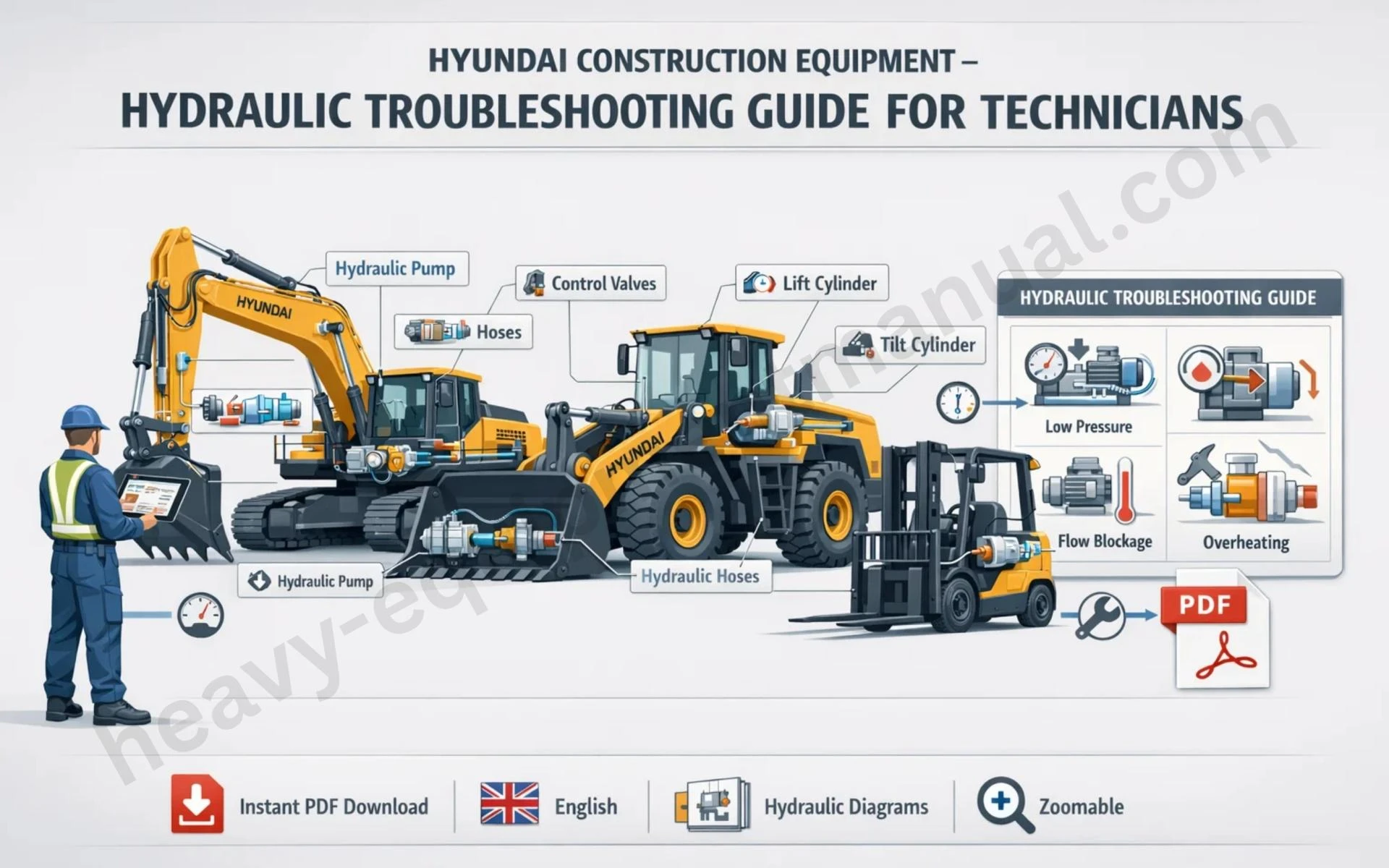
The Hyundai R200LC-210LC Excavator utilizes a hydraulic system to power vital components such as the lift arms, bucket tilt, auxiliary attachments, and drive components. The system’s performance depends on a well-functioning hydraulic pump, control valves, and cylinders, which work together to generate the pressure needed for movement.
Key Components of the Hydraulic System:
- Hydraulic pump: Generates pressurized fluid
- Control valve assembly: Directs fluid flow
- Lift and tilt cylinders: Provide the force for arm and bucket movement
- Hydraulic reservoir: Stores the fluid
- Hydraulic filters: Keep the fluid clean
- Pressure relief valves: Prevent excessive pressure buildup
- Hydraulic hoses and fittings: Transport fluid through the system
Failure-Prone Components:
- Hydraulic pump wear
- Contaminated hydraulic fluid
- Clogged or dirty filters
- Damaged cylinder seals
- Loose or damaged hoses
- Faulty relief valves
- Step-by-Step Hydraulic Troubleshooting Procedure
This systematic approach helps accurately diagnose issues and reduce unnecessary repairs. Below are the steps to resolve hydraulic system problems on the Hyundai R200LC-210LC Excavator.
1. Initial Inspection
Begin with a thorough visual inspection of the hydraulic system. Look for the following common issues:
- Low hydraulic fluid levels
- Leaks around hoses and fittings
- Loose or damaged connections
- Cracked hoses or worn-out components
- Unusual noise during operation
Address visible issues, such as low fluid levels or cracked hoses, before moving on to more advanced diagnostics. This step can often resolve simple problems.
2. Hydraulic Fluid Condition Check
Hydraulic fluid is the lifeblood of the system. Contaminated or degraded fluid can significantly reduce system efficiency and cause component damage.
Check for:
- Dark or burnt fluid (indicating overheating)
- Milky fluid (suggesting water contamination)
- Presence of debris or metal particles
- Unusual odor (which can indicate fluid degradation)
If the fluid is contaminated, it must be replaced, and the system should be cleaned to avoid damaging internal components such as the pump and valve.
3. Pressure Testing
Hydraulic pressure testing is a critical step in diagnosing performance issues. Use a calibrated pressure gauge to measure:
- Main system pressure
- Auxiliary hydraulic pressure
- Relief valve settings
Common Pressure Issues to Look For:
- Low pressure readings, which could indicate pump wear or internal leakage
- High pressure readings, which may suggest a faulty relief valve or flow restriction
Why Pressure Testing Is Important:
Pressure testing ensures that hydraulic pressure is within the correct range specified by the manufacturer. Incorrect pressure levels can lead to performance issues and system failure. Always compare the measured pressure to manufacturer specifications before replacing components to avoid unnecessary repairs.
4. Hydraulic Cylinder Inspection
Weak or unresponsive lift functions may point to issues with the hydraulic cylinders. Inspect the cylinders for:
- Oil leakage around seals
- Damaged rod surfaces
- Internal bypassing
- Cylinder drift when idle (indicating internal seal failure)
Cylinder drift is a common sign that internal seals need replacement or the cylinder needs further attention.
5. Control Valve & System Diagnostics
If pressure readings are normal but performance issues persist, the control valve might be at fault. Check for:
- Sticking valve spools
- Faulty electrical control signals
- Improper sensor connections
Electro-hydraulic systems, which involve both mechanical and electrical components, can sometimes malfunction due to these issues.
Safety & Compliance Notes
Working with hydraulic systems involves high pressure, which requires strict safety precautions during servicing. Ensure that all safety procedures are followed to prevent injuries.
OSHA Safety Considerations:
- Always relieve hydraulic pressure before disconnecting lines
- Follow lockout/tagout procedures
- Secure attachments and lift arms before servicing
- Never loosen pressurized fittings
Safe Hydraulic Repair Practices:
- Wear protective gloves and eye protection
- Allow the system to cool before servicing
- Use calibrated tools for adjustments
- Replace damaged hoses immediately
Manual Access / Technical Reference Context
Using the correct OEM manual is critical for ensuring accurate diagnostic procedures and repairs. Technicians working on the Hyundai R200LC-210LC Excavator rely on verified PDF equipment manuals from heavy-equipmentmanual.com to access essential troubleshooting steps, wiring diagrams, and system specifications.
Common Mistakes to Avoid
Even experienced technicians can make errors during hydraulic troubleshooting. Avoid these common mistakes to ensure efficient and accurate repairs:
- Using incorrect model manuals: Always refer to the correct manual for the specific model.
- Skipping system pressure testing: Never replace components without first confirming the system's pressure levels.
- Ignoring fluid contamination: Clean the system thoroughly if fluid contamination is detected.
- Incorrect valve adjustments: Ensure relief valves are correctly calibrated.
- Performing repairs without referring to the manual: Always refer to the manual for correct assembly and torque values.
Conclusion
Effective hydraulic system troubleshooting in the Hyundai R200LC-210LC Excavator requires a structured, detailed approach. From initial inspections to advanced pressure testing and cylinder evaluations, following these steps will help technicians accurately diagnose and resolve issues, minimizing downtime and ensuring long-term equipment reliability.
Always refer to the correct equipment manual before performing system diagnostics or repairs to ensure safe and accurate operation.