Hyperpigmentation can leave areas of skin looking darker or uneven compared with the surrounding skin. It may develop after acne, skin inflammation, sun exposure, or other changes in the skin. Choosing a suitable skincare product depends on the type of pigmentation and individual skin needs.
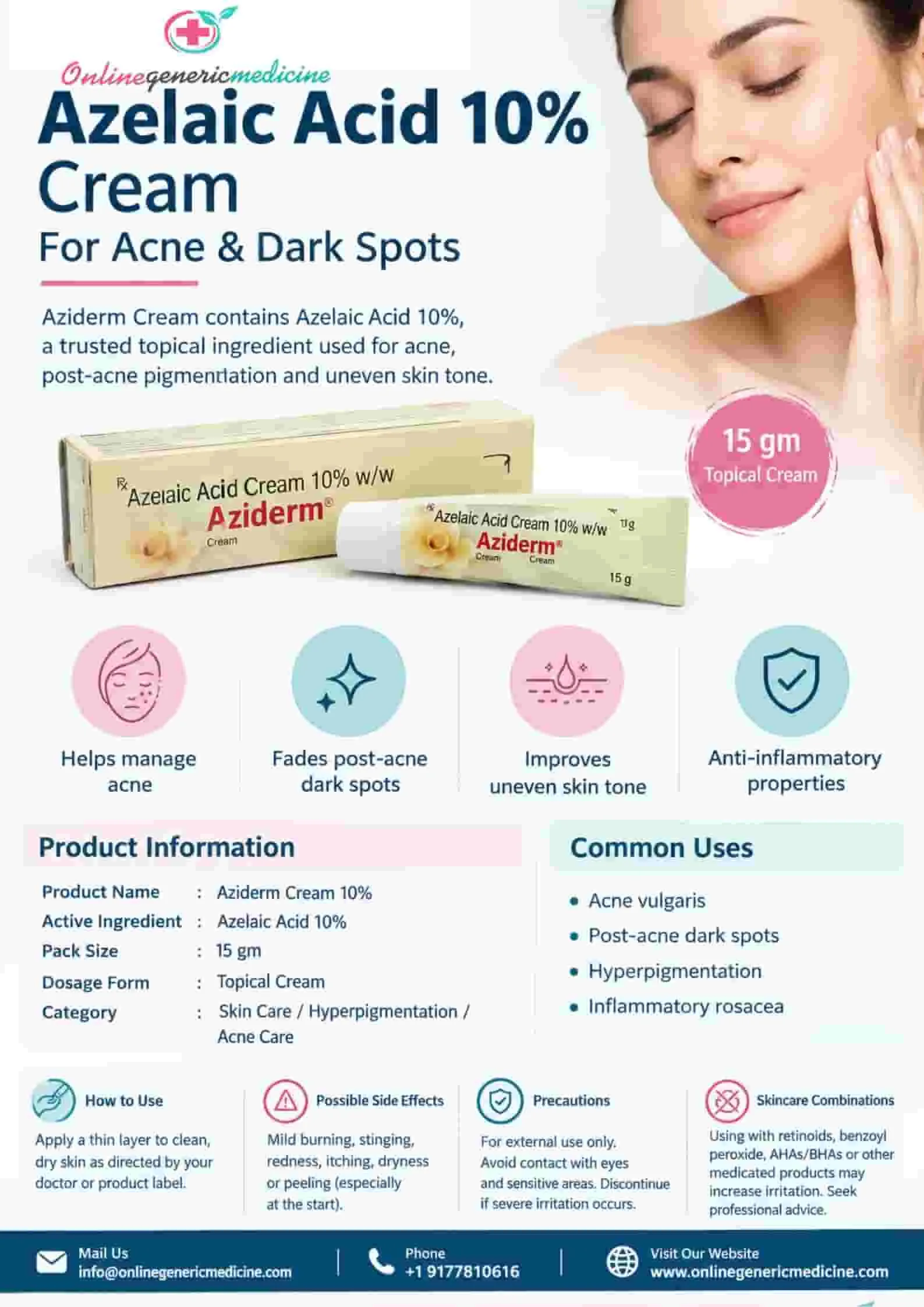
One ingredient commonly used in topical skincare is azelaic acid. Aziderm 10% Cream contains azelaic acid 10% and is a topical formulation commonly used in acne care. Azelaic acid is also used in skincare routines for concerns related to post-acne marks and uneven pigmentation.
Azelaic Acid 10% Cream: Product Details
Product Name: Aziderm 10% Cream
Active Ingredient: Azelaic Acid 10% w/w
Dosage Form: Topical cream
Pack Size: 15 gm
Category: Dermatological / Skin Care
Common Use: Acne and related skin concerns
Azelaic acid has antimicrobial and anti-inflammatory properties and can affect processes involved in clogged pores and skin pigmentation. Because of these properties, it may be included in routines designed to manage acne and certain pigmentation concerns.
What Is Hyperpigmentation?
Hyperpigmentation occurs when some areas of the skin become darker than the surrounding skin. Post-acne marks are a common example. These marks can remain after acne has cleared and may gradually become less noticeable over time.
Sun exposure can also make pigmentation more noticeable. For this reason, a consistent skincare routine that includes daytime sun protection can be useful when managing uneven skin tone.
If you are researching a cream for hyperpigmentation, it is important to consider the cause of the pigmentation rather than choosing a product based only on its name.
How Is Azelaic Acid Cream Used?
Aziderm 10%Cream should be used according to the product instructions or advice from a healthcare professional. Generally, topical cream is applied to clean, dry skin in a thin layer.
A basic routine may include:
- Gently cleansing the skin
- Drying the area before application
- Applying a thin layer as directed
- Using moisturizer if needed
- Applying suitable sunscreen during the daytime
Avoid contact with the eyes, lips and other sensitive areas. If you are already using other active skincare ingredients, such as retinoids or exfoliating acids, professional advice can help you decide how to combine products without unnecessary irritation.
Possible Skin Reactions
Some people may experience mild irritation when beginning azelaic acid. Possible reactions include:
- Stinging or burning
- Redness
- Dryness
- Itching
- Peeling
If irritation is severe, persistent, or accompanied by swelling or a significant rash, discontinue use and consult a healthcare professional.
Choosing a Cream for Hyperpigmentation
There is no single cream that suits every pigmentation concern. Thebest cream for hyperpigmentation depends on factors such as the cause of the pigmentation, skin sensitivity, existing skincare routine and any other treatments being used.
Azelaic acid may be considered for certain acne and pigmentation-related concerns, but persistent, changing, or extensive pigmentation should be evaluated by a dermatologist.
Final Thoughts
Aziderm 10% Cream contains Azelaic Acid 10% and is a topical product used in acne care. Azelaic acid may also have a role in skincare routines for post-acne marks and uneven-looking skin. Consistent use, appropriate skincare and sun protection are important when addressing pigmentation concerns.
For more information about best cream for hyperpigmentation and available skincare products, visit Online Generic Medicine.
Note: This information is for general educational purposes and does not replace advice from a qualified healthcare professional.