
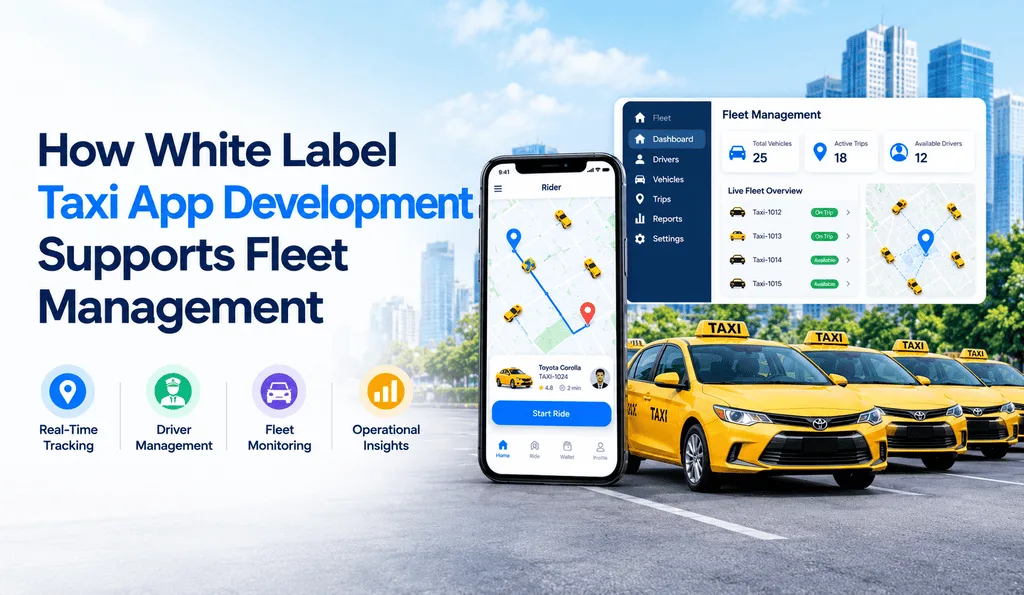
Fleet management plays an important role in the daily operations of taxi businesses. Whether a company operates a small group of vehicles or manages a large fleet across multiple locations, keeping track of drivers, vehicles, bookings, and customer requests can become complicated. Manual processes and disconnected systems often make it difficult to coordinate operations, monitor vehicle availability, and maintain consistent service quality.
Digital platforms offer a practical way to bring these activities together. They help fleet managers access operational information, coordinate drivers, and make decisions based on real-time data. White label taxi app development supports this shift by providing a customizable foundation for taxi businesses to manage their fleets through a centralized digital platform.
Understanding how these applications work can help taxi operators identify opportunities to improve daily workflows, reduce operational inefficiencies, and deliver more reliable transportation services.
Understanding Fleet Management in the Taxi Industry
Fleet management involves overseeing the vehicles, drivers, schedules, maintenance activities, and operational resources required to run a transportation business. In the taxi industry, it also includes coordinating ride requests, assigning drivers, monitoring trips, and ensuring that vehicles are available when customers need them.
Without an organized system, fleet managers may rely on phone calls, spreadsheets, or separate applications to handle these responsibilities. This approach can create communication gaps, duplicate bookings, and delays in assigning rides. It may also make it harder to understand how efficiently vehicles and drivers are being used.
A centralized taxi management application helps bring these processes into one environment. Managers can review bookings, check driver availability, monitor active trips, and access relevant vehicle information without switching between multiple tools.
1. Real-Time Vehicle Tracking and Visibility
Knowing where vehicles are located is essential for managing a taxi fleet effectively. GPS-enabled tracking allows fleet managers to view vehicle locations on a digital map and monitor their movement during active trips.
This visibility helps dispatchers identify nearby drivers when a new booking arrives. Instead of contacting several drivers individually, they can review available vehicles and select a suitable option based on location, availability, and estimated arrival time.
Real-time tracking can also help managers identify unexpected delays, monitor route progress, and respond to customer inquiries more accurately. For businesses operating across large service areas, it provides a clearer understanding of vehicle distribution.
However, tracking accuracy depends on factors such as GPS availability, network connectivity, and device performance. Businesses should also establish clear policies for collecting and using location data to protect driver privacy.
2. More Efficient Driver Assignment and Dispatch
Driver coordination becomes increasingly challenging as a fleet grows. Dispatchers need to consider driver availability, vehicle location, shift schedules, and the type of service requested when assigning rides.
A digital dispatch system can automate parts of this process. When a customer places a booking, the platform can identify eligible drivers and suggest assignments based on predefined rules. These rules may consider proximity, current workload, vehicle capacity, and driver status.
Through white label taxi app development, businesses can configure dispatch workflows around their operational requirements rather than depending entirely on generic processes. For example, a company offering airport transfers may prioritize scheduled pickups, while a city taxi operator may focus on matching immediate requests with nearby drivers.
Automated dispatch can reduce unnecessary communication and improve response times. Nevertheless, managers should retain the ability to override assignments when unusual circumstances, accessibility requirements, or customer preferences demand human judgment.
3. Improved Vehicle Utilization
Vehicle utilization measures how effectively a fleet's available vehicles are being used. Poor utilization can increase operating costs because vehicles may remain idle for long periods while other parts of the service area experience high demand.
Fleet management software helps operators examine booking activity, active trips, idle periods, and vehicle availability. These insights can reveal patterns that are difficult to identify through manual records.
For example, a business may discover that demand increases near commercial districts during morning hours but shifts toward residential areas in the evening. Managers can use this information to position vehicles more strategically and adjust driver schedules according to expected demand.
Better utilization does not necessarily mean keeping every vehicle active throughout the day. Planned breaks, maintenance periods, and reasonable driver working hours remain important. The objective is to balance availability, operating expenses, and service quality.
4. Driver Performance and Productivity Monitoring
Drivers have a direct influence on customer satisfaction, trip completion rates, and operational efficiency. Monitoring relevant performance indicators can help fleet managers understand where additional support or process improvements may be needed.
A taxi management platform can record information such as completed trips, acceptance rates, cancellations, punctuality, and customer feedback. When interpreted carefully, these indicators help managers identify recurring issues and recognize consistent performance.
For instance, frequent late arrivals may indicate scheduling problems, traffic conditions, or difficulties with pickup locations rather than poor driver performance alone. Reviewing the surrounding circumstances helps managers make more informed decisions.
Businesses should communicate which metrics are collected and how they are used. Performance monitoring should support fair evaluations, driver safety, and service improvements rather than relying on isolated numbers to judge employees.
5. Simplified Vehicle Maintenance and Inspection
Vehicle maintenance is another essential part of fleet management. Missed inspections, delayed servicing, and unexpected breakdowns can disrupt schedules and increase operating expenses.
A digital system can help managers maintain vehicle records, including registration details, service dates, inspection results, mileage, and repair history. Depending on its features, the platform may also send reminders when maintenance is approaching or when a vehicle requires attention.
For example, a manager could schedule routine servicing based on mileage or time intervals and temporarily mark a vehicle unavailable while repairs are underway. This reduces the likelihood of assigning a vehicle that is not ready for service.
Maintenance records also help businesses identify recurring mechanical problems and understand the long-term costs associated with individual vehicles. These insights can inform repair decisions, replacement planning, and fleet expansion strategies.
6. Centralized Booking and Trip Management
Managing bookings across phone calls, websites, and mobile applications can create fragmented records. A centralized system helps bring trip information together, giving dispatchers and managers a more consistent view of daily operations.
Depending on the platform, bookings may include pickup and drop-off locations, passenger details, scheduled times, assigned drivers, fare estimates, and trip status. Staff can use this information to coordinate current rides and prepare for upcoming reservations.
Centralized trip records also make it easier to investigate cancellations, resolve customer complaints, and review completed journeys. If a passenger reports a missed pickup, authorized staff can check the booking history and determine where the process failed.
For taxi businesses serving corporate clients, hotels, or airport passengers, organized booking management can be particularly useful because these services often involve scheduled rides and specific service requirements.
7. Data-Driven Decisions and Operational Reporting
Fleet managers need reliable information to evaluate performance and plan future operations. Reporting tools can turn booking and vehicle data into useful operational insights.
Common reports may cover revenue, completed trips, cancellation rates, driver activity, vehicle utilization, maintenance expenses, and customer demand. Reviewing these indicators over time can help businesses distinguish temporary fluctuations from persistent operational problems.
For example, rising cancellations in a particular area may indicate driver shortages, inaccurate pickup estimates, or changing customer demand. Similarly, increasing maintenance costs may highlight vehicles that require closer inspection or replacement.
The value of reporting depends on data quality. Inaccurate trip records, missing expenses, and inconsistent driver information can produce misleading conclusions. Regular data checks and clearly defined performance indicators help ensure that reports support practical decisions.
8. Flexible Features and Integration With Existing Systems
Every taxi business has different fleet management requirements. A local operator may need straightforward booking and dispatch tools, while a larger transportation company may require multiple fleet locations, role-based access, advanced reporting, and integration with accounting or customer relationship management systems.
A customizable application allows businesses to select features that fit their operating model. White label taxi app development can support branded passenger and driver applications alongside an administrative dashboard, depending on the chosen solution.
Integrations can further connect fleet operations with payment gateways, mapping services, notification systems, and business software. This reduces the need to transfer information manually between disconnected platforms.
Before implementing new software, businesses should assess existing workflows, data migration requirements, integration costs, and staff training needs. A phased rollout can help teams identify issues early and make adjustments before the system is introduced across the entire fleet.
Challenges to Consider When Implementing Fleet Management Software
Although digital platforms can improve fleet coordination, successful implementation requires planning. GPS tracking and automated dispatch depend on reliable connectivity and accurate location data. Integration with existing systems may also require additional development, testing, and ongoing maintenance.
Data security is another important consideration. Taxi platforms can process passenger details, driver information, trip histories, and payment-related data. Businesses should apply appropriate access controls, secure data transmission, regular software updates, and clear data retention policies.
Staff adoption also matters. Drivers and dispatchers need to understand how to use the system correctly. Practical training, accessible support, and feedback from daily users can help prevent avoidable errors and improve long-term adoption.
Finally, businesses should evaluate software based on operational needs rather than the number of available features. Starting with essential capabilities and expanding gradually can make implementation more manageable.
Conclusion
Effective fleet management requires coordination between vehicles, drivers, bookings, maintenance schedules, and customer service. When these activities are handled through disconnected processes, businesses may struggle to maintain visibility and respond efficiently to changing demand.
Digital taxi management platforms help address these challenges by centralizing operational information, supporting real-time tracking, simplifying dispatch, and providing useful performance insights. White label taxi app development gives businesses the flexibility to configure these capabilities around their workflows, service areas, and growth plans.
The most effective solution is one that addresses real operational problems while remaining secure, reliable, and easy for staff to use. With thoughtful planning and continuous evaluation, taxi operators can use fleet management technology to improve coordination, make better use of available resources, and build more consistent transportation services.