For small and growing businesses in India, competing against established brands on Google can be difficult. Limited budgets, weak website structures, poor keyword targeting, and a lack of consistent SEO work often prevent businesses from reaching potential customers through organic search.
This was the challenge faced by an Indian business that approached VP DigiWeb for a practical SEO strategy focused on improving search visibility without investing in an expensive enterprise-level campaign.
The project was handled by Vicky Patel, founder of VP DigiWeb, with a focus on technical SEO, keyword research, content optimization, internal linking, authority building, and continuous performance analysis.
The Challenge
The business already had a website and offered services to its target customers, but its organic search performance was not reaching its potential.
The main challenges included:
- Limited visibility for commercially valuable keywords
- Poor keyword targeting across important pages
- Pages that were not fully optimized for search intent
- Weak internal linking
- Limited topical coverage
- Technical SEO issues affecting website performance
- Strong competition from established websites
- Limited resources for a large-scale SEO campaign
The business needed an SEO approach that could prioritize the most important opportunities instead of trying to optimize everything at once.
This is where VP DigiWeb took a focused, data-driven approach.
Building an SEO Strategy Around the Business
Rather than starting with hundreds of keywords, the first step was to understand the business, its customers, competitors, and search landscape.
Vicky Patel and the VP DigiWeb team analyzed:
- Existing organic traffic
- Google Search Console data
- Existing keyword rankings
- Competitor websites
- Search intent
- Content gaps
- Technical SEO issues
- Internal linking opportunities
- Pages with ranking potential
- Commercial and informational keywords
The objective was simple: identify the pages and keywords that could create the biggest impact with the available resources.
This approach is particularly important for small businesses because an affordable SEO campaign should focus on return on effort, rather than simply increasing the number of tasks completed each month.
Step 1: Keyword Research and Keyword Mapping
The campaign began with detailed keyword research.
Instead of targeting keywords only because they had high search volume, keywords were grouped according to their intent.
The research covered:
- Commercial keywords
- Service-based keywords
- Informational searches
- Long-tail keywords
- Location-based searches
- Problem-based searches
- Supporting topical keywords
The selected keywords were then mapped to appropriate pages.
This prevented multiple pages from competing against each other for the same search terms and created a clearer relationship between the website's content and the target audience.
Step 2: Technical SEO Improvements
Technical SEO was another important part of the campaign.
The website was reviewed for issues that could affect crawling, indexing, usability, and organic performance.
The optimization process included reviewing:
- Indexing issues
- Page titles and meta descriptions
- Heading structure
- Canonicalization
- Internal links
- Website architecture
- Mobile usability
- Page speed
- Broken links
- Duplicate or weak content
- XML sitemap health
- Structured data opportunities
Technical SEO was treated as the foundation of the campaign.
There is little value in continuously publishing content if search engines cannot efficiently discover, understand, and index the website's important pages.
Step 3: On-Page SEO Optimization
After identifying priority pages, VP DigiWeb worked on improving their relevance and search intent alignment.
The optimization included:
- SEO-friendly title tags
- Better meta descriptions
- Improved H1 and H2 structure
- Natural keyword placement
- Semantic keyword integration
- Content expansion
- Search-intent optimization
- Image optimization
- Internal linking
- FAQ opportunities
- Conversion-focused content
The objective was not to simply insert more keywords.
Instead, each page was improved so that it could answer the searcher's question more completely while making the page useful for potential customers.
This is one of the principles behind VP DigiWeb's approach as the best SEO freelancer in India—combining technical optimization with content, search intent, and business objectives.
Step 4: Content Strategy
The next stage focused on building topical relevance.
The website needed more useful content around the services and questions that potential customers were searching for.
VP DigiWeb created a content strategy based on:
- Core service topics
- Supporting informational topics
- Long-tail searches
- Frequently asked questions
- Comparison-based searches
- Problem-solving content
- Industry-specific topics
Instead of publishing random blog posts, the content was connected to the website's main commercial pages.
This created opportunities to internally link supporting articles to important service pages.
Over time, the website could demonstrate greater topical coverage instead of relying on a small number of landing pages.
Step 5: Internal Linking
Internal linking became an important part of the optimization process.
Relevant blog articles were connected with commercial pages, while related service pages were linked together where appropriate.
The internal linking strategy helped:
- Improve navigation
- Distribute internal authority
- Help search engines discover important pages
- Establish topical relationships
- Guide visitors toward commercial pages
The strategy was kept natural and focused on helping users find additional information.
Step 6: Authority Building
Once the website's on-page and technical foundations were improved, the campaign focused on building authority.
The off-page strategy emphasized relevance and quality instead of generating large numbers of low-quality links.
Activities included:
- Relevant guest contributions
- Contextual backlinks
- Business listings where appropriate
- Brand mentions
- Content promotion
- Digital PR opportunities
- Niche-relevant placements
The goal was to develop a stronger overall authority profile while maintaining a natural backlink pattern.
Step 7: Continuous Search Console Analysis
SEO performance was monitored continuously rather than evaluated only once a month.
Google Search Console data was used to identify:
- Keywords gaining impressions
- Queries approaching page one
- Pages receiving increasing visibility
- Pages losing performance
- New keyword opportunities
- CTR improvement opportunities
- Content gaps
This allowed the campaign to evolve based on actual search behavior.
For example, if a page started receiving impressions for a relevant keyword that was not originally targeted, that query could become an opportunity for further content optimization.
This type of iterative SEO is especially useful for businesses working with a limited budget because existing ranking opportunities can be improved before investing heavily in completely new campaigns.
The Results
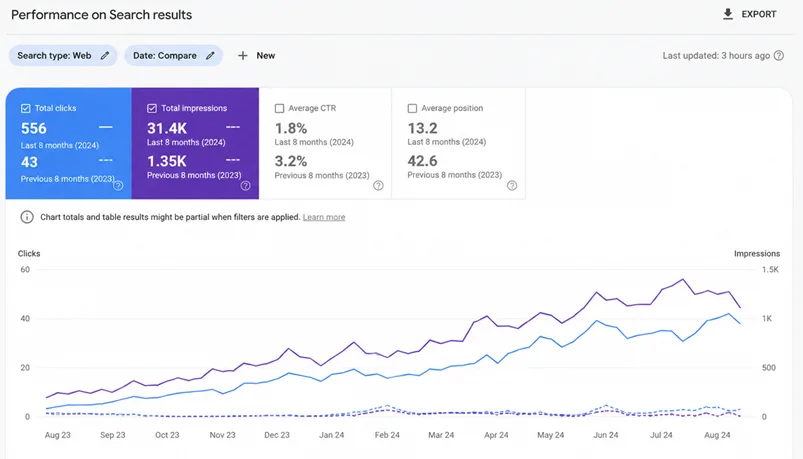
The campaign produced measurable improvements in organic visibility.
The biggest improvement was not simply an increase in traffic. The website developed stronger visibility across a wider range of relevant searches.
The campaign helped improve:
- Organic keyword visibility
- Search impressions
- Ranking positions
- Click-through opportunities
- Organic traffic
- Visibility of important service pages
- Topical relevance
- Internal authority distribution
More importantly, the SEO campaign established a repeatable process for continued growth.
Instead of depending on one or two keywords, the website began developing visibility across multiple related search terms.
Why the Strategy Worked
One of the biggest lessons from this project was that affordable SEO does not have to mean basic SEO.
A smaller SEO budget simply requires better prioritization.
VP DigiWeb focused resources on activities that could produce the highest potential impact:
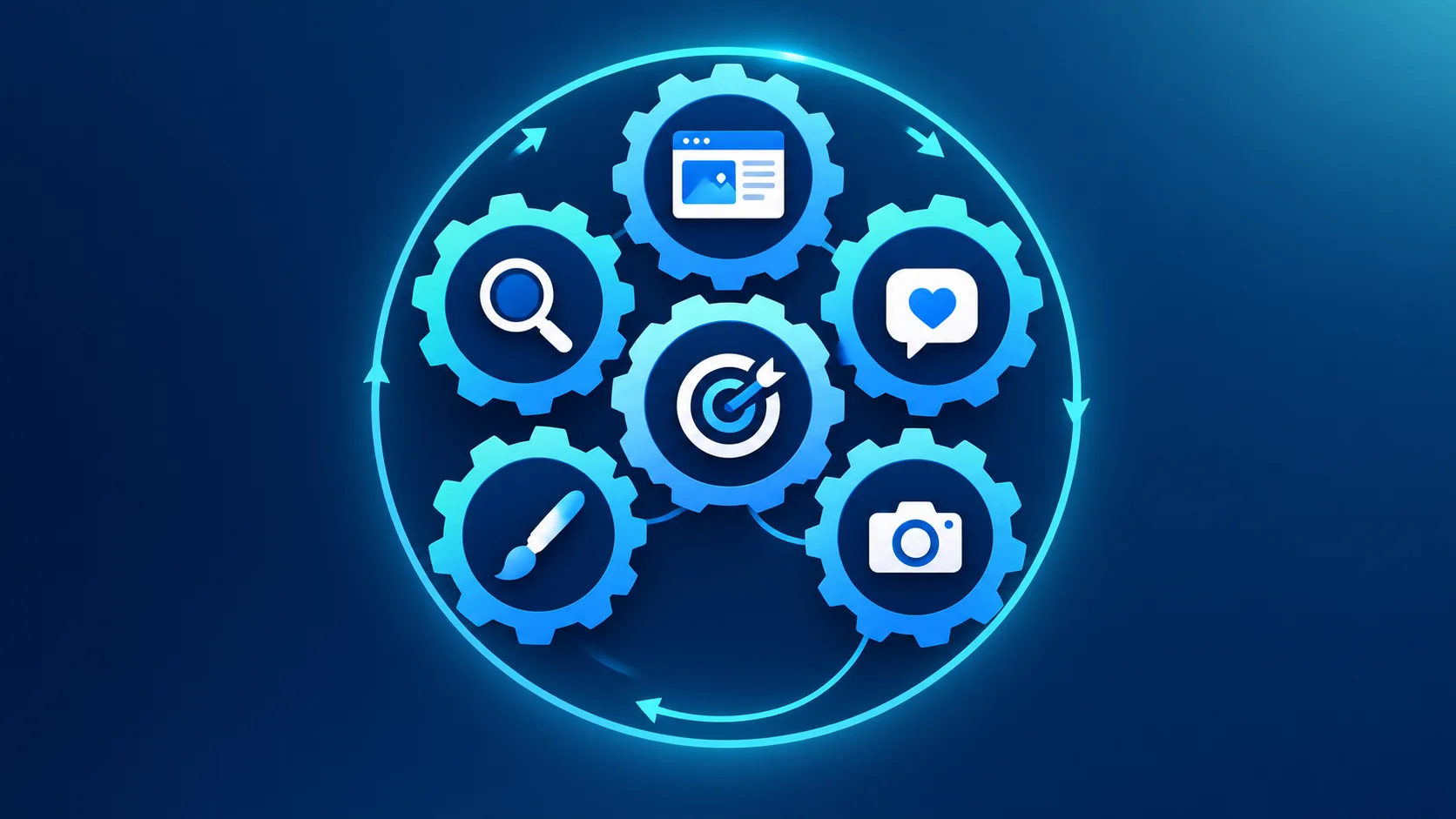
Research → Technical SEO → Keyword Mapping → On-Page Optimization → Content → Internal Linking → Authority Building → Continuous Optimization
This prevented the campaign from becoming a checklist of disconnected SEO tasks.
Every activity had a relationship with the overall search strategy.
Affordable SEO With a Long-Term Approach
Many businesses assume that affordable SEO means purchasing the cheapest possible package.
However, the cheapest SEO campaign is not always the most cost-effective.
A better approach is to identify the highest-value opportunities and prioritize them according to the business's available budget.
For startups, local businesses, service companies, and growing Indian brands, this can provide a more realistic path toward organic growth.
VP DigiWeb follows this philosophy through its affordable SEO consultant in India approach, where SEO activities can be prioritized according to website condition, competition, business objectives, and available resources.
Key Takeaways From the Case Study
This project demonstrates several important SEO lessons for Indian businesses:
1. SEO starts with research
Before changing a website, it is important to understand the market, competitors, keywords, and search intent.
2. Technical SEO creates the foundation
A technically healthy website makes it easier for search engines to crawl, understand, and index important pages.
3. Content needs a purpose
Publishing more articles is not enough. Content should support the website's overall topical and commercial strategy.
4. Internal links matter
A strong internal linking structure can connect supporting content with important commercial pages.
5. Affordable SEO requires prioritization
Businesses with smaller budgets can still compete by focusing on high-impact opportunities instead of attempting everything simultaneously.
6. SEO is an ongoing process
Search visibility changes continuously. Regular analysis and optimization are necessary to maintain and improve organic performance.
Conclusion
This case study shows how a focused SEO strategy can help an Indian business improve its organic search visibility without relying on an unnecessarily large marketing budget.
The approach used by VP DigiWeb combined technical SEO, keyword research, on-page optimization, content development, internal linking, authority building, and continuous performance analysis.
Rather than chasing short-term ranking increases, the campaign focused on creating a stronger search foundation that could support long-term organic growth.
For businesses looking for a practical SEO partner, working with an experienced SEO freelancer in India can provide direct expertise and a more focused strategy. For businesses operating with tighter budgets, a carefully prioritized affordable SEO campaign can also provide a structured path toward stronger Google visibility.
The most important lesson is simple: successful SEO is not about doing the most work. It is about doing the right work, in the right order, consistently.