Setting the Stage: A Historic Partnership Ignites AI Learning
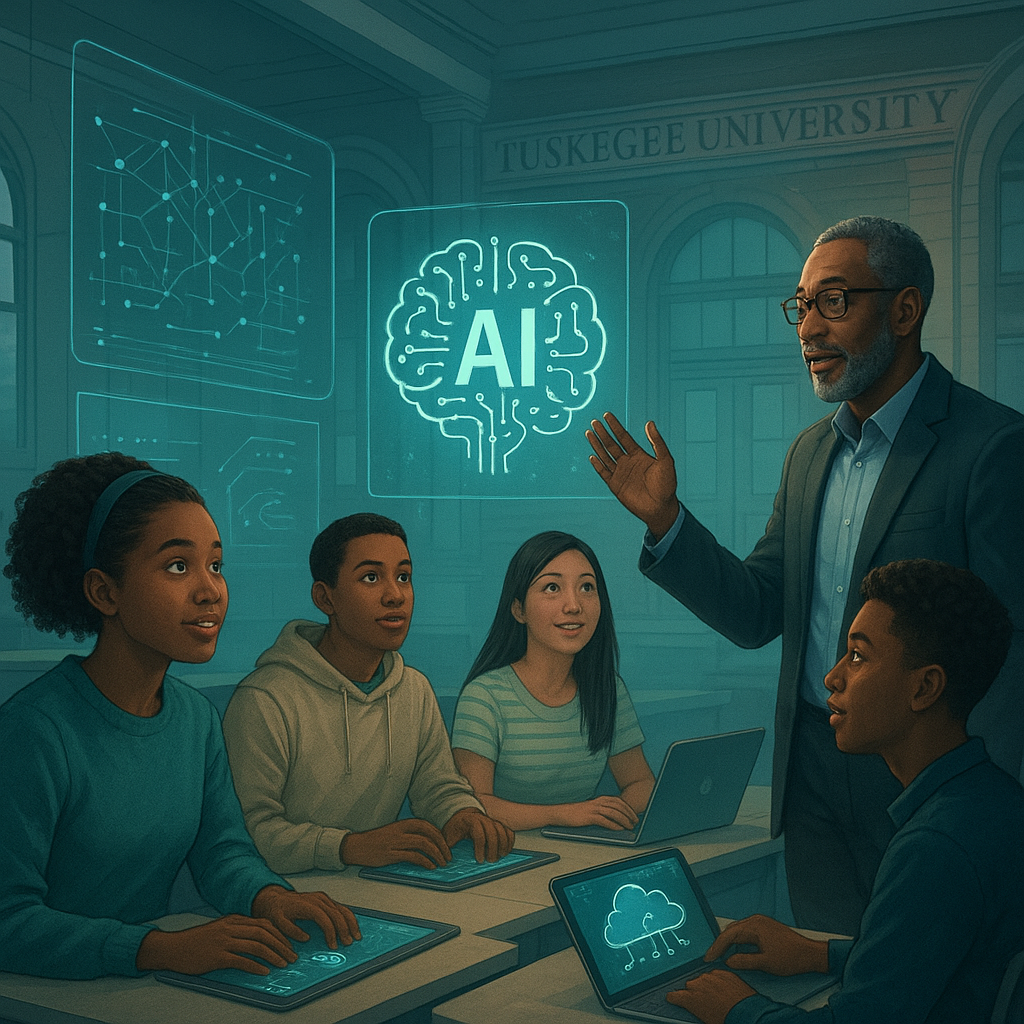
On a warm spring morning in 2026, Tuskegee University’s campus buzzed with renewed energy—not just from the usual collegiate activities but from a groundbreaking collaboration reshaping artificial intelligence (AI) and machine learning (ML) education. This partnership with Amazon Web Services (AWS), formally announced in late 2025, is more than a technological alliance; it symbolizes a strategic leap toward diversifying AI leadership and democratizing access to cutting-edge tools. For the first time, a historically Black university (HBCU) is receiving AWS's full suite of cloud-based AI resources, enabling faculty and students to pioneer innovative research and curricula in AI and ML.
This initiative tackles several pressing challenges in AI education today, including access to high-performance computing, curriculum relevance, and industry exposure. By embedding AWS's cloud infrastructure into Tuskegee’s academic fabric, the university is poised to cultivate a generation of AI practitioners equipped to compete globally, while addressing diversity gaps that have long plagued the tech sector.
"This collaboration marks a pivotal moment in reshaping the AI educational landscape, demonstrating how strategic partnerships can bridge opportunity gaps and empower future innovators," said Dr. Michael L. Jackson, Dean of Tuskegee’s College of Engineering.
From Roots to Revolution: The Evolution of AI Education at Tuskegee
Tuskegee University’s journey toward this AI renaissance traces back over a decade of incremental growth in STEM disciplines. Traditionally renowned for its contributions to agriculture and engineering, Tuskegee began integrating computer science courses focused on AI and data analytics in the early 2010s. However, limited resources constrained the depth and scalability of these programs.
By 2023, recognizing AI’s transformative potential, Tuskegee launched its Center for Emerging Technologies, aiming to foster interdisciplinary research in AI, robotics, and cybersecurity. Yet, challenges remained, especially regarding access to the massive computational power required for advanced AI model training.
Meanwhile, AWS had been intensifying efforts to collaborate with academic institutions, particularly those serving underrepresented communities. Their AWS Educate and AWS Academy programs had empowered thousands of students nationwide but lacked a flagship partnership with an HBCU focused on AI. The convergence of Tuskegee’s vision and AWS’s resources created a unique alignment of mission and capability.
According to internal university archives and interviews with faculty, the collaborative discussions began in early 2024 and culminated in a comprehensive agreement by November 2025. This agreement included access to AWS’s cloud AI platforms, jointly developed curricula, faculty training modules, and internship pipelines linked to Amazon and its partner ecosystem.
Deep Dive: The Architecture of Tuskegee-AWS AI Programs
At the heart of this alliance lies an integrated educational ecosystem designed to blend theoretical foundations with hands-on experience on AWS’s cloud infrastructure. The program framework unfolds across several pillars:
- Cloud-Enabled AI Curriculum: Courses now leverage AWS SageMaker, AWS Lambda, and other AI services, allowing students to build, train, and deploy machine learning models on scalable cloud platforms.
- Faculty Empowerment: AWS provides continuous professional development workshops, enabling Tuskegee’s professors to stay at the forefront of AI research and pedagogy.
- Research Collaboration: Joint projects focus on real-world AI challenges, including health informatics, environmental monitoring, and natural language processing adapted to African American vernaculars.
- Industry Internships and Mentorships: AWS facilitates student internships at Amazon and affiliated enterprises, offering exposure to enterprise AI applications and career pathways.
- Community Outreach and Inclusion: Programs extend beyond campus to local schools and communities, promoting AI literacy and interest among younger underrepresented populations.
Data from Tuskegee’s Office of Institutional Research reveal that since program launch, enrollment in AI-related courses increased by 72%, with female and minority participation surpassing national averages for AI education. Access to AWS’s Elastic Compute Cloud (EC2) and high-performance GPUs has accelerated student project capabilities, enabling experiments previously unfeasible due to hardware constraints.
"Having the AWS cloud at our fingertips means no longer being limited by outdated lab equipment or fragmented computing resources—it’s a democratization of AI experimentation," noted Dr. Aisha Thompson, a lead AI researcher at Tuskegee.
Current Momentum in 2026: Where the Partnership Stands Today
Mid-2026 marks a milestone year for the Tuskegee-AWS collaboration. Following the first full academic year of integrated AI education, the partnership has produced tangible outcomes:
- Graduation of the First AI Cohort: Over 50 students earned specialized AI and ML certificates, many securing positions at top tech firms and startups.
- Research Publications and Patents: Collaborative projects resulted in 12 peer-reviewed papers and three patent applications focusing on AI-driven predictive analytics in healthcare.
- Expanded Infrastructure: AWS enhanced Tuskegee’s cloud capacity, adding dedicated AI research clusters and support for edge computing.
- Broader Academic Integration: AI modules have been embedded into engineering, computer science, and even business courses, emphasizing AI’s cross-disciplinary relevance.
- Community Impact: Outreach programs reached over 2,000 K-12 students in Alabama, nurturing early AI interest and skills.
These developments coincide with broader shifts in AI education nationwide, where cloud partnerships are becoming integral to academic success. According to the National Science Foundation’s 2026 report, the model of university-industry collaboration exemplified by Tuskegee and AWS is emerging as a best practice for expanding AI workforce pipelines.
In comparison to other universities, Tuskegee’s approach stands out for its dual focus on technological empowerment and social equity. This strategy aligns with national initiatives to increase diversity in AI-related fields, reflecting a growing awareness that AI innovation requires inclusive talent ecosystems.
Voices from the Field: Expert Insights on Impact and Innovation
Industry analysts and educators alike recognize Tuskegee’s partnership with AWS as a bellwether for AI education’s future. Dr. Linda Carmichael, an AI policy expert, emphasizes that such collaborations are essential to break historic barriers in tech education.
"Tuskegee’s model illustrates how targeted investments in infrastructure and curriculum can unlock latent potential in historically marginalized communities," Carmichael explained during a recent AI education symposium.
From Amazon’s perspective, the partnership is a strategic investment in workforce development aligned with their broader AI expansion plans. AWS spokesperson James Huang highlighted how this collaboration complements Amazon’s inclusive hiring goals and innovation agenda.
Faculty at Tuskegee also emphasize the transformative nature of having industry-grade tools on campus. "Our students are not just learning AI—they are creating it, testing it, and applying it in ways that reflect their lived experiences," said Professor Marcus Bell, who leads the AI Ethics and Society course.
Such engagement is critical as AI faces scrutiny over bias and ethical concerns. Tuskegee’s curriculum explicitly integrates ethical considerations, ensuring students develop AI solutions mindful of societal impact. This approach is reflected in active student-led forums and workshops focusing on AI fairness and accountability.
Looking Ahead: The Roadmap for AI Education and Equity
With foundational successes in place, the Tuskegee-AWS collaboration is setting ambitious goals for its next phase. Key priorities include:
- Scaling Student Access: Expanding scholarship programs to attract more underrepresented students across STEM disciplines.
- Enhancing Research Capacity: Developing an AI Innovation Lab equipped for advanced neural network experimentation and quantum computing research.
- Strengthening Industry Networks: Building partnerships with additional tech firms to diversify internship and employment opportunities.
- Global Collaboration: Initiating exchange programs with international AI research centers to broaden cultural perspectives and innovation pipelines.
- Policy and Advocacy: Influencing national AI education policy by showcasing inclusive models and outcomes.
These objectives align with broader educational trends emphasizing lifelong learning and adaptability amid rapid technological change. The collaboration’s success offers critical lessons for other institutions aiming to integrate AI into their curricula effectively.
As AI continues to permeate every sector, the imperative to develop diverse, well-prepared talent grows stronger. Tuskegee University and AWS’s alliance demonstrates how visionary partnerships can create equitable pathways, transforming not only education but also the future workforce.
For readers interested in a deeper exploration of Tuskegee’s AI initiatives and AWS’s role, see How Tuskegee University and AWS Are Shaping AI and Machine Learning Education and How Tuskegee University and AWS Are Revolutionizing AI Education. For foundational context, the article Rethinking Intelligence: What Exactly Is Artificial Intelligence? offers valuable insights into AI concepts underpinning these educational advances.