
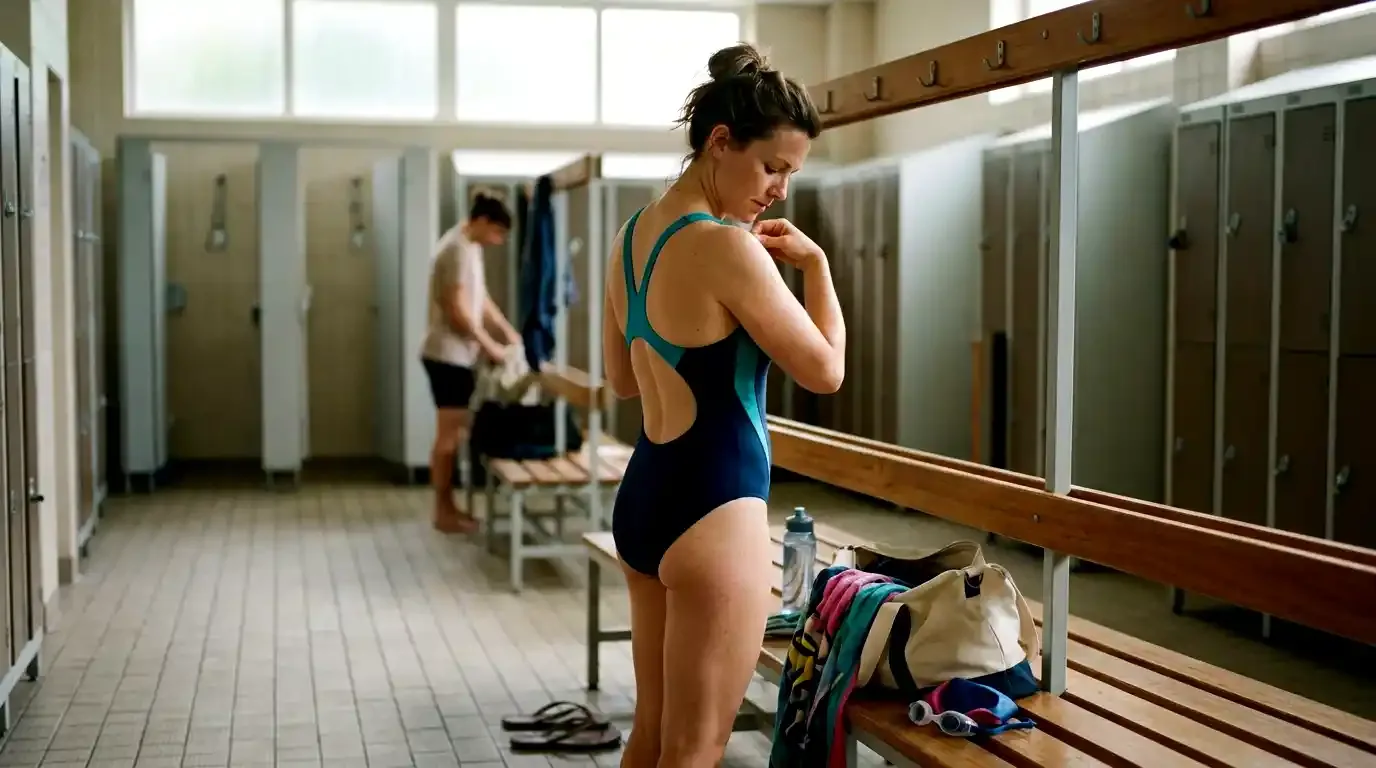
Standing in a changing room with a twisted strap, a damp towel, and a queue outside is nobody's idea of fun. Putting on a swimsuit takes about a minute once you know the order, and a good fit makes a real difference in the water.
The short answer: check the costume is the right way round, step into it with the straps down, pull it up to your hips, slide the straps over your shoulders, then adjust the chest, back and leg openings until it sits flat without digging in.
This guide covers one-piece costumes, bikinis, swimming trunks, modest swimwear and children's swimwear, along with how to tell whether a costume fits and the mistakes to avoid.
What to Know Before You Put On a Swimming Costume
A few quick checks save a lot of tugging later.
Check the size and fit before you wear it. Sizing varies between brands, so a costume labelled medium in one range can feel very different in another. If you bought it online, try it on at home before the pool trip rather than in a rush at the poolside.
Find the right side. Most costumes have a lining, and it sits against your skin. The care label is usually stitched inside the back or side seam, which gives you a quick clue. Two-piece sets often have a seam or small tag that marks the back.
Underwear. Swimwear is designed to be worn on its own, and most costumes have a built-in lining for this reason. Regular underwear is not made to cope with chlorinated water, can bunch up and may show through when wet. The exceptions are a swim brief or liner designed to go under certain styles, and swim nappies for babies and toddlers. Hygiene rules differ between pools, so check yours.
Start dry. Swimwear slides on far more easily over dry skin. If you are heading to the changing room from a shower, dry your legs and shoulders properly first. Forcing a costume onto damp skin is how straps tear and seams stretch.
How to Wear a One-Piece Swimming Costume
A one-piece is the usual choice for lessons and fitness swimming because it stays in place during movement. Here is the order that works for most people.
- Hold it correctly. Gather the costume so the straps are folded down over the front, with the back facing you.
- Step in. Put one foot through the leg opening, then the other. Hold the fabric loosely so you do not catch your toes.
- Pull up to the hips. Work the fabric upwards in small tugs, smoothing it as you go. Bunched fabric around the thighs is a sign you rushed this step.
- Bring the straps over your shoulders. Check they are not twisted, then settle the chest area in place.
- Fasten the back. If there is a zip, ask for a hand if you struggle to reach it. Tie-backs and clasps should sit snugly without pulling the shoulders back.
- Do a final check. Smooth out any wrinkles, adjust the leg openings, and make sure the straps lie flat.
Do a few practice movements before you leave the changing room: raise your arms, bend your knees, and take a few steps. If anything shifts, adjust it now rather than at the poolside.
How to Wear a Two-Piece Swimsuit or Bikini
Put the bottoms on first, as you would shorts. The waistband should sit comfortably at your hips or waist, depending on the cut, with no rolling or pinching. High-waisted styles stay put well during activity, while low-rise ones are better suited to relaxed beach days than lengths of the pool.
For the top, fasten the back first, then pull the straps into place. Halter tops tie behind the neck, bandeau styles have no straps and rely on a snug band, and triangle tops use adjustable ties. A useful trick with tie fastenings is to double-knot them, which is far easier than retying a loose bow in the water.
If you are swimming laps or taking part in lessons, a sports-style bikini top with a wider band usually stays more secure than a fashion style.
How to Wear Swimming Trunks or Jammers
Trunks and board shorts are fitted with a drawstring or an elastic waist. Tie the drawstring snugly enough that the shorts stay put when you push off the wall, and tuck the ends in so they do not trail. Many trunks have a mesh liner inside, which acts as support and means no other underwear is needed.
Jammers extend to the knee and fit closely, so they usually go on like a pair of tight shorts. Briefs sit higher on the hip and are fitted more snugly still. Both are popular for training because they create less drag, though a looser style is perfectly fine for casual swimming and beginner lessons.
How to Wear Modest Swimwear
Modest swimwear, including burkinis, swim leggings and rash guards, is worn by swimmers for religious, cultural, comfort or sun-protection reasons. Layering matters because every layer takes on water.
Start with the base layer: a one-piece or fitted swimwear underneath if the design needs it. Add swim leggings or a full-length suit, then the tunic or top. Choose fabrics that are made for swimming, as cotton absorbs a lot of water and becomes heavy.
A swim hijab should sit firmly under the chin or at the nape of the neck with no loose fabric floating around the face. Many people find a fitted cap-style hijab easier than a wrapped scarf in the water. Whatever you wear, do a test swim on a quiet day to check that nothing rides up or restricts your breathing, arms or legs.
How to Help Children Wear a Swimming Costume
Putting a swimsuit on a wriggling child is a different challenge altogether. Few things test a parent's patience like a damp child and a clingy costume.
Choose styles that are easy to pull on, such as swim shorts with a soft elastic waist or a one-piece with a stretchy fit and a simple back. Zips at the back can be tricky for younger children to manage alone, so they are worth saving for when your child is a little older.
Getting them changed before they get wet saves the biggest headache. At home, put the costume on under their clothes so they are ready on arrival. After the session, a dry towel and a loose, warm layer help more than a rush to change. Changing a cold, tired child is much easier when the costume has been loosened first, and the towel is already around their shoulders.
Babies and toddlers who are not yet toilet trained will need a reusable swim nappy or a disposable one, with the costume or trunks worn over it. The nappy should fit snugly at the legs and waist, as that is what keeps accidents contained.
Fit matters even more once lessons begin. Children in structured swimming programmes spend a good deal of time kicking, floating and practising arm movements, and baggy shorts or a loose costume drag in the water and make all three harder. A snug, stretchy fit is usually the more comfortable choice. Every child is different, though, so let them try a few styles at home before the first lesson and see which one they move in most easily.
How to Know If Your Swimming Costume Fits Properly
A good fit supports you without restricting movement. When you try one on, move around in it. Reach overhead, crouch, and rotate your shoulders. The costume should stay in place, the straps should not slip, and the fabric should feel snug without leaving deep marks on your skin.
Keep in mind that fabric loosens with use, particularly after repeated exposure to chlorine, so a costume that is a little snug in the shop may feel right after a few swims.
Fit problemLikely reasonWhat to tryStraps slipping offCostume too large or straps stretchedAdjust the straps, or size downFabric gaping at the chest or backCut does not suit your shapeTry a different style or a smaller sizeMarks or digging at shoulders and legsCostume too smallMove up a sizeRiding up at the legsCut too narrow or wrong styleTry a different leg openingBagging or bubbling in the waterFabric stretched from age or wearReplace the costumeCommon Mistakes When Wearing a Swimsuit
Most problems come down to a handful of habits:
- Buying the wrong size and hoping it will stretch or shrink
- Putting the costume on back to front or inside out
- Skipping the adjustment before heading to the pool
- Pulling it on over wet skin
- Wearing a casual or fashion costume for regular lessons or lengths, when a sturdier training style would last longer and stay put
Tips to Make Your Swimming Costume Last Longer
Chlorine, salt water, sunscreen, and heat all wear swimwear down over time. A quick rinse in fresh water after every swim helps a great deal. Wash gently by hand in cool water with a mild detergent, avoid wringing it out, and dry it flat in the shade. Direct sunlight and tumble dryers will break down the elastic faster than anything else.
Final Thoughts
Wearing a swimming costume properly comes down to a few simple habits: check the size, put it on the right way round, adjust before you get wet, and look after it afterwards. A costume that fits well lets you focus on the swimming rather than on the straps. If you are choosing a style for the first time, our guide to selecting the right swimwear is a good next read.
FAQs
Should I wear underwear under a swimming costume?
In most cases, no. Swimwear usually has its own lining. Wearing standard underwear can feel uncomfortable and may show through when wet.
What is the right way to put on a swimming costume?
Step into it with the straps down, pull it up to your hips, then bring the straps over your shoulders and adjust the fit.
How tight should a swimsuit be?
Snug enough to stay in place while you move, but not so tight that it leaves marks or limits your breathing or movement.
Can I wear a bra inside a swimsuit?
Regular bras are not designed for water and can become heavy and uncomfortable. Swimwear with built-in support or a sports-style swim top is a better choice.
What is the best costume for a first swim?
A simple, well-fitted style that you feel comfortable in. For lessons, a one-piece or fitted trunks tend to stay put best.
How do I put on a wet swimsuit?
Roll the fabric slowly up your legs rather than yanking it, and dry your skin with a towel first if you can. Do not force it, as that can tear the seams.