
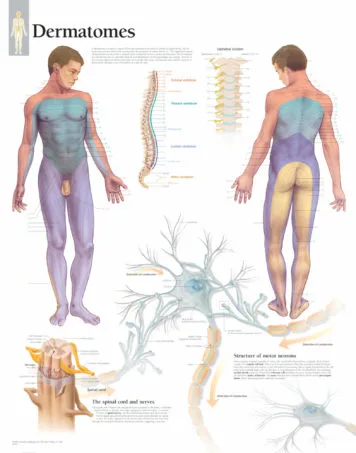
Every anatomy student eventually learns the same lesson. You can survive one exam by cramming, but you cannot build lasting knowledge that way. The subject is simply too layered. Bones connect to muscles, muscles connect to nerves, nerves connect to function, and suddenly, one forgotten detail throws off your understanding of an entire system. Students often mistake familiarity for mastery because they recognize terms while reading notes late at night. Then the exam starts, the diagrams appear, and everything blurs together. Anatomy punishes shallow memorization almost immediately.
The Brain Retains Visual Information Differently
Repetition Works Better Than Marathon Study Sessions
Long study sessions feel productive because they are exhausting, but exhaustion is not the same thing as retention. Most anatomy students would learn more from twenty focused minutes repeated daily than from a six-hour panic session before an exam. The brain stores information more effectively when exposure happens consistently over time. That is especially true for anatomy because the material builds on itself constantly. Once foundational structures become familiar, everything else starts fitting together more naturally.
Students who retain anatomy well usually follow a few simple habits:
- Review visual material every day
- Study one system thoroughly before jumping to another
- Test recall actively instead of rereading notes passively
- Focus on anatomical relationships, not isolated labels
- Revisit older material regularly instead of abandoning it after exams
Why Spatial Understanding Changes Everything
A surprising number of students can explain what an organ does, but cannot confidently place it within the body. That disconnect creates problems later, especially during labs and clinical coursework. Anatomy depends heavily on orientation. You need to understand where structures sit, what surrounds them, and how they relate physically to nearby systems. A detailed body organs chart helps bridge that gap because it presents anatomy as a connected physical structure rather than scattered information trapped inside textbook pages.
Turning Passive Study Into Active Recall
One of the biggest mistakes students make is confusing exposure with learning. Looking at diagrams repeatedly without testing yourself creates a false sense of confidence. Real retention comes from retrieval. Cover the labels. Identify structures from memory. Trace pathways mentally before checking the answers. That small struggle to recall information is what strengthens memory over time. Students who practice active recall consistently usually notice something interesting after a while. Anatomy starts feeling less like memorization and more like recognition.
The Study Environment Matters More Than People Think
Study spaces quietly shape learning habits. If anatomy only appears during stressful cram sessions, the subject begins feeling mentally heavy before studying even starts. Keeping clear visuals nearby changes that relationship. Seeing important structures repeatedly throughout the day reinforces familiarity without requiring extra effort every single time. Scientific Publishing has produced educational visuals that work particularly well for this kind of long-term study because the illustrations prioritize clarity and readability instead of cluttering every inch of space with unnecessary detail.
Large visuals also solve a practical problem that textbooks rarely address. Small diagrams flatten anatomy into cramped illustrations that are difficult to interpret quickly. Full-sized references allow the eye to follow pathways and relationships naturally. That difference sounds minor until you spend weeks trying to distinguish crowded nerves, vessels, and muscle groups inside a tiny printed figure.
Conclusion
Long-term anatomy retention is rarely about studying harder. More often, it comes down to studying in a way that actually matches how the brain processes complex visual information. Understanding is created by consistent review, active recall, and repeated exposure, and it is something that lasts much beyond the duration of a single exam week. If you feel as though your present study regimen consists of unending memorizing followed by constant forgetting, it may be time to reevaluate the approach. If you want to transform anatomy from something you cram into something you actually understand and remember, adding well-designed anatomy charts to your learning environment might be of great assistance.