
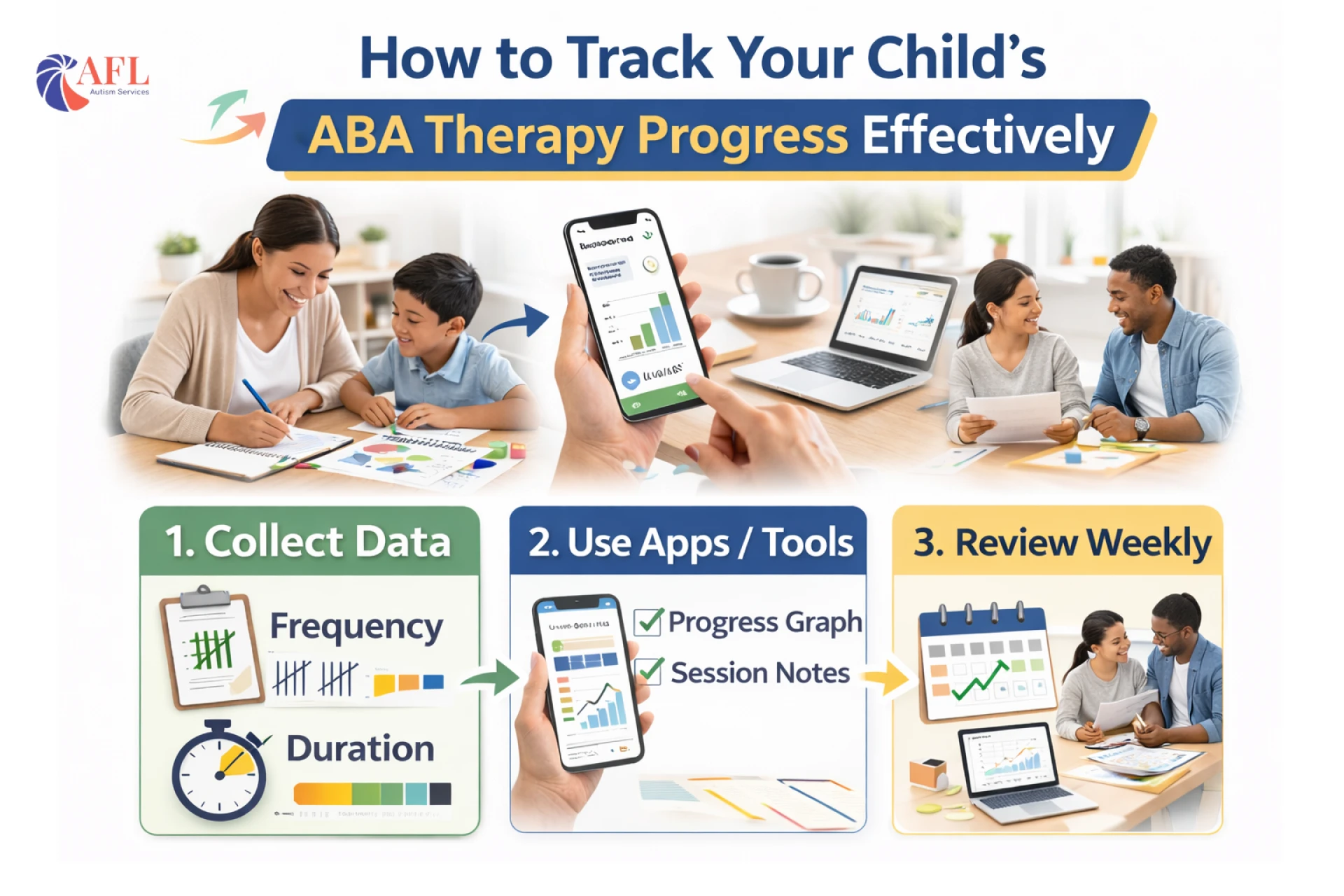
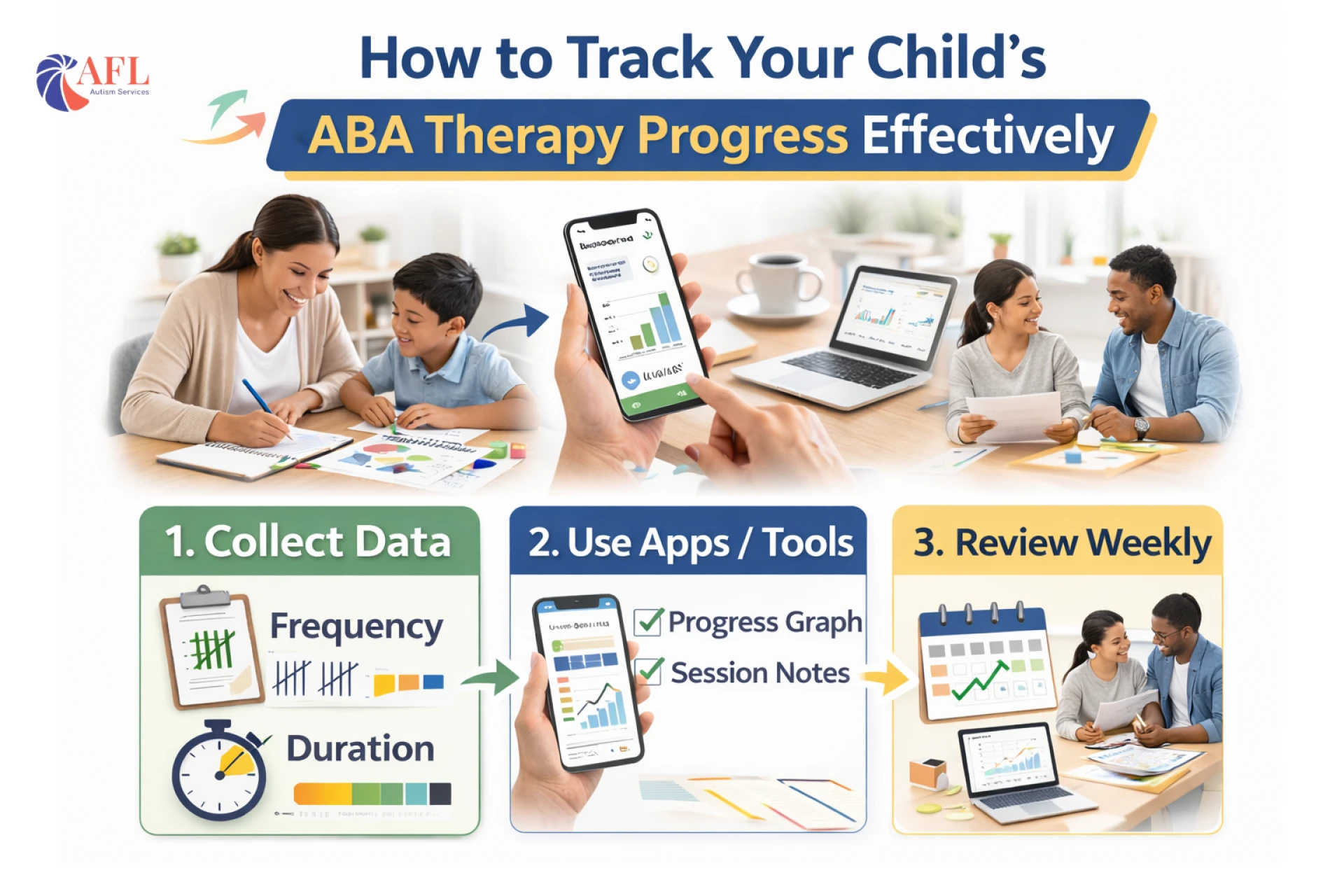
Tracking your child's progress in ABA therapy gives you clear insights into their growth. At Adapt For Life - AFL Autism Services, we help parents like you turn data into real confidence.
Why Tracking Matters?
Parents often feel lost without a way to measure ABA therapy results. You see small changes at home, but how do you know if therapy truly works? Reliable tracking builds trust in the process and spots areas needing tweaks. It keeps everyone focused on goals, from reducing tantrums to building social skills.
Good tracking also strengthens your bond with therapists. When you share notes, the team adjusts plans faster. One parent I worked with noticed her son's eye contact improving after just four weeks of consistent logs. Have you ever wondered if those daily wins add up?
Key Data Collection Methods
ABA therapy relies on simple, proven ways to record behaviors. Start with frequency recording: count how often a behavior happens, like hand-flapping or saying "please." This sets a baseline to watch for drops or gains.
Duration recording times how long behaviors last, useful for focus during play. Latency measures the delay between a prompt and response, like waiting for a child to pick up a toy after you ask. Use a notebook or app for quick entries right after sessions. These methods make progress visible over time.
Tools like checklists or graphs turn numbers into stories. For example, plot tantrums on a chart with weeks on one axis and frequency on the other. Parents love seeing the line trend downward.
Tools and Apps to Use
Skip paper if it feels overwhelming; tech makes tracking easy. Apps like Catalyst or ABA Skills let therapists log data in real time, which you can access anytime. They graph trends automatically, so you spot patterns without math.
Free options work too. Google Sheets handles basic charts, or try phone notes for daily journals. Note new words, better listening, or fewer meltdowns. Video short clips of skills in action for review later. What tools have you tried so far?
At Adapt For Life - AFL Autism Services, our team shares digital reports weekly. This keeps you in the loop without extra work on your end.
Involve the Whole Team
Progress tracking shines with collaboration. Share your home observations during ABA therapy sessions. Therapists value details like how your child reacts to siblings or handles bedtime.
Regular meetings, even quick calls, align everyone. Ask for progress reports tied to goals, like mastering five new words. Parent feedback shapes adjustments, ensuring therapy fits real life. One family celebrated when their son generalized a skill from sessions to school.
Signs of Progress at Home
Look beyond session data to everyday wins. Does your child make more eye contact during meals? Are routines smoother, with less frustration? These signal ABA therapy success.
Track social gains too, like joining playdates willingly. For speech therapy for autism, note new sounds or phrases used spontaneously. Community autism services often highlight these milestones in group shares. Celebrate small steps; they build momentum.
Create a Parent Journal
Grab a notebook and make it routine. Jot one win, one challenge, and one observation daily. Over months, flip back and see growth you might miss otherwise.
Include photos or tallies. "Day 15: Used signs for water three times." This journal empowers you and gives therapists gold for planning. Is journaling part of your routine yet?
Graph and Review Data
Turn raw numbers into visuals. Graphs show trends clearly, like attention span growing from two to ten minutes. Review monthly to decide if goals need updating.
Use free tools online for line charts. X-axis for time, Y-axis for behavior count. Share these at team meetings. Data-driven changes keep ABA therapy effective.
Common Challenges and Fixes
Parents hit roadblocks, like forgetting to log or doubting data. Start small: track just two behaviors weekly. Consistency beats perfection.
If progress stalls, check for overlaps with speech therapy for autism or other supports. Our team at Adapt For Life troubleshoots these daily. What hurdles slow your tracking?
Another issue: overwhelming details. Focus on three to five goals max. Anecdote time: A mom tracked only mealtime compliance first. Within weeks, her son sat calmly, boosting her motivation.
Long-Term Tracking Strategies
Think yearly reviews alongside weekly checks. Annual assessments measure big leaps, like entering mainstream preschool. ABA therapy evolves, so update baselines often.
Blend quantitative data with stories. Video reviews capture nuances numbers miss. Stay connected via email updates from your provider.
Expert Tips from AFL
As a 10-year SEO specialist turned content advisor for autism services, I've seen what works. Prioritize actionable insights over fluff. Parents rank blogs like this high because they solve real pains.
Use community autism services for peer tips. Join local groups to swap tracking hacks. At Adapt For Life - AFL Autism Services, we offer free progress audits.
Question for you: Ready to see your child's full potential? Our ABA therapy programs include parent training and custom tracking tools.
Take Action Today
Do not wait for the next session. Start a simple log tonight and share it with your therapist. Visible progress reduces stress and fuels hope.
Contact Adapt For Life - AFL Autism Services for a free consultation. Our experts tailor ABA therapy to your family, with built-in tracking from day one. Call or message now, and let's chart your child's path forward.
FAQS
What are the main ways to collect ABA therapy data?
Frequency counts behaviors like requests per day, duration tracks focus time, latency measures prompt delays, and intervals check 5-minute windows. Start with a baseline week for clear trends.
How does VB-MAPP help track progress?
VB-MAPP assesses 170+ milestones across barriers like language and social skills, from basic imitation (Level 1) to advanced responding (Level 2). Use it for baselines and mastery at 80% accuracy over 3 sessions.
What's the difference between VB-MAPP, ABLLS-R, and ATEC?
VB-MAPP covers overall development, ABLLS-R drills into language and academics, and ATEC rates autism symptoms from home. AFL integrates them free during intakes.
What are the best apps for ABA tracking in 2026?
RethinkBH offers offline collection and AI graphs for teams, while Catalyst syncs real-time parent data. Start simple with Google Sheets if apps feel overwhelming.
How often should you review ABA therapy progress?
Check graphs weekly for quick trends and do full reviews monthly to update goals. Mastery means 80% success over 3 sessions with varied therapists.
What are signs of ABA progress at home?
Look for steady eye contact, calmer routines, new words in speech therapy for autism, or skills used outside sessions like at the park. Track generalization for real wins.
How do you overcome common tracking challenges?
Set phone reminders for forgotten logs, reassess with VB-MAPP if stalled, and limit to 3 goals to avoid overwhelm. AFL offers free audits to troubleshoot.
What success rates can parents expect with ABA therapy?
90% of tracked kids show communication gains, and 40-50% early starters reach near-peer levels. Consistent logging with tools like our AFL template makes the difference.