
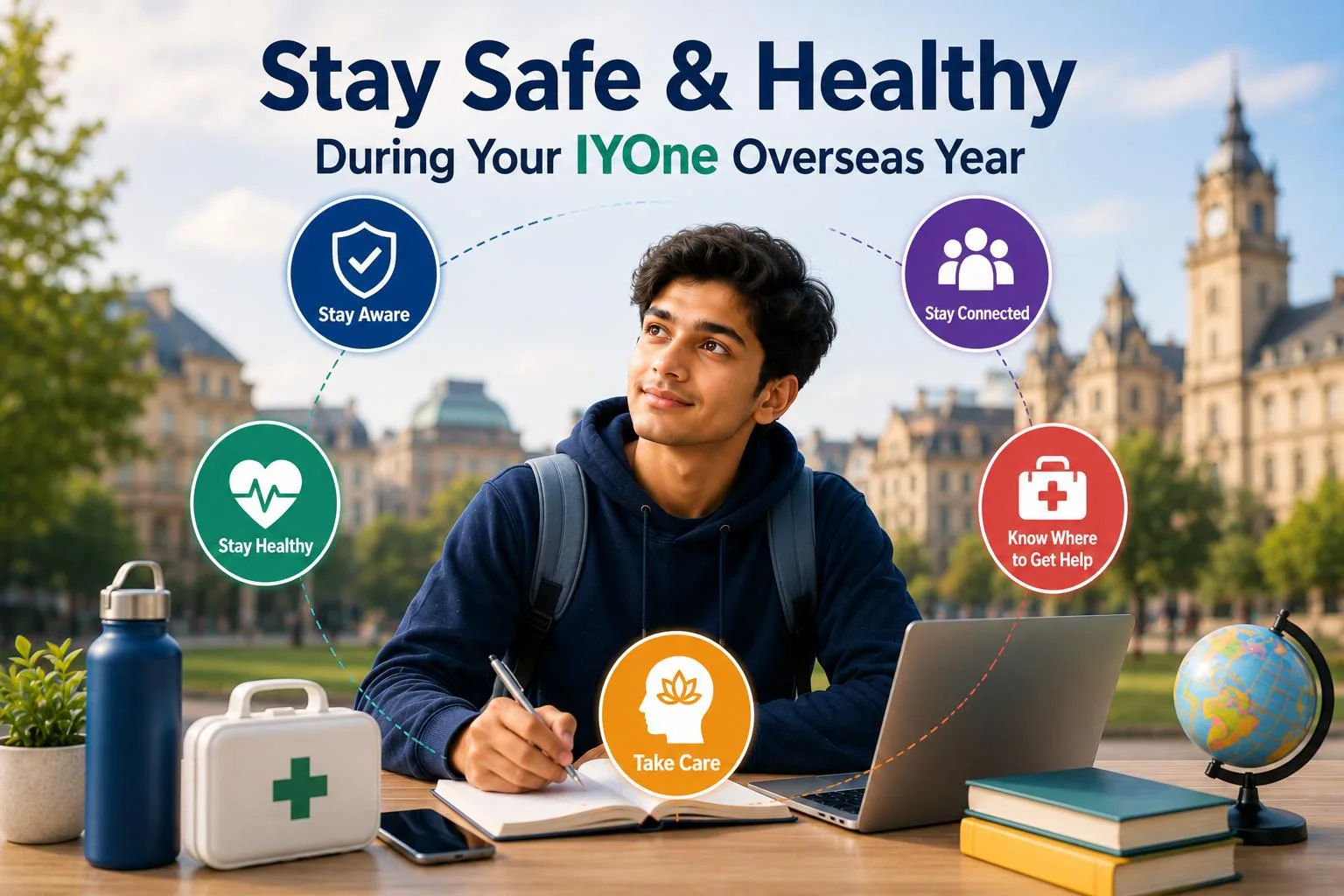
Starting an International Year One overseas can be exciting, but it also puts you in charge of many things at once. You may need to manage university work, housing, food, transport, money, healthcare, and a new social setting without the support you had at home. Good preparation helps you stay well and stops small problems from turning into bigger ones.
An International Year One usually combines first-year degree study with added academic and language support for international students. Students who meet their programme requirements can normally progress to the next stage of their degree. This means health and safety can affect academic progress too. Poor sleep, illness, missed classes, money problems, or scams can quickly make university life harder.
Why Health and Safety Matter During International Year One
The first few weeks abroad are often the hardest because almost every routine feels new. You may still be learning how to reach campus, use public transport, shop for food, contact a doctor, and follow local rules. At the same time, lectures, coursework, and assessments may already be starting.
Some pathway programmes also use attendance and academic performance as part of their progression requirements. Missing classes because of illness may therefore become more than a health problem. Read your programme handbook early and find out who you should contact when sickness or another serious issue affects attendance.
Safety does not mean avoiding normal student life. It means knowing what to do before something goes wrong. A few good systems can make living abroad far easier.
Prepare Before You Leave Home
Your safety plan should start before your flight. Check official health and travel advice for the country where you will study. Find out what healthcare cover you need, whether any vaccinations apply to you, and whether you can legally bring your regular medicines into the country.
Keep secure copies of your passport, visa, insurance details, prescriptions, university documents, and emergency contacts. Store one digital backup separately from your phone and luggage. Losing one bag should not mean losing every important document you have.
Health or travel insurance also needs careful checking. Do not choose a policy only because it is cheap. Look at medical treatment, hospital care, existing medical conditions, prescription needs, lost belongings, emergency transport, and return-home costs where they apply.
Make Your First Days Abroad Count
Use your first few days to set up a simple safety system. Save the correct local numbers for police, ambulance, and fire services. Add campus security, accommodation support, your international student office, and your insurance emergency number to your contacts.
Find your nearest pharmacy and learn where you would go for routine medical care. Walk your normal route from your accommodation to campus during daylight. Check another route as backup and learn which transport services you can use after evening classes or social events.
Tell a trusted person that you have arrived safely and give them your current contact details. You do not have to report every place you visit. Someone you trust should simply know where you are living and how to reach you during an emergency.
Learn How Local Healthcare Works
Do not wait until you become ill to learn how the healthcare system works. Find out whether you need to register with a doctor, university health centre, public clinic, or private healthcare provider. You should also know which service handles common illnesses, urgent problems, and medical emergencies.
The process differs between countries. Students studying in England, for example, can register with a local GP, and university health centres may provide a convenient option. Another destination may have completely different registration, insurance, or payment rules.
Save your healthcare information somewhere easy to reach. Find a nearby pharmacy as well. Spending a few minutes setting this up at the beginning of your International Year One can save a great deal of stress later.
Manage Prescription Medicines Carefully
Prescription medicine needs extra planning when you study overseas. A medicine that is commonly prescribed in your home country may be restricted somewhere else. Some countries also limit how much medicine you can bring or ask you to carry a prescription or medical certificate.
Speak with your doctor before travelling when you take regular medication. Keep medicine in its original packaging and carry supporting medical documents when required. Learn its generic name too, since the brand you use at home may not exist in your study destination.
Plan refills before your current supply becomes low. Find out whether you need a local prescription or medical appointment. Avoid buying prescription drugs through unknown websites or social media sellers.
Protect Your Sleep, Food, and Physical Health
Many student health problems begin with poor routines. Late-night studying, missed meals, heavy caffeine use, and too little sleep can make lectures harder to follow. Over time, the same habits may affect memory, mood, attendance, and motivation.
Build your sleep schedule around your classes. Keep simple food at home for busy weeks and learn a few affordable meals you can cook easily. Regular walking, sport, gym sessions, or short workouts can also stop university life from becoming hours of sitting between classes and assignments.
Your routine does not have to be perfect. It needs to be realistic enough that you can continue it during exams and busy coursework periods. Stable habits usually work better than strict plans that last only a few days.
Take Mental Wellbeing Seriously
Homesickness, loneliness, academic pressure, and culture shock can affect students who move abroad. Feeling unsettled during the adjustment period is common, especially when you are also adapting to university-level study. The problem becomes more serious when stress begins to affect sleep, concentration, appetite, attendance, or normal tasks.
Use university support early. Your tutor may help with academic concerns, while student welfare teams, international student advisers, counselling services, or peer-support groups may help with personal issues. You do not need to wait until the situation becomes severe before asking someone for support.
Build some local connections as well. Join a society, course group, sports activity, volunteering project, or student event. You do not need dozens of friends; a few dependable people can make studying abroad feel much safer and less isolating.
Make Your Accommodation a Safe Base
Your accommodation should be somewhere you can rest and study without worrying about basic security. Check locks, building entrances, fire exits, smoke alarms, and emergency procedures when you move in. Find out who to contact if your lock breaks or another housing problem makes you feel unsafe.
Keep your passport, bank cards, university documents, and valuable electronics in sensible places. Do not leave building doors open for strangers. Students sharing accommodation should also agree on simple habits, such as locking doors and reporting lost keys quickly.
Take rental scams seriously as well. Check the property, payment details, contract, and person receiving your money before sending a large deposit. Pressure to pay immediately should make you stop and verify everything again.
Travel Safely Around Your New City
Learn your public transport system during daylight before depending on it late at night. Check when buses or trains stop running and which taxi or ride services are trusted locally. Keep enough phone battery and mobile data to use maps or contact someone when your plans change.
Use a simple three-part transport plan: your normal route, a backup route, and an emergency ride option. This becomes useful after late lectures, bad weather, cancelled transport, or social events. Planning how you will return home before going out is easier than solving the problem when you are tired.
Stay aware of your belongings in crowded stations, buses, nightlife areas, and tourist locations. Carry only the cash you need. When you go out with friends, agree on how each person plans to return home.
Watch for Scams and Digital Theft
International students may attract scammers because newcomers are less familiar with local immigration, banking, housing, and university systems. Criminals may pretend to represent immigration authorities, banks, universities, landlords, employers, or government offices. They often try to create panic and demand fast payment.
Use the STOP rule when something feels wrong:
- Sender: Check who is really contacting you instead of trusting the displayed name or phone number.
- Threat: Be suspicious when someone threatens arrest, deportation, account closure, or another serious result unless you pay immediately.
- Official check: End the conversation and contact the organisation yourself through a known official channel.
- Payment: Treat requests for unusual payment methods, account access, passwords, or verification codes as warning signs.
Protect your university email with a strong password and multi-factor authentication when offered. Be careful with fake jobs, rental listings, tuition messages, and banking requests. Never let a stranger move money through your bank account in return for payment.
Be Smart About Parties and Social Events
Studying overseas should still include meeting people and enjoying your new city. Before going out, know where you are going, who you are meeting, and how you plan to get home. Keeping your phone charged and staying connected with trusted friends makes unexpected situations easier to handle.
Keep control of your drinks and belongings. Learn the country's laws on alcohol, smoking, drugs, and public behaviour because they may differ greatly from the rules at home. Cultural differences also do not mean you have to accept harassment, pressure, or behaviour that makes you uncomfortable.
Know how your university handles harassment or serious safety concerns. Campus security, accommodation teams, student welfare staff, or local authorities may all have a role depending on what happened. Reporting a serious issue early gives you a better chance of getting the right support.
Know What to Do When Illness Affects Study
Getting sick does not automatically ruin an International Year One. Problems often become worse when students disappear from classes and say nothing until coursework has piled up. Contact the right healthcare service and tell your university when illness affects attendance, assignments, or exams.
Ask what evidence your institution needs and how its absence or mitigating-circumstances process works. Speak with your tutor about the work that matters most. Deal with urgent assessments and missed course material before less important tasks.
Your institution's own rules matter most here. Some pathway programmes require students to meet both academic and attendance standards before progression. Never assume another student's programme follows exactly the same policy as yours.
Create a Personal Emergency Plan
Keep a short emergency record on your phone and another safe backup. Update it after you move accommodation or change important contacts.
Your plan should include:
- Emergency services: Local police, ambulance, and fire numbers.
- University help: Campus security, your tutor, International Year One support, and student welfare.
- Medical help: Doctor or clinic, pharmacy, and insurance contact details.
- Trusted people: At least one local person and one trusted contact at home.
- Safe transport: A reliable backup option when your normal route is unavailable.
Do not store passwords, banking PINs, or other highly sensitive details in an unlocked note. The purpose of the emergency plan is fast access to useful contacts, not keeping every private record in one place.
Use the SAFE Approach Throughout Your International Year One
A simple way to remember the main advice is SAFE.
S — Set up before departure. Prepare healthcare documents, insurance, medication, emergency contacts, and destination information.
A — Adopt healthy routines. Protect your sleep, food, exercise, study schedule, transport habits, and personal security.
F — Find support early. Contact healthcare services, tutors, student advisers, accommodation staff, or trusted friends before a problem grows.
E — Escalate serious problems. Report illness, scams, unsafe housing, harassment, or academic disruption instead of trying to manage serious problems alone.
Final Thoughts
Staying safe and healthy during an International Year One overseas year comes down to preparation, sensible routines, and early action. Learn how local healthcare works, protect your documents and money, plan safe transport, look after your physical and mental health, and know who can help you at university.
Do not treat safety as a checklist you read once before your flight. Review your situation after illness, exams, a move, or another major change. Small problems are much easier to deal with before they begin affecting several parts of your life.
A successful International Year One is not only about passing modules. It is also a year of learning how to live independently in another country. Good habits give you more time and energy for your main goal: staying healthy, progressing academically, and moving confidently into the next stage of your degree.