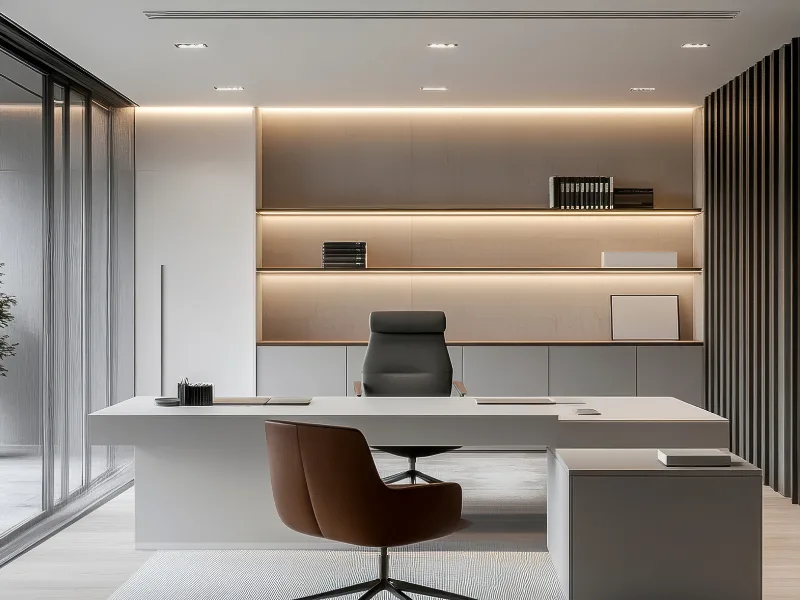
Your office is more than a place where employees sit and work. It reflects your brand, influences employee experience, supports collaboration, and can even shape how clients perceive your business. That is why choosing the right firm for your office interior in Delhi is an important business decision rather than simply a design exercise.
Delhi and the wider NCR region have a diverse commercial landscape, from corporate offices and startups to consulting firms, creative agencies, and established enterprises. Each workplace has different requirements for space planning, branding, technology, privacy, collaboration, and employee comfort.
But with so many interior designers and design studios available, how do you know which one is right for your project?
This guide explains the key factors to consider when selecting an office interior design firm Delhi NCR, including portfolio quality, industry experience, design approach, budget management, project execution, communication, and post-completion support.
Why Choosing the Right Office Interior Firm Matters
A poorly planned workplace can create practical problems long after construction is complete. Insufficient storage, inefficient circulation, poor lighting, inadequate meeting spaces, and excessive noise can affect everyday productivity.
On the other hand, a well-designed office can make better use of available space while creating an environment that supports the way your employees actually work.
A professional design firm can help with:
- Efficient space planning
- Reception and client-facing areas
- Workstations and private offices
- Meeting and conference rooms
- Employee breakout areas
- Lighting and electrical planning
- Storage solutions
- Brand integration
- Material and furniture selection
- Ergonomics and workplace functionality
- Renovation and execution management
The right partner should therefore understand both design and business requirements.
1. Start by Defining Your Office Requirements
Before approaching a design firm, clarify what you want to achieve.
Are you moving into a new office? Expanding an existing workplace? Renovating an outdated interior? Reducing space requirements? Creating a more collaborative environment?
Your objectives will influence the type of designer you need.
For example, a startup may prioritize flexibility and cost efficiency, while a corporate organization may require executive cabins, multiple conference rooms, formal reception areas, and sophisticated branding.
Prepare basic information such as:
- Office size and location
- Number of employees
- Expected future expansion
- Required departments
- Number of meeting rooms
- Storage requirements
- Approximate budget
- Desired completion timeline
- Brand and design preferences
Having these details ready makes conversations with potential firms much more productive.
2. Review Their Office Interior Design Portfolio
A portfolio is one of the best ways to evaluate a firm's capabilities.
Do not simply look for attractive photographs. Examine whether the firm has completed projects similar to yours in terms of scale, industry, budget, and functionality.
For example, if you operate a 100-person corporate office, a portfolio dominated by small residential projects may not provide enough evidence of commercial workplace expertise.
Look for examples involving:
Corporate Offices
Corporate workplaces often require a balance between formal spaces, employee areas, meeting rooms, technology, and brand identity. Experience with corporate office design Delhi projects can be particularly valuable for businesses seeking a professional and scalable environment.
Startup and Flexible Workspaces
Startups may need adaptable workstations, collaboration zones, breakout areas, and layouts that can accommodate growth without requiring frequent reconstruction.
Office Renovation Projects
If you are upgrading an existing workplace, ask to see previous office renovation Delhi projects. Renovation requires additional expertise because the designer must work around existing structures, electrical systems, flooring, services, and building limitations.
3. Check Experience in Delhi NCR
Local experience can make a significant difference.
An experienced office interior design firm Delhi NCR is more likely to understand the practical considerations involved in commercial projects across Delhi, Gurgaon, Noida, and surrounding areas.
Ask prospective firms whether they have worked in your building or commercial complex before. Familiarity with building regulations, management procedures, access restrictions, working hours, material movement, and installation requirements can make execution smoother.
However, local experience should complement—not replace—design expertise. A firm should demonstrate both strong creative thinking and reliable project execution.
4. Understand Their Design Process
A professional design firm should be able to clearly explain how your project will move from concept to completion.
A typical process may include:
- Initial consultation and requirement gathering
- Site measurement and assessment
- Space planning
- Concept development
- 3D visualization or design presentation
- Material and finish selection
- Detailed drawings
- Cost estimation
- Approvals and coordination
- Execution and site supervision
- Quality checks
- Handover
Ask what happens at each stage and who will be responsible for decisions.
A clear process reduces confusion and helps prevent expensive changes during construction.
5. Evaluate the Qualifications and Team
The person presenting the design may not be the person managing your project.
Ask about the actual team that will work on your office.
Depending on the project, this may include architects, interior designers, project managers, electrical consultants, HVAC specialists, civil contractors, furniture specialists, and site supervisors.
You should also understand who will be your primary point of contact.
A strong workplace design consultant Delhi should be able to connect aesthetics with practical workplace requirements instead of focusing only on visual appeal.
6. Compare Quotes Carefully—Not Just Prices
One of the most common mistakes businesses make is selecting an interior firm solely because it provides the lowest quotation.
Two firms can quote very different prices for apparently similar projects because their specifications may differ.
When comparing proposals, check:
- Design fees
- Civil work
- Flooring
- Ceiling
- Electrical work
- Lighting
- HVAC requirements
- Furniture
- Partitions
- Paint and finishes
- Branding elements
- Project management
- Installation
- Taxes
- Contingency costs
Ask whether the quotation is itemized and what is excluded.
A transparent proposal makes it easier to compare firms fairly and reduces the possibility of unexpected costs later.
7. Ask About Materials and Vendors
The materials used in your office directly affect durability, maintenance, appearance, and cost.
Ask the design firm about the brands and specifications they recommend for flooring, lighting, furniture, partitions, hardware, paints, and other finishes.
You do not necessarily need the most expensive materials. Instead, the goal should be selecting materials appropriate for the level of usage and expected lifespan of the office.
For example, a high-traffic workplace may require more durable flooring than a small executive office.
A reliable firm should be willing to explain why a particular material is being recommended rather than simply presenting it as the designer's preference.
8. Consider Functionality and Employee Experience
Good workplace design is not only about impressive reception areas or attractive furniture.
Think about how employees will use the space throughout the day.
Does the layout provide enough movement space? Are meeting rooms conveniently located? Are employees able to collaborate without disturbing people who need quiet? Is there sufficient storage? Are workstations comfortable?
Lighting, acoustics, ventilation, ergonomics, and temperature control can all influence workplace comfort.
Your design firm should therefore ask questions about your company's working style rather than simply asking what colors or finishes you prefer.
9. Look for Strong Communication and Project Management
Even an excellent design can become stressful if communication is poor.
During the selection process, observe how quickly and clearly the firm responds to questions. Do they explain technical matters in an understandable way? Are they transparent about timelines and costs?
Ask how often project updates will be provided and how changes will be documented.
You should also clarify:
- Who approves design changes?
- Who handles contractor coordination?
- How are delays communicated?
- What happens if materials become unavailable?
- How are defects addressed?
- Who manages the final handover?
Good communication can prevent many avoidable misunderstandings.
10. Verify Reviews, References, and Completed Projects
Online reviews can provide useful information, but do not depend on them alone.
Ask the shortlisted firms for references from previous commercial clients. If possible, speak with those clients about their actual experience.
Ask questions such as:
- Was the project completed on schedule?
- Did the final cost differ significantly from the initial estimate?
- How well did the firm handle changes?
- Was site supervision consistent?
- How was the quality of workmanship?
- Did the firm remain responsive after completion?
If possible, visit a completed project. Seeing the quality of execution in person can tell you more than polished portfolio photographs.
Pros and Cons of Hiring a Professional Office Interior Firm
Pros
Better space utilization: Professionals can identify inefficient areas and create more functional layouts.
Integrated planning: Design, furniture, lighting, electrical requirements, and finishes can be coordinated from the beginning.
Professional execution: Experienced firms can coordinate contractors, vendors, and site teams.
Brand consistency: Your office can communicate your company's identity through colors, materials, signage, and spatial design.
Reduced decision-making burden: A professional team can help shortlist materials, furniture, and finishes.
Cons
Higher initial investment: Professional design services add to the project cost.
Longer planning phase: Good design requires consultation, drawings, revisions, and approvals before execution begins.
Need for active collaboration: The client still needs to provide feedback and make timely decisions.
The objective is not to find the cheapest firm but to find one that provides the best balance of design quality, functionality, transparency, and execution capability.
Questions to Ask Before Hiring a Design Firm
Before signing an agreement, ask:
Do you have experience with projects similar to mine?
Look for relevant commercial experience rather than relying only on the number of projects completed.
What is included in your proposal?
Request a detailed scope of work and identify exclusions before signing.
Who will manage my project?
Know the person responsible for daily coordination and site supervision.
What is the estimated timeline?
Ask for a realistic schedule covering design, approvals, procurement, construction, and handover.
How do you handle changes?
Understand how design modifications affect cost and timelines.
Do you provide post-completion support?
Clarify how defects, replacements, or minor issues are handled after handover.
Frequently Asked Questions
How much does office interior design cost in Delhi?
The cost varies considerably depending on office size, design complexity, materials, furniture, services, and execution requirements. Instead of relying on a generic per-square-foot figure, request a detailed quotation based on your actual requirements.
How long does an office interior project take?
Timelines depend on the size and complexity of the workplace, design approvals, procurement, building permissions, and construction requirements. A professional firm should provide a project-specific schedule.
Should I hire an architect or an interior designer?
It depends on your project. An architect may be required for broader architectural or structural requirements, while an interior designer focuses primarily on interior planning, finishes, furniture, and workplace experience. Many commercial projects benefit from coordinated expertise.
What should I prioritize when choosing a design firm?
Focus on relevant experience, portfolio quality, transparent pricing, project management, communication, material quality, and references. A visually impressive portfolio alone should not determine your decision.
Can a design firm handle office renovation?
Yes. Many commercial design firms provide renovation services. However, renovation projects can involve additional challenges related to existing structures, services, furniture, and building restrictions, so relevant experience is important.
Conclusion
Selecting the right firm for your office interior in Delhi requires more than comparing attractive designs and quotations. The right partner should understand your business, employees, brand, budget, space, and long-term requirements.
Start by defining your objectives. Review relevant portfolios, verify local commercial experience, understand the design process, compare detailed quotations, evaluate materials, and speak with previous clients. Most importantly, choose a firm that combines creativity with practical workplace planning and dependable project execution.
A successful office interior should look impressive, but it should also work efficiently every day.