When you organise a high-security corporate event, attendee registration is more than collecting names and contact details. You need to know who is attending, whether they are authorised to enter, and which event areas they can access.
This becomes especially important for leadership summits, investor meetings, confidential product launches, government-related conferences, and closed-door corporate gatherings. However, a complicated verification process can create long queues and frustrate genuine attendees.
The key is to create an identity verification process that balances security, speed, and convenience. Here’s how you can do it.
TL;DR Pointers
Secure attendee verification begins before the event. You need to:
- Collect only the information you need, validate registrations, and use secure identity checks based on your event’s risk level.
- Combine QR codes, government-issued identification, corporate credentials, or biometric verification where appropriate.
- Connect verification with access control, train your staff, and protect attendee data throughout the process.
- Always provide a clear process for exceptions, such as missing documents or name mismatches.
- Finally, test your system before the event and monitor access activity in real time to maintain security without creating unnecessary registration delays.
How Can You Securely Verify Attendee Identity?
1. Start by Understanding Your Event’s Security Requirements
Before selecting an identity verification method, assess the type of event you are organising.
Not every corporate event requires the same level of security. A private networking session for existing clients may need basic registration checks, while a confidential executive summit may require stricter verification.
Identify Your Attendee CategoriesStart by identifying who will attend your event. Your audience may include:
- Employees and internal teams
- Senior executives and VIPs
- Clients and business partners
- Speakers and panel members
- Vendors and service providers
- Media representatives
- Temporary staff
Each category may require different access permissions. For example, a speaker may be allowed backstage access, while a general attendee may only be permitted to enter the main conference area.
Define the RisksConsider the risks associated with your event. Could an unauthorised person enter using someone else’s registration? Are confidential discussions or restricted materials involved? Will attendees access multiple zones?
Your answers will help you decide whether you need basic identity matching, document verification, multi-factor authentication, or more advanced security measures.
2. Collect Only the Information You Actually Need
A secure registration process begins with responsible data collection.
It may be tempting to ask attendees for extensive personal information, but collecting unnecessary data can increase privacy and security risks. Instead, determine which details are essential for verifying identity and managing access.
Depending on your event, you may need:
- Full name
- Corporate email address
- Organisation and designation
- Contact number
- Registration category
- Photo, where necessary
- Identity document details, if legally and operationally justified
You need to explain why each piece of information is being collected and how it will be used. Also communicate your data-retention and deletion policies clearly.
The goal is to collect enough information to verify attendees without making registration feel intrusive.
3. Use Pre-Event Verification to Reduce Onsite Delays
One of the most effective ways to make identity verification seamless is to complete as much of the process as possible before the event.
Instead of checking every detail at the entrance, allow attendees to submit their information during registration. Your team can then review, validate, and approve registrations in advance.
Verify Corporate Email AddressesFor internal or invitation-only events, corporate email verification can help confirm an attendee’s association with an organisation. You can send a verification link or one-time password to the registered email address.
However, email verification should not be treated as complete proof of identity. It works best when combined with other checks, particularly for high-security events.
Review and Approve RegistrationsFor sensitive events, consider introducing an approval stage. An organiser or authorised team member can review attendee details before issuing an invitation or access pass.
You can also use different approval rules for employees, external guests, vendors, and VIPs.
This reduces the risk of unauthorised registrations reaching the venue.
4. Choose the Right Identity Verification Method
The verification method you choose should match your event’s security requirements and attendee expectations.
QR-Code VerificationA unique QR code can be generated for each approved attendee. At the venue, staff can scan the code to retrieve the registration record and confirm whether the attendee is authorised to enter.
QR codes are useful for speeding up check-in, but they should not be the only security measure at high-security events. A QR code can potentially be forwarded or misused.
For stronger protection, combine QR scanning with an identity check or photo matching.
Government-Issued ID VerificationFor high-security gatherings, you may ask attendees to present an accepted identity document at check-in. Staff can compare the document details with the registration record.
If you use this method, establish clear guidelines regarding acceptable documents, data handling, storage, and deletion. Avoid retaining copies of identity documents unless there is a legitimate and clearly communicated reason to do so.
Corporate ID or Employee CredentialsFor internal corporate events, employee IDs or organisation-issued credentials may provide a practical verification layer.
This method can help confirm an attendee’s association with the company. However, access permissions should still be checked against the event registration database.
Biometric VerificationFacial recognition or other biometric methods may be considered for specific high-security environments. These systems can support identity matching and reduce manual checks.
However, biometric data is highly sensitive. Before using it, assess legal requirements, consent obligations, security controls, accuracy limitations, and alternative options for attendees who cannot or do not wish to use biometric verification.
Biometric technology should be introduced only when its benefits justify the additional privacy and operational considerations.
5. Connect Identity Verification With Access Control
You should know that identity verification becomes more useful when it is connected to your event’s access-control system.
Once an attendee is verified, the system should determine which areas they are authorised to enter. This can be managed through:
- Personalised badges
- QR-enabled access passes
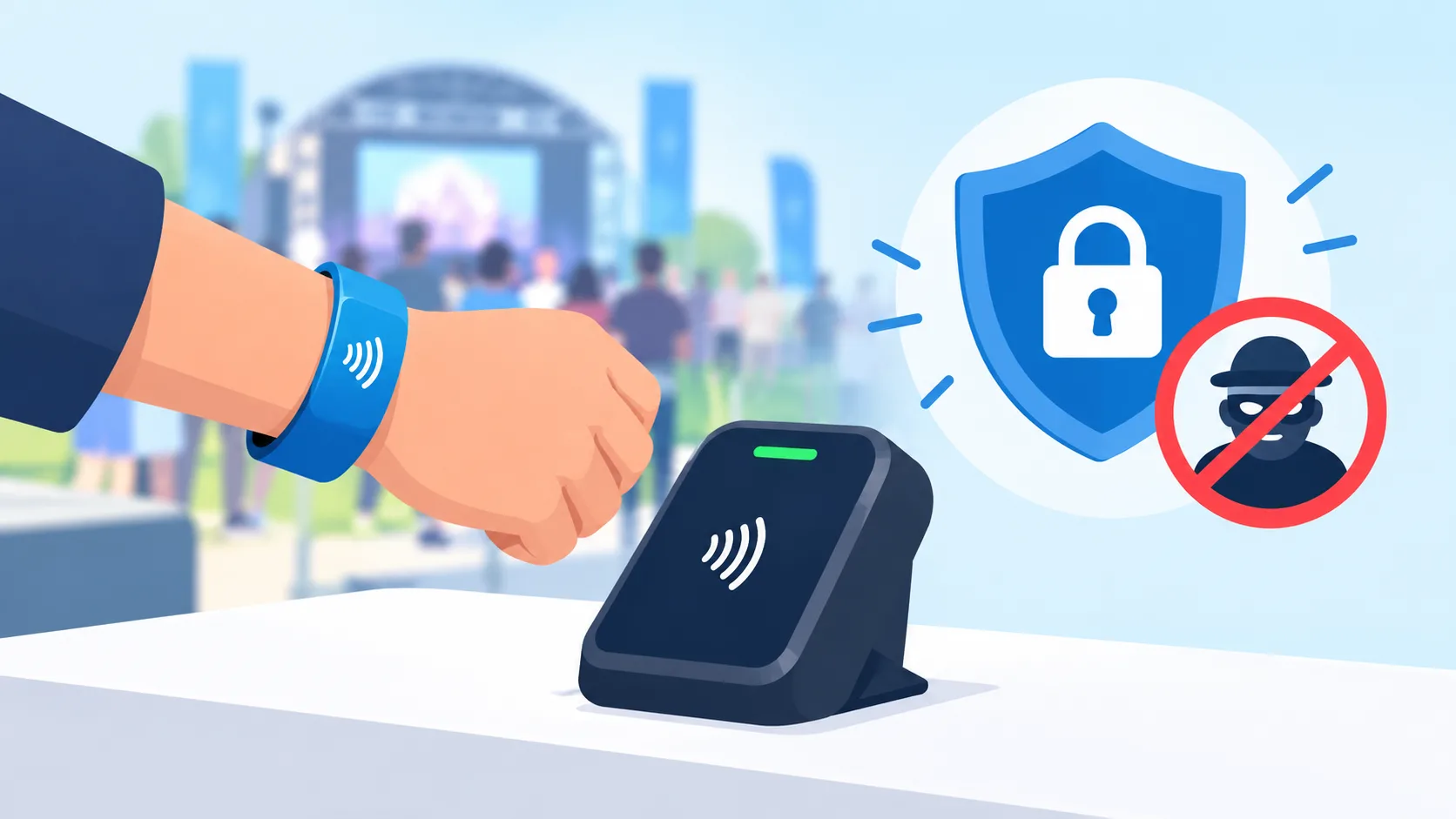
- RFID cards or wristbands
- Digital credentials
- Access permissions linked to registration categories
For example, a VIP badge may allow access to an executive lounge, while a vendor badge may provide access only to service areas.
You need to make sure that lost or misused credentials are blocked quickly. Your team should also have a process for revoking access when an attendee’s registration is cancelled.
6. Protect Attendee Data Throughout the Process
Strong identity verification is not only about preventing unauthorised entry. It is also about protecting the information attendees share with you.
Follow Basic Data-Security PracticesYour event technology provider should support appropriate security measures, such as:
- Role-based access for event staff
- Secure data transmission
- Strong account authentication
- Audit logs for important actions
- Limited access to sensitive information
- Secure storage and deletion procedures
- Regular system and permission reviews
Only authorised team members should be able to view sensitive attendee information. You should also avoid displaying unnecessary personal details on printed badges or check-in screens.
7. Make the Process Easy for Genuine Attendees
Security checks should not automatically mean long queues. With proper planning, you can maintain control while keeping the registration experience smooth.
Always consider creating separate lanes for pre-verified attendees, VIPs, speakers, and attendees requiring manual assistance.
You can also provide clear pre-event instructions explaining:
- Which documents attendees should bring
- Whether photographs are required
- How to access their QR code
- What time they should arrive
- What to do if their details are incorrect
A trained support team is equally important. Staff should know how to handle name mismatches, missing documents, duplicate registrations, and unexpected guests without bypassing security rules.
8. Test the Verification Process Before the Event
Even a well-designed identity verification system can fail if it has not been tested under real-world conditions.
This is why you should conduct a full rehearsal before the event. Test QR scanning, identity matching, badge printing, access permissions, network connectivity, and backup procedures.
You should also test what happens if:
- An attendee’s name is entered incorrectly
- A QR code does not scan
- The internet connection fails
- A credential is lost
- An attendee arrives without the required document
- A registration is cancelled at the last minute
You must prepare a manual escalation process for exceptional cases. The objective is to resolve legitimate problems without creating security loopholes.
End Notes
Secure attendee identity verification is a combination of technology, clear processes, trained staff, and responsible data handling.
As an event organiser, you should begin by understanding your event’s security needs and then choose verification methods that match those requirements. Pre-event validation, QR codes, corporate credentials, identity documents, and access-controlled badges can work together to improve both security and convenience.
The most effective approach is not necessarily the most complicated one. It is the approach that verifies the right people, protects their information, and allows authorised attendees to enter with minimal friction.