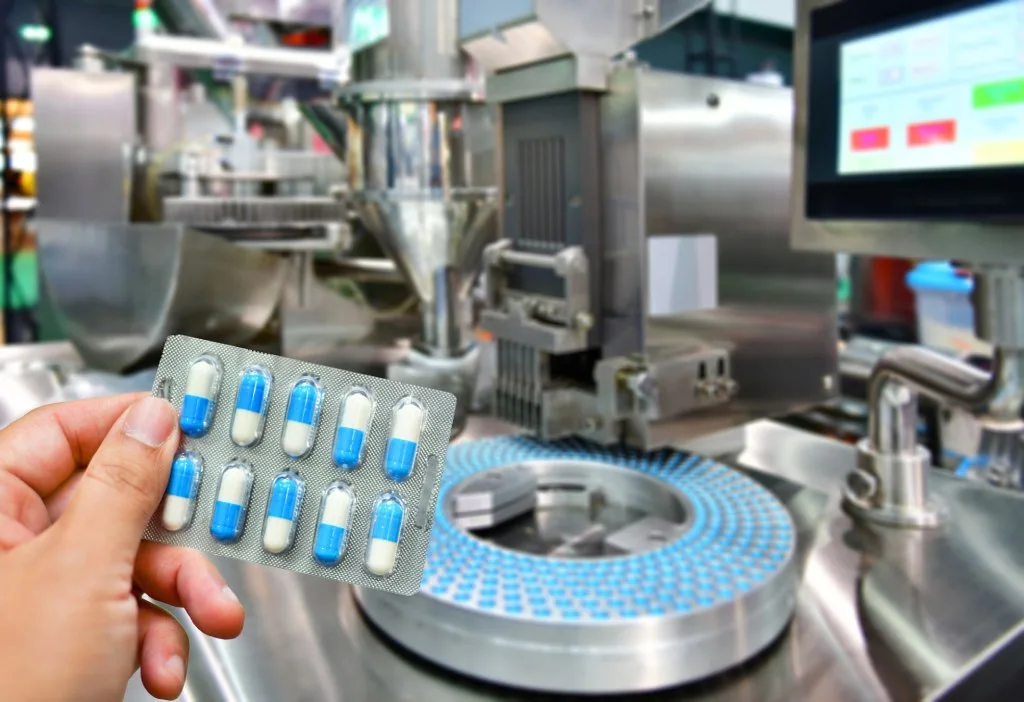
Growing demand for dietary supplements creates new opportunities for manufacturers and supplement brands. However, increasing production volume requires careful planning, reliable equipment, and consistent quality control. Supplement encapsulation is a manufacturing process that fills capsules with measured amounts of vitamins, minerals, herbal extracts, probiotics, and other dietary ingredients.
As production increases, manufacturers must maintain accurate filling, ingredient consistency, and product safety. Organizations such as the U.S. Food and Drug Administration (FDA) establish Current Good Manufacturing Practice (cGMP) requirements to support dietary supplement quality.
This guide explains how manufacturers can increase capsule production while maintaining quality, efficiency, and regulatory compliance.
Why Is Quality Control Important When Scaling Capsule Production?
Increasing production capacity involves more than running capsule filling machines faster.
Larger production batches can create challenges involving powder mixing, ingredient distribution, filling accuracy, and equipment performance.
Without proper controls, these problems may lead to:
- Inconsistent capsule weights
- Uneven ingredient distribution
- Increased material waste
- Higher contamination risks
- Production delays
- Failed quality inspections
- Inaccurate product specifications
A reliable manufacturing process helps maintain batch consistency while supporting higher production volumes.
7 Steps to Scale Supplement Capsule Production Successfully
1. Evaluate Your Current Production Capacity
Before expanding production, manufacturers should review their existing manufacturing process.
Important factors include:
- Current capsules produced per hour
- Batch size and processing time
- Equipment efficiency
- Material waste rates
- Labor requirements
- Quality control results
Identifying production bottlenecks helps manufacturers decide whether they need additional equipment, improved workflows, or larger production facilities.
2. Upgrade Capsule Filling Equipment
Modern capsule filling machines can increase production capacity and improve operational efficiency.
Automatic encapsulation machines commonly include systems for capsule separation, powder filling, capsule closing, and product discharge.
When selecting equipment, consider filling accuracy, supported capsule sizes, cleaning requirements, and maintenance needs.
Higher machine speed does not automatically mean better production. Equipment must maintain consistent performance at the intended operating speed.
3. Maintain Consistent Ingredient Blending
Uniform ingredient distribution is essential during encapsulation manufacturing.
As batch sizes increase, powder properties such as particle size, bulk density, and flowability can affect blending performance.
Manufacturers may use industrial powder blenders, sieving equipment, and appropriate mixing procedures.
Blending time, batch volume, and ingredient characteristics should be evaluated carefully.
Simply increasing mixing time may not improve uniformity and can sometimes cause ingredient separation.
4. Strengthen In-Process Quality Testing
Quality control should continue throughout production rather than only after manufacturing is complete.
Common quality checks include:
- Raw material identity testing
- Capsule weight variation
- Blend uniformity assessment
- Active ingredient potency testing
- Microbial contamination testing
- Moisture analysis
- Capsule integrity inspection
Laboratories may use High-Performance Liquid Chromatography (HPLC) and other analytical methods depending on the formulation.
Testing frequency and acceptance criteria should follow established product specifications and applicable requirements.
5. Follow FDA cGMP Requirements
In the United States, dietary supplement manufacturers must comply with 21 CFR Part 111.
These regulations cover production controls, equipment maintenance, quality specifications, documentation, and packaging operations.
When increasing production, manufacturers should maintain:
- Standard Operating Procedures (SOPs)
- Master Manufacturing Records (MMRs) for each formulation and batch size
- Batch Production Records (BPRs)
- Equipment calibration records
- Cleaning and sanitation procedures
- Quality control documentation
Proper records support traceability and help identify problems during manufacturing.
6. Improve Raw Material and Supplier Management
Larger production volumes require reliable ingredient sourcing.
Manufacturers should evaluate supplier quality, ingredient availability, and incoming material specifications before increasing output.
Supplier management may include reviewing Certificates of Analysis (COAs), verifying material identity, and monitoring ingredient consistency.
Maintaining appropriate inventory levels also helps prevent production interruptions.
However, increased inventory should not compromise storage conditions or ingredient stability.
7. Optimize Packaging and Final Inspection
Packaging capacity must increase alongside capsule production.
Automated bottle filling, counting, sealing, and labeling equipment can help improve packaging efficiency.
Manufacturers should also monitor:
- Capsule count accuracy
- Container integrity
- Label accuracy
- Lot number traceability
- Moisture protection
- Storage conditions
Final quality review helps confirm that products meet established specifications before distribution.
How Can Encapsulation Services Support Production Growth?
Scaling production internally may require significant investment in machinery, facilities, and trained personnel.
For some brands, working with an experienced encapsulation manufacturer provides an alternative.
Professional supplement encapsulation services may offer formulation assistance, ingredient sourcing, capsule filling, laboratory testing, and packaging.
Specialized encapsulation services can also support different batch sizes and production schedules.
When comparing encapsulation solutions, brands should evaluate manufacturing capacity, quality systems, testing capabilities, documentation, and delivery reliability.
Common Mistakes to Avoid When Scaling Production
Several mistakes can affect product quality during manufacturing expansion.
Common problems include increasing machine speed without checking filling accuracy, changing batch sizes without evaluating mixing performance, and overlooking equipment maintenance.
Another mistake is reducing quality testing to save production time.
Manufacturers should also investigate process deviations rather than assuming that previous production settings will work for larger batches.
Successful production growth requires balancing efficiency with consistent quality standards.
Conclusion
Scaling supplement capsule production requires careful planning, suitable equipment, reliable raw materials, and effective quality control.
Manufacturers should evaluate production capacity, optimize powder blending, monitor capsule filling, and maintain proper documentation.
Following FDA cGMP requirements and using appropriate laboratory testing can help protect product quality as manufacturing volumes increase.
The goal is not simply to produce more capsules. It is to maintain consistent product quality throughout every stage of production.
Frequently Asked Questions (FAQs)
1. How can manufacturers increase capsule production capacity?
Manufacturers can increase capacity through automated filling equipment, improved workflows, efficient blending, and better production planning.
2. What are the biggest challenges in scaling capsule manufacturing?
Common challenges include maintaining blend uniformity, controlling capsule weight, managing raw material supply, and maintaining consistent product quality.
3. How do manufacturers maintain capsule quality during mass production?
Manufacturers use equipment calibration, in-process inspections, laboratory testing, documented procedures, and established quality specifications.
4. What equipment is needed for large-scale capsule manufacturing?
Common equipment includes industrial powder blenders, automatic capsule filling machines, capsule polishers, inspection systems, and automated packaging machines.
5. Why is cGMP compliance important in supplement manufacturing?
cGMP requirements establish production and quality control standards that help manufacturers maintain consistent product quality, prevent contamination, and support regulatory compliance.