You finished colouring your hair, and now there's a dark line along your forehead, a smudge behind your ear and stained fingertips. It happens to almost everyone who colours at home. The good news is that most hair dye stains lift with things you already have in the bathroom, as long as you start gently and act early.
Why hair dye stains skin so easily
Permanent and demi-permanent dyes are designed to bond with keratin, the protein in hair. The outer layer of your skin contains keratin too, so the colour grabs on in the same way. Fresh stains sit near the surface and come off fairly easily. The longer the dye stays, the deeper it settles, which is why speed matters more than the product you use.
Skin also renews itself constantly. Even a stubborn mark usually fades within two or three days as the top layer sheds, so there is no need to scrub until your skin turns red.
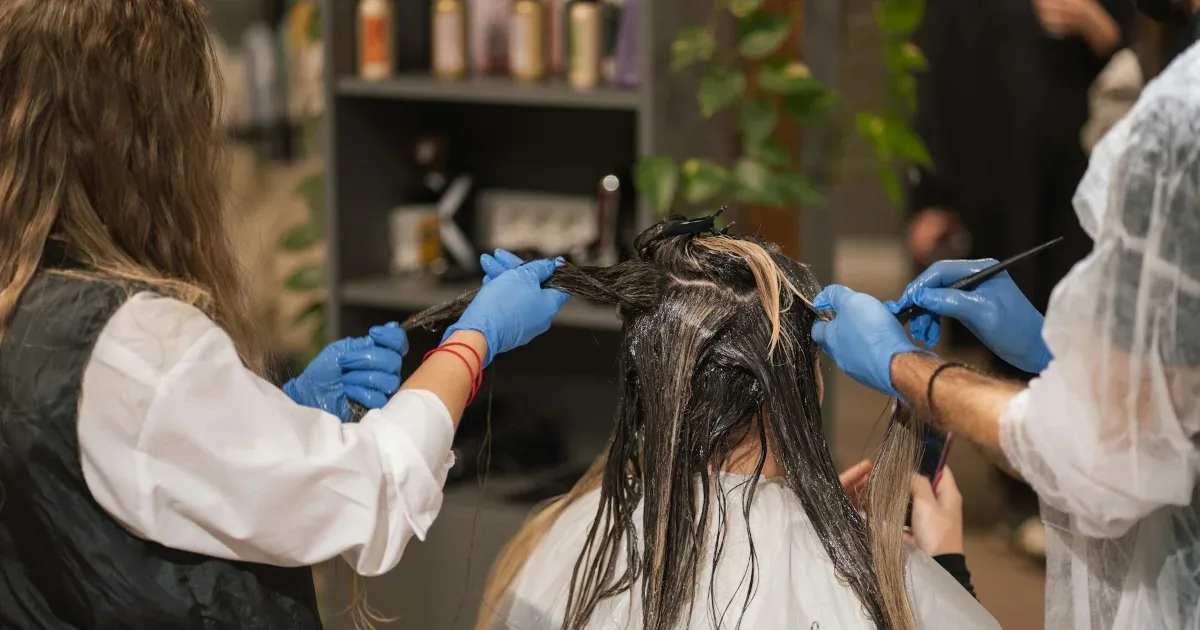
Salons deal with this all the time, and the main reason professional hair colouring rarely leaves marks is preparation: a barrier along the hairline, careful sectioning and wiping spills straight away. You can borrow the same habits at home, which the prevention section below covers.
8 ways to remove hair dye from skin, from gentlest to strongest
Start at the top of this list and only move down if the stain doesn't budge.
1. Warm water and mild soap
If the dye is still wet or only a few minutes old, a damp cotton pad with a little gentle soap or facial cleanser is often enough. Wipe, don't rub hard.
2. Micellar water or makeup remover
Makeup removers are made to dissolve pigment without stripping skin. Soak a cotton pad, hold it on the stain for 30 seconds, then wipe. This is the best first choice for the face and hairline.
3. Baby oil, olive oil or coconut oil
Oil loosens dye particles, especially on dry skin. Massage a few drops into the mark, leave it for several minutes (or overnight for stubborn spots on the hands), then wash off with soap.
4. Petroleum jelly
Petroleum jelly works in a similar way to oil but stays put. Apply a thin layer to the stained area before bed and wipe it off in the morning.
5. A little dish soap and baking soda
For hands and nails only, mix a small amount of dish soap with baking soda to make a paste. Rub it gently with your fingertips, then rinse well and moisturise. Avoid this on the face, as it is too drying.
6. Non-gel toothpaste
Plain white toothpaste has a mild abrasive. Dab a little on the stain, rub softly with a finger or a soft toothbrush for 30 to 60 seconds and rinse. Test a small spot first, as some people find it irritating.
7. Hair dye stain remover wipes
Beauty shops sell wipes made for this exact job. They are handy to keep with a home colouring kit and usually work on fresh and day-old marks.
8. Rubbing alcohol, used carefully
Alcohol can lift a stubborn stain on hands or the back of the neck, but it dries the skin and stings on broken skin. Use a small amount on a cotton ball, never near the eyes, and moisturise afterwards. Skip it if your skin is sensitive.
Removing hair dye from the scalp
The scalp needs a different approach because scrubbing it can cause irritation, especially straight after a chemical service.
- Shampoo as normal once the colour has been rinsed. Most scalp staining fades over the next two or three washes.
- If you can see a mark along the parting, apply a little oil with a cotton bud before washing.
- Avoid alcohol, toothpaste and baking soda on the scalp.
A light tint on the scalp is harmless and disappears as skin renews. Itching, burning, swelling or a rash is different. That can be a reaction to ingredients such as PPD, and DermNet explains the signs of an allergy to paraphenylenediamine (PPD). Rinse well and get medical advice if your scalp reacts this way.
What to avoid
A few common tips do more harm than good:
- Bleach or household cleaners. These can burn skin and should never be used.
- Nail polish remover on the face. Acetone is harsh and drying.
- Hard scrubbing. Rubbing raw skin can leave redness that lasts longer than the stain.
- Repeating strong methods many times a day. Give skin a few hours between attempts.
How to stop stains before they happen
Prevention takes two minutes and saves a lot of wiping later.
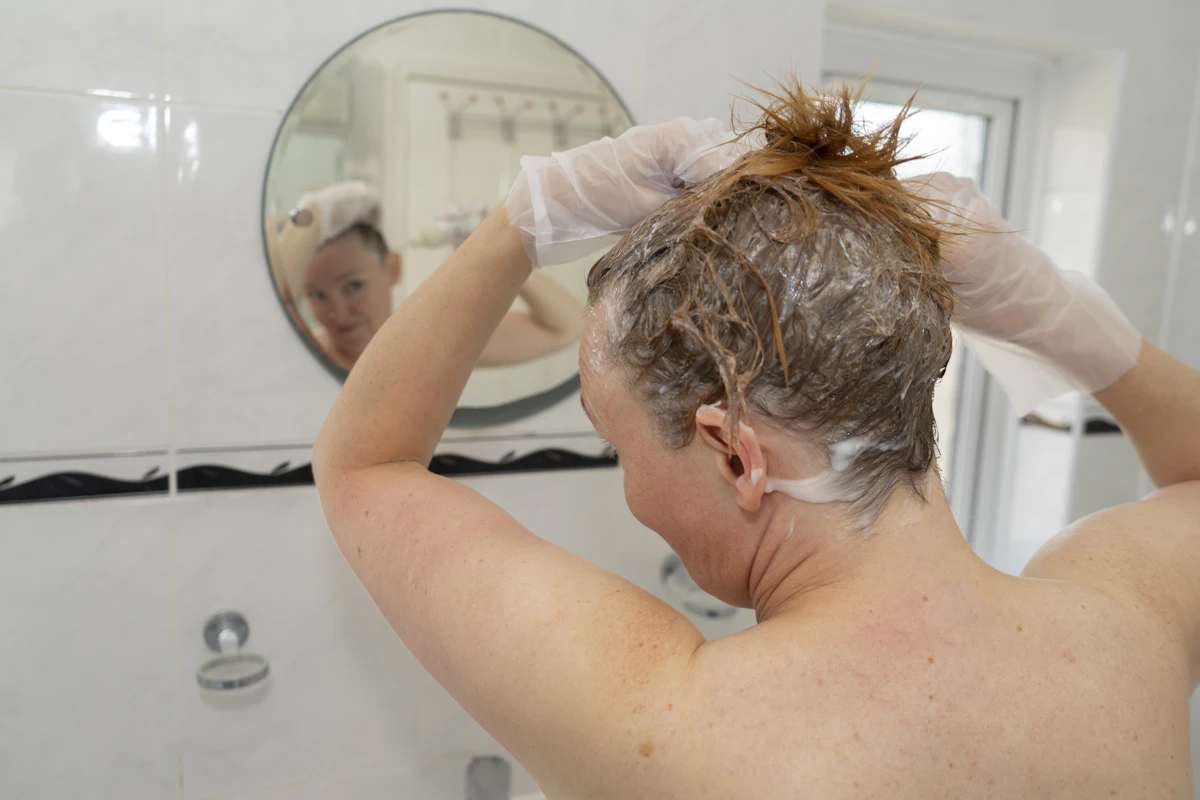
- Apply a barrier. Smooth petroleum jelly or a thick balm along the hairline, over the ears and on the back of the neck.
- Wear gloves the whole time, including when rinsing. Most kits include a pair.
- Keep wipes or damp cotton pads nearby and remove drips straight away.
- Wear an old towel or shirt. Dye spots on fabric are much harder to remove than on skin.
- Section the hair so the applicator doesn't press colour onto the skin at the roots.
In a hot, humid climate, sweat can make dye run toward the face. Colouring in a cool room helps the barrier stay in place.
Quick answer: which method for which area
| Area | Best first try | If it won't budge |
|---|---|---|
| Forehead and hairline | Micellar water or makeup remover | Oil, left on for a few minutes |
| Ears and neck | Oil or petroleum jelly | Stain remover wipe |
| Hands and nails | Dish soap and baking soda | Rubbing alcohol, then moisturiser |
| Scalp | Regular shampoo | A little oil before washing |
A few days is usually all it takes
Hair dye on skin looks alarming for about an hour and then becomes a minor annoyance. Begin with the mildest option, give oil some time to work, and let natural skin renewal take care of the rest. With a barrier cream and gloves next time, you may not need any of these tricks at all.
FAQs
How long does hair dye stay on skin if you don't remove it?
Most stains fade on their own within two to three days, and a little faster on the face, where skin renews quickly.
Can I remove hair dye from skin with vinegar?
Diluted white vinegar can lift light marks on the hands, but it may sting and smells strong. It is best kept away from the face and scalp.
Does sweat make hair dye stains worse?
Yes, sweat can carry wet dye down onto the forehead and neck. Working in a cool room and wiping the hairline while the colour develops helps.
Is it safe to use makeup wipes on a freshly coloured hairline?
Yes, alcohol-free makeup wipes are gentle and are one of the easiest ways to clean the hairline while the dye is still fresh.
Will hair dye stains come off eyebrows or eyelids?
Use only water and a gentle eye makeup remover near the eyes. Never use alcohol, toothpaste or baking soda in this area.
Cover photo: Ionela Mat on Unsplash.