Brake pads are one of the most important components of your vehicle’s braking system. They create the friction needed to slow down and stop your car when you press the brake pedal. Over time, this friction wears down the pads, making regular inspection and timely replacement essential for safe driving. Ignoring worn brake pads can reduce stopping performance and lead to more expensive repairs.
Knowing when you need brake pad replacement can help you address braking problems before they affect your safety. Drivers should pay attention to unusual sounds, changes in pedal response, and other warning signs that indicate the braking system needs professional attention. Recognizing these symptoms early can help protect your rotors and maintain reliable stopping power.
What Are Brake Pads and How Do They Work?
Brake pads are friction components installed inside the disc braking system. When you press the brake pedal, hydraulic pressure pushes the brake calipers against the brake rotors. The pads press against the rotating rotors, creating friction that slows the wheels.
Because this process happens every time you brake, the pads gradually become thinner. Their lifespan depends on several factors, including driving habits, traffic conditions, vehicle weight, and the type of brake pads installed.
City driving with frequent stops can wear brake pads faster than steady highway driving. Heavy loads, repeated hard braking, and driving on steep roads can also increase wear.
5 Common Signs Your Brake Pads Need Replacement
1. Squealing or High-Pitched Braking Sounds
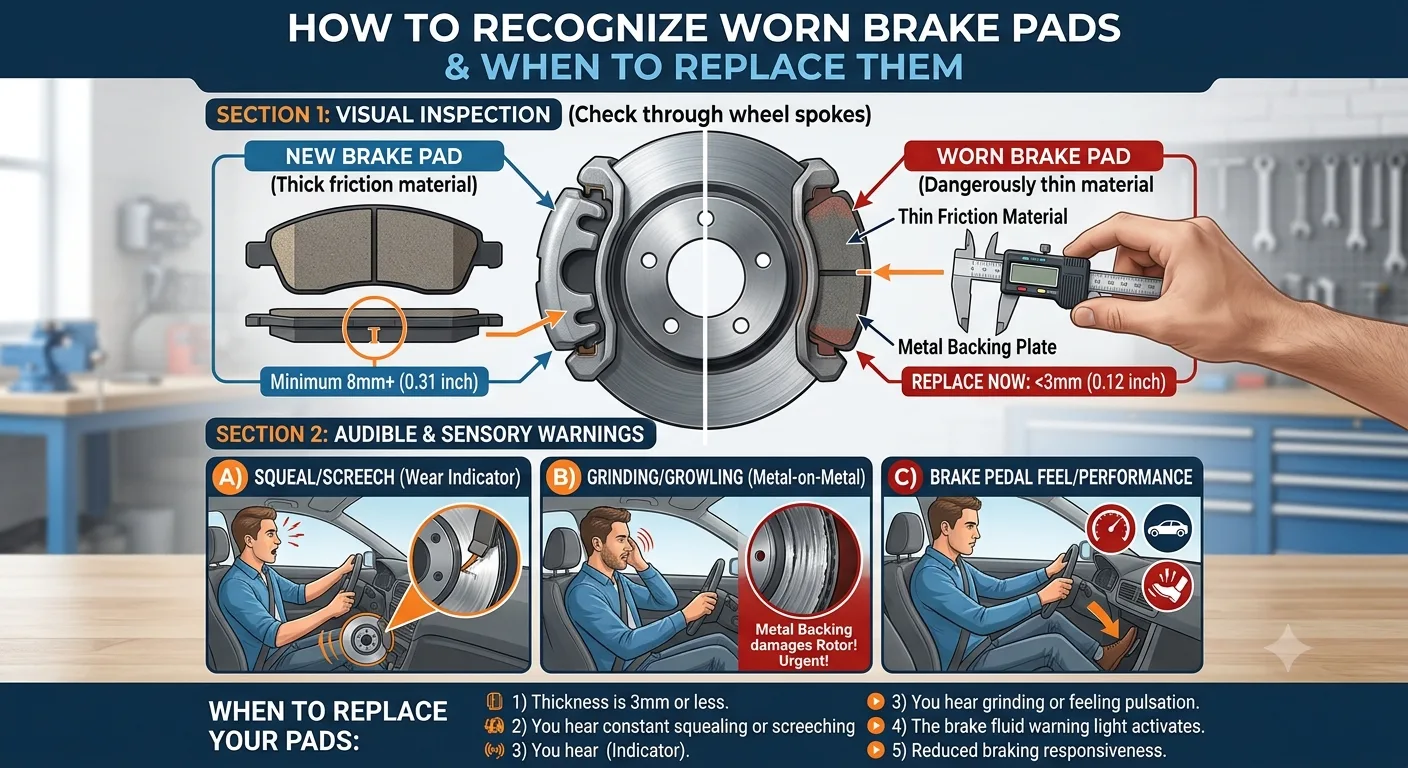
A high-pitched squeal when braking is one of the most common signs of worn brake pads. Many pads include a small metal wear indicator that produces a warning sound as the friction material becomes thin.
However, not every squeal means the pads need replacement. Moisture, surface rust, dust, or certain pad materials can also cause noise. If the sound continues or occurs regularly, have the brakes inspected to identify the cause.
2. Grinding Noises When You Brake
A grinding sound can indicate that the brake pads are severely worn and metal components are making contact with the rotors. This can damage the rotors and increase repair costs.
Grinding should not be ignored. Arrange a professional inspection as soon as possible, and avoid driving the vehicle if braking performance is reduced or the noise is severe. A qualified technician can determine whether the pads, rotors, or other components need repair or replacement.
3. Reduced Braking Performance
If your vehicle takes longer to stop than usual, the braking system may need attention. Worn pads are one possible cause, but other issues can also affect braking performance, including damaged rotors, brake fluid problems, or a faulty caliper.
Do not assume that replacing the pads alone will resolve every braking concern. A complete inspection helps identify the actual problem and the appropriate repair.
4. Brake Pedal Changes
A brake pedal that feels unusually soft, sinks toward the floor, or requires more pressure than normal may indicate a braking system issue. Although worn pads can contribute to changes in braking feel, these symptoms may also point to hydraulic problems or air in the brake lines.
If the pedal suddenly feels different, take the concern seriously. Stop in a safe location if braking feels unreliable and arrange professional assistance.
5. Brake Warning Lights
Some vehicles have brake wear sensors that alert drivers when the pads reach a specified wear level. A dashboard brake warning light may also indicate low brake fluid, a parking brake issue, or another system fault.
Check your vehicle’s owner’s manual to understand the warning. Have the system inspected rather than assuming the light always means the pads are worn.
How Often Should Brake Pads Be Replaced?
There is no single replacement interval that works for every vehicle. Brake pads can last tens of thousands of miles, but actual service life varies considerably with the vehicle, pad material, road conditions, and driving style.
Instead of relying only on mileage, follow the manufacturer’s maintenance recommendations and have the braking system inspected at appropriate service intervals. A technician can measure pad thickness and check the rotors, calipers, and related components.
Drivers who frequently travel through stop-and-go traffic, carry heavy loads, or drive in hilly areas may need more frequent inspections.
What Affects the Cost of Brake Pad Replacement?
The total cost depends on several factors:
- Vehicle make and model: Parts availability and brake system design affect pricing.
- Brake pad material: Different materials offer different levels of performance, noise control, durability, and cost.
- Rotor condition: Rotors may require resurfacing where permitted and appropriate, or replacement if they are damaged or outside manufacturer specifications.
- Additional repairs: Sticking calipers, damaged hardware, or other worn components can increase the total cost.
- Labor requirements: Some vehicles have more complex brake systems that require additional service time.
Ask for an explanation of the inspection findings and an estimate before approving repairs. This helps you understand which services are necessary and why.
Can You Keep Driving With Worn Brake Pads?
Driving with worn brake pads is risky because braking performance may decline as the friction material wears down. Continued driving can also damage the rotors and turn a relatively routine maintenance job into a more expensive repair.
If you hear grinding, experience reduced braking, notice a significant pedal change, or see a brake warning light, arrange an inspection promptly. If the brakes feel unsafe, avoid driving the vehicle and seek professional assistance.
Why Professional Brake Inspections Matter
Brake maintenance involves more than checking the visible pad material. A technician can inspect pad thickness, rotor condition, caliper operation, brake hardware, fluid condition, and other components that influence stopping performance.
At Patriot Express Tire & Oil, drivers can seek help diagnosing brake concerns and determining which repairs are appropriate for their vehicle. Clear explanations and recommendations based on inspection findings help vehicle owners make informed maintenance decisions.
A professional inspection is especially useful when the symptoms are unclear or when noise and vibration continue after previous brake work.
Frequently Asked Questions
What is the most obvious sign of worn brake pads?
Persistent squealing, grinding noises, and reduced braking performance are common warning signs. A physical inspection is the best way to confirm pad wear.
Should brake pads be replaced in pairs?
Brake pads are generally replaced on both wheels of the same axle to maintain balanced braking. A technician should inspect the complete axle and follow the vehicle manufacturer’s recommendations.
Do new brake pads always require new rotors?
No. Rotors do not automatically need replacement whenever new pads are installed. Their thickness, surface condition, runout, and manufacturer specifications determine whether they can remain in service.
How long does brake pad replacement take?
Many routine jobs can be completed within a few hours, but the exact time depends on the vehicle, the condition of the braking system, parts availability, and whether additional repairs are needed.
Can I check my brake pads myself?
Some vehicles allow a partial view of the pads through the wheel, but visual checks may not reveal uneven wear or problems with other brake components. A professional inspection provides a more complete assessment.
Final Thoughts
Brake pads gradually wear with normal use, so paying attention to warning sounds, pedal changes, and stopping performance is essential. Regular inspections can help identify wear before it damages other components or compromises braking safety. When replacement is needed, choose the correct parts for your vehicle and address any related issues found during the inspection. Timely maintenance helps keep your braking system dependable and supports safer driving.