

Introduction
Workplace safety standards require structured management systems, clear policies, and regular monitoring of operational risks. This ISO 45001 Lead Implementer Certification roadmap helps professionals understand implementation strategies, safety risk evaluation, and compliance frameworks. Preparing with the right learning approach and understanding implementation principles helps candidates approach the certification exam with clarity and confidence.
Understanding ISO 45001 Lead Implementer Certification
ISO 45001 Lead Implementer Certification focuses on implementing occupational health and safety management systems within organizations. Professionals who pursue this certification study how to develop safety policies, manage workplace risks, and ensure that safety procedures align with international standards. Understanding the certification structure is an important first step for candidates preparing for the exam through a professional certification training program.
Key Areas Covered in Certification Training
- Occupational Health and Safety Management Systems
Candidates study the structure of safety management systems used by organizations to manage workplace risks. This includes understanding policies, objectives, and procedures that support safe operations.
- Risk Identification and Hazard Assessment
Implementation professionals must identify workplace hazards and evaluate operational risks. Certification training explains methods used to detect safety issues and design preventive measures.
- Safety Policy Development
Organizations require documented safety policies that define responsibilities, safety goals, and reporting procedures. Candidates learn how to create policies aligned with ISO 45001 guidelines.
- Operational Control and Monitoring
Professionals responsible for implementation must monitor safety processes and ensure procedures are followed consistently. Monitoring tools help organizations track incidents and maintain safe operations.
Building a Strong Study Plan for Certification Preparation
Preparing for ISO 45001 Lead Implementer Certification requires a structured study plan that covers safety management principles, ISO clauses, and practical implementation methods. A clear learning schedule helps candidates understand concepts gradually and review key areas before the exam.
Effective Study Approaches
- Review ISO 45001 Standard Structure
Candidates should understand the clauses of the ISO 45001 standard and how each clause supports workplace safety management systems. Studying the standard helps candidates interpret exam questions correctly.
- Follow a Structured Learning Path
Training programs usually provide a sequence of lessons covering safety principles, implementation techniques, and compliance requirements. Following this sequence helps candidates understand the framework step by step.
- Practice Scenario-Based Questions
Certification exams often include scenario-based questions that test practical understanding. Practicing case studies helps candidates learn how to apply safety principles to real workplace situations.
- Create Personal Study Notes
Writing summaries of important concepts helps candidates remember terminology, processes, and implementation steps. Organized notes simplify revision before the certification exam.
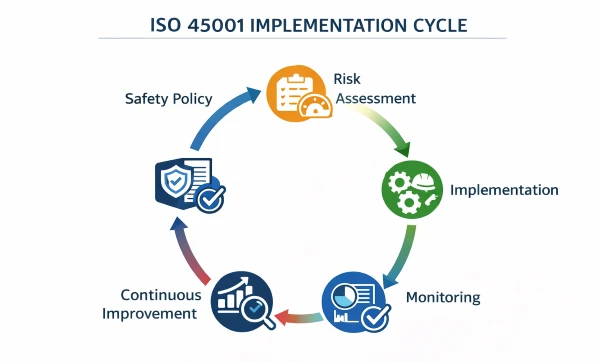
Understanding ISO 45001 Implementation Process
Professionals preparing for certification must understand how safety management systems are implemented within organizations. Implementation involves evaluating current safety practices, designing structured procedures, and monitoring workplace safety performance. This section serves as a practical guide to career development for professionals aiming to apply ISO 45001 principles effectively.
Main Stages of ISO 45001 Implementation
- Initial Safety Assessment
Organizations begin by reviewing existing safety practices and identifying gaps between current procedures and ISO 45001 requirements. This assessment helps determine what changes are necessary.
- Developing Safety Policies and Procedures
After identifying gaps, organizations create safety policies, responsibilities, and operational procedures that align with ISO standards.
- Employee Awareness and Training
Employees must understand workplace safety responsibilities and reporting procedures. Training programs help staff follow safety guidelines during daily operations.
- Monitoring and Continuous Review
Safety performance is monitored regularly using incident reports, inspections, and workplace evaluations. Continuous review ensures safety practices remain effective.
Key Skills Required for Certification Success
Candidates preparing for ISO 45001 Lead Implementer Certification must develop both technical and analytical skills. These abilities help professionals interpret safety requirements and apply them within workplace environments.
Essential Skills for Certification Candidates
- Understanding Safety Management Systems
Candidates should understand how safety policies, procedures, and risk management practices work together within an organization.
- Analytical Thinking
Implementation professionals evaluate safety practices and identify gaps in operational processes. Analytical thinking helps interpret workplace safety data effectively.
- Documentation and Process Management
Safety implementation requires detailed documentation such as safety policies, incident reports, and risk assessments.
- Communication and Training Skills
Professionals responsible for implementation often explain safety policies to employees and management teams. Clear communication ensures safety procedures are understood and followed.
Common Challenges Candidates Face During Preparation
Many candidates preparing for certification encounter difficulties while studying the ISO 45001 framework. Recognizing these challenges helps professionals adjust their study approach and prepare more effectively.
Typical Preparation Challenges
- Understanding Standard Terminology
ISO standards use specific terminology that may initially appear complex. Reviewing definitions and examples helps candidates understand how these terms apply in workplace safety contexts.
- Applying Concepts to Real Scenarios
Exam questions often present workplace situations that require analytical thinking. Candidates who practice scenario-based questions usually perform better during the exam.
- Managing Study Time
Professionals preparing for certification may balance work responsibilities with study time. Creating a study schedule helps maintain consistent preparation.
- Remembering Implementation Steps
Implementation processes include several stages such as assessment, policy creation, training, and monitoring. Candidates benefit from reviewing these steps regularly.
Practical Preparation Tips for Passing on the First Attempt
Certification success often depends on preparation strategies rather than memorizing theoretical content. Candidates who focus on practical understanding usually approach exam questions more confidently.
Preparation Strategies
- Study the ISO Clause Structure
Understanding how clauses relate to each other helps candidates interpret exam questions and select correct answers.
- Review Case Studies and Practical Examples
Case studies show how organizations implement safety frameworks in real situations. Studying examples helps candidates apply theory to practical scenarios.
- Attend Structured Training Programs
Professional training sessions provide instructor guidance, exam preparation tips, and explanations of complex concepts.
- Practice Time Management During Exams
Candidates should allocate time carefully while answering exam questions. Reviewing questions before submission helps avoid mistakes.
Industry Importance of ISO 45001 Implementation Professionals
Organizations across industries rely on professionals who understand occupational health and safety frameworks. Implementation specialists help organizations design structured safety systems and maintain regulatory compliance. This highlights the value of career focused certification resources for professionals aiming to build expertise in ISO 45001 implementation..
Industries That Require Implementation Expertise
- Manufacturing Sector
Factories and production facilities require structured safety procedures to prevent workplace incidents.
- Construction Industry
Construction environments involve multiple safety risks that require detailed monitoring and management.
- Healthcare Organizations
Hospitals and healthcare facilities must maintain safety procedures to protect employees and patients.
- Energy and Infrastructure Projects
Large infrastructure projects often follow strict occupational safety standards to ensure operational stability.
These industries continue to seek professionals who understand how safety management systems are implemented effectively.
Conclusion
Passing ISO 45001 Lead Implementer Certification on the first attempt requires a clear understanding of occupational health and safety management systems, implementation processes, and exam preparation strategies. Candidates who follow structured study plans, review implementation steps, and practice real-world scenarios approach the exam with greater confidence. This certification helps professionals understand how organizations design and manage safety systems that protect employees and operations. Training programs provided by SterlingNext support professionals in preparing for certification and developing practical knowledge of ISO 45001 implementation practices.
Read this practical learning roadmap for ISO 45001 Lead Implementer Certification