
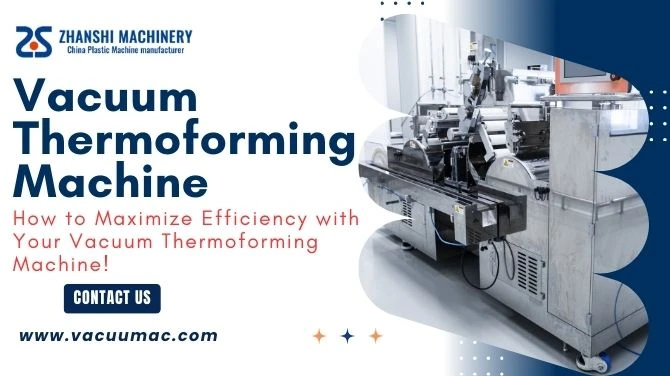
In today’s fast-paced manufacturing environment, efficiency is the cornerstone of profitability and competitiveness. Whether you are producing packaging, automotive components, medical devices, or consumer goods, the ability to optimize your production processes can make the difference between leading the market and falling behind. Among the many technologies that have revolutionized plastic forming, the Vacuum Thermoforming Machine stands out as a versatile, cost-effective, and highly productive solution.
At Shanghai Zhanshi Mechanical Equipment Co., Ltd., we have seen how the right approach to operating and maintaining a Vacuum Thermoforming Machine can dramatically improve output, reduce waste, and ensure consistent product quality. However, simply owning a state-of-the-art machine is not enough. To truly maximize efficiency, manufacturers must understand the intricacies of the vacuum thermoforming process, leverage advanced features, and implement best practices across their operations.
Understanding the Vacuum Thermoforming Process
It is essential to understand how a Vacuum Thermoforming Machine works. Vacuum thermoforming is a process in which a plastic sheet is heated until it becomes pliable, then formed over a mold using vacuum pressure. Once the plastic cools and solidifies, it takes the shape of the mold and is trimmed to create the final product.
The process typically involves the following steps:
- Sheet Loading: The plastic sheet is loaded into the machine, either manually or automatically.
- Heating: The sheet is heated to the appropriate forming temperature using radiant heaters.
- Forming: The heated sheet is placed over a mold, and a vacuum is applied to draw the sheet tightly against the mold surface.
- Cooling: The formed part is cooled to retain its shape.
- Trimming: Excess material is trimmed away, and the finished part is ejected.
Vacuum Thermoforming Machines are widely used due to their ability to produce complex shapes, rapid cycle times, and suitability for both small and large production runs.
Key Factors Affecting Efficiency in Vacuum Thermoforming
To maximize efficiency with your Vacuum Thermoforming Machine, it is important to consider several critical factors:
1. Machine Setup and Calibration
Proper setup and calibration are fundamental to efficient operation. This includes:
- Correct Alignment: Ensuring the sheet is properly aligned with the mold to prevent defects and material waste.
- Temperature Settings: Calibrating heaters to achieve uniform heating across the sheet.
- Vacuum Pressure: Adjusting vacuum levels for optimal forming without overstressing the material.
- Cycle Timing: Fine-tuning heating, forming, and cooling times to minimize cycle duration without compromising quality.
2. Material Selection and Handling
The choice of material has a significant impact on both efficiency and product quality. Consider the following:
- Material Type: Select plastics that are compatible with your machine and application, such as PET, PVC, PS, PP, or biodegradable options.
- Sheet Thickness: Use the minimum thickness required for structural integrity to reduce material costs and cycle times.
- Pre-Drying: Some materials, like PET, require pre-drying to prevent defects such as bubbles or haze.
3. Mold Design and Maintenance
Efficient mold design can reduce cycle times and improve product consistency. Key considerations include:
- Ventilation: Proper venting ensures even vacuum distribution and prevents air pockets.
- Surface Finish: Smooth mold surfaces facilitate easy part release and reduce the need for secondary finishing.
- Regular Cleaning: Keeping molds clean prevents contamination and maintains product quality.
4. Automation and Integration
Modern Vacuum Thermoforming Machines can be integrated with upstream and downstream automation, such as:
- Automatic Sheet Feeders: Reduce manual handling and increase throughput.
- Robotic Part Removal: Speeds up unloading and reduces labor costs.
- In-Line Trimming and Stacking: Streamlines the process and minimizes manual intervention.
5. Process Monitoring and Control
Advanced machines are equipped with sensors and PLCs (Programmable Logic Controllers) that enable real-time monitoring of key parameters, such as:
- Temperature: Ensures consistent heating and forming.
- Vacuum Levels: Maintains optimal forming pressure.
- Cycle Times: Tracks production speed and identifies bottlenecks.
Data collected from these systems can be used for process optimization and predictive maintenance.
Strategies to Maximize Efficiency with Your Vacuum Thermoforming Machine
1. Optimize Heating Profiles
Uniform heating is crucial for consistent forming. Use multi-zone heaters and adjust settings based on sheet thickness and material type. Regularly inspect and calibrate heaters to prevent hot or cold spots.
2. Reduce Cycle Times
Analyze each stage of the process to identify opportunities for time savings. For example:
- Preheat Sheets: Preheating can reduce the time required in the main heating station.
- Efficient Cooling: Use water-cooled molds or air jets to speed up cooling without warping the part.
- Simultaneous Operations: Where possible, overlap processes (e.g., heating the next sheet while the previous one is cooling).
3. Minimize Material Waste
Material costs are a major component of production expenses. To reduce waste:
- Optimize Sheet Layout: Arrange parts on the sheet to maximize yield.
- Recycle Trim Scrap: Implement systems to collect and recycle trimmed material.
- Use Edge Detection: Automatic edge detection systems ensure precise alignment and minimize offcuts.
4. Implement Preventive Maintenance
Regular maintenance prevents unexpected breakdowns and extends machine life. Key tasks include:
- Lubricate Moving Parts: Reduces wear and tear.
- Inspect Vacuum Pumps: Ensure they are operating at full capacity.
- Check Seals and Gaskets: Prevent vacuum leaks that can reduce forming quality.
- Clean Heaters and Molds: Maintains consistent performance.
5. Train Operators and Staff
Well-trained operators can quickly identify and resolve issues, adjust settings for optimal performance, and maintain high safety standards. Provide ongoing training and encourage knowledge sharing among staff.
6. Leverage Data and Analytics
Use the data collected by your machine’s control system to:
- Monitor KPIs: Track cycle times, yield rates, and downtime.
- Identify Trends: Spot recurring issues or inefficiencies.
- Implement Continuous Improvement: Use insights to refine processes and set performance targets.
7. Upgrade and Retrofit
If your Vacuum Thermoforming Machine is older, consider retrofitting with modern controls, sensors, or automation modules. Upgrades can significantly boost efficiency and extend the useful life of your equipment.
Real-World Applications: Case Studies
Case Study 1: Food Packaging Manufacturer
A leading food packaging company partnered with Shanghai Zhanshi Mechanical Equipment Co., Ltd. to optimize their Vacuum Thermoforming Machine operations. By implementing automated sheet feeders and in-line trimming, the company increased throughput by 25% and reduced labor costs by 15%. Regular maintenance and operator training further improved machine uptime and product quality.
Case Study 2: Automotive Components Supplier
An automotive supplier needed to produce complex interior panels with tight tolerances. By working with our engineering team to optimize mold design and heating profiles, the company achieved a 20% reduction in cycle times and a significant decrease in material waste.
Case Study 3: Medical Device Manufacturer
A medical device manufacturer required high-precision packaging with strict hygiene standards. By integrating real-time process monitoring and predictive maintenance, the company minimized defects and ensured compliance with regulatory requirements.
Common Challenges and Solutions in Vacuum Thermoforming
Challenge 1: Inconsistent Forming
- Solution: Ensure uniform heating, proper vacuum levels, and well-ventilated molds. Regularly calibrate sensors and inspect for blockages.
Challenge 2: Excessive Material Waste
- Solution: Optimize sheet layout, recycle trim scrap, and use edge detection systems for precise alignment.
Challenge 3: Machine Downtime
- Solution: Implement preventive maintenance schedules, train operators, and use real-time monitoring to detect issues early.
Challenge 4: Poor Part Release
- Solution: Maintain smooth mold surfaces, use appropriate mold release agents, and ensure adequate cooling before ejection.
The Shanghai Zhanshi Mechanical Equipment Co., Ltd. Advantage
At Shanghai Zhanshi Mechanical Equipment Co., Ltd., we are committed to helping our clients achieve maximum efficiency with their Vacuum Thermoforming Machines. Our machines are engineered for reliability, precision, and ease of integration with modern automation systems. We offer:
- Custom Solutions: Tailored machine configurations and mold designs to meet your specific needs.
- Advanced Controls: User-friendly interfaces and real-time monitoring for optimal process control.
- Comprehensive Support: Installation, training, technical assistance, and fast access to spare parts.
- Continuous Innovation: Ongoing R&D to incorporate the latest advancements in vacuum forming technology.
Maximizing efficiency with your Vacuum Thermoforming Machine is not just about having the latest equipment—it’s about understanding the process, leveraging advanced features, and implementing best practices across your operations. By focusing on proper setup, material selection, mold design, automation, process monitoring, and preventive maintenance, you can achieve higher output, lower costs, and superior product quality.

Frequently Asked Questions (FAQ)
1. What is a Vacuum Thermoforming Machine?
A Vacuum Thermoforming Machine is a device that heats plastic sheets and forms them over molds using vacuum pressure. It is widely used for producing packaging, trays, automotive parts, and more.
2. How can I reduce cycle times with my Vacuum Thermoforming Machine?
Optimize heating and cooling stages, use efficient molds, and automate sheet feeding and part removal to minimize manual intervention.
3. What materials can be used in a Vacuum Thermoforming Machine?
Common materials include PET, PVC, PS, PP, ABS, and biodegradable plastics. The choice depends on the application and desired properties.
4. How often should I perform maintenance on my Vacuum Thermoforming Machine?
Regular maintenance should be performed according to the manufacturer’s guidelines, typically including daily, weekly, and monthly tasks.
5. Can I retrofit my existing Vacuum Thermoforming Machine with new technology?
Yes, many older machines can be upgraded with modern controls, sensors, and automation modules to improve efficiency and extend their lifespan.
6. What are the most common causes of defects in vacuum-formed parts?
Common causes include uneven heating, insufficient vacuum, poor mold design, and contaminated materials.
7. How can I minimize material waste?
Optimize sheet layout, recycle trim scrap, and use precise alignment systems to reduce offcuts.
8. Is operator training important for maximizing efficiency?
Absolutely. Well-trained operators can quickly identify and resolve issues, adjust settings for optimal performance, and maintain safety standards.
9. How does real-time monitoring improve efficiency?
Real-time monitoring allows for immediate detection of process deviations, enabling quick adjustments and reducing downtime.
10. What support does Shanghai Zhanshi Mechanical Equipment Co., Ltd. offer?
We provide comprehensive support, including installation, training, technical assistance, and fast access to spare parts to ensure your machine operates at peak efficiency.