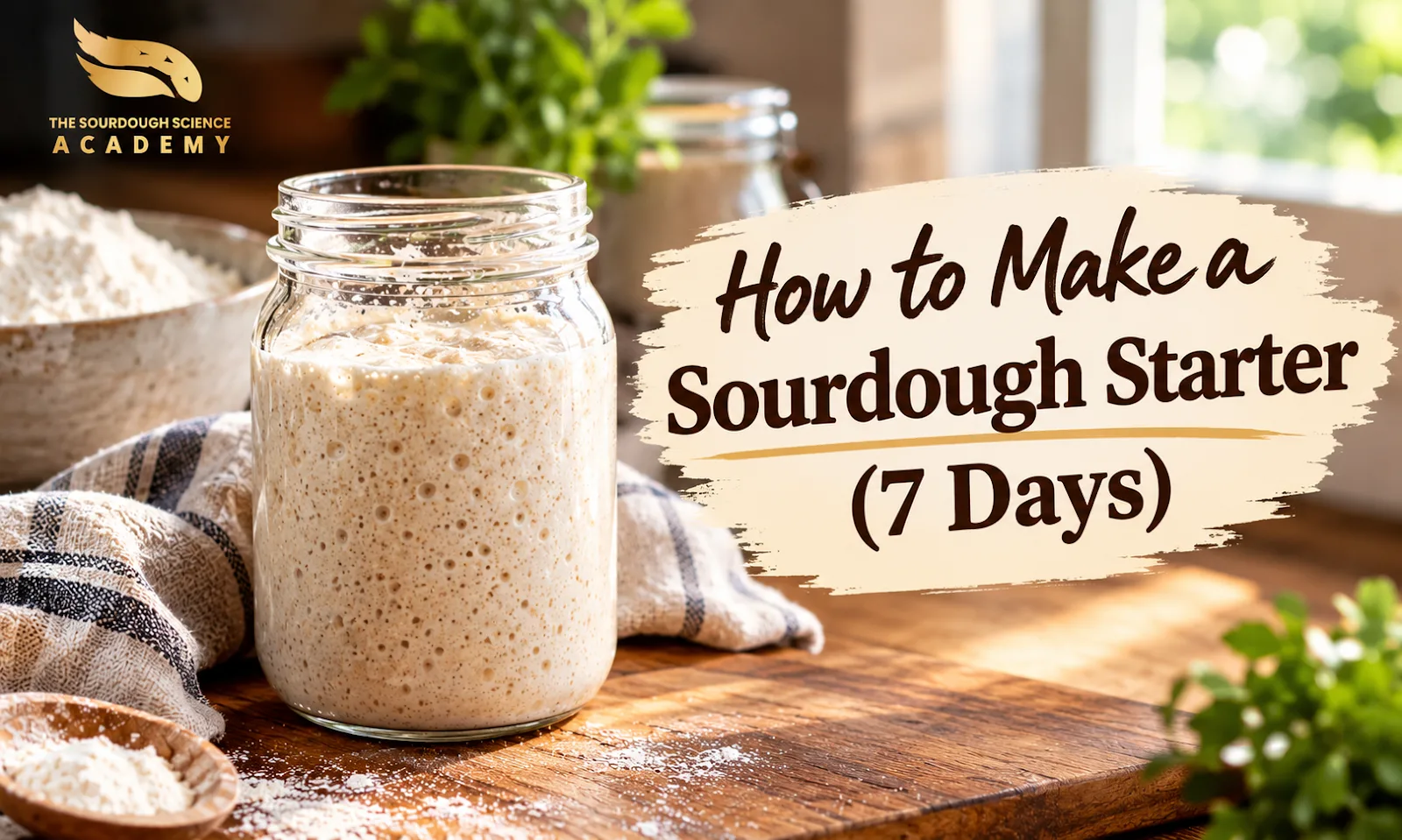
A sourdough starter is a living culture of wild yeast and bacteria that you keep alive with three things: food, warmth and care. Using a dehydrated organic sourdough starter, the culture wakes up in two to three days, and a week is a realistic window to go from a dry pack to a starter you can bake with. This post walks through that week the way I teach it at The Sourdough Science Academy.
Why do I teach people to treat a sourdough starter as a living thing?
I founded The Sourdough Science Academy in September 2021, in Coomera, on the Gold Coast. Since then I have taught more than 3,000 students through weekend workshops, online lessons and private events. The same moment keeps repeating in the room.
Someone arrives with a jar of what they were told is a starter. They hold it up and ask why their bread comes out dense. When I ask what they think the starter is, the answer is almost always the same: flour and water.
That belief is the first thing I try to change. In a video on my YouTube channel, I explain that a sourdough starter is alive, filled with invisible bacteria and yeast that breathe, eat and grow just like we do. Once a baker accepts that, the questions change. Nobody asks "Why is my flour and water not working?" They start asking "Is my starter hungry? Is it too cold?"
The starter is the heart of every sourdough loaf, and a baker who understands what is inside the jar bakes better bread.
What does a sourdough starter actually need to thrive?
My answer is three things. I teach it that way because it is easy to remember at 6 a.m. with a jar in your hand.
What the starter needsWhat it means in your kitchenFoodFlour is the food. The bacteria and yeast eat it, so the starter needs regular feeding to stay active.WarmthFermentation is a biological process, and a comfortable, steady temperature helps the culture work.CareLooking at your starter every day. Care means observing it and responding to what you see.The bacteria and yeast in the jar work together to create fermentation. The yeast helps the dough rise, and the bacteria help build the flavour. Neither one does the job alone, which is why a healthy balance matters more than any single trick.
A healthy starter comes from a simple rhythm of food, warmth and care, repeated until the culture is strong and active.
Do I need to make a sourdough starter from scratch?
No. This surprises people, so I want to be direct about it.
There are two ways to begin. You can build a starter from scratch with flour and water, or you can revive a starter that already exists. At The Sourdough Science Academy, I make a dehydrated version for exactly this reason: it removes the biggest source of beginner doubt.
Here is what the Dehydrated Organic Sourdough Starter from our online shop is:
- A 50g pack of starter taken from a strong, active culture.
- Made only with certified organic flour, 50% whole wheat and 50% high extraction bakers flour.
- Dehydrated gently at 35 degrees Celsius, so the beneficial strains of bacteria stay vibrant and active for robust fermentation.
- Delivered with video and written guidance on reactivating it.
- Shipped free within Australia.
The pack is designed to spring back to life in your kitchen in two to three days. If you want to see what that looks like before you order, I filmed a video on how to revive the starter.
That is the 7-day plan in this post: two to three days to wake the culture, then the rest of the week to settle it into a rhythm and prepare for your first bake.
Starting from a proven, mature culture takes the guesswork out of the first few days, which is where most people give up.
How long does it take to make a sourdough starter?
The short answer is about a week from the moment you open the pack to the moment you are ready to bake. Here is how I suggest you plan it.
DaysGoalWhat you are watching forDays 1 to 3Wake the cultureFollow the reactivation video and written guide that come with your pack. The dry starter returns to life in two to three days.Days 4 and 5Build a rhythmKeep feeding on a regular schedule and notice how the starter responds to food and warmth.Day 6Check the signsLook for a starter that is active and strong, not sluggish.Day 7First bakeMix your first dough and follow the dough, not just the clock.This table is a planning guide, not a rigid timetable. Every kitchen is different, and your starter will tell you when it is ready.
A starter does not run on a calendar, so the 7 days are a framework, and the signs in the jar are the real deadline.
What should I do on days 1 to 3?
The first three days are about waking the culture gently. This is the stage where patience pays off most.
- Open the guide before you open the pack. Watch the reactivation video once all the way through, so you know what to expect.
- Follow the written instructions that come with your starter. They are written for the dehydrated starter specifically, so there is no need to improvise.
- Give the culture food and warmth. This is the first of the three things your starter needs.
- Look at it daily. Care starts here. Notice any change, even a small one.
- Be patient with the first signs of life. The pack is designed to come back in two to three days.
If you would rather learn this with a teacher beside you, the starter course covers the process step by step, and our upcoming classes let you practise it in person.
What should I do on days 4 and 5?
By now the culture has woken up, and the job changes from reviving it to understanding it.
This is where I ask students to stop watching the clock. The same idea shows up again when we get to baking: following the starter, not just the time on the wall, is what separates a good week from a frustrating one.
- Keep a steady feeding rhythm. Food is what keeps the bacteria and yeast working.
- Keep the jar somewhere comfortable. Warmth is the second need.
- Watch how the starter behaves after a feed. A starter that responds is a starter that is healthy.
- Write short notes. Time of feeding, how the jar looked, how it smelled. After two days, patterns appear.
The notes matter more than people expect. When something goes wrong later, you will have a record to look back at, and so will I if you send me a message.
How do I know my sourdough starter is ready to use?
I look for a starter that is strong and active. That phrase comes straight from how I describe the culture I send out: a strong, active culture, not an unreliable "maybe it will work" packet.
In practice, that means a starter that is clearly alive and responding to its feeds. If it is sluggish, give it more time on day 6 instead of rushing into the bake. A dough made with a weak starter will tell you so, usually with a dense, tight crumb.
When you are unsure, ask. You can contact me by email at [email protected] or on WhatsApp at +61 492 936 808.
A starter is ready when it is active and strong, and waiting an extra day is always cheaper than baking a loaf that does not rise.
What should I do on day 7, my first bake?
This is the day the starter becomes bread. Gluten science takes over here, and understanding it is what separates a dense loaf from an open, airy crumb.
In my video Why Your Sourdough is Dense and How to Fix It, I explain that gluten is formed from two proteins, gliadin and glutenin. Here are the key ideas:
- Water, mixing and resting build the gluten network. Each of these steps gives the dough structure.
- Strength and elasticity must be balanced. Airy bread needs both.
- Follow the dough, not just the clock. A recipe's timing is a guide, and the dough is the final judge.
The last point is the one I repeat most often in class. Two bakers can follow the same recipe on the same day and get different results, because their kitchens are not the same.
If you want to see this in motion, watch the Sourdough Bread Workshop video, or read what happens on the first day in our guide to a sourdough workshop on the Gold Coast.
Following the dough instead of the clock is the single habit that turns a working starter into a good loaf.
Why is my sourdough dense even though my starter is active?
This is the most common question I get, and the starter is not always the cause. Dense bread often comes down to gluten development and timing.
What you noticeWhat may be going onWhat I suggestDense, tight crumbThe gluten network may not have had enough water, mixing or resting.Review how water, mixing and resting build the network, and watch the gluten video.Dough follows the recipe but does not riseThe timing may not suit your kitchen.Follow the dough, not just the clock.Starter seems sluggishThe culture may need more food or warmth.Return to the three needs and give it more time.Results vary from bake to bakeSmall changes in routine.Keep notes on each feed and each bake.If the table does not solve it, I offer consultations where we look at your specific situation together.
What equipment do I need to make a sourdough starter?
Less than most people think. A starter needs flour, water, a jar and a little attention. The harder question is what you need for the loaf that follows, and that is where a kit helps.
My ALL Inclusive Sourdough Starter Kit is built so a complete beginner can bake their first two loaves with confidence. You can watch inside the kit before deciding.
What is includedWhy it mattersCertified organic floursBetter flavour, better digestion and more consistent results than generic supermarket flour.50g dehydrated organic starterA proven, mature culture from a strong, active source.Written guide and video instructionsYou are not guessing your way through your first loaf.Support from a real bakerThe kit is made by The Sourdough Science Academy, with an active community ready to help.The kit exists because many cheap bundles give you random tools and a weak starter, then leave you alone to figure it out. I built this one to be a simple system with support behind it. If you prefer to choose your own items, browse the full sourdough shop.
A good starter kit is a system with a proven starter, organic flour and clear guidance, not a bag of tools.
Is sourdough better for people with gluten intolerance?
This is the reason The Sourdough Science Academy exists. The academy is dedicated to fighting gluten intolerance through the craft of sourdough, using organic ingredients and ancient grains.
What I can say, and what I teach, is that fermented sourdough can significantly reduce gluten content. That is a health benefit worth understanding, and it is one reason I build every class around slow fermentation. I do not describe sourdough as gluten free, and I encourage anyone with a medical condition to speak to their health professional.
Our courses and classes go deeper into how fermentation works and why it matters for your body as well as your bread.
What if I do not have a week to spare?
This is the objection I hear from busy people, and it is fair. Most of the work in a starter week is observation, not labour. The daily tasks are short, and they fit around a normal schedule.
That idea sits at the centre of my signature teaching approach, the 2-Hour Sourdough Method™. I wrote about it in how the 2-Hour Sourdough Method fits busy lifestyles. More than 3,000 students have been trained with it, and over 1,500 active bakers now belong to our online and in-person community.
A starter week is a series of short check-ins, which is why it suits a working schedule.
Where can I learn sourdough in person or online?
I teach in two ways, depending on where you live.
- In person: Weekend classes in Coomera, serving the Gold Coast to Brisbane. See upcoming classes for dates. If you enjoy pizza, our pizza making event on the Gold Coast is another way to learn with us.
- Online: The online courses are available worldwide. The online shop ships within Australia only.
The Sourdough Science Academy has earned more than 400 five-star Google reviews, and we have been featured on Channel 10 (10 Comedy and 10 Drama). You can read more about me and the academy, or follow along on Instagram, Facebook and Vimeo.
Key Takeaways
- A sourdough starter is alive. It is a culture of bacteria and yeast, not just flour and water.
- Every starter needs three things: food, warmth and care.
- The Dehydrated Organic Sourdough Starter from The Sourdough Science Academy comes back to life in two to three days.
- A realistic plan is one week: wake the culture, build a rhythm, check the signs, then bake.
- Dense bread usually points to gluten development and timing. Follow the dough, not just the clock.
- The ALL Inclusive Sourdough Starter Kit combines certified organic flour, a proven starter and step-by-step support.
Frequently Asked Questions
How do I make a sourdough starter in 7 days?
Begin with a dehydrated organic starter and follow the reactivation guide. The culture wakes in two to three days, and you use the rest of the week to feed it regularly and check that it is active before your first bake.
What is the best flour for a sourdough starter?
At The Sourdough Science Academy, our starter is made from certified organic flour, 50% whole wheat and 50% high extraction bakers flour. Certified organic flour gives better flavour, better digestion and more consistent results than generic supermarket flour.
Can a complete beginner make a sourdough starter?
Yes. The ALL Inclusive Sourdough Starter Kit is designed for complete beginners, with a written guide and video instructions, so you can bake your first two loaves with confidence.
Is there a sourdough starter course?
Yes. The Sourdough Science Academy runs a starter course online and in person, and you can also find answers on our frequently asked questions page.
Where can I read more sourdough guides?
Visit the blog for more articles, or watch our YouTube channel for tutorials from the Sourdough Educational Series.
About the Author
Roberto Giammellucca is the founder of The Sourdough Science Academy, established in September 2021 in Coomera, Queensland, Australia. He is a qualified Italian pizzaiolo, chef and baker, and the creator of the 2-Hour Sourdough Method™. The academy has taught more than 3,000 students, holds over 400 five-star Google reviews, and has been featured on Channel 10. Connect with Roberto on LinkedIn, or email [email protected].
Originally published on:
https://thesourdoughscience.com/how-to-make-a-sourdough-starter-7-days/