Losing some hair every day is completely normal. But for a growing number of people in India, hair loss goes well beyond usual shedding. When the hairline keeps receding, patches start forming, or the scalp becomes more visible over time, something more targeted is needed. For many, this is when the conversation around Hair Transplant in Noida begins, and knowing when to have that conversation is what this blog is about.

The Difference Between Normal Hair Loss and a Real Problem
On average, losing 50 to 100 strands a day is considered normal as part of the hair growth cycle. This kind of shedding is temporary and usually self-correcting.
Hair loss that signals a deeper issue looks different. Here are the signs worth paying attention to:
- Hair fall that has been going on consistently for more than three months
- Visible thinning across the scalp, particularly at the crown or temples
- A hairline that has moved noticeably further back over time
- Bald patches appearing suddenly, or spreading
- Hair that is not growing back after shedding
- Excessive hair loss after illness, major stress, surgery, or childbirth that does not stop after a few months
If any of these apply to you, the first step is always a proper diagnosis, not a product purchase.
Common Causes That Need Medical Attention

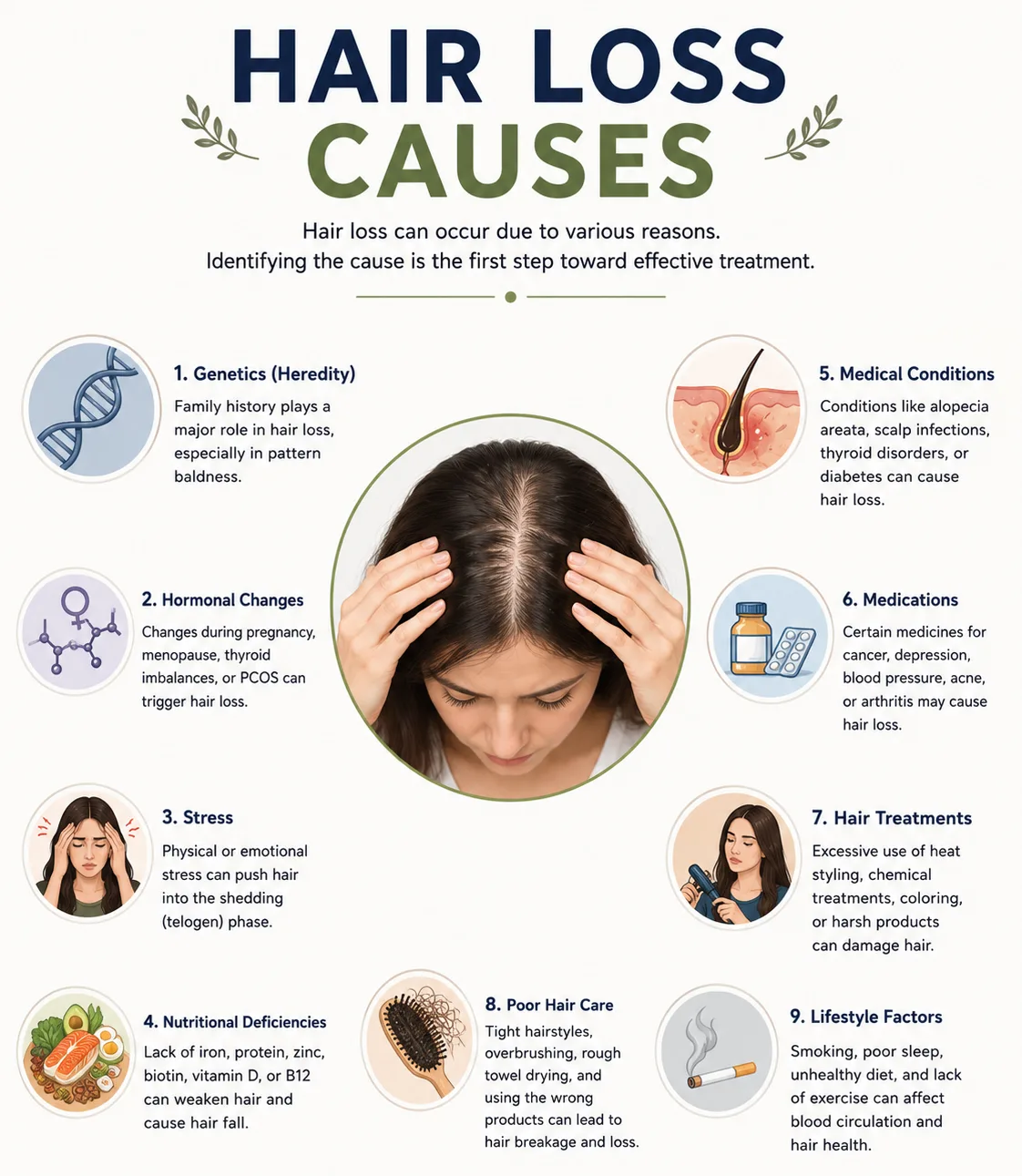
Hair loss has many possible causes, and the right treatment depends on identifying the correct one. Some of the most common medically significant causes include:
- Androgenetic alopecia (pattern baldness): The most prevalent cause in both men and women, driven by genetics and hormones. It tends to be progressive and does not stop without intervention.
- Hormonal imbalances: Thyroid disorders, PCOS in women, or significant hormonal fluctuations can trigger noticeable hair loss that does not resolve without treating the underlying condition.
- Nutritional deficiencies: Low levels of iron, Vitamin D, Vitamin B12, and protein are common triggers in India. These respond well to corrective treatment when caught early.
- Alopecia areata: An autoimmune condition causing patchy hair loss. This requires dermatological management, not home remedies.
- Scarring conditions: Certain conditions permanently destroy hair follicles. In these cases, medical or surgical intervention is the only viable path.
When Non-Surgical Treatments Are No Longer Enough
Many cases of hair loss respond well to non-surgical treatment - medications like minoxidil, PRP therapy, mesotherapy, or nutritional supplementation. These work best in early stages when follicles are weakened but still active.
The problem is that too many people delay seeking treatment. By the time they consult a specialist, follicles in the affected areas may already be dormant or permanently damaged. Once hair follicles stop producing hair and scar tissue has formed, topical treatments and injections cannot restore growth.
This is when a dermatologist in Noida would typically discuss whether a hair transplant is the appropriate next step.
What Makes a Hair Transplant the Right Decision?
A hair transplant is a surgical procedure that moves healthy hair follicles from a donor site - usually the back of the scalp where hair is resistant to loss - to the thinning or bald areas. The transplanted follicles grow naturally and permanently.
At Skinlogics, two proven techniques are offered:
- FUE (Follicular Unit Extraction): Individual follicles are extracted and placed into tiny recipient sites. There are no stitches, minimal scarring, and recovery is relatively fast. FUE is the most commonly performed technique globally.
- FUT (Follicular Unit Transplantation): A strip of skin is removed from the donor area, grafts are separated and transplanted. Recovery takes around 10 days, and the new hairline typically becomes visible within 3 to 4 months.
Both techniques are performed under local anaesthesia. Hair transplant cost in Noida at Skinlogics varies depending on the number of grafts, the technique used, and the extent of hair loss.
Who Is a Good Candidate?
Hair transplant is suitable for:
- Men and women with permanent pattern baldness
- People with scars from injury or surgery affecting hair growth
- Those who want to restore eyebrows, eyelash, or beard density
- Individuals whose hair loss has stabilised and who have sufficient donor hair
It is not suitable for those with active scalp infections, autoimmune-related hair loss that is not yet stable, or insufficient donor hair density. A thorough assessment determines candidacy.
Conclusion
Hair loss that has moved beyond everyday shedding deserves proper medical attention. The earlier a specialist assesses the situation, the more treatment options remain available. If you have been putting off a consultation and want to explore whether a Hair Transplant in Noida is the right path for you, Skinlogics is a trusted place to start.

Dr. Vandana Malik and the team at Skinlogics offer personalised hair loss evaluations and customised treatment plans. Visit the website to book your consultation to make an informed choice.