
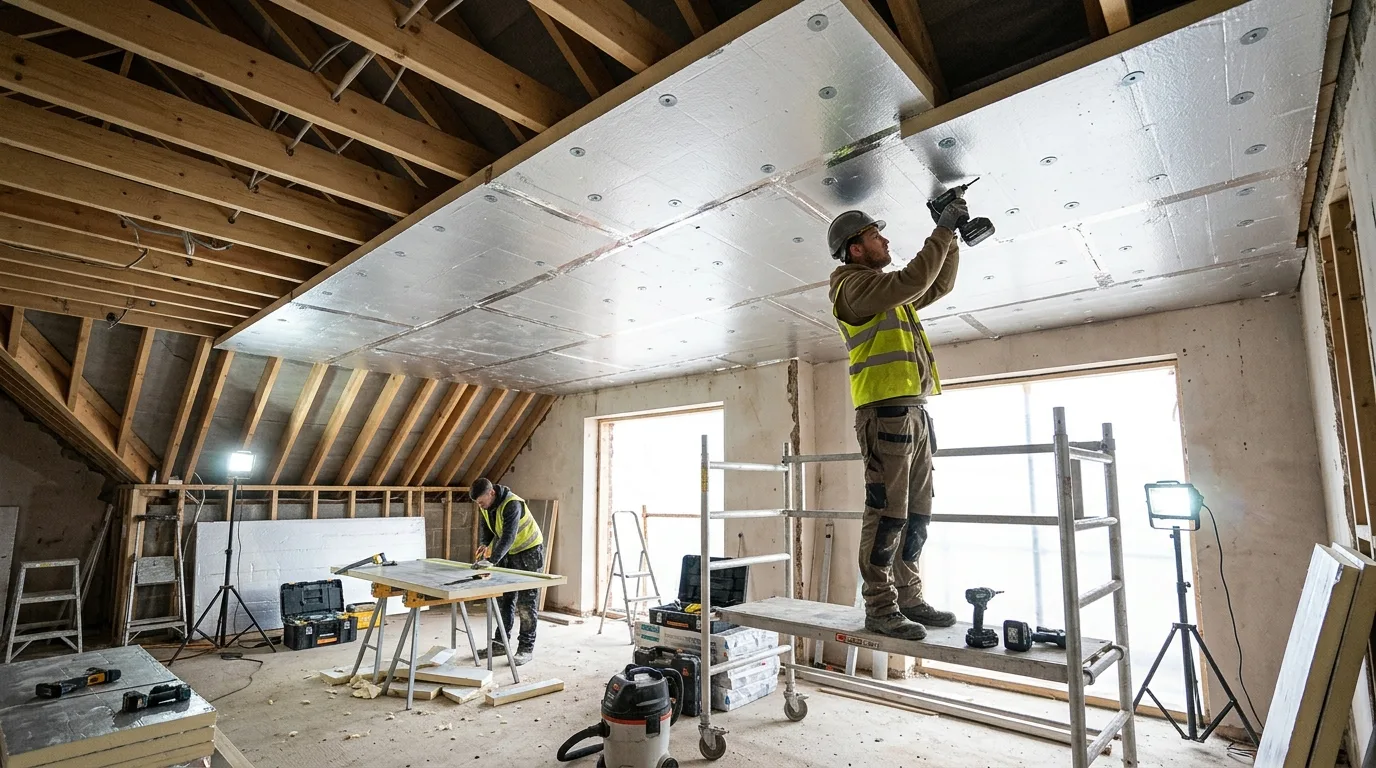
There are two ways to insulate a flat roof. The warm roof method places the insulation on top of the roof deck, below the waterproof layer. The cold roof method places it between the ceiling joists, under the roof deck.
In this guide, we explain both methods step by step, list the materials you will need, and answer the most common questions about flat roof insulation.
Warm Roof vs Cold Roof: Which Should You Choose?
FeatureWarm RoofCold RoofInsulation positionOn top of the roof deck, below the waterproof layerBetween the ceiling joists, under the roof deckEffectivenessMost effective, keeps the whole structure warmLess effective, prone to cold spotsCondensation riskLow, structure stays warm throughoutHigher, needs proper ventilation to avoid damp and mouldCostHigher upfront costCheaper optionBest forRenovations, new builds, long-term performanceTight budgets, quick fixesKey requirementCorrect insulation thickness and sealingStrong airflow and ventilation
Which one is right for you:
Not sure which insulation method suits your flat roof? The right choice depends on your roof type, your budget and how much headroom you can spare. Get a free estimate from reliable roofing contractors and they will recommend the best option for your property.
Materials and Tools You'll Need
- Rigid insulation boards: PIR, PUR, phenolic boards, or plasterboard
- Vapour control layer (VCL): stops moisture getting trapped and causing damp
- Waterproof membrane: EPDM rubber, roofing felt, or single-ply membrane
- Fixings or strong adhesive: to secure insulation boards to the roof
- Basic tools: saw, screws, drill, sealant, measuring tape
Check your local building regulations for the required insulation thickness. Most homes in the UK need at least 100-150mm for good energy performance.
How to Insulate a Flat Roof from the Outside (Warm Roof Method)
1. Clean the roof surface
Remove dirt, leaves, and debris. If you're replacing an old roof, strip away the old waterproofing (felt, EPDM, or bitumen) with a roofing shovel or scraper. Repair any bumps or holes in the deck before moving on, so the new layers can bond properly.
2. Lay the vapour control layer
Unroll the VCL over the clean deck, keeping it smooth and free of wrinkles. Overlap seams by about 100mm (4 inches) for a tight seal, and secure it with roofing nails or adhesive depending on the material. Seal the seams with tape or adhesive to block moisture completely.
3. Install the insulation boards
Lay PIR, PUR, or phenolic boards side by side across the deck, staggering the seams like a brick wall for stability and reduced heat loss. Secure them with screws or strong adhesive, and cut boards to fit neatly around corners or vents.
4. Add the waterproof membrane
Unroll your chosen membrane (EPDM, bituminous felt, or single-ply) across the insulation, leaving a small overhang on each edge to trim later. Overlap seams by at least 100mm and seal them with adhesive or heat welding, leaving no gaps.
5. Seal all the edges
Apply roofing sealant along every edge where the membrane meets the deck or walls, including corners and penetrations like vents and chimneys. Metal flashing around vents or pipes adds extra protection.
How to Insulate a Flat Roof from the Inside (Cold Roof Method)
This method works well when you can't access the top of the roof. It's usually cheaper and simpler than the warm roof method, but ventilation is critical to prevent damp or mould.
1. Access the roof space
Remove the ceiling panels to expose the roof void. Check for existing leaks, mould, or water damage before you start, and make sure the space is clean and dry. Wear gloves, goggles, and a mask while working inside.
2. Fit insulation between the joists
Use rigid foam board, mineral wool, or fibreglass batts. Measure the gap between joists and cut the insulation to fit snugly, with no gaps or holes. Leave at least 50mm (2 inches) of clear airflow space above the insulation to prevent condensation.
3. Install a vapour barrier
Roll the vapour barrier across the underside of the joists and secure it along the edges. Overlap seams by at least 100mm, and seal them with tape or sealant for a complete moisture barrier.
4. Install ceiling boards
Fit new plasterboard or ceiling panels over the joists, securing them with nails or screws. Finish with paint or your preferred decoration.
Tips to Prevent Problems After Insulating a Flat Roof
- Keep the ventilation clear: On a cold roof, make sure the 50mm airflow gap above the insulation stays open so condensation cannot build up.
- Seal the vapour control layer properly: Overlap the seams and tape them, because even small gaps let warm, moist air reach the insulation.
- Choose the right insulation thickness: Follow building regulations, which usually means 100 to 150mm for good energy performance.
- Inspect the roof twice a year: Check after autumn and after winter for cracks, blisters, loose edges and standing water.
- Keep the roof clear: Remove leaves, moss and debris so water can drain away and does not pool.
- Book a professional roof inspection: Have a professional roof inspection in Chelmsford at least once a year and after severe weather, so small problems are caught before they damage the insulation.
- Fix small damage early: A minor tear or leak can soak the insulation and reduce its performance, so repair it before it spreads.
- Check the flashings and sealant: Look around vents, pipes and chimneys, and reseal any gaps.
- Look for damp warning signs: Watch for stains, musty smells or mould on the ceiling, as these can mean moisture is getting in.
At Bestway Roofing - Chelmsford Roofing, we provide professional flat roofing services for homes and businesses in Chelmsford and the surrounding areas. Our team installs and repairs flat roofs using EPDM rubber, GRP fibreglass and felt, and we also offer flat roof maintenance and waterproofing treatments. Whether you are replacing an old roof or planning a new one, we will survey your roof and recommend the right solution. Contact us today for a free, no-obligation quote.
Conclusion
Proper flat roof insulation protects your building, cuts energy bills, and keeps your space comfortable year-round. Whichever method you choose, careful planning, the right materials, and good moisture control make the difference between a job that lasts decades and one that causes problems within a few years.
FAQs
How much does it cost to insulate a flat roof?
Typically £40 to £60 per square metre, depending on the insulation type, roof size, and complexity. Warm roof systems usually cost more than cold roof options.
What is the best insulation for a flat roof?
PIR (polyisocyanurate) and XPS (extruded polystyrene) are considered the best choices for their thermal performance, moisture resistance, and durability.
Can I insulate an existing flat roof?
Yes. You can insulate an existing flat roof using either the warm roof (from above) or cold roof (from below) method, depending on your access and budget.
How long does flat roof insulation last?
Quality materials like PIR boards can last 30-50 years or more when installed properly and protected from moisture.