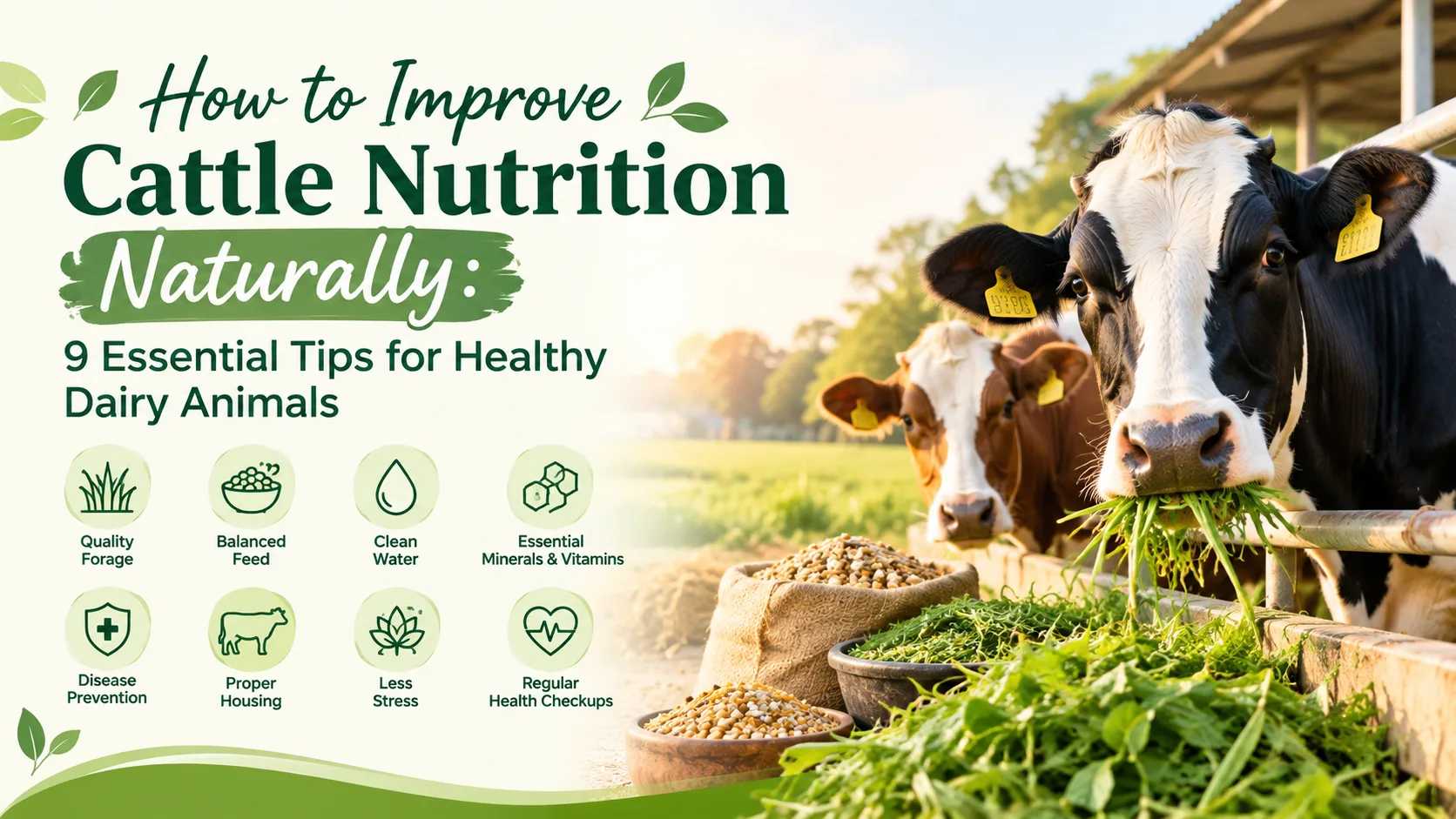
Good nutrition is one of the foundations of healthy and productive dairy animals. Whether you are caring for cows, buffaloes, calves, goats or other livestock, providing a balanced diet can support growth, body condition, milk production and overall wellbeing.
But good cattle nutrition is not simply about giving animals more feed. The quality of the feed, availability of essential minerals and vitamins, clean drinking water and the animal's age, breed, production stage and health condition all matter.
If you are looking for practical cattle nutrition tips, here are nine simple ways to improve the nutritional routine of dairy animals.
1. Provide a Balanced Daily Diet
A healthy diet should provide animals with the nutrients they need for their particular stage of life and production.
Depending on the animal and its requirements, the diet may need to provide:
- Energy
- Protein
- Fiber
- Minerals
- Vitamins
- Adequate water
The exact nutritional requirements can differ between a growing calf, a pregnant animal and a high-producing dairy cow.
Therefore, simply increasing the quantity of feed may not solve a nutritional deficiency. The overall balance of the ration is more important.
2. Include Good-Quality Fodder
Green fodder, dry fodder and other suitable feed ingredients can form an important part of a dairy animal's diet.
Good-quality fodder should be:
- Fresh or properly preserved
- Free from visible mould
- Suitable for the animal
- Stored hygienically
- Provided in appropriate quantities
Poor-quality or spoiled feed can negatively affect appetite and digestive health.
Farmers should also avoid sudden and major changes in the animal's diet. Feed changes should generally be introduced gradually.
3. Make Clean Drinking Water Available
Water is often overlooked when discussing animal nutrition, but it is essential for normal body functions.
Dairy animals need regular access to clean and safe drinking water. Water requirements can vary depending on factors such as:
- Temperature
- Body size
- Feed composition
- Milk production
- Activity level
- Pregnancy and lactation
During hot weather, paying particular attention to water availability becomes even more important.
4. Pay Attention to Minerals and Vitamins
A diet may look adequate but still fail to provide sufficient amounts of certain vitamins and minerals.
Minerals such as calcium, phosphorus, zinc, copper, manganese, magnesium and others have important roles in normal body functions.
Vitamins such as A, D and E also contribute to normal health and metabolism.
For this reason, mineral and vitamin supplementation may be considered when appropriate for the animal's diet.
VarahVet Mineral Mixture Powder combines multiple vitamins and minerals with a herbal extract and is listed for use in cows, buffaloes, calves, sheep, goats, poultry and fish. The product page also provides different mixing quantities according to animal type.
5. Consider the Animal's Life Stage
Nutritional requirements are not the same for every animal.
For example, a calf that is still growing has different nutritional requirements from an adult dairy cow producing milk.
Similarly, pregnant animals and animals in lactation may require additional nutritional attention.
A useful feeding plan should therefore consider:
- Age
- Body weight
- Pregnancy status
- Milk production
- Growth stage
- Breed
- Overall health
This is one reason why a feeding plan prepared with the help of a veterinarian or animal nutrition professional can be useful.
6. Support Healthy Digestion
Good digestion is closely connected with how effectively an animal can use the nutrients present in its feed.
Sudden feed changes, poor-quality feed and unsuitable feeding practices can affect digestive health.
Providing good-quality fodder, maintaining a consistent feeding routine and ensuring access to clean water can help create better conditions for normal digestion.
Some nutritional supplements also contain ingredients intended to support digestive function. However, they should be selected according to the animal's specific needs.
7. Monitor Body Condition and Growth
Don't rely only on the amount of feed being provided.
Regularly observe:
- Body condition
- Weight or growth
- Appetite
- Coat or skin condition
- Activity
- Milk production
- Reproductive performance
Changes in these areas can sometimes indicate that the animal's nutritional needs are not being met or that an underlying health issue needs attention.
If an animal is losing weight despite receiving adequate feed, a veterinarian should be consulted rather than simply increasing supplementation.
8. Keep Feed and Storage Areas Clean
Nutrition is also affected by feed hygiene.
Feed should be stored in a clean, dry area protected from moisture and contamination. Mouldy, spoiled or visibly contaminated feed should not be given to animals.
Clean feeding equipment and storage areas can also help maintain better farm hygiene.
Good nutrition and good farm management should work together.
9. Use Supplements According to Need
Supplements can help fill nutritional gaps, but they should not be viewed as a replacement for a balanced ration.
Mineral mixtures, calcium supplements, vitamin preparations and other feed supplements can have different purposes.
Before choosing one, consider:
- What nutrients are already present in the feed
- The animal's age and production stage
- Existing nutritional deficiencies
- The type of animal
- Veterinary or nutritional advice
VarahVet's Mineral Mixture Powder, for example, contains calcium, phosphorus, zinc, manganese, copper, iodine, vitamins and other nutrients and is designed as a nutritional supplement for different animal categories.
What Are the Signs of Poor Nutrition in Cattle?
Nutritional problems can appear in different ways depending on their cause and severity.
Some possible signs that deserve attention include:
- Poor growth
- Weight loss
- Reduced appetite
- Poor body condition
- Reduced milk production
- Reproductive problems
- Weakness
- Changes in coat or skin condition
These signs can also occur because of disease, parasites or other management problems. Therefore, they should not automatically be attributed to a nutritional deficiency.
How Can Farmers Improve Dairy Animal Nutrition?
A practical approach is to focus on the basics:
- Provide good-quality fodder.
- Maintain a balanced ration.
- Ensure regular access to clean water.
- Consider appropriate mineral and vitamin supplementation.
- Adjust feeding according to the animal's life stage.
- Avoid sudden feed changes.
- Monitor body condition and production.
- Maintain clean feed storage.
- Consult a veterinarian or nutrition professional when problems arise.
Frequently Asked Questions
What is the best feed for dairy cows?
- There is no single feed that is best for every dairy cow. A suitable ration should provide appropriate energy, protein, fiber, minerals, vitamins and water according to the animal's individual requirements.
Why are minerals important for cattle?
- Minerals such as calcium, phosphorus, zinc, copper and magnesium participate in many normal body functions. Requirements vary depending on the animal's age, production stage and diet.
Do dairy animals need mineral supplements?
- Some animals may benefit from mineral supplementation when their regular diet does not provide sufficient amounts of required minerals. The need should ideally be assessed according to the animal's ration and nutritional requirements.
How can I improve my cow's nutrition naturally?
- Start with good-quality fodder, clean water, a balanced ration and appropriate feeding practices. Natural or herbal supplements can be considered where appropriate, but they should complement rather than replace balanced nutrition.
Conclusion
- Good cattle nutrition is built on consistency and balance rather than relying on one particular feed or supplement.
- Quality fodder, adequate water, appropriate minerals and vitamins, healthy feeding practices and regular observation can all contribute to better animal nutrition.
- When nutritional gaps exist, a suitable mineral or feed supplement may provide additional support. However, supplementation should always be considered as part of the complete diet and according to the animal's individual requirements.
- A well-planned nutritional routine can help farmers support the health, growth and productivity of their dairy animals over the long term.