
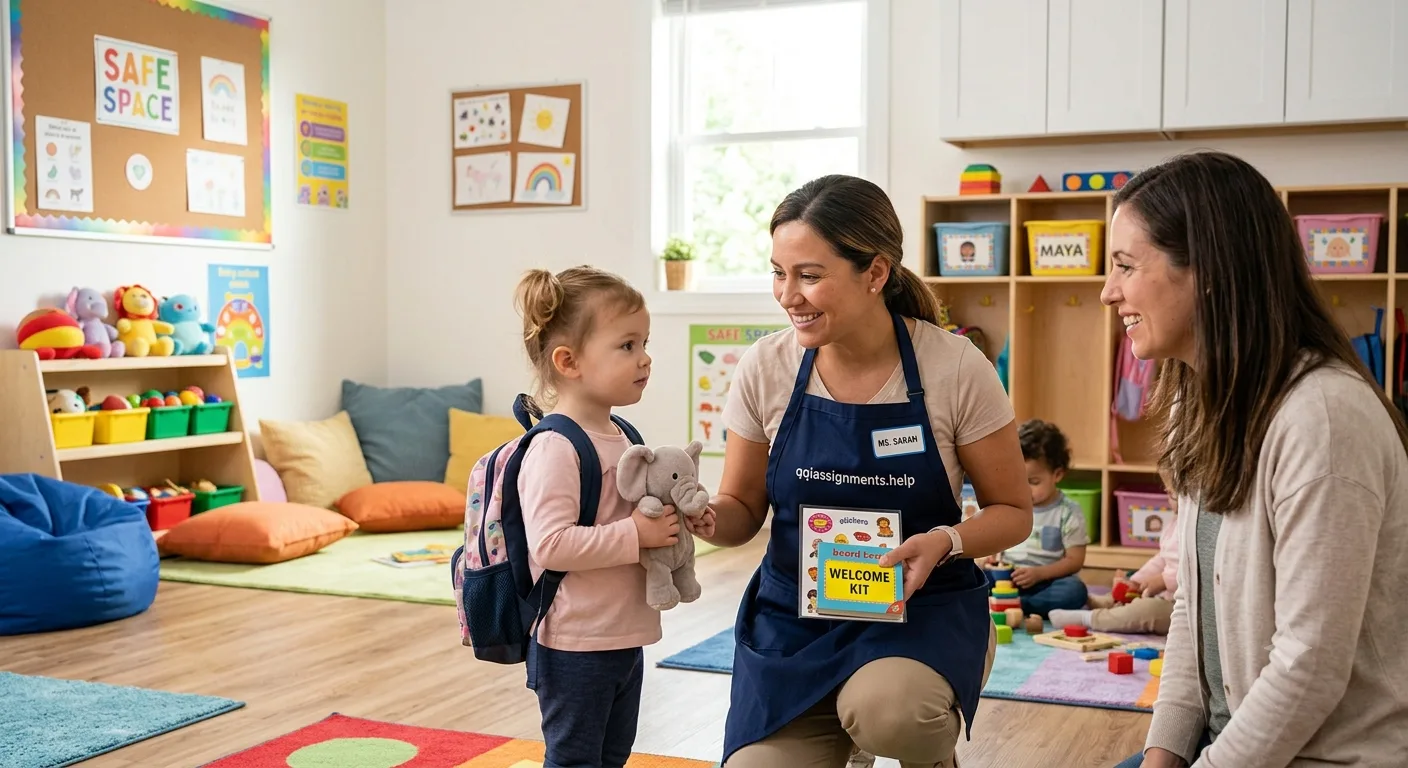
The first drop-off in a daycare is the biggest challenge for everyone involved.
The first day of daycare for children feels like a stepping stone into a different world. For parents, it can be confusing whether the environment is safe. And it is the time for teachers to build trust with both the child and the parents.
When a child is left alone, they will look up to their teachers for protection. But that only happens in a safe and sound space. This is why a teacher plays a crucial role in regulating the classroom’s energy. A calm and welcoming gesture keeps everyone relaxed and comfortable.
Here I’ll discuss my experience of handling young children as a preschool teacher on their first day with me.
Preparing the Classroom First
The classroom should look welcoming and warm. It helps children to adjust more easily, and parents also get confident that their little ones are in safe hands.
How I Created a Safe Physical Space:
Young children have a natural tendency to explore. So my priority was to make sure their surroundings are safe.
I followed these simple tips:
- Set up a cosy corner with bean bags, soft pillows, and cushions
- Place toys and plushies on lower shelves so children can access them easily
- Remove pointed or sharp objects from the space
- Keep the walkway clear so children don't stumble
- Decorate the classroom with colorful furniture and posters to make it engaging
Don’t Forget to Organise Essential Items:
I believe staying well-organised beforehand keeps you stress-free.
Before starting the day:
- Label each cubbyhole with children’s names boldly
- DIY small welcome kits with stickers, coloring books, and tiny knick-knacks
- Mark your checklist for diapers, baby food, cleaning supplies, and additional clothes
How to Manage the Parent’s Goodbye
The drop-off moment is the most difficult aspect of the first day of daycare for both children and parents.
Build Trust Through Open Communication:
Teachers seem trustworthy when parents feel heard.
Here are some trusted and tested tips that I stand by:
- Pay full attention to parents' special instructions
- Share what and how their child responded as the outcome of the first day. For example, if their child made a new friend.
- Smile during the conversation and speak positively
Overcome High-Stress Tantrums
Both parent and child get separated for the first time on this day. That feeling is extremely overwhelming.
When a child clings closely to their parent:
- Step in gradually with comfort and warmth
- Tell parents to make a quick goodbye because it reduces anxiety later on
- Inform them when to expect the first update via call or text
- Console the child immediately after the parents leave with a cute toy or a poem
I strongly believe teachers need to keep evolving with practical knowledge. You can learn more about daycare tips in the QQI courses by seeking QQI Assignment Help from professionals.
Calm the Storm For a Quiet Environment:
Most children sob because the environment doesn’t feel familiar. In this scenario, patience makes a huge difference.
Always Use Gentle Comforting:
Seek opportunities and moments to bond, such as:
- Call their names with a soothing and gentle voice
- Walk slowly from one place to another instead of rushing
- Offer a comfort object that reminds them of home, such as a stuffed toy or a soft blanket
- Keep them distracted with sensory activities like water play, sand castles, or blowing bubbles.
Stay beside every activity and interact directly
How I Lead the First Day Schedule
Make your timetable more flexible than a strict routine on day one.
I Keep the Day Low Pressure:
Every child takes some time to adapt.
Don’t rush through lesson plans.
Do this instead:
- Offer quality time for free exploration of the classroom
- Make sure the activities are basic and fun
- Prioritize necessities like bringing meals, naps, bathroom breaks, and adequate hydration
- Celebrate even the tiniest success of their participation
How to Introduce Group Activities Gradually:
Every child has a different personality. Some bond with classmates instantly while others require more time.
You can start by arranging small activities that include:
- Singing poems
- Reading short stories
- Playing with building blocks
- Practicing sharing toys and meals
Reporting Back to Parents:
Parents trust you more when they hear about positive progress, even if it’s small.
Monitor Little Wins:
Make simple notes about
- A positive achievement during the first day
- Eating meals
- Washroom routine
- Sleeping habits
- Best activity
- New friendships
End the Day With a Positive Note
When parents return, start the conversation by saying something positive such as: “She loved our pancakes” or “He chuckled during story time.”
Be straightforward if the child cried or there was some other inconvenience.
Lastly, assign one simple tip or task for the next day, such as “Bring their favorite toy”.