
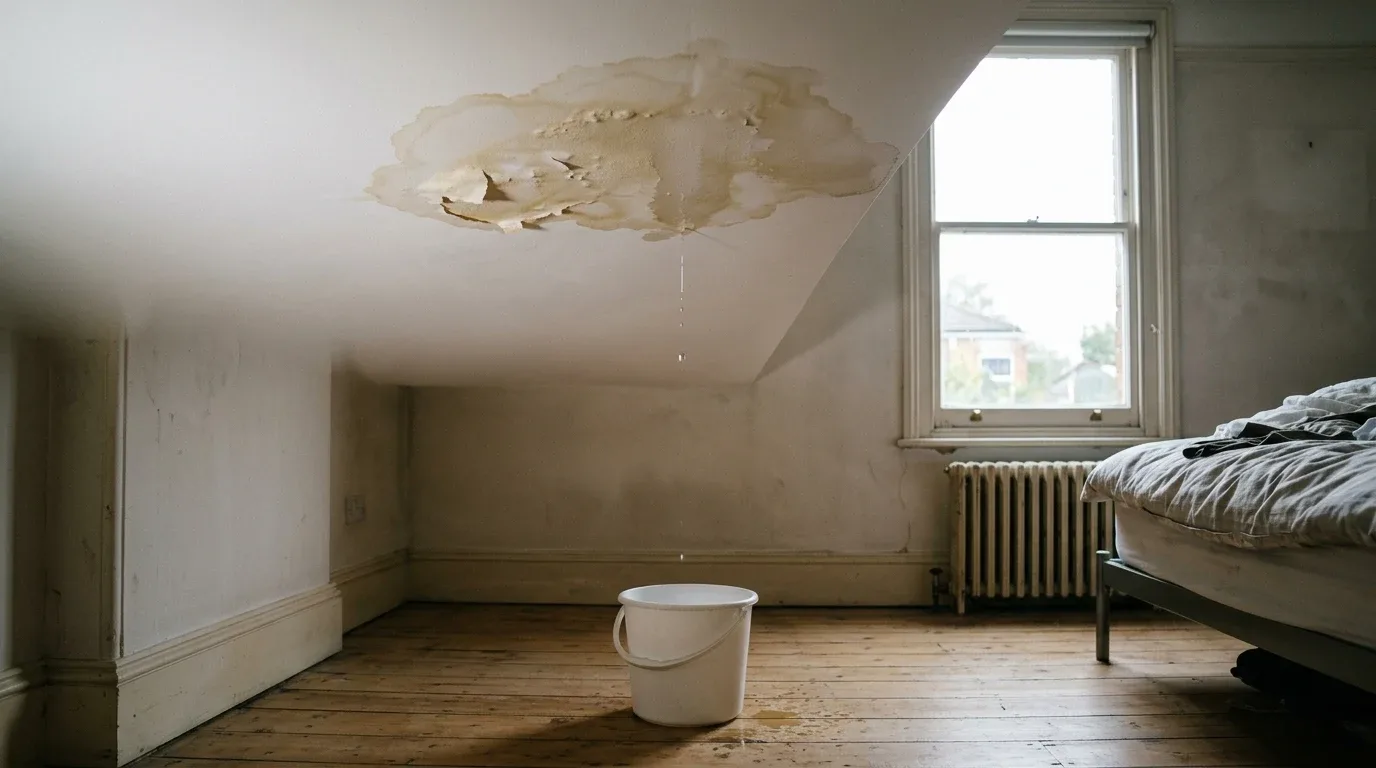
A drip in the middle of the night or a brown stain spreading across the ceiling is stressful for any homeowner. The first question is usually whether you can fix it yourself, right now, without climbing onto the roof.
The honest answer is that you can limit the damage and make a temporary repair from the inside. A permanent fix almost always has to be done from the outside, by someone who can work safely at height. This guide covers what to do first, which temporary fixes work, and when it is time to call a roofer.
Step 1: Contain the Water and Protect Your Home
Before looking for the cause, stop the leak from causing more damage.
- Move furniture and valuables away from the affected area.
- Place a bucket or tub under the drip, with a towel at the bottom to stop splashing.
- Relieve a bulging ceiling. If the plasterboard is sagging and full of water, make a small hole in the lowest point of the bulge with a screwdriver and let the water drain into a bucket. This is better than letting the whole ceiling collapse.
- Switch off the electrics. If water is near ceiling lights or sockets, turn off the power to that circuit at the consumer unit and do not use the fitting until an electrician has checked it.
- Take photos of the damage for your insurance claim.
Step 2: Find Where the Leak Is Really Coming From
Water rarely drips straight down from the hole in the roof. It runs along rafters, felt and pipework before it appears on your ceiling, sometimes a metre or more from the source. If you can safely access the loft, check the following:
- Look for dark stains, damp timber or wet insulation on the underside of the roof.
- Follow the water trail upwards to find the highest wet point. That is usually close to the source.
- Check around chimneys, vents, pipes and roof windows. These are the most common leak points, because the flashing around them can fail over time.
- Look for daylight coming through the roof covering, which points to missing, cracked or slipped tiles.
- Wait for a dry day if you can, and recheck, as some leaks only appear in particular wind directions.
Wear a dust mask and gloves in the loft, and only step on the joists or a proper board, never on the ceiling between them. If your ceiling has a textured coating (such as Artex) and your home was built before 2000, do not scrape or drill it, as older coatings can contain asbestos.
Step 3: Temporary Fixes You Can Do from the Inside
Once you know roughly where the water is entering, these measures can buy you time until the roof is properly repaired:
- Dry the area. Move wet insulation aside so it can dry, and use a fan or dehumidifier. Wet insulation loses its performance and can lead to mould.
- Use a waterproof tape or sealant on small gaps. For a tiny crack or gap around a pipe, an exterior-grade sealant or bitumen-based repair tape on the underside can slow the leak. Treat this as a short-term measure only.
- Divert the water. In a severe case, a sheet of heavy polythene pinned under the leak can channel water into a bucket.
- Check the guttering. If you can see an overflowing or blocked gutter from a window, clearing it from ground level or a stable ladder can reduce the water running into the roof edge.
What You Cannot Fix from the Inside
ProblemCan it be fixed from inside?Slipped, cracked or missing tilesNo, tiles must be replaced from outsideFailed lead flashing around a chimneyNo, needs a roofer on the roofSplit or blistered flat roof membraneNo, needs repair or recovering from aboveDamaged valley or ridge tilesNo, needs access from outsideSmall gap around a pipeTemporary patch onlyAn inside repair treats the symptom, not the cause. If the covering outside is damaged, the water will keep coming back, and the longer a leak continues, the more it costs in rotten timber, damp insulation and ceiling damage.
Why Leaks Start in the First Place
Understanding the cause helps you decide on the right repair. Common causes include:
- Ageing, cracked or slipped roof tiles
- Worn flashing and sealant around chimneys
- Split or ponding water on flat roofs
- Blocked or damaged guttering, fascias and soffits
- Storm damage from strong Essex winds and heavy rain
- Condensation that looks like a leak but is caused by poor ventilation
Condensation is worth ruling out if the damp appears as black mould in cold corners and no water is dripping. If you notice persistent moisture, damp proofing advice from a specialist can help identify the real cause.
When to Call a Professional Roofer
Call a roofer straight away if you notice any of the following:
- Water coming through the ceiling during or after rain
- A sagging or bulging ceiling
- Daylight visible in the loft
- Wet or stained timbers in the roof space
- A leak that returns after you have patched it
- Damage after a storm
A qualified roofer will inspect the roof, find the real source and explain what needs doing. For homeowners looking for roof repair in Chelmsford, a local roofer can often attend quickly. They can also tell you honestly whether a small repair will do or whether a larger job is needed.
How to Choose a Roofer for the Repair
Before you hire anyone, check that they:
- Have a real local address and genuine reviews
- Carry public liability insurance
- Give a clear, itemised written quote
- Explain the cause of the leak, not just the price
- Offer a workmanship guarantee in writing
Conclusion
You can reduce the damage from a roof leak from the inside by containing the water, finding the source and making a short-term patch. But a leaking roof is a sign that something outside is failing, and the lasting fix has to happen there. Acting early is almost always cheaper than waiting for the next storm.
If you need a roof leak inspected or repaired, Bestway Roofing offers roofing services in Chelmsford, Ipswich, Braintree and the surrounding areas. Visit bestwayroofingltd.co.uk to request a free, no-obligation quote.
Frequently Asked Questions
Can I fix a leaking roof from the inside permanently?
Not usually. Interior repairs such as sealant or tape can slow a leak for a while, but the damaged tile, flashing or membrane outside has to be repaired for a lasting fix.
What should I do first if my ceiling is leaking?
Move belongings away, place a bucket under the drip, relieve any bulging plasterboard safely, turn off power if water is near electrics, and photograph the damage.
How do I find where a roof leak is coming from?
Check the loft for wet timber and stained insulation and follow the water trail uphill. The source is often near a chimney, pipe, valley or roof window, and can be some distance from the stain on the ceiling.
How much does it cost to repair a leaking roof in Chelmsford?
It depends on the cause, access and the size of the repair. A few replacement tiles costs far less than re-lining a valley or replacing a flat roof covering, so ask for an itemised written quote.
Will home insurance cover a roof leak?
Often it will cover sudden damage, such as storm damage, but not leaks caused by wear and tear or poor maintenance. Check your policy and keep photos and invoices.
Is a leaking roof an emergency?
If water is entering near electrics, the ceiling is sagging, or it is raining heavily, treat it as urgent. Even small leaks should be checked soon, because hidden damp can damage timber and insulation.