
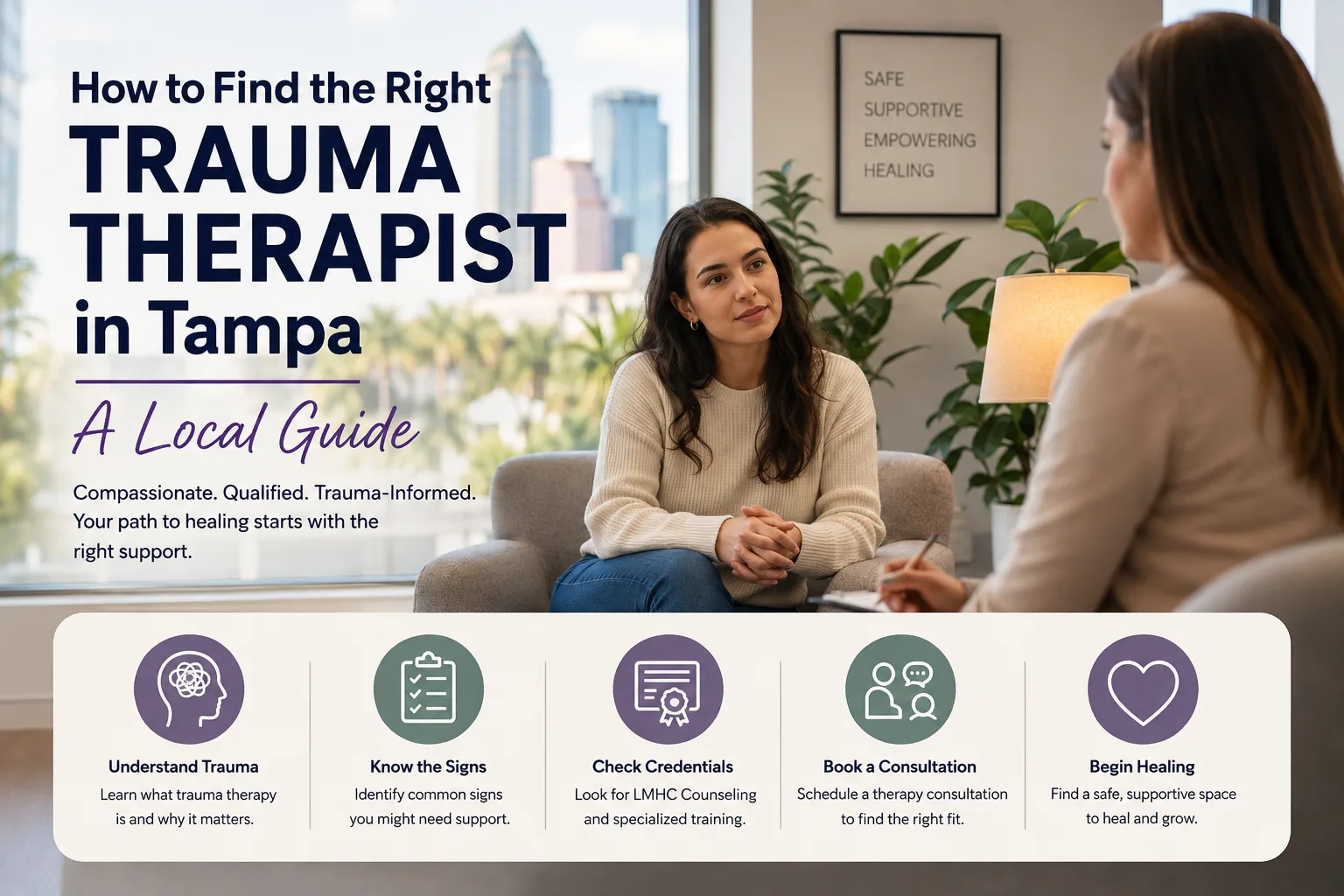
If you've been searching for trauma therapy Tampa options, you already know the process can feel overwhelming. Between insurance questions, credentials, and simply wondering if a therapist will "get" what you've been through, finding the right fit takes more than a quick Google search. This guide walks you through exactly what to look for, what questions to ask, and how to feel confident in your choice.
What Is Trauma Therapy and Why It Matters
Trauma therapy is a specialized form of counseling designed to help people process distressing or overwhelming experiences — whether that's a single event like an accident, or prolonged experiences like childhood neglect, abuse, or living through a natural disaster. Unlike general talk therapy, trauma therapy uses approaches specifically built to help the nervous system heal, not just the mind.
Trauma changes how the brain and body respond to stress. That's why generic coping strategies often fall short, and why working with someone trained specifically in trauma care makes such a meaningful difference.
Understanding Trauma-Informed Therapy
You'll often see the term trauma informed therapy used alongside trauma therapy, and while related, they aren't identical. Trauma-informed therapy refers to an overall approach and mindset a clinician brings into every session, regardless of the specific issue being addressed. A trauma-informed therapist:
- Recognizes the widespread impact of trauma and understands potential paths for recovery
- Avoids re-traumatizing clients through the therapeutic process itself
- Prioritizes physical and emotional safety, choice, and collaboration
- Understands that "problem" behaviors are often adaptive responses to past pain
Even if you're not seeking therapy specifically for trauma, working with a trauma-informed provider means you're less likely to encounter approaches that feel invalidating or harmful.
Signs You Might Need Trauma Therapy in Tampa
It's not always obvious that what you're experiencing is trauma-related. Some common signs include:
- Feeling on edge, easily startled, or hypervigilant
- Avoiding certain people, places, or topics without fully understanding why
- Intrusive memories, nightmares, or flashbacks
- Emotional numbness or difficulty connecting with others
- Struggling with anxiety, depression, or anger that doesn't seem to have a clear cause
- Difficulty trusting others or maintaining relationships
If any of this resonates, it may be worth exploring whether trauma is playing a role in your day-to-day struggles — and a qualified therapist can help you sort that out.
What to Look for in a Trauma Therapist in Tampa
Not every mental health provider has the training or experience to work effectively with trauma. When you're evaluating a trauma therapist Tampa area residents recommend, keep the following in mind.
Credentials: Why LMHC Counseling Matters
In Florida, one of the most common and respected credentials you'll see is LMHC, which stands for Licensed Mental Health Counselor. LMHC Counseling requires a master's degree, thousands of hours of supervised clinical experience, and passing a state licensing exam. This credential tells you that the person you're working with has met rigorous educational and ethical standards set by the state of Florida.
When researching providers, look for the LMHC designation (or LCSW, LMFT, or PsyD, which are also legitimate and well-respected credentials) after a therapist's name. This is your first checkpoint for ensuring you're working with someone properly trained and accountable to a licensing board.
Specialized Training in Trauma-Informed Therapy
Licensure alone doesn't guarantee trauma expertise. Ask potential therapists whether they have specific training in modalities such as:
- EMDR (Eye Movement Desensitization and Reprocessing)
- Somatic Experiencing
- Internal Family Systems (IFS)
- Cognitive Processing Therapy (CPT)
Trauma-Focused Cognitive Behavioral Therapy (TF-CBT)
A therapist who can speak clearly and confidently about their trauma-specific training is generally a strong signal that they practice trauma-informed therapy rather than applying a one-size-fits-all approach.
How to Start: Scheduling a Therapy Consultation
Most reputable therapists and practices offer a free or low-cost therapy consultation before you commit to ongoing sessions. This is your opportunity to get a feel for the therapist's style, ask questions, and determine whether you feel safe and understood.
Think of a consultation less like an interview you need to pass, and more like a conversation to determine mutual fit. A good therapist wants this too — they aren't looking to take on clients who won't feel comfortable working with them.
Questions to Ask During Your Consultation
Come prepared with a short list of questions, such as:
- What experience do you have working with trauma specifically?
- What therapeutic approaches do you typically use, and why?
- How do you measure progress over time?
- What does a typical session structure look like?
- Do you accept my insurance, or do you offer sliding-scale rates?
- How do you handle moments when a session brings up intense emotions?
Pay attention not just to the answers, but to how the therapist communicates. Do they explain things in a way that makes sense to you? Do you feel rushed, or genuinely heard?
Local Considerations for Finding a Trauma Therapist Tampa Residents Trust
Tampa's mental health landscape has grown significantly in recent years, which is good news — it means more options, but also more research on your end. A few local factors worth considering:
- Location and commute: Tampa traffic is no joke. If in-person sessions matter to you, look for a therapist in a part of town that fits your schedule, or ask about telehealth options.
- Community familiarity: Some trauma therapists in Tampa have specific experience with populations common to the area, such as military and veteran communities near MacDill Air Force Base, first responders, healthcare workers, or Spanish-speaking clients.
- Availability: Demand for trauma-informed care has increased, so don't be discouraged if your first-choice therapist has a waitlist. Many practices maintain referral networks to help you find another qualified provider in the meantime.
Red Flags to Watch For When Choosing a Trauma Therapist
While most therapists genuinely want to help, it's still worth watching for warning signs that a provider may not be the right fit:
- Vague or evasive answers about their training and credentials
- Dismissiveness toward your concerns or experiences
- Pressure to commit to a long-term package before a proper consultation
- Lack of clear boundaries around confidentiality or session structure
- A rigid, one-size-fits-all treatment approach regardless of your specific needs
Trust your instincts here. Trauma recovery depends heavily on feeling safe, so if something feels off during your search, it's okay to keep looking.
Making the Most of Your Trauma Therapy Journey
Once you've found a therapist who feels like the right fit, a few things can help you get the most out of the process:
- Be patient with the process. Trauma healing isn't linear, and it's normal to have sessions that feel harder than others.
- Communicate openly. If something in a session doesn't feel right, tell your therapist. A good trauma-informed provider will welcome that feedback.
- Set realistic expectations. Progress often looks like small, incremental shifts rather than sudden breakthroughs.
- Build support outside of sessions. Therapy is powerful, but pairing it with supportive relationships, healthy routines, and self-care makes a real difference.
Final Thoughts on Trauma Therapy in Tampa
Finding the right trauma therapist in Tampa takes a bit of research, but it's worth the effort. Look for proper credentials like LMHC Counseling, verify specialized training in trauma-informed therapy, and use a therapy consultation to gauge whether the fit feels right for you. Whether you're dealing with a specific traumatic event or the lingering effects of long-term stress, the right therapist can help you move toward healing at a pace that feels manageable and safe.
You don't have to navigate this alone. Reaching out for that first consultation is often the hardest step — and also the most important one.