Higher education institutions operate in a competitive environment. Students compare courses, academic resources, faculty, fees, location, learning formats, and potential career pathways before selecting a college or university. Institutions must communicate these details clearly while reaching prospective applicants through the channels they use.
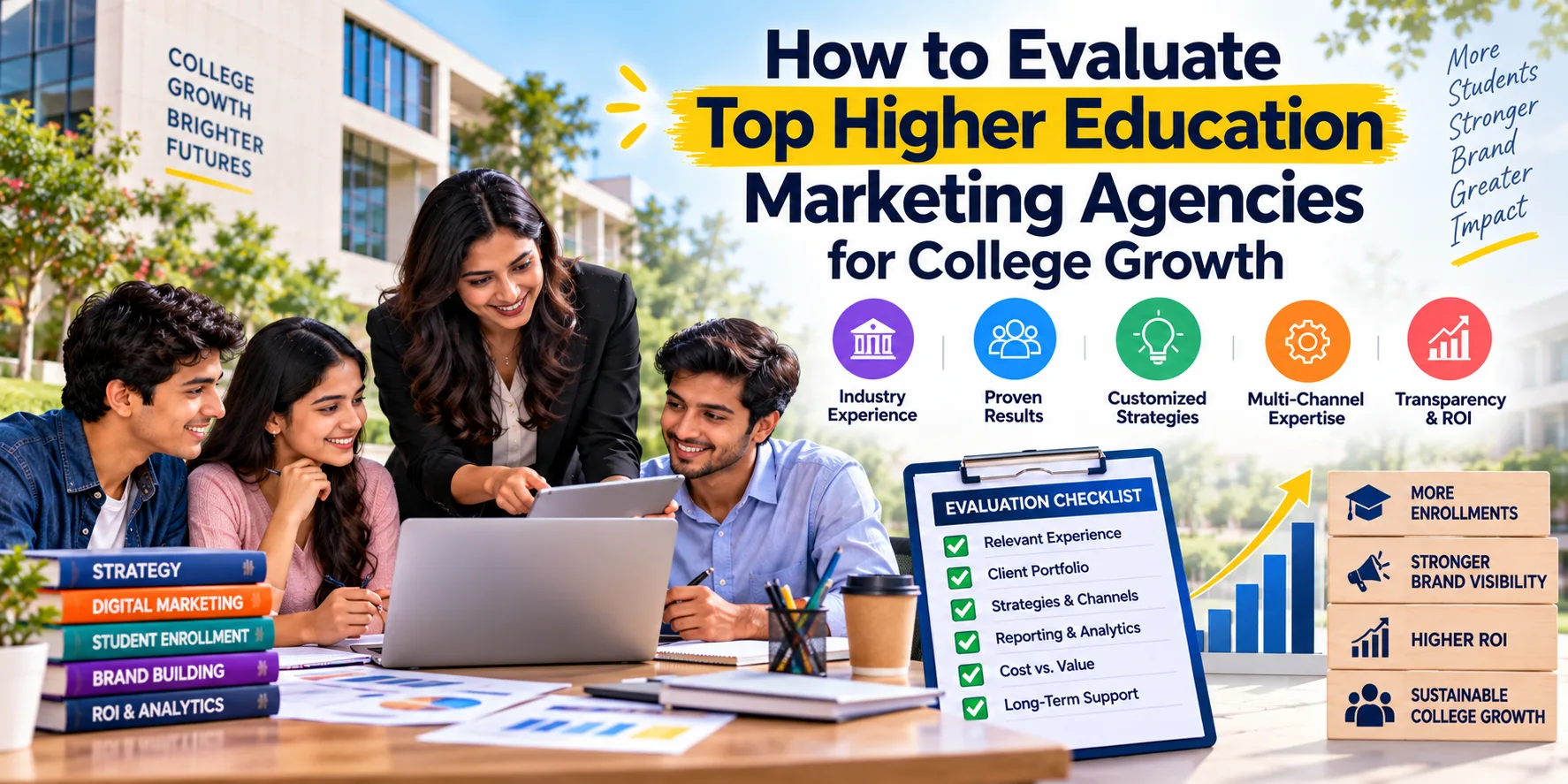
For this reason, selecting from the top higher education marketing agencies requires a careful evaluation of strategy, sector knowledge, communication, and measurable outcomes. The right agency should understand the student decision-making journey and help the institution build a consistent digital presence.
Understand the Institution's Priorities
Start by identifying the most important marketing challenges. An institution launching a new programme may need awareness and targeted enquiries, while another may want to improve applications for existing courses.
Possible goals include increasing relevant website traffic, improving course-page visibility, attracting qualified enquiries, promoting open days, strengthening the institution's reputation, or increasing completed applications.
Clear objectives make it easier to evaluate whether an agency's proposed services match actual institutional needs.
Assess Education-Sector Knowledge
Higher education marketing requires an understanding of different audiences and decision-making stages. Prospective undergraduate students, postgraduate applicants, international students, and working professionals may need different information.
Ask agencies how they research these audiences and adapt messaging for different programmes. They should be able to explain how course information, eligibility, faculty expertise, learning resources, and application steps influence student decisions.
Review relevant case studies where available. Look for clear descriptions of the challenge, strategy, measurements, and limitations rather than relying on promotional claims alone.
Examine Website and Search Strategy
The institution's website is often the central point where prospective students research programmes. Course pages should provide accurate information, answer common questions, and make admission details easy to locate.
Search engine optimisation can help relevant pages appear for course-related searches. A useful content plan may include programme guides, application advice, subject explanations, and answers to frequently asked questions.
Agencies should also consider page usability, mobile performance, internal linking, and content accuracy. Traffic growth is useful only when the visitors are relevant and can find what they need.
Review the Approach to Paid Advertising
Paid search and social advertising can support student recruitment when campaigns target relevant audiences and use accurate messages.
Ask how the agency plans campaign structure, audience targeting, landing pages, budgets, and conversion tracking. It should explain how campaign performance will be assessed and how spending decisions will be adjusted based on evidence.
No agency can guarantee admission outcomes because results also depend on programme demand, eligibility, pricing, competition, institutional reputation, and the admission process.
Look Beyond Enquiry Volume
A campaign that produces many low-quality enquiries may create extra work without improving enrolment. Institutions should define qualified leads and track what happens after students make contact.
Useful measures include cost per qualified enquiry, counselling appointments, completed applications, admission offer acceptance where applicable, and confirmed enrolments.
A capable agency should be willing to discuss the entire funnel rather than presenting clicks or form submissions as the only indicators of success.
Evaluate Content and Reputation Management
Students want to understand what studying at an institution might involve. Helpful content can include faculty perspectives, programme explanations, student projects, campus facilities, academic events, and guidance about the application process.
Institutions should ensure that content is accurate, current, and approved by the appropriate teams. Student stories and images should be shared with suitable permissions, and any claims about outcomes should be supported by evidence.
Reputation-building should focus on transparent communication and genuine institutional strengths rather than exaggerated promises.
Check Reporting and Collaboration
Marketing agencies need reliable input from admissions, academic departments, and institutional leadership. Confirm how often the agency reports performance, who will manage the relationship, and how quickly important programme updates can be incorporated.
Reports should explain what changed, what was learned, and what actions are recommended next. Clear communication is especially important during admission periods when dates, course availability, and requirements may change.
Compare Value, Not Just Cost
When comparing proposals, examine the services included, strategy, reporting quality, team experience, communication process, and expected workload for institutional staff.
The lowest price may not cover the research, content, tracking, or ongoing optimisation required. A larger package may also be unnecessary if it includes services unrelated to the institution's priorities.
Conclusion
Evaluating higher education marketing agencies is about finding a partner that understands the institution's audience, communicates its strengths accurately, and measures progress against meaningful goals.
A well-planned combination of search visibility, useful content, paid campaigns, relevant landing pages, and organised admission follow-up can help colleges build a more consistent student recruitment process. The strongest agency relationship is one based on transparent reporting, realistic expectations, and continuous improvement.