I remember sitting on my couch one Sunday afternoon, phone face down, heart racing for no obvious reason. A friend had just said something simple but heavy: “I don’t recognize my relationship anymore.” No yelling. No drama. Just exhaustion. That’s usually how trust problems show up—not loud, but draining.
Most couples don’t fall apart overnight. Things slip. Small hurts stack up. And suddenly, trust feels fragile.
When cheating is a symptom, not the whole problem
Cheating is often treated like the core issue, but in therapy, it’s usually a signal. A loud one, yes—but still a signal.
Many people seek therapy to stop cheating because they’re scared of repeating the same behavior. Not because they don’t care. Often because they don’t understand why they did it in the first place. Therapy slows things down enough to look at patterns instead of just damage control.
Burnout plays a bigger role than most couples realize. Constant pressure, emotional neglect, and exhaustion can quietly disconnect people. That’s where a work life balance therapist becomes relevant—not to excuse behavior, but to expose what pushed things off track.
Trust doesn’t heal just because time passes
Time helps wounds close, but it doesn’t rebuild trust on its own.
The process of healing trust issues is uncomfortable because it asks both partners to participate. Even the one who didn’t break the trust. That part surprises people.
When couples talk about dealing with trust issues in a relationship, what they usually mean is they’re stuck between wanting closeness and fearing another letdown. Therapy gives structure so those conversations don’t spiral into blame or silence.
If you’re wondering how to help trust issues in a relationship, it often comes down to consistency, not reassurance. Words matter. But patterns matter more.
When a relationship feels toxic, not just broken
Some couples don’t describe their relationship as sad. They describe it as exhausting.
Working with a toxic relationship therapist often reveals cycles that keep repeating, like:
- One partner chasing reassurance while the other shuts down
- Arguments that never actually resolve, just pause
- Apologies without behavioral change
- Constant suspicion, even during calm moments
When people ask how to deal with trust issues in a relationship, therapy often uncovers deeper emotional safety issues underneath.
Someone saying they’re dealing with trust issues in relationship is often saying, “I don’t feel secure anymore, even when nothing is technically wrong.”
Rebuilding trust takes guidance, not guessing
Most couples try to fix trust problems on their own. And most get stuck.
Learning how to get over trust issues in a relationship isn’t about forcing forgiveness or pretending things don’t hurt anymore. That’s where trust issues therapy becomes useful—it creates a safe structure for hard conversations.
When trust issues in a relationship go unaddressed, they often turn into control, monitoring, or emotional distance. Therapy for trust issues helps interrupt that cycle before resentment settles in permanently.
When infidelity is part of the story
Infidelity changes the emotional rules of a relationship. Ignoring that usually causes more harm.
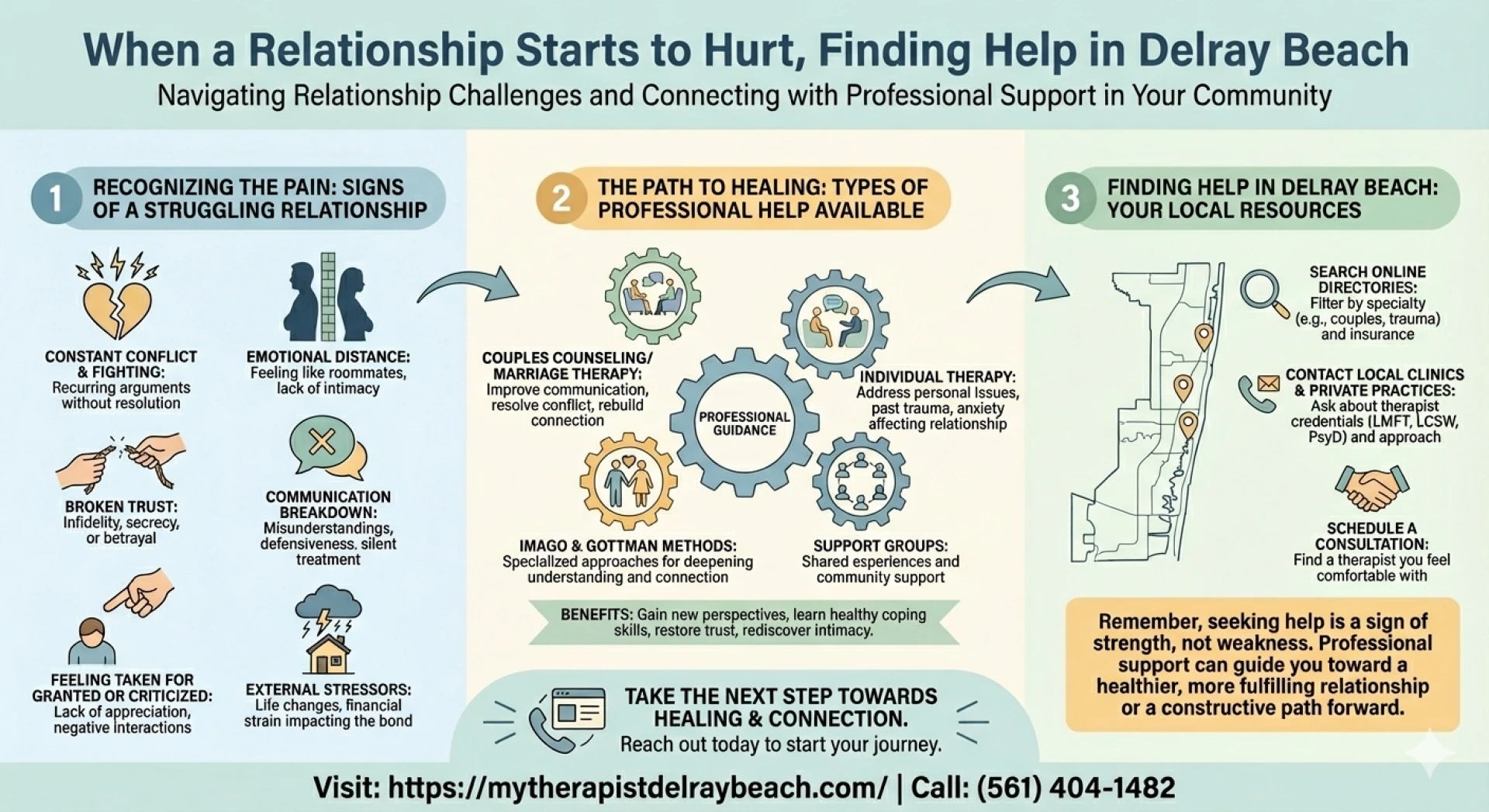
People searching for an infidelity therapist near me are often looking for clarity, not judgment. What does rebuilding actually look like? What boundaries matter now?
Many couples turn to couples counseling florida because they want professional support that focuses on long-term repair, not just crisis response.
And then there’s the question no one wants to ask: too late for couples counseling. Sometimes therapy helps couples reconnect. Sometimes it helps them separate with honesty and less damage. Both outcomes can be healing.
FAQs — clear, detailed answers
Can therapy really stop someone from cheating again?
Therapy doesn’t work like a switch. What it does is help people understand the emotional and behavioral patterns behind cheating. Once those patterns are visible, they can be addressed directly. Accountability, boundaries, and emotional awareness are what reduce repeat behavior—not guilt alone.
How long does it take to rebuild trust in a relationship?
There’s no fixed timeline. Some couples see progress in months, others need longer. Trust rebuilds through consistent behavior over time, not quick reassurance. Therapy helps set realistic expectations so both partners aren’t constantly disappointed.
Is couples counseling only for people who want to stay together?
No. Couples counseling can also help partners decide what they want, with clarity instead of chaos. Sometimes the goal is repair. Other times, it’s understanding whether continuing is healthy. Both are valid reasons to seek help.
What if only one partner wants therapy?
That’s common. Individual participation can still create change, especially when someone learns healthier communication and boundary-setting. Often, one person starting therapy opens the door for the other later.
Final thoughts
Trust doesn’t break in one moment, and it doesn’t heal in one conversation. Therapy doesn’t promise a perfect ending—but it does offer honesty, structure, and relief from guessing. And sometimes, that’s exactly what a relationship needs to either heal or finally breathe again.