
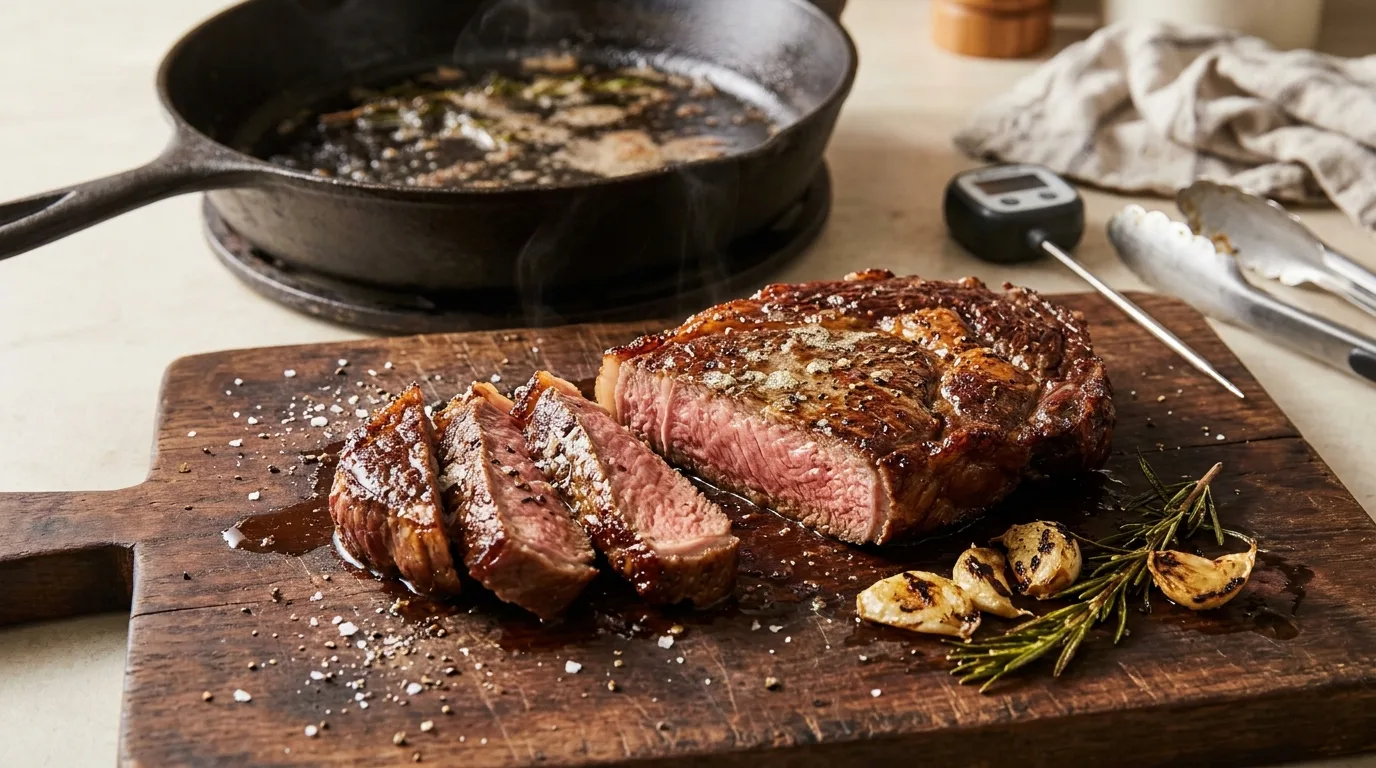
How to Cook Ribeye Steak: A Step-by-Step Guide to a Juicy, Tender Result
A good ribeye costs a fair bit, so the last thing you want is a grey, chewy disappointment on the plate. The good news is that ribeye is one of the more forgiving cuts once you understand heat, thickness and temperature. Whether you cook it in a pan, the oven, on the grill or in an air fryer, the principles barely change.
If you want the short version, it goes like this: pat the steak dry, season it well, sear it for two to three minutes per side in a very hot pan, baste with butter, take it off at 130°F (54°C) for medium-rare and rest it for ten minutes. The rest of this guide explains why each step matters and how to adapt it to your kitchen.
What Is Ribeye Steak and Why Cook It This Way?
Ribeye comes from the rib section of the animal, generally between the sixth and twelfth ribs, before it is cut into individual steaks. The muscles here do little heavy work, and they carry plenty of intramuscular fat. That marbling melts as the steak cooks, which is where the rich flavour and tender bite come from.
Bone-in vs Boneless Ribeye
The difference matters more for technique than for taste. A bone-in ribeye takes longer to cook because the bone acts as an insulator, and it tends to hold its shape better. Flavour-wise, the two taste much the same. A boneless steak lets you caramelise every edge, which many people prefer for a more even crust.
How to Prepare Ribeye Before Cooking
Most of what separates a restaurant-style steak from an average one happens before the pan is even hot.
Choosing the Right Thickness and Marbling
Aim for a steak between 2.5 and 5 cm (1 to 2 inches) thick. Anything thinner overcooks before it develops a proper crust, and anything much thicker can cook unevenly unless you use a gentler method. Look for fine, evenly spread white flecks of fat rather than one thick band. Higher grades such as USDA Prime or Choice, or well-marbled Wagyu, will give you a juicier result, though cost climbs quickly.
Thawing a Frozen Ribeye Safely
If your steak is frozen, thaw it in the fridge overnight. Leaving it on the worktop invites bacteria and gives you a cold centre with a warm, soggy outside. Cooking from frozen is possible, but the results are rarely as good, so plan ahead where you can.
Room Temperature and Drying
Take the steak out of the fridge 20 to 30 minutes before cooking. Then pat it thoroughly dry with kitchen paper. Surface moisture is the main enemy of a good sear, because the pan wastes energy boiling off water before it can brown the meat.
Seasoning
Coarse salt and freshly ground black pepper are all a good ribeye needs. Salt just before the steak hits the pan, or at least 45 minutes ahead so it has time to draw in. The awkward in-between window can leave beads of moisture on the surface.
Equipment You Need
You do not need much. A heavy cast iron pan holds heat brilliantly and is the best tool for the job. Add a pair of tongs and an instant-read thermometer, which is the single most useful bit of kit for any steak. A wire rack and baking tray come in handy if you plan to use the oven.
How to Cook Ribeye Steak in a Pan
This is the most popular method, and for a steak around 2.5 cm thick it is hard to beat. It is quick, it creates a deep crust, and it needs no special equipment.
Step 1: Heat the Pan Properly
Place your cast iron pan over a medium-high to high heat for several minutes, until it is properly hot. Add a thin film of oil with a high smoke point, such as rapeseed, avocado or groundnut oil. Extra virgin olive oil will burn and turn bitter at these temperatures. Switch on your extractor fan or open a window, because this will get smoky.
Step 2: Sear the First Side
Lay the steak in the pan away from you and leave it alone. Resist the urge to nudge it about. For a 2.5 cm ribeye, two to three minutes will give you a deep brown crust. The pan should sizzle loudly the moment the meat touches it. If it does not, the pan was not hot enough.
Step 3: Flip and Baste With Butter
Turn the steak over and add a generous knob of butter, a couple of crushed garlic cloves and a sprig of thyme or rosemary. Lower the heat slightly, tilt the pan and spoon the foaming butter over the steak for the last minute or two. This adds flavour and helps the crust cook evenly.
Step 4: Check the Internal Temperature
Slide the thermometer into the thickest part of the steak, keeping it clear of bone and large pockets of fat. Pull the steak off the heat a few degrees below your target, because it keeps cooking as it rests.
Rendering the Fat Cap
Ribeye often has a thick edge of fat along one side. Hold the steak upright with tongs for 30 to 60 seconds, edge down in the pan, until that fat turns golden and crisp. It makes a real difference to texture.
How to Cook Ribeye in the Oven Using the Reverse Sear
Thicker steaks, around 4 to 5 cm, suit a gentler approach. Pan-searing alone can burn the outside before the centre warms through.
Why Reverse Searing Works
You cook the steak slowly first, then finish with a short, fierce sear. The result is an even colour from edge to edge, with a narrow band of crust on the outside. The technique is popular for good reason, and reverse searing steak at home needs nothing more than an oven, a rack and a hot pan.
The Method
Heat the oven to about 135°C (275°F). Set the seasoned steak on a wire rack over a tray and cook it until the internal temperature is roughly 10°F (about 5°C) below your target. Depending on thickness, that can take 30 to 45 minutes. Then sear in a smoking-hot pan with a little oil for 60 to 90 seconds per side, adding butter and aromatics at the end.
How to Grill Ribeye Steak
Grilling gives ribeye a smoky edge that a pan cannot match, and the fat renders beautifully over flame.
Set Up Two Zones
Light your grill and let it heat for around 15 minutes, then clean the grate. Build a hot zone and a cooler zone, either by banking charcoal to one side or switching off a burner on a gas grill. Sear the steak over the hot side for two to three minutes per side, then slide it to the cooler side with the lid closed to finish cooking.
Managing Flare-Ups
Ribeye drips fat, and fat catches fire. If flames leap up, move the steak to the cooler zone until they settle. Trimming any overly thick fat from the edge also helps. Charred, bitter patches from constant flare-ups are the usual sign things got out of hand.
How to Cook Ribeye in an Air Fryer
An air fryer will not give you the crust of a cast iron pan, but it is quick and tidy for a weeknight.
Settings and Timing
Preheat to about 200°C (400°F) and place the seasoned steak in the basket without overlapping any others. A steak around 2.5 cm thick takes roughly 10 to 15 minutes for medium-rare, flipped halfway through. Models vary a great deal, so start checking the temperature at around eight minutes.
Finishing in a Pan
If crust matters to you, give each side 30 to 60 seconds in a hot pan after the air fryer. It makes a noticeable difference.
Ribeye Steak Cooking Time and Temperature Chart
Times are always approximate, because thickness, starting temperature and your heat source all change the result. A thermometer tells you far more than a timer does.
Doneness Guide
| Doneness | Pull temperature | Approx. pan time per side (2.5 cm steak) |
| Rare | 120 to 125°F (49 to 52°C) | 1.5 to 2 minutes |
| Medium-rare | 125 to 130°F (52 to 54°C) | 2 to 3 minutes |
| Medium | 135 to 140°F (57 to 60°C) | 3 to 4 minutes |
| Medium-well | 145 to 150°F (63 to 65°C) | 4 to 5 minutes |
| Well done | 155 to 160°F (68 to 71°C) | 5 to 6 minutes |
Carryover Cooking and Food Safety
Expect the temperature to rise by around 5°F (about 3°C) while the steak rests. The USDA recommends a minimum of 145°F (63°C) for whole cuts of beef, which is closer to medium. Many cooks choose lower temperatures for tender cuts like ribeye, but anyone who is pregnant, elderly or has a weakened immune system should follow official food safety guidance.
How to Rest and Slice Ribeye
Rest the steak for about ten minutes on a warm plate or board, loosely covered with foil. During cooking, the juices are pushed towards the centre. Cut in too soon and they run out onto the board, leaving the meat drier than it should be.
When you do slice, cut across the grain, not along it. Shorter muscle fibres mean a more tender mouthful. For a bone-in steak, cut the meat away from the bone first, then slice it.
Common Mistakes When Cooking Ribeye
Even experienced home cooks slip up on a few of these:
- Cooking it cold. A steak straight from the fridge cooks unevenly, with a grey outer layer and a cool centre.
- Skipping the drying step. A damp surface steams in the pan, so you lose the crust.
- Crowding the pan. Two steaks in a small pan drop the temperature and turn the sizzle into a simmer. Cook them one at a time or use a bigger pan.
- Guessing doneness. Poking the steak with a finger is unreliable. Use a thermometer.
- Cutting straight away. Patience for ten minutes pays off in juiciness.
What to Serve With Ribeye
Ribeye is rich, so it pairs well with something fresh or sharp. Creamy mashed potato, roasted vegetables, a crisp green salad or buttery greens all work. A peppercorn sauce, a bright chimichurri or a classic pan gravy gives the plate extra depth, and a glass of bold red wine suits the fat in the meat.
Final Thoughts
Cooking a great ribeye comes down to a few habits: a dry steak, a properly hot pan or grill, a thermometer and a decent rest. Start with the pan method, because it is quick and forgiving. Once that feels comfortable, try the reverse sear on a thicker cut and see how much more even the centre turns out. Every kitchen and steak behaves a little differently, so take notes and adjust to your own taste. Within a few attempts, you will know exactly how you like it.
FAQs
How long should you cook a ribeye on each side?
For a steak about 2.5 cm thick in a very hot pan, two to three minutes per side gives medium-rare. Thicker steaks need longer or a gentler method such as the reverse sear.
What temperature should ribeye be cooked to?
Most people enjoy ribeye at 125 to 130°F (52 to 54°C) for medium-rare. The fat renders well at that point, and the meat stays juicy.
Is it better to cook ribeye in a pan or on the grill?
Both work well. A pan gives a deeper, more even crust and lets you baste with butter. A grill adds smoky flavour. Choose whichever suits your kitchen and the weather.
Should you cook ribeye bone-in or boneless?
Taste is much the same. Bone-in cooks more slowly and holds its shape, while boneless is easier to sear evenly on all sides.
How do you keep ribeye juicy?
Dry the surface, cook to temperature rather than time, and rest the steak for around ten minutes before cutting.
Can you cook ribeye from frozen?
You can, but results are usually better if you thaw it in the fridge first. A frozen steak tends to cook unevenly and develops a weaker crust.