
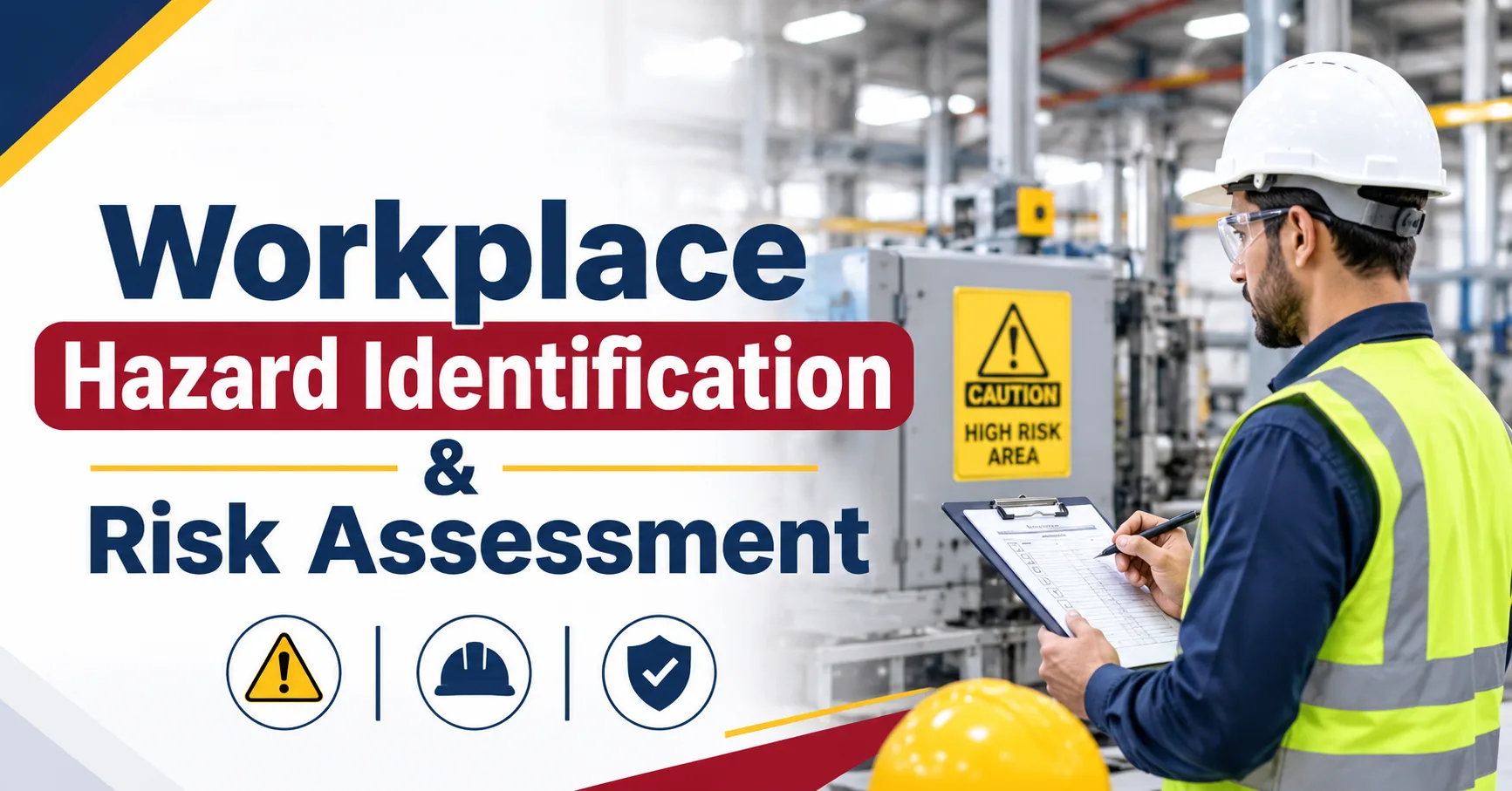
How to Conduct Workplace Hazard Identification and Risk Assessment in Manufacturing Industries.
Manufacturing industries involve various workplace activities that can expose employees to occupational health and safety risks. Operating heavy machinery, handling chemicals, working with electrical equipment and performing repetitive tasks can create hazards if appropriate safety controls are not established.
For manufacturing organisations, identifying these hazards and assessing associated risks is an important part of maintaining a safe working environment. A systematic approach helps businesses understand potential dangers, implement preventive measures and improve workplace safety performance.
1. Identify Potential Workplace Hazards
The first step is to identify hazards across different workplace activities and operational areas.
Manufacturing businesses should examine machinery, production lines, electrical installations, material handling processes, storage areas and employee workstations.
Common workplace hazards include:
- Mechanical hazards from moving machinery and equipment.
- Chemical exposure during production and material handling.
- Electrical hazards from damaged wiring or equipment.
- Physical hazards such as excessive noise, heat and vibration.
- Ergonomic hazards caused by repetitive movements and improper working positions.
Regular workplace inspections and employee feedback can help identify hazards that may otherwise go unnoticed.
2. Evaluate Occupational Health and Safety Risks
After identifying hazards, organisations should assess the associated risks.
Risk assessment involves understanding how likely an incident is to occur and how serious its consequences could be.
Businesses can evaluate risks by considering factors such as:
- Frequency of employee exposure.
- Potential severity of injury or illness.
- Number of employees affected.
- Existing safety measures.
- Possibility of equipment failure or human error.
This assessment helps organisations prioritise significant risks and determine where additional preventive action is necessary.
3. Implement Appropriate Risk Control Measures
Once risks have been evaluated, businesses should establish suitable control measures.
The hierarchy of controls provides a structured approach to managing occupational hazards. It includes elimination, substitution, engineering controls, administrative controls and personal protective equipment.
For example, a manufacturing facility may introduce machine guards, improve ventilation, establish safe operating procedures and provide suitable protective equipment.
Where possible, organisations should prioritise controls that remove or reduce hazards at their source rather than relying only on personal protective equipment.
4. Provide Employee Training and Awareness
Employees play an important role in maintaining workplace safety.
Manufacturing organisations should provide training on equipment operation, hazard reporting, emergency procedures and safe working practices.
Regular awareness programmes can help employees recognise workplace risks and understand the precautions required during daily operations.
5. Monitor and Review Safety Performance
Workplace risk assessment should not be treated as a one-time activity.
Organisations should review their assessments whenever there are changes in machinery, production processes, workplace layouts or operational conditions.
Regular inspections, incident investigations, internal audits and performance monitoring can help identify gaps and support continual improvement.
How ISO 45001 Supports Workplace Risk Management
ISO 45001 provides an internationally recognised framework for establishing an occupational health and safety management system.
It helps organisations develop systematic processes for hazard identification, risk assessment, operational controls, employee participation and continual improvement.
For manufacturing businesses, implementing an effective occupational health and safety management system can support better risk management and a more structured approach to workplace safety.
Businesses interested in understanding the wider importance and benefits of this standard can explore our detailed guide: Why Is ISO 45001 Certification Important for Business Growth?
Effective hazard identification and risk assessment are essential elements of workplace safety management in manufacturing industries.
By identifying hazards, evaluating occupational risks, implementing suitable controls and regularly reviewing safety performance, organisations can establish a more structured approach to protecting employees and improving operational safety.
ISO 45001 offers a framework that helps businesses integrate these practices into their overall management system.