
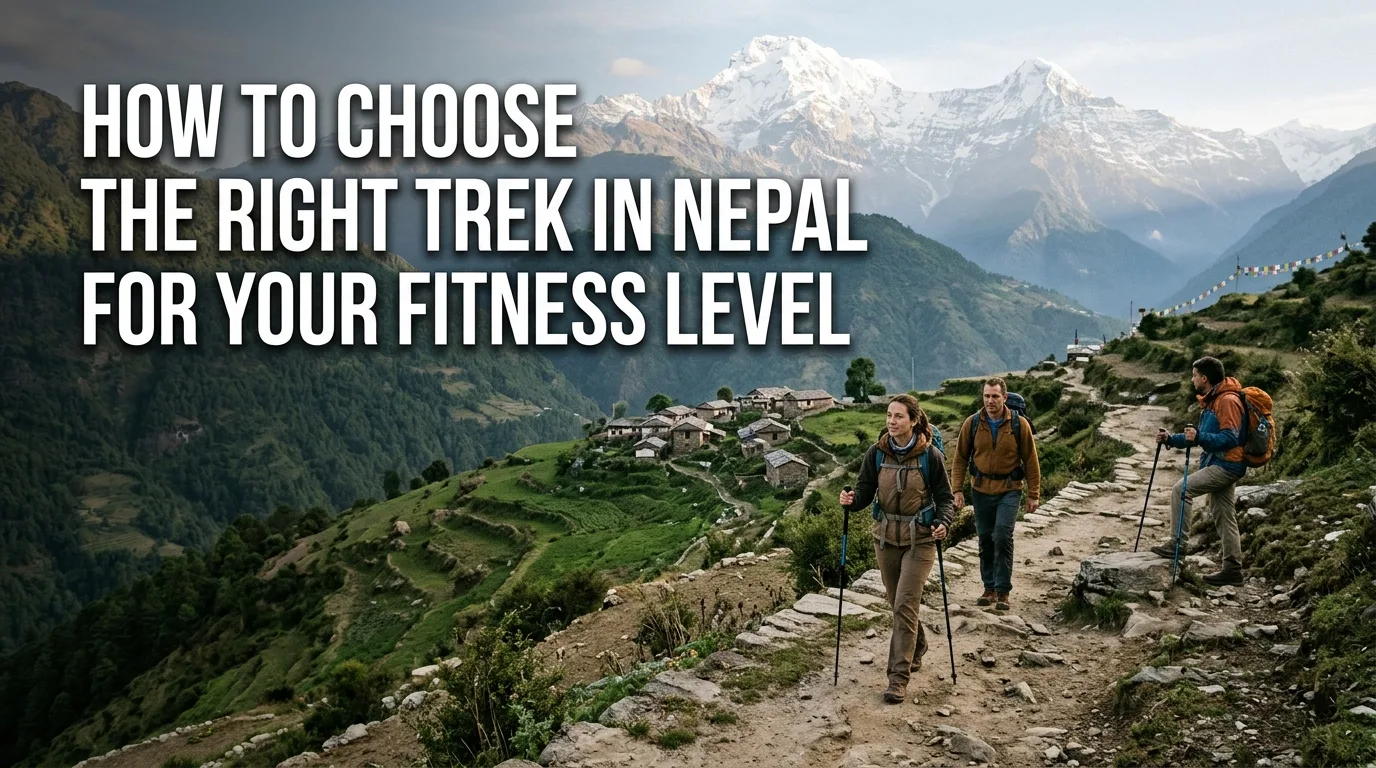
Choosing a trek in Nepal is about more than picking a famous route. Your fitness, walking experience, available time, and comfort with high places all matter. A route that suits an experienced hiker may feel too demanding for someone taking their first mountain trip. The best choice is one that lets you enjoy the journey while staying safe and within your limits.
1. Assess Your Current Fitness Before Choosing a Route
Start by looking at how active you are in daily life. Can you walk for two or three hours without feeling exhausted? Are you comfortable climbing stairs, walking uphill, and carrying a light backpack? These simple checks can help you understand your starting point.
Remember that trekking uses different muscles from regular gym workouts. Long climbs, uneven paths, stone steps, and steep descents can tire your legs quickly. You should also consider how your body handles several active days in a row.
A useful approach is to train for the type of walking you will do. Try brisk walks, hill walks, stair climbing, cycling, and light strength exercises. Increase your distance and effort over several weeks instead of pushing too hard at once.
2. Match the Trekking Route to Your Experience
Nepal has routes for first-time hikers, regular walkers, and experienced trekkers. Some trails pass through lower hills and villages, while others reach remote valleys and high mountain passes. Your choice should reflect the effort you can manage, not just the views you want to see.
If you are new to trekking, look at shorter routes such as Panchase or village walks in the Annapurna region. Trekkers with some hiking experience may consider Mardi Himal or Langtang Valley. Longer routes such as the Annapurna Circuit and Manaslu Circuit need more preparation and time.
You can also check out these Himalayan trekking experts to compare guided routes, trip lengths, and regional options before making a decision. A reliable Kathmandu trekking agency can help explain daily walking hours, trail conditions, altitude gains, and the support available along the way.
| Trek or route | Published trip length | What to consider |
| Panchase Trek | Check the planned itinerary | A lower-altitude option to discuss for newer hikers |
| Mardi Himal Trek | 11 days | Includes a climb to a viewpoint around 4,500 m |
| Everest View Trek | 12 days | A shorter Everest-region itinerary, but altitude still matters |
| Manaslu Circuit Trek | 16 days | A longer route that needs strong preparation |
| Everest Base Camp Trek | 17 days | High altitude and several days of sustained walking |
Trip lengths are based on published itineraries and can vary by operator. They include travel and rest days, so they do not show daily walking effort.
3. Understand Altitude, Not Just Physical Difficulty
One of the biggest mistakes is judging a trek only by distance. A short route can still be demanding if it climbs quickly or reaches a high elevation. At altitude, the body receives less oxygen, and even fit hikers may feel tired or develop symptoms of altitude sickness.
The CDC Yellow Book 2026, written by high-altitude medicine experts Peter H. Hackett and David R. Shlim, explains that “Training and physical fitness do not affect risk.” This guidance was published on April 23, 2025, in its chapter on high-altitude travel. It means being fit does not protect you from altitude illness.
The CDC advises gradual ascent. Above 3,000 metres, its guidance recommends increasing sleeping altitude by no more than 500 metres per day. It also advises an extra acclimatisation night for every 1,000 metres gained in sleeping altitude. These are general guidelines, not a substitute for a route-specific medical plan.
Pay attention to symptoms such as headache, nausea, dizziness, and unusual tiredness. Do not keep climbing if you feel unwell. Tell your guide, follow medical advice, and descend when needed.
4. Use Real Data to Plan Your Time in Nepal
The time you have available can help narrow your choices. Nepal welcomed 1,162,365 international visitors in 2025, according to the Government of Nepal's Nepal Tourism Statistics 2025. The report also recorded 165,056 visitors under trekking and mountaineering, showing the continued importance of mountain travel.
The same report lists an average visitor stay of 16.34 days in 2025. This figure includes all visitor purposes, not only trekkers. Still, it gives useful context when planning a trip that may combine trekking, travel between regions, and time in Kathmandu or Pokhara.
| Official tourism indicator | 2025 figure |
| Total international arrivals | 1,162,365 |
| Trekking and mountaineering visitors | 165,056 |
| Average visitor stay | 16.34 days |
Do not use every available day for walking. Allow time for travel delays, rest, weather changes, and acclimatisation. A well-paced itinerary is often more enjoyable than one that tries to fit too much into a short visit.
5. Prepare Your Body and Check the Practical Details
A good training plan should reflect the route you choose. For a lower-altitude trek, regular walks and basic leg strength may be a useful start. For a longer or higher route, build up to longer hikes on back-to-back days while carrying the pack you expect to use.
Before booking, check these key points:
- Daily walking time: Ask how many hours you will walk on normal and difficult days.
- Elevation gain: Check the highest point and each day's sleeping altitude.
- Trail conditions: Find out about steep steps, rocky paths, snow, and river crossings.
- Rest days: Make sure the plan includes enough time to recover and adjust to altitude.
- Support and safety: Confirm guide arrangements, emergency plans, permits, and insurance needs.
A responsible Nepal trekking and tour company should explain these details before you commit. Share your hiking background honestly, including any past altitude problems or health concerns. If you have a medical condition or are unsure about high-altitude travel, speak with a healthcare professional before departure.
Conclusion
The right trek in Nepal should challenge you without pushing you beyond your limits. Start with an honest fitness check, compare routes, and pay close attention to altitude and daily walking demands. Train in advance and choose an itinerary with enough time for rest and safe ascent. With the right preparation and local guidance, you can enjoy Nepal's mountain trails at a pace that suits you.
FAQs
1. Which trek in Nepal is best for beginners?
Beginners can look into shorter, lower-altitude routes such as Panchase and selected village treks. The best option depends on walking ability, route conditions, and the itinerary's daily demands.
2. Do I need to be very fit to trek in Nepal?
Not for every route. Many treks require steady walking rather than athletic performance. However, you should build stamina and leg strength before departure, especially for longer or higher routes.
3. Can fit people still get altitude sickness?
Yes. Physical fitness does not prevent altitude sickness. The risk depends on factors such as sleeping altitude, ascent rate, and individual response to reduced oxygen.
4. How many days should I plan for a trek in Nepal?
It depends on the route and your travel plans. Some itineraries take around 11 to 12 days, while longer routes may need 16 to 17 days or more. Always include time for rest and travel.
5. What is the best way to prepare for a Nepal trek?
Build up your walking time through regular hikes, uphill walks, stair climbing, and strength training. Practise with a light backpack and ask a qualified guide or health professional about route-specific risks.