
Enterprise transformation is no longer limited to upgrading technology. For modern organizations, it involves rethinking business processes, improving operational efficiency, enabling data-driven decision-making, and preparing for future growth. As enterprises navigate changing market conditions, customer expectations, and digital disruption, many are turning to SAP solutions to support large-scale transformation initiatives.
However, the success of an SAP project depends on more than selecting the right platform. The implementation approach, migration strategy, customization requirements, and long-term support model all play a critical role in achieving business objectives. This is why choosing the right SAP partner has become one of the most important decisions for enterprise leaders.
A capable SAP partner brings technical expertise, industry knowledge, and a structured delivery methodology that helps organizations reduce risk, accelerate adoption, and maximize return on investment. From strategic planning and system modernization to SAP S/4HANA migration and ongoing optimization, the right partner can help transform technology investments into measurable business outcomes.
This guide explores the key phases of enterprise transformation and explains how organizations can evaluate SAP partners that align with their long-term vision and operational goals.
The New Era of Enterprise Transformation
Enterprise transformation has evolved far beyond traditional system upgrades. Today, organizations are under constant pressure to improve efficiency, respond to changing customer expectations, and adapt to emerging technologies. As a result, transformation initiatives are becoming a core business priority rather than a technology-driven project.
Many enterprises still operate with disconnected systems, manual workflows, and legacy infrastructure that limit agility. These challenges often create data silos, reduce operational visibility, and make it difficult to scale business processes across departments. Enterprise leaders are increasingly recognizing that sustainable growth requires a modern technology foundation that supports innovation and long-term business objectives.
This shift has accelerated the demand for ERP transformation strategies that unify processes, data, and decision-making across the organization. Modern ERP platforms provide real-time insights, automation capabilities, and greater flexibility, enabling businesses to respond more effectively to market changes.
SAP has become a key technology enabler in this transformation journey. With solutions designed to integrate finance, supply chain, procurement, manufacturing, human resources, and customer operations, SAP helps organizations create a connected digital ecosystem. For enterprises planning large-scale modernization initiatives, SAP S/4HANA migration is often a critical step toward replacing legacy systems and building a future-ready operational framework.
However, technology alone cannot deliver transformation. Many organizations invest in advanced platforms yet struggle to achieve expected outcomes due to poor planning, limited expertise, or implementation challenges. Successful transformation requires a clear roadmap that aligns technology investments with business goals.
This is where an experienced SAP partner becomes valuable. Beyond technical implementation, the right partner helps enterprises define transformation priorities, identify operational gaps, manage organizational change, and ensure that technology initiatives generate measurable business value. By combining strategic guidance with specialized SAP consulting services, organizations can move beyond simple software deployment and build a foundation for continuous innovation.
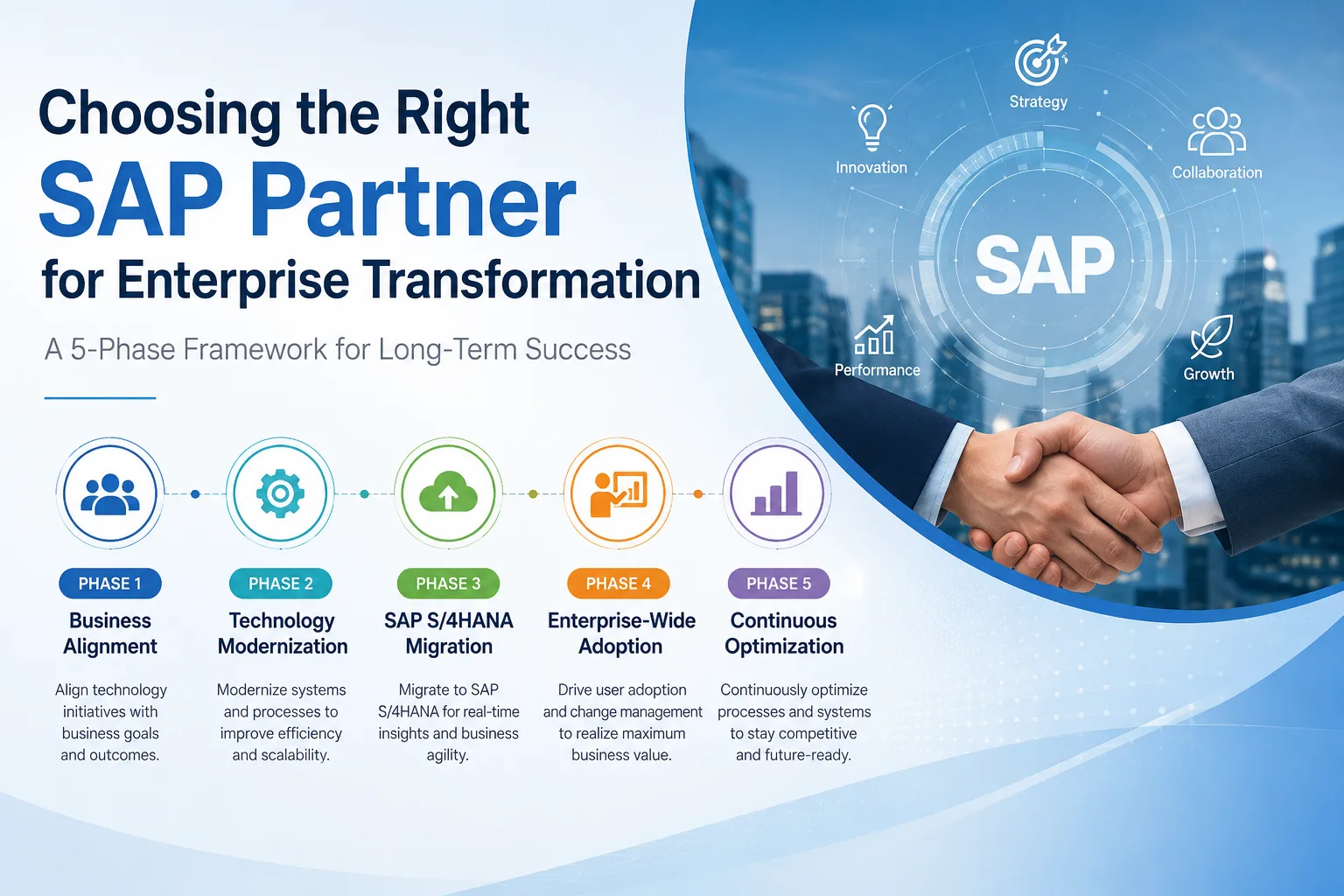
The most successful enterprise transformation programs follow a structured approach that begins with business alignment, progresses through technology modernization and implementation, and continues with long-term optimization after deployment. Understanding these phases is essential when evaluating potential SAP partners and their ability to support enterprise-wide transformation objectives.
Phase 1: Business Alignment
Successful enterprise transformation starts with business alignment. Before implementing new technologies, organizations need a clear understanding of their goals, challenges, and expected outcomes.
Many enterprises focus on software selection too early and overlook the importance of defining business priorities. Whether the objective is improving operational efficiency, enhancing customer experiences, reducing costs, or increasing visibility across departments, every transformation initiative should be tied to measurable business outcomes.
This phase also involves assessing existing processes and identifying gaps that may limit growth. By understanding current challenges, organizations can build a roadmap that supports both immediate needs and long-term objectives.
An experienced SAP partner can help facilitate this process by evaluating business requirements, identifying transformation opportunities, and aligning technology investments with strategic goals. This foundation ensures that future implementation efforts support meaningful business results rather than simply introducing new systems.
Phase 2: Technology Modernization
Once business objectives are clearly defined, the next step is modernizing the technology ecosystem that supports those goals. Many enterprises still rely on legacy applications that create data silos, limit visibility, and slow decision-making.
Technology modernization focuses on replacing outdated systems with integrated platforms that improve efficiency, scalability, and real-time access to business data. This enables organizations to streamline operations, automate repetitive tasks, and support future growth initiatives.
For many enterprises, SAP serves as the foundation of this modernization effort by connecting critical business functions across finance, supply chain, procurement, and operations. A well-planned modernization strategy also reduces technical debt and creates a more agile environment for innovation.
At this stage, organizations should evaluate how new technologies will integrate with existing systems and support long-term transformation goals. A strategic SAP partner can help design a roadmap that minimizes disruption while maximizing business value.
Phase 3: SAP S/4HANA Migration
For many organizations, SAP S/4HANA migration is a key milestone in the enterprise transformation journey. As businesses seek greater agility, real-time insights, and improved process efficiency, moving from legacy ERP systems to a modern platform becomes a strategic priority.
However, migration is more than a technical upgrade. It requires careful planning, data assessment, process optimization, and risk management. Without a clear migration strategy, enterprises may face delays, increased costs, and operational disruptions.
A successful SAP S/4HANA migration starts with evaluating the current ERP landscape and identifying the most suitable migration approach. Organizations should also assess data quality, integration requirements, and future business needs before implementation begins.
This is where experienced SAP consulting services can make a significant difference. The right partner helps enterprises build a structured migration roadmap, reduce implementation risks, and ensure the new environment supports both current operations and long-term growth objectives.
Phase 4: Enterprise-Wide Adoption
Technology implementation alone does not guarantee transformation success. The real value of an ERP investment is realized when employees actively adopt new processes and tools across the organization.
Enterprise-wide adoption requires effective change management, user training, and clear communication from leadership teams. Employees need to understand how new systems will improve daily operations and contribute to broader business goals.
Organizations that prioritize adoption often experience faster returns on their technology investments and fewer operational challenges after deployment. Regular training sessions, feedback mechanisms, and performance monitoring can help improve user engagement and system utilization.
A trusted SAP partner can support this phase by providing guidance, training resources, and ongoing assistance to ensure teams are confident using the new platform. Strong adoption practices help enterprises maximize the benefits of their transformation initiatives and achieve long-term business value.
Phase 5: Continuous Optimization
Enterprise transformation does not end after implementation. As business requirements evolve, organizations must continuously evaluate and improve their processes, systems, and technology investments to remain competitive.
Continuous optimization focuses on monitoring performance, identifying inefficiencies, and uncovering opportunities for further improvement. This may include process automation, advanced analytics, system enhancements, or the adoption of new SAP capabilities that support changing business needs.
Regular performance reviews help enterprises measure whether transformation goals are being achieved and where additional adjustments may be required. Organizations that embrace continuous improvement are often better positioned to respond to market changes and drive long-term growth.
An experienced SAP partner can provide ongoing guidance, technical support, and optimization strategies that help businesses maximize the value of their ERP investment while preparing for future transformation initiatives.
Choosing a Partner for Every Stage
The success of enterprise transformation depends not only on technology but also on the expertise of the partner guiding the journey. From initial planning to long-term optimization, each phase requires a combination of business insight, technical knowledge, and implementation experience.
When evaluating a SAP partner, enterprises should look beyond certifications and project portfolios. The ideal partner should understand industry-specific challenges, provide strategic guidance, and offer a structured approach to delivery. This helps reduce project risks while ensuring technology investments align with business objectives.
Organizations should also assess a partner's capabilities across the entire transformation lifecycle. This includes consulting, migration planning, implementation, integration, customization, training, and post-deployment support. A partner that offers comprehensive SAP Implementation Services can help maintain consistency throughout the project while minimizing operational disruptions.
For businesses with unique requirements, expertise in SAP Development Services is equally important. Custom integrations, workflow automation, and tailored solutions often play a critical role in maximizing the value of an SAP environment.
Ultimately, the right SAP partner acts as a long-term advisor rather than just a service provider. By combining strategic planning, technical expertise, and ongoing support, organizations can build a strong foundation for sustainable growth and successful enterprise transformation.
Conclusion
Enterprise transformation is a continuous journey that requires a clear strategy, modern technology, and the right expertise. From business alignment and technology modernization to SAP S/4HANA migration, adoption, and ongoing optimization, every phase plays a role in achieving long-term success.
While SAP provides the foundation for transformation, the outcomes largely depend on the partner supporting the initiative. Organizations that choose an experienced SAP partner gain access to the guidance, technical capabilities, and implementation expertise needed to reduce risk and accelerate business value. By taking a strategic approach to partner selection, enterprises can position themselves for sustainable growth and future innovation.