A pair of work shoes can look perfectly suitable on a shop shelf and still prove completely wrong after eight hours on site.
Anyone who has spent a full shift standing on concrete, walking across uneven ground or working outside in wet weather will know that footwear is not a minor part of the working day. Poorly chosen shoes can become uncomfortable quickly, while the right pair can make a long shift considerably easier.
That is why choosing Reebok work shoes or other safety footwear should start with the job itself. How much walking is involved? Are you mainly indoors or outside? Is there a risk of impact, penetration or slipping? Will the footwear regularly get wet?
Those questions are more useful than simply asking which shoe looks the smartest.
Choosing Reebok work shoes for the job
Modern work footwear has moved a long way beyond the heavy, rigid safety boot of the past.
There are now safety trainers, lightweight work shoes, mid-cut boots and more traditional styles, giving workers the opportunity to choose footwear that suits the environment rather than simply accepting whatever is available.
For warehouse workers, delivery drivers and people who spend much of the day walking on hard surfaces, a lighter safety trainer can be appealing. It can provide a familiar trainer-like feel while incorporating safety features required for the workplace.
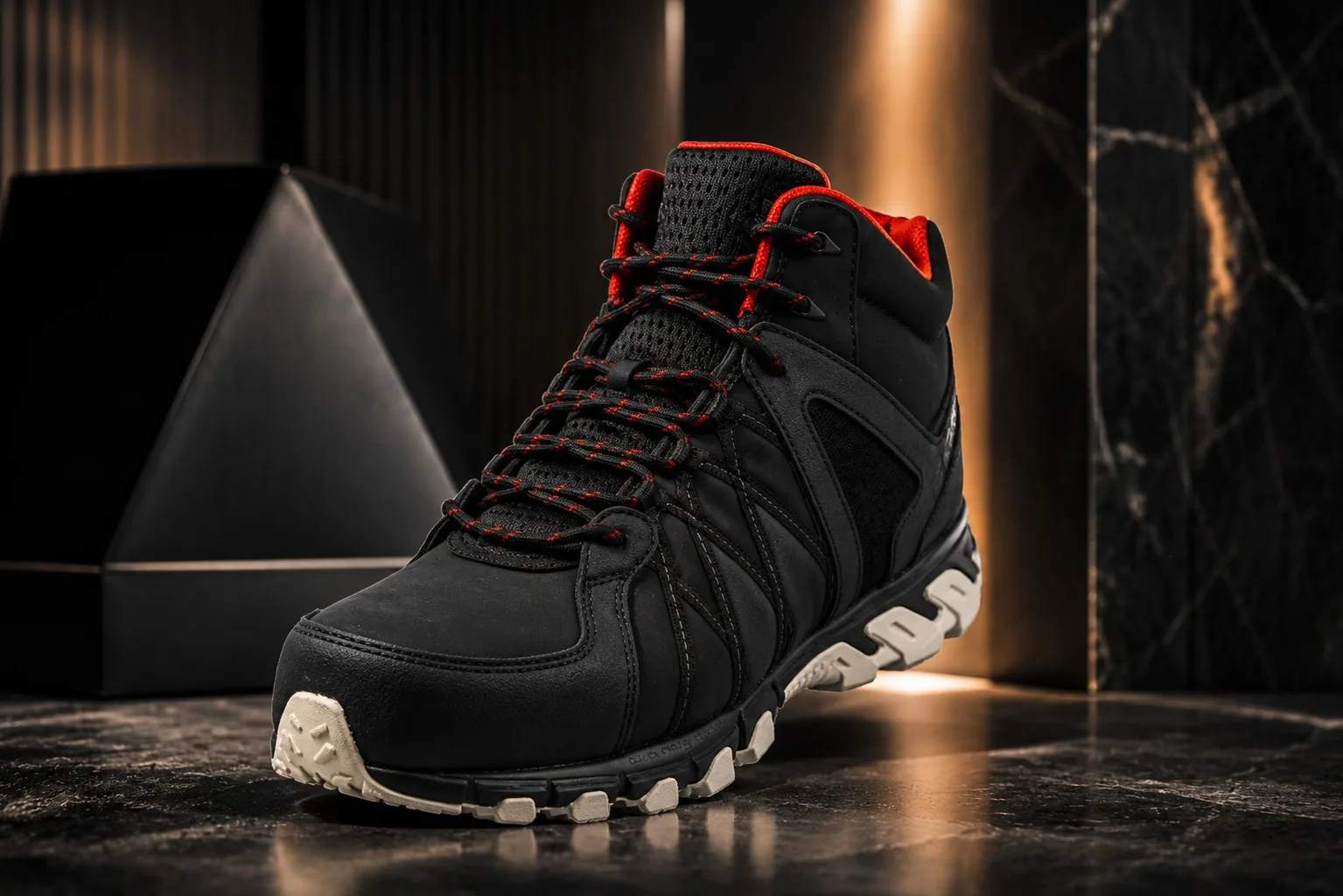
Construction and outdoor trades present a different challenge. Uneven surfaces, changing weather and heavier physical work may make a higher-cut safety boot the more sensible choice.
Reebok's current occupational footwear range, for example, includes safety trainers as well as boots with ratings such as S3 and S3S, giving workers different options depending on their requirements.
Discover more
Commission Custom Prints
Search Engine Marketing
AI Powered Marketing
Auto
Banner Printing Services
Compare Car Insurance
The lesson is straightforward: match the footwear to the working environment, not the other way round.
What to look for in Reebok safety shoes
When comparing Reebok safety shoes, start by checking the specification rather than relying on appearance.
Look at the safety rating and establish what protection the shoe actually provides. Depending on the model, this can include features relating to toe protection, resistance to penetration, slip resistance and water-related performance.
Slip resistance deserves particular attention. A shoe designed for dry indoor flooring may not be the right choice for a yard, building site or outdoor environment where surfaces can become wet or contaminated.
The upper material matters, too. Breathable materials can be valuable in warmer indoor workplaces, while more robust leather or waterproof constructions may be preferable for outdoor jobs.
Then there is the sole. Grip is not simply about how aggressive the tread looks. It needs to be appropriate for the surfaces you regularly encounter.
When safety boots make more sense
There is a temptation to choose a low-profile work shoe because it feels lighter and more like ordinary footwear. Sometimes that is exactly the right decision.
Other times, a boot is worth the additional weight.
A higher-cut boot can provide greater coverage around the ankle and is often better suited to rough terrain, construction environments and outdoor work. It can also offer useful protection against mud, rain and debris.
For workers who move between indoor and outdoor environments during the same shift, a boot can be the more practical all-round option.
That does not mean every outdoor worker needs the heaviest boot available. Excess weight can become tiring over a long day. The aim is to find the point where protection, support and comfort are properly balanced.
The case for waterproof safety footwear
British weather has a habit of turning a straightforward working day into a wet one.
If your job regularly involves outdoor work, waterproofing should be considered a functional requirement rather than a nice extra. Wet feet are uncomfortable, but prolonged exposure to moisture can also affect the condition and lifespan of footwear.
When comparing CAT waterproof safety boots, check what the manufacturer actually claims rather than assuming that a boot described as water-resistant is fully waterproof.
Waterproof construction can also affect breathability, so there is often a compromise to consider. A boot that keeps rain out exceptionally well may feel warmer than a lightweight safety trainer.
For people who spend most of their working day outdoors, however, that trade-off can be worthwhile.
Current UK safety-footwear ranges include waterproof composite boots designed for demanding outdoor conditions, while separate safety shoes cater for lighter-duty environments.
Comfort matters more than most people think
Safety footwear is only useful if you can comfortably wear it throughout the shift.
Fit should therefore be treated as a safety consideration in its own right.
Your heel should remain secure without excessive pressure, while your toes need enough space to move naturally. Remember that feet can swell during a long working day, particularly when you spend hours standing or walking.
Try footwear with the socks you would normally wear at work. That small detail can make a surprising difference.
Weight is worth considering as well. A few hundred grams may not sound significant when comparing specifications, but the cumulative effect of taking thousands of steps during a shift is another matter.
A comfortable shoe is not necessarily the softest shoe. Good support, appropriate cushioning and a stable sole all contribute to how footwear feels after several hours rather than just several minutes.
Understanding safety ratings and workplace requirements
A common mistake is buying safety footwear based purely on brand or appearance.
Safety ratings exist for a reason. Before buying, check your employer's requirements and the hazards associated with your particular role.
For example, someone working around heavy machinery may have very different footwear requirements from someone working in a warehouse or driving between customer sites.
It is also worth remembering that safety standards and product specifications can change. Always check the current manufacturer's information for the particular model rather than assuming every shoe in a range offers identical protection.
A reputable specialist retailer can also make the process easier by allowing footwear to be filtered by safety rating, brand, protection and other features. Briggs Safetywear, for example, currently carries a substantial selection of Reebok occupational footwear alongside other established safety-footwear brands. Briggs Safetywear
Choose footwear that will actually last
The cheapest pair is not always the cheapest option over a working year.
If footwear is worn five days a week, durability becomes part of the calculation. Look at the sole construction, upper material, stitching and overall build quality, but also consider how the footwear will be treated.
Mud and dirt should be removed rather than left to accumulate. Wet footwear should be allowed to dry properly, away from excessive direct heat that can damage certain materials. Insoles may also need replacing before the rest of the shoe has reached the end of its useful life.
Perhaps the most practical approach is to think about work footwear as equipment.
You would not choose a power tool without considering what you need it to do. Safety footwear deserves the same level of thought.
The right Reebok work shoes are not necessarily the lightest, toughest or most expensive pair. They are the ones whose protection, construction and comfort genuinely match the demands of your working day.
FAQ
Are Reebok work shoes suitable for construction work?
Some Reebok occupational footwear is designed with safety ratings appropriate for demanding working environments, but suitability depends on the specific model and the requirements of the job. Always check the individual specification.
What is the difference between Reebok work shoes and Reebok safety shoes?
The terms are sometimes used broadly, but safety footwear should meet the relevant protective requirements for the workplace. Check the safety rating and features of the specific model rather than relying on the product name.
Are waterproof safety boots worth buying in the UK?
For people who regularly work outdoors, waterproof footwear can be particularly useful. It is worth checking whether a product is genuinely waterproof and whether its other characteristics, such as breathability and grip, suit the working environment.
Should I choose safety trainers or safety boots?
Safety trainers can work well for indoor environments and jobs involving a lot of walking on relatively even surfaces. Boots can be more appropriate for outdoor work, uneven terrain or environments where additional ankle coverage and weather protection are useful.