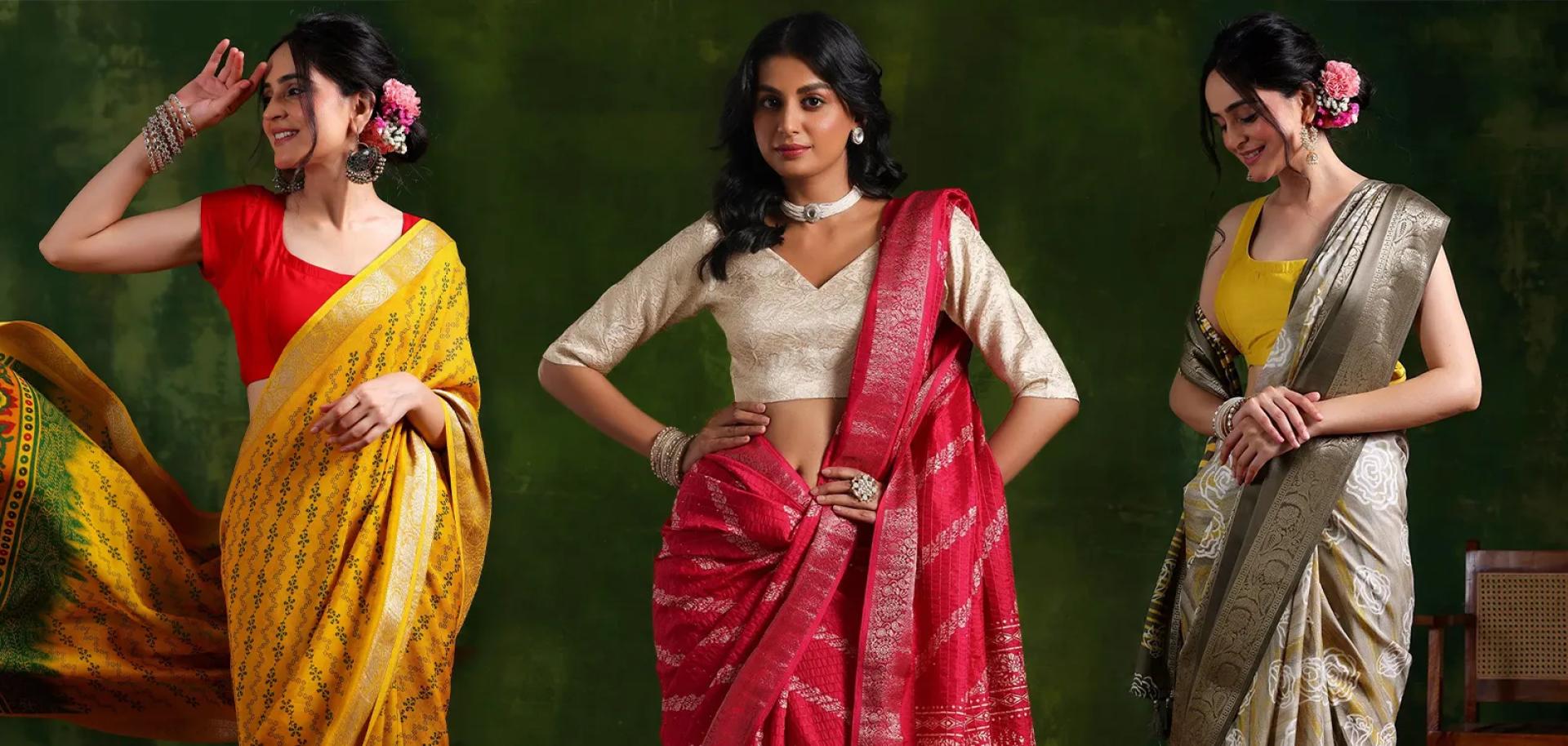
A padded blouse can completely upgrade how your saree or lehenga look sits on the body—better shape, cleaner fall of the pallu, and a more confident fit for long events. But if the size or padding type is wrong, it can feel tight, look “bulky,” or create gaping near the armhole and neckline.
This guide helps you choose the right padded designer blouse in the UK with simple sizing steps, padding options explained, and fit checks that work for both readymade and stitched styles.
Why Padded Blouses are Popular in the UK
In the UK, many shoppers prefer padded blouses because:
- You don’t always need to wear a separate bra (depending on blouse structure and comfort).
- It gives a smoother silhouette under sarees, especially in photos.
- It supports heavier sarees (silk, Banarasi, embellished, bridal drapes).
- It helps with deep-back or statement-neck designs where bra straps look awkward.
Step 1: Know Your Exact Measurements (not just “I wear M”)
The biggest mistake in padded blouses is ordering by guess-size. Do this instead:
Essential Measurements
Use a soft measuring tape and measure over a non-padded bra or fitted camisole.
- Bust: Around the fullest part of the bust
- Underbust: Just below the bust
- Blouse length: Shoulder to desired end point
- Shoulder width: Shoulder tip to shoulder tip
- Armhole: Around the armhole area (important for comfort)
- Sleeve length (if sleeves)
- Front depth & back depth: Very important for modest vs deep styles
UK tip: Many women know their bra size (like 34D, 36C). That helps a lot, but you still need bust + underbust for the best blouse fit.
Step 2: Choose the Correct Size for Readymade Pdded Blouses
Readymade padded blouses usually come in standard sizes (UK-friendly stores may list inches/cm). Here’s how to choose smarter:
If you’re between sizes
- If your bust is between two sizes, pick the larger size if the blouse has padding + structured fit (princess cut, hooks, thick lining).
- If the blouse has extra margin (alteration allowance), you can safely go slightly bigger and alter down.
Check for “margin”
Many good blouses include margin (extra fabric on sides) for tailoring. This is a lifesaver in the UK because you can get a perfect fit from any local tailor.
Step 3: Understand Padding Types (and who they suit)
Not all padding is the same. Choose based on your comfort, occasion, and body shape.
1) Light foam padding (most common)
- Soft shape, everyday comfort
- Best for: regular saree wear, office functions, family events
- Pro: natural look, not bulky
- Con: less lift for heavy bust unless stitching is strong
2) Pre-shaped cups (cup-style padding)
- Cup has a fixed shape, gives more defined bust line
- Best for: partywear blouses, deep necklines
- Pro: good shape, photo-friendly
- Con: if cup doesn’t match your bust, it can gape or press
3) Push-up / heavy padding
- Adds lift and fullness
- Best for: bridal blouses, glam looks, smaller bust wanting lift
- Pro: dramatic shape
- Con: can feel warm/tight during long events
4) Removable pads (pad pockets)
- You can remove or change pads
- Best for: people sensitive to padding, travel, multi-use blouses
- Pro: flexible
- Con: cheaper versions may shift while wearing
5) Built-in support (lining + structure, not thick pads)
- Some blouses feel “supported” due to stiff lining and good stitching
- Best for: people who dislike thick pads
- Pro: breathable and clean silhouette
- Con: may still need a strapless or supportive bra
Step 4: Pick the right fit style (this matters more than padding)
Padding looks best when the blouse construction is right.
Princess cut (recommended for padded blouses)
- Curved panels that shape the body nicely
- Best for: most body types, bridal/partywear
Boat neck / high neck
- More secure and supportive
- Best for: heavier bust, long events, modest preference
Deep V / sweetheart / backless
- Looks stunning but needs accurate size and strong hooks
- Best for: parties and weddings
- Tip: choose higher-quality stitching + cup padding + firm lining
Step 5: Fit Checks You Should do in 2 minutes (when blouse arrives)
Before you remove tags or alter, do these checks:
- No gaping at neckline when you bend slightly
- Armhole comfort: raise both arms no pinching
- Bust sits smooth: padding should not fold or look pointy
- Back hooks lie flat: no pulling lines across the back
- Underbust band feels secure: not riding up
- Sleeves don’t cut into arms (if sleeves)
If it passes these checks, you’ve picked the right size and padding.
Common Padded Blouse fit Problems (and easy fixes)
Problem 1: Gaping at the neckline
Why: cup shape mismatch or size slightly big
Fix: tailor can add darts, adjust cup placement, or tighten neckline piping
Problem 2: “Bulky” look on the chest
Why: heavy padding + wrong cup size
Fix: switch to light padding or removable pads
Problem 3: Tight at armhole
Why: armhole cut is small or bust size is correct but armhole isn’t
Fix: choose styles with a comfortable armhole curve; tailoring can help but limited
Problem 4: Back hooks pulling
Why: blouse is tight at bust/underbust
Fix: choose one size bigger with margin; alter for perfect fit
UK Shopping tips for Padded Blouses (online)
- Always check the size chart in inches/cm (don’t rely only on S/M/L).
- Prefer stores that mention margin and detailed blouse measurements.
- Read return rules before buying heavily padded or deep-back styles.
- If you have a wedding date soon, pick a blouse that needs minimal alteration.
Best Padded Blouse Choice by Body Type (quick guide)
- Heavier bust: light-to-medium padding + strong lining + broader straps/shoulder + secure hooks
- Smaller bust: cup padding or push-up padding for lift (if you like)
- Broad shoulders: wider necklines (boat/square) can balance the look
- Curvy midsection: slightly longer blouse length + princess cut gives smoother finish
Quick Checklist Before You Buy
- You know your bust + underbust
- You checked armhole and shoulder width
- You selected padding type for comfort (light/cup/removable)
- You verified margin/alteration allowance
- You chose neckline depth you can comfortably wear all day
Conclusion
Choosing the right padded blouse in the UK is all about accurate measurements, the right padding type, and a comfortable fit not just picking S/M/L. When your bust, underbust, armhole, and neckline depth match well, the blouse looks smoother, feels lighter, and stays perfect through long events. If you’re ever confused between two sizes, go for the size with margin and alter it a well-fitted padded blouse always looks more premium and gives the best saree drape and confidence.