

Compressed air is a core utility for food factories, beverage lines, laboratory environments, mining workshops, pharmaceutical production, and sterile packaging facilities across Australia. As processing becomes cleaner and more automated, the purity of compressed air has a direct influence on safety, production stability, regulatory approvals, and operating costs. This is leading Australian manufacturers to adopt oil free air compressors as a reliable alternative to traditional lubricated units.
Traditional compressors rely on oil for sealing and lubrication inside the compression chamber. Even with strong filtration, trace lubricant can enter the compressed air pipeline. For general tools, this may be acceptable, but for regulated or hygiene-focused environments, such contamination risks are too costly to manage. Oil-free compressed air solutions eliminate this risk at the source, making purity easy to sustain rather than difficult to verify.
This guide helps Australian industrial buyers understand how to evaluate, size, compare, and install the right oil-free compressed air system for long-duty, regulated, and remote environments.
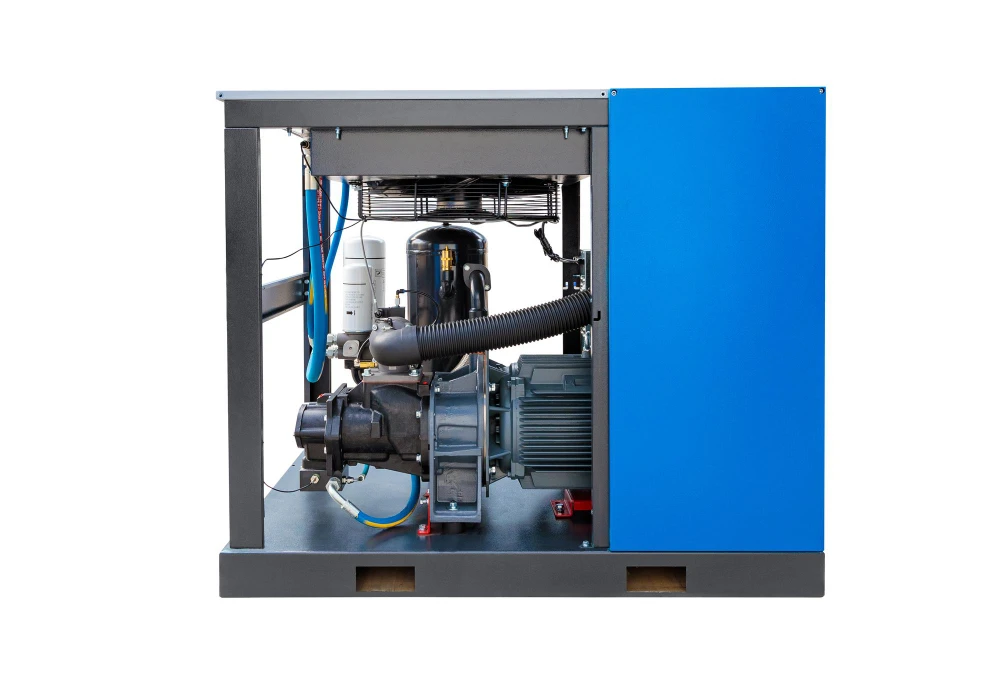
Why Oil-Free Air Compressors Are Becoming a Standard in Australia
Australian industrial buyers are prioritizing purity and safety for several reasons:
- Cleaner production expectations in food and beverage
- Higher sterility requirements for pharmaceutical and laboratory environments
- Automated packaging lines that need consistent chamber sealing
- Mining workshops that require stable long-duty performance
- Sustainability and environmental compliance goals
- Increasing efficiency demands for continuous pneumatic operations
Oil free air compressor technology eliminates lubrication exposure inside the compression chamber. This delivers stable compressed air purity for industrial operations without depending on heavy coalescing filters, downstream cleanups, or purge cycles.
Australian factories prefer oil free compressed air solutions because purity is engineered at the chamber, not monitored after compression. This significantly reduces contamination risk, inspection burden, and rework across industrial processes.
Understanding Oil Free Air Compressor Technology
Oil-free compressors operate without lubrication inside the compression chamber. Instead of oil-based sealing, chambers use:
- Precision rotor clearances
- Long-life engineered sealing materials
- Low friction internal coatings
- Controlled temperature management
- Predictable compression stability
After intake, air is compressed inside a chamber where pressure increases without lubricant exposure. The internal design controls heat and airflow before the air is directed into dryers and filters for moisture removal.
Oil-free technology is widely available in screw compressor oil free models. These units are engineered for continuous duty cycles and predictable purity, making them ideal for packaging, sorting, filling, laboratory, cleaning, and mining environments across Australia.
Oil-free units are different from oil-less equipment. Oil-less machines may rely on lubrication in secondary components, while true oil-free systems isolate compressed air completely from lubrication and carry third-party purity documentation.
Key Questions Before Choosing an Oil-Free Compressor in Australia
What Is Your Required Airflow (CFM)?
Accurate sizing begins with determining compressed air flow volume, measured in CFM. Buyers must map:
- Number of workstations
- Simultaneous demand conditions
- Peak production hours
- Seasonal load variations
- Shift operating patterns
Undersizing reduces purity and pressure stability. Oversizing increases unnecessary energy consumption. A proper sizing survey ensures predictable purity and energy efficiency.
What Pressure Do Your Tools and Processes Require?
Different environments require different pressure levels. Packaging machines, laboratory instruments, air knives, and pneumatic mining tools need stable pressure output. Australian industrial operators should review:
- PSI requirement at each point of use
- Pressure drop risks inside long piping runs
- Peak shift pressure variations
- Tool sensitivity to inconsistent air delivery
Correct pressure planning protects product safety and reduces downtime.
Evaluating Industrial Purity Requirements
Is Class Zero Purity Important for Your Operation?
ISO 8573 defines compressed air purity standards. Class Zero is the highest oil-free rating, certifying that no oil aerosol or vapor enters the final compressed air stream. Australian buyers should verify:
- Third-party Class Zero certification
- Documentation for purity and chamber testing
- Annual validation data if applied to export or sterile environments
Facilities that need hygienic packaging, sterile batching, pharmaceutical operations, or clinical processing benefit from Class Zero purity.
How Sensitive Are Your Production Areas to Contamination?
Australian plants where compressed air contacts production surfaces or sterile rooms must adopt oil free systems. These sectors include:
- Food and beverage processing
- Dairy packaging and cold rooms
- Pharmaceutical manufacturing
- Laboratory environments
- Hospital processing and sterilization
- Semiconductor assembly
- Clinical analysis and sterile packaging
In these environments, even trace aerosol contamination can cause product rejection, inspection delays, or brand risk.
Choosing the Right Dryer and Filtration Strategy
Humidity and temperature vary across Australia. Queensland and coastal regions experience high moisture levels, which increase the burden on dryers. Mining regions in Western Australia require dust-resistant inlet filtration and stable cooling performance. Southern climates need startup stabilization due to temperature drop.
Oil free compressors perform best when paired with:
- Correct dryer sizing for regional humidity
- Point-of-use filters for sterile packaging or lab tools
- Pressure drop analysis for long distribution lines
- Condensate removal systems that protect pneumatic tools
Dryer selection is critical because moisture can affect sterility, safety, and accuracy even if the compressor produces clean air.
Comparing Screw Compressor Oil Free Designs
Oil-free screw compressors are widely adopted in Australia because they deliver stable long-shift performance with predictable purity. Key benefits include:
- Continuous duty operation
- Accurate thermal management
- Rotor stability without lubrication
- Lower filter replacement cost
- Reduced sludge accumulation in piping
- Longer pneumatic equipment lifespan
- Better compatibility with automated production lines
When comparing models, Australian buyers should evaluate:
- Rotor durability
- Cooling performance
- Noise and heat footprint
- Sensor-based diagnostics
- AMC and predictive maintenance tools
A high-quality screw compressor oil free design improves uptime for packaging floors, dairy lines, pharmaceutical rooms, and mining workshops.
Understanding Lifecycle Cost Instead of Price
Oil free compressed air systems may cost more initially. However, lifecycle advantages are strong:
- Lower filter replacements
- Less equipment fouling
- Fewer contamination shutdowns
- Lower rework and batch disposal
- No lubricant disposal costs
- More predictable AMC cycles
- Lower environmental reporting burden
For Australian plants that run continuous shifts, lifecycle value matters more than short-term price.
Checking AMC, Spare Parts, and Service Availability
Oil free air compressors require regular preventive maintenance, but the burden is lower than lubricated systems. When choosing a supplier, evaluate:
- AMC availability and remote service access
- Spare parts stocking and delivery time
- Predictive diagnostic support
- Energy monitoring and performance analytics
- Service coverage in regional mining or manufacturing areas
- Response time for breakdown or technical support
Industrial operations located far from capital cities and service hubs benefit greatly from suppliers with strong regional presence.
Comparing Air Compressor Manufacturers
When evaluating air compressor manufacturers, Australian buyers should assess:
- Industry experience in regulated sectors
- Service footprint across Australian states
- Class Zero expertise
- Installation experience in high-humidity or dusty environments
- Local technician availability
- Spare parts logistics and AMC quality
- Lifetime operating cost compared to baseline price
Suppliers that understand sterile packaging, laboratory requirements, or remote mining operations provide better long-term reliability.
Installation Considerations for Australia
A correct installation protects purity. Australian facilities should plan:
- Room ventilation and heat removal
- Dryer and condensate configuration for humidity conditions
- Pressure drop and piping slope analysis
- Moisture removal in extended distribution lines
- Isolation and safety valves for service work
- Remote monitoring for predictive uptime
System engineering affects purity as much as compressor design. Oil free compressed air solutions deliver best results when ecosystem planning is correct.
Conclusion
Choosing the right oil free air compressor system helps Australian industrial facilities protect hygiene, sterility, product consistency, and uptime. Evaluating CFM, pressure requirements, dryer needs, purity standards, AMC support, and supplier expertise ensures stable operation across sterile packaging rooms, pharmaceutical batches, mining workshops, and automated production lines.
By focusing on long-term lifecycle cost instead of short-term equipment price, Australian plants gain greater purity, lower maintenance, fewer contamination incidents, and more reliable continuous duty performance.
FAQs
FAQ 1: Why should Australian industrial plants choose oil free air compressors instead of lubricated models?
Australian plants in food processing, pharmaceutical manufacturing, laboratory environments, dairy packaging, and sterile production must maintain predictable purity at all times. Lubricated compressors can introduce trace oil aerosol into compressed air even with downstream filtration. Oil free air compressors eliminate contact between lubrication and compressed air, which reduces batch rejection, maintenance workload, inspection complexity, and environmental disposal handling. For industrial operations where air quality touches product or sterile equipment, oil free technology provides greater long-term safety and reliability.
FAQ 2: How do I size an oil free air compressor for my industrial operation?
Sizing depends on simultaneous air demand, workstation count, pneumatic tool requirements, CFM consumption, pressure variations, and seasonal load fluctuations. Australian buyers should survey real-time consumption at peak production hours to avoid oversizing or undersizing. Correct sizing ensures stable purity, lower energy consumption, accurate delivery pressure, and reduced system stress. Many Australian air compressor manufacturers or service providers offer on-site assessments for better accuracy.
FAQ 3: Are screw compressor oil free systems suitable for continuous-duty industrial shifts?
Yes. Screw compressor oil free designs are engineered for continuous-duty Australian environments including packaging lines, beverage processing, mining workshops, laboratory tools, and sterile cleaning stations. The chamber maintains sealing and temperature control without lubrication, which supports long operating hours without purity degradation. These compressors reduce sludge buildup inside pipelines, lower filter replacement cost, and improve uptime for automated lines and remote workshops.
FAQ 4: What should I look for when comparing air compressor manufacturers in Australia?
Industrial buyers should evaluate Class Zero expertise, installation experience in sterile or remote environments, AMC availability, technician coverage, spare parts stocking, diagnostic support, and performance monitoring. Manufacturers with strong Australian service presence are better positioned to support long-duty cycles, mining operations, pharmaceutical packaging, or food-grade production. Comparing lifecycle cost instead of equipment price gives a more realistic view of reliability and maintenance value.
FAQ 5: How important is dryer and filtration planning for oil free compressed air solutions?
Oil free compressed air solutions deliver purity at the chamber, but system performance still depends on moisture management and distribution design. Australian plants should consider humidity load, dryer capacity, dust filtration for mining regions, pressure drop across long piping, condensate removal, and point-of-use sterile filters. Proper dryer and filtration planning protects packaging lines, laboratory instruments, and sterile batching from moisture-related performance issues.
6: Which is better for industrial use: oil-flooded air compressors or oil-free air compressors?
It depends on your application.
- Oil-flooded compressors are better for heavy-duty use, continuous operation, and industries where a small amount of oil carryover is acceptable. They offer higher durability and lower upfront cost.
- Oil-free compressors are ideal when clean, contaminant-free air is essential—such as food, pharmaceuticals, electronics, and medical sectors. They prevent oil contamination and reduce downstream filtration needs.
Choosing the right type comes down to air purity requirements, operational load, maintenance expectations, and industry standards.