Businesses today depend heavily on technology to manage operations, store data, communicate with clients, and run critical systems. From cloud platforms to cybersecurity tools, IT infrastructure has become a central part of daily business operations. However, managing complex IT systems internally can be expensive and time-consuming for many organizations.
This is where Managed Service Providers play an important role. A Managed Service Provider, commonly known as an MSP, offers outsourced IT services that help businesses maintain and support their technology environments. These providers handle tasks such as network monitoring, cybersecurity, cloud management, and system maintenance.
Choosing the right Managed Service Provider can significantly improve operational efficiency, strengthen security, and reduce IT management costs. However, selecting the wrong partner can lead to service disruptions, security risks, and wasted resources. Understanding how to evaluate and compare MSP options is essential for making the right decision.
Understanding What a Managed Service Provider Does
A Managed Service Provider is a company that remotely manages a business's IT infrastructure and technical services. Instead of hiring a large internal IT team, businesses can rely on MSPs to monitor systems, troubleshoot issues, and maintain technology platforms.
These providers typically offer proactive support, meaning they identify and fix problems before they disrupt business operations.
Common Services Offered by Managed Service Providers
Most MSPs provide a wide range of IT services designed to support modern business environments.
• Network monitoring and maintenance
• Cybersecurity protection and threat detection
• Cloud infrastructure management
• Data backup and disaster recovery
• Software updates and patch management
By outsourcing these services, businesses can focus on their core operations while ensuring their technology systems remain secure and reliable.
Why Choosing the Right MSP Matters
Technology problems can slow down productivity, cause financial losses, and create security vulnerabilities. A reliable Managed Service Provider ensures that IT systems remain stable and secure while supporting business growth.
Choosing the right provider also allows businesses to scale their technology resources as their needs change.
Benefits of Working With a Reliable MSP
Partnering with the right provider offers several advantages.
• Reduced downtime and faster technical support
• Improved cybersecurity protection
• Predictable IT costs
• Access to specialized technical expertise
• Scalable solutions for growing businesses
These benefits help organizations operate more efficiently while maintaining a strong technology infrastructure.
Evaluate the Provider’s Experience and Expertise
One of the first factors to consider when selecting a Managed Service Provider is their experience. A provider with a strong track record in the industry is more likely to understand the challenges businesses face and provide effective solutions.
Experienced providers also stay updated with emerging technologies and cybersecurity threats.
Questions to Ask About Experience
When evaluating an MSP, businesses should consider several factors.
• How long the provider has been offering managed services
• Industries they have previously supported
• Certifications held by their technical team
• Experience with similar IT environments
An experienced provider can identify potential risks early and implement strategies that keep systems running smoothly.
Assess Cybersecurity Capabilities
Cybersecurity has become one of the most critical responsibilities for Managed Service Providers. Businesses face increasing threats from ransomware, phishing attacks, and data breaches. A strong MSP should offer comprehensive security services that protect both networks and data.
Key Security Services to Look For
Businesses should ensure their provider includes advanced security features such as:
• network threat monitoring
• endpoint protection for devices
• firewall management
• security patch management
• employee security awareness support
Strong cybersecurity services help prevent costly data breaches and system disruptions.
Review Service Level Agreements
A Service Level Agreement, often called an SLA, defines the responsibilities of the Managed Service Provider and the level of service businesses can expect.
This document outlines response times, system availability guarantees, and support expectations.
Important SLA Elements
Businesses should carefully review several key components of the SLA.
• guaranteed response and resolution times
• system uptime commitments
• support availability hours
• escalation procedures for critical issues
A clear SLA ensures accountability and helps avoid misunderstandings between businesses and service providers.
Evaluate Communication and Support Quality
Technology issues often require immediate attention. If a Managed Service Provider does not respond quickly, business operations may suffer.
Reliable communication and responsive technical support are essential when selecting an MSP.
Indicators of Strong Support
Businesses should look for providers that demonstrate strong support capabilities.
• 24-hour monitoring and technical assistance
• multiple communication channels for support
• fast response times for urgent issues
• dedicated account management teams
Consistent communication helps businesses stay informed about system performance and potential risks.
Consider Scalability and Flexibility
As businesses grow, their technology requirements change. The Managed Service Provider should offer solutions that can scale with the organization.
A flexible provider allows businesses to expand services without major disruptions.
Examples of Scalable Services
Scalable IT solutions may include:
• cloud infrastructure expansion
• additional cybersecurity services
• network upgrades
• support for new devices and users
A scalable MSP ensures that technology systems continue supporting business growth.
Compare Pricing Models and Value
Cost is an important factor when selecting a Managed Service Provider. However, businesses should focus on overall value rather than choosing the cheapest option.
A provider offering comprehensive services and strong support may deliver better long-term results.
Common MSP Pricing Models
Managed Service Providers typically use several pricing structures.
• monthly subscription-based pricing
• per device or per user pricing
• tiered service packages
• customized enterprise solutions
Understanding pricing structures helps businesses choose a service plan that aligns with their budget and operational needs.
MSP Service Comparison
The table below highlights several factors businesses should compare when evaluating Managed Service Providers.
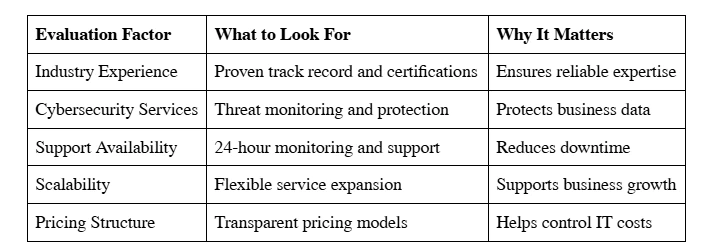
This comparison helps businesses identify providers that offer both reliability and long-term value.
Look for Proactive IT Management
The best Managed Service Providers do more than fix problems after they occur. They take a proactive approach to technology management by continuously monitoring systems and preventing issues before they impact operations.
Proactive support helps reduce downtime and improve system performance.
Examples of Proactive IT Services
A strong MSP often provides several proactive services.
• continuous network monitoring
• automated security updates
• system performance optimization
• early detection of hardware failures
These preventive measures help businesses maintain stable and secure IT environments.
Conclusion
Choosing the right Managed Service Provider is a crucial decision that can significantly impact a company’s technology performance, security, and long-term growth. Businesses should carefully evaluate potential providers based on their experience, cybersecurity capabilities, service agreements, and support quality.
A reliable MSP acts as a strategic technology partner, helping organizations maintain a stable IT infrastructure while adapting to evolving business needs. By selecting a provider with strong expertise, responsive support, and scalable solutions, companies can ensure their technology systems remain efficient and secure.
Organizations seeking dependable IT support and modern managed services can explore solutions offered by RogasTec, which help businesses manage their technology infrastructure while improving reliability, security, and operational efficiency.
FAQs1. What does a Managed Service Provider do
A Managed Service Provider remotely manages a business’s IT infrastructure, including network monitoring, cybersecurity, cloud services, and technical support.
2. Why should businesses use a Managed Service Provider
MSPs help reduce IT management costs, improve system reliability, and provide access to specialized technical expertise.
3. How do businesses choose the right MSP
Businesses should evaluate experience, cybersecurity capabilities, service agreements, support quality, and pricing before selecting a provider.
4. Are Managed Service Providers suitable for small businesses
Yes, MSPs are especially useful for small businesses that may not have large internal IT teams but still require reliable technology support.
5. What services do Managed Service Providers typically offer
Common services include network monitoring, cybersecurity protection, cloud management, data backup, and software updates.