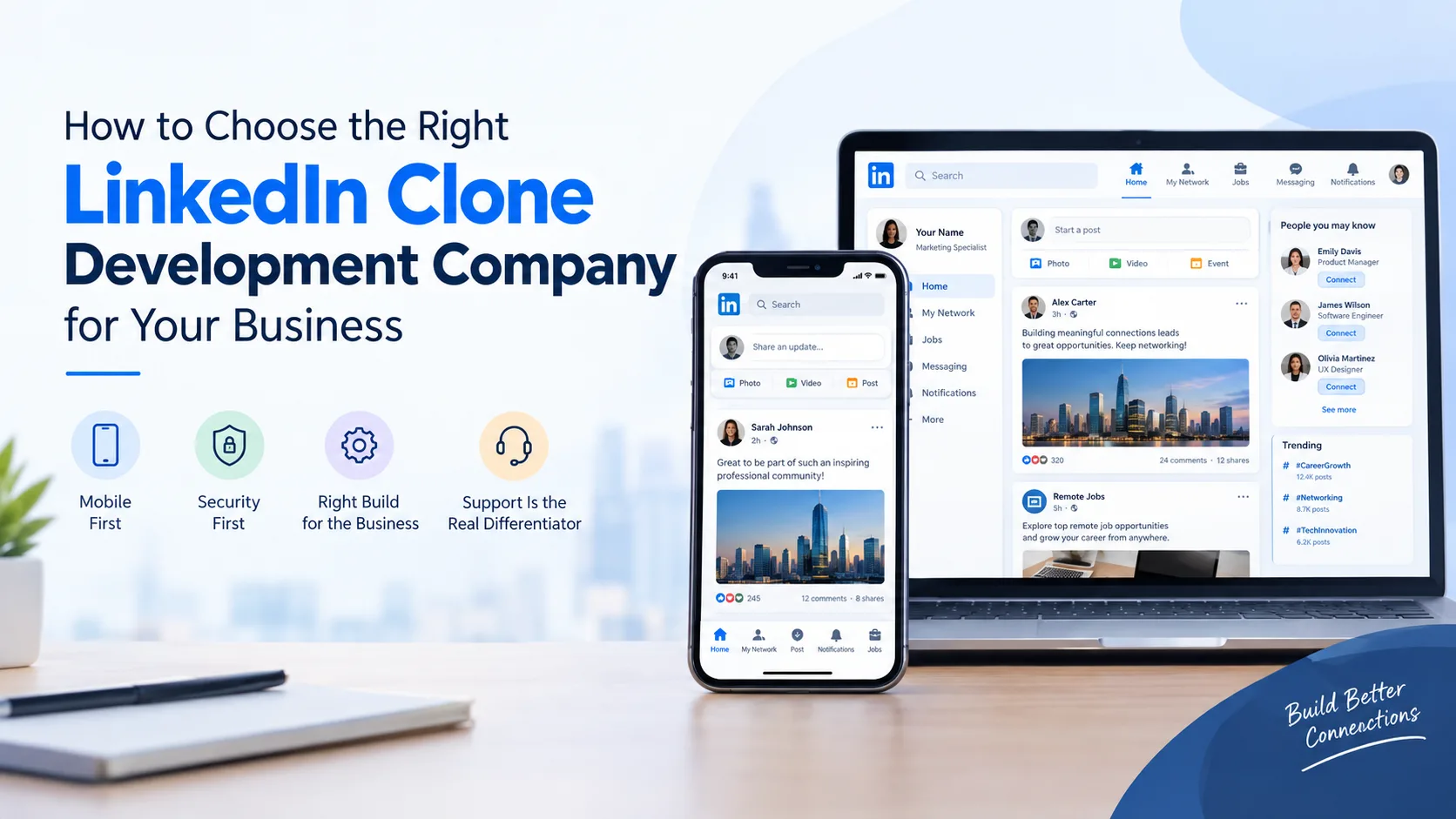
A lot of founders go with whoever quotes the lowest number. Then eight months in, the platform's live, users are annoyed, and the cost of fixing everything ends up higher than what a proper LinkedIn Clone development company would've charged in the first place. The real question isn't price. It's whether the team actually understands what a networking platform needs once people start using it daily, not just during the demo.
Mobile First
Most people check professional networking apps from their phone, not a laptop. A vendor without real experience in LinkedIn Clone Flutter development or LinkedIn Clone React Native development tends to treat mobile as something to patch on later.
- Messages lag on weaker connections
- Screens take a second too long to load
- Users who sign up on day one quietly stop opening the app by day three
Security First
If a vendor doesn't mention encryption or GDPR and CCPA compliance on their own, before you even bring it up, that's worth noticing. It usually means security got added later instead of built in from day one.
- Role-based access control should be standard, not an upsell
- Compliance readiness should be discussed upfront, not after a contract is signed
- A team serious about secure LinkedIn Clone script development will walk you through this without being asked twice
Right Build for the Business
A startup testing an idea needs something fast and flexible. An enterprise scaling an existing platform needs proper architecture and infrastructure that won't buckle under growth.
- MVP-first builds work for early validation
- Enterprise LinkedIn Clone development works for teams scaling recruitment or networking at volume
- White-label LinkedIn Clone app development suits businesses that want their own brand on the platform right from launch, not a template wearing someone else's name.
If an agency quotes the exact same package no matter what stage you're at, that usually means nobody actually paid attention during the first conversation.
Support Is the Real Differentiator
Everyone looks good on launch day. Check back in five months and you'll see who's still answering emails. A recruiter platform we worked with had their original vendor go dark for three weeks straight when their messaging feature broke during a hiring push. That's the scenario worth planning around before signing anything, not after.
Three things to nail down early: turnaround time on patches, actual response time when something's down (not what's promised, what's real), and whether maintenance is priced into the contract or billed separately once the honeymoon period ends.
Bottom Line
Traffic-tested experience, security brought up unprompted, and a team still around a year later. That's really it. Everything else is negotiable.
Build a Secure, Scalable LinkedIn Clone That’s Ready for Real Users. Get Started Today.