

When your operations rely heavily on machinery, a breakdown can lead to more than just downtime; it can disrupt your entire production timeline. This is why selecting the right industrial repair service is imperative. Making a well-informed decision ensures efficiency, longevity, safety, and compliance for your equipment. But how do you know which provider stands out as the right one?
This guide will walk you through the key factors to consider, providing actionable insights so you can make the best choice for your business.
Why Choosing the Right Provider Matters
Industrial machinery is the heart of your operations. Opting for the wrong repair provider could mean recurring failures and escalating costs.
Here’s why selecting wisely is essential:
- Minimized Downtime: A dependable provider offers swift and efficient repairs, reducing delays.
- Safety Compliance: Properly repaired equipment ensures the safety of your workforce.
- Prolonged Equipment Lifespan: High-quality repairs maintain your equipment’s efficiency and reduce the need for frequent replacements.
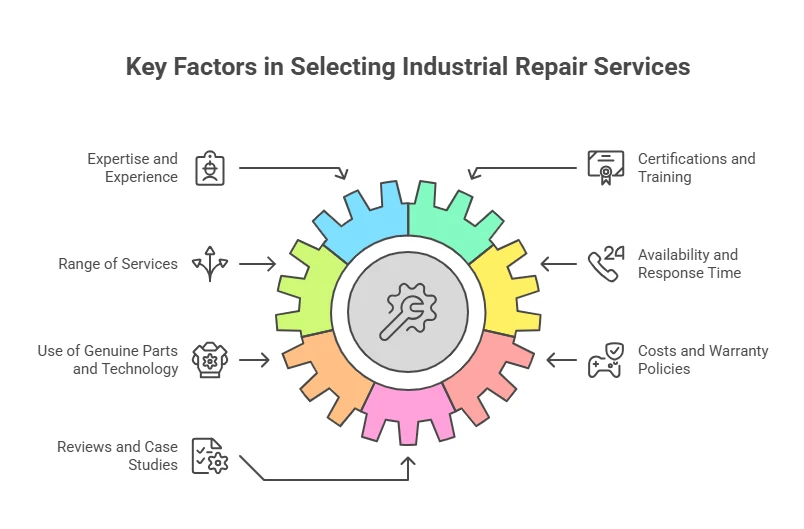
Key Factors to Consider When Selecting an Industrial Repair Service Provider
1. Assess Their Expertise and Experience
For any industrial repair service, expertise and years of experience are critical indicators of their capability. Providers with a long-standing presence often have hands-on experience with various equipment issues and industries.
What to Look For
- Their track record in industrial equipment repairs, especially with machinery similar to yours.
- Specialized technicians trained in industrial machine repair, capable of diagnosing varying problems.
- Client testimonials or reviews showcasing successful past repairs.
Pro Tip: Check if the provider has experience handling your specific industry needs. Tailored expertise can save significant time and cost in the long run.
Also Read: Signs Your Facility Needs Immediate Attention for Electrical and Mechanical Systems
2. Verify Certifications and Training
Certifications from industry-recognized bodies indicate that the service provider adheres to stringent quality standards.
For instance:
- ISO or OSHA certifications for safety and operational standards.
- Training certifications showcase their up-to-date knowledge of industry best practices.
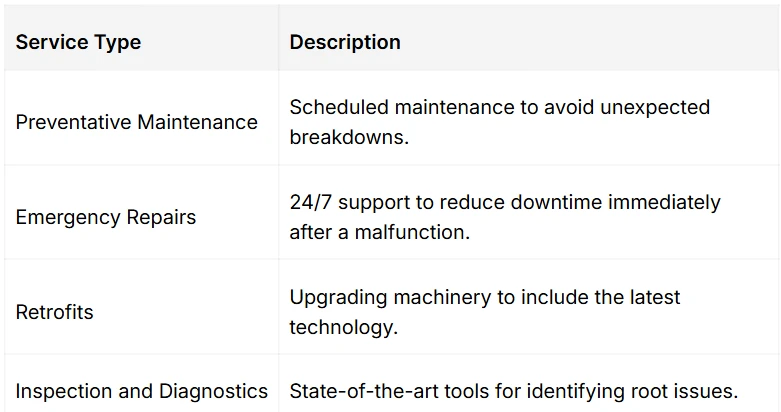
3. Evaluate the Range of Services Offered
A well-rounded provider offers more than just repairs. They typically provide:
- Preventative maintenance
- Diagnostic services
- Equipment retrofits and upgrades
- Emergency repair services
4. Check Their Availability and Response Time
Downtime can cost thousands of dollars within hours. Hence, service availability is crucial.
Questions to Ask:
- Do they offer 24/7 services for urgent repairs?
- What is their average response time for emergency cases?
- Is support available in your geographic region?
5. Scrutinize Their Use of Genuine Parts and Technology
The reliability of your repair service often boils down to the quality of parts and tools they use. Ensure the service provider uses:
- OEM (Original Equipment Manufacturer) parts for replacements.
- Diagnostic tools for pinpointing and solving issues effectively.
Quick Fact: Using OEM parts increases equipment lifespan by up to 50%, as they are designed specifically for your machinery.
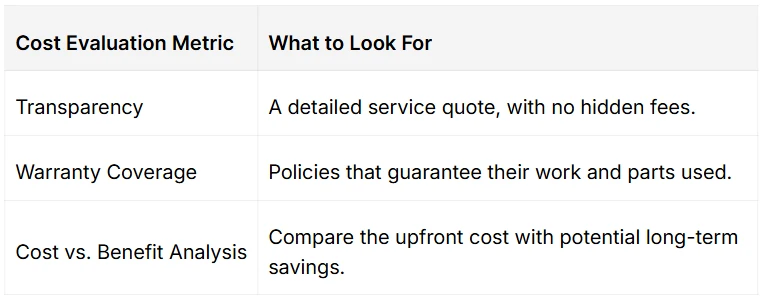
6. Evaluate Costs and Warranty Policies
While cost shouldn’t be the sole deciding factor, it’s essential to ensure you get value for money. Pricing transparency and warranty policies are assured in the event of repair failure.
7. Look for Reviews and Case Studies
Client reviews on platforms like Google or industry forums give insights into the reliability of an industrial repair service provider. Case studies often highlight specific challenges the provider has handled, showcasing their problem-solving expertise.
Pro Tip: Look beyond their website—check independent platforms for unbiased opinions.
Red Flags to Avoid
- No Certification: Uncertified providers may not comply with safety and quality standards.
- Unclear Quotes: Providers who avoid clear cost breakdowns might have hidden fees.
- Limited Approach: Beware of companies that push for replacements over repairs.
Wrapping-Up
Your choice of an industrial repair service provider will determine the efficiency, safety, and longevity of your machinery. Always prioritize a company that combines experience, certifications, and a proven track record.
Here’s a concise recap of the key points:
- Verify the provider’s experience and expertise in your industry.
- Ensure they use top-notch diagnostic tools and OEM parts.
- Prioritize providers offering 24/7 availability and emergency support.
- Look for transparent pricing and strong warranties.
- Utilize customer reviews and case studies to gauge reliability.
Taking these factors into account will help you find a service provider who ensures smooth operations, minimum disruptions, and long-term cost savings.
The Occupational Safety and Health Administration (OSHA) also emphasizes that the proper maintenance of industrial equipment is vital for safety, helping to prevent workplace accidents and ensuring compliance with regulations.
FAQs
1. What’s the difference between preventative maintenance and emergency repairs?
Preventive maintenance involves regular check-ups to prevent potential issues, while emergency repairs address sudden breakdowns to minimize downtime.
2. How do I check if a service provider uses genuine parts?
Ask for documentation or certifications proving they use OEM (Original Equipment Manufacturer) parts.
3. Why is response time so important in industrial repairs?
Quick response times minimize financial losses and keep your operations on schedule.
By following these guidelines, you can confidently select an industrial repair service provider that aligns with your needs and keeps your equipment in excellent condition.