
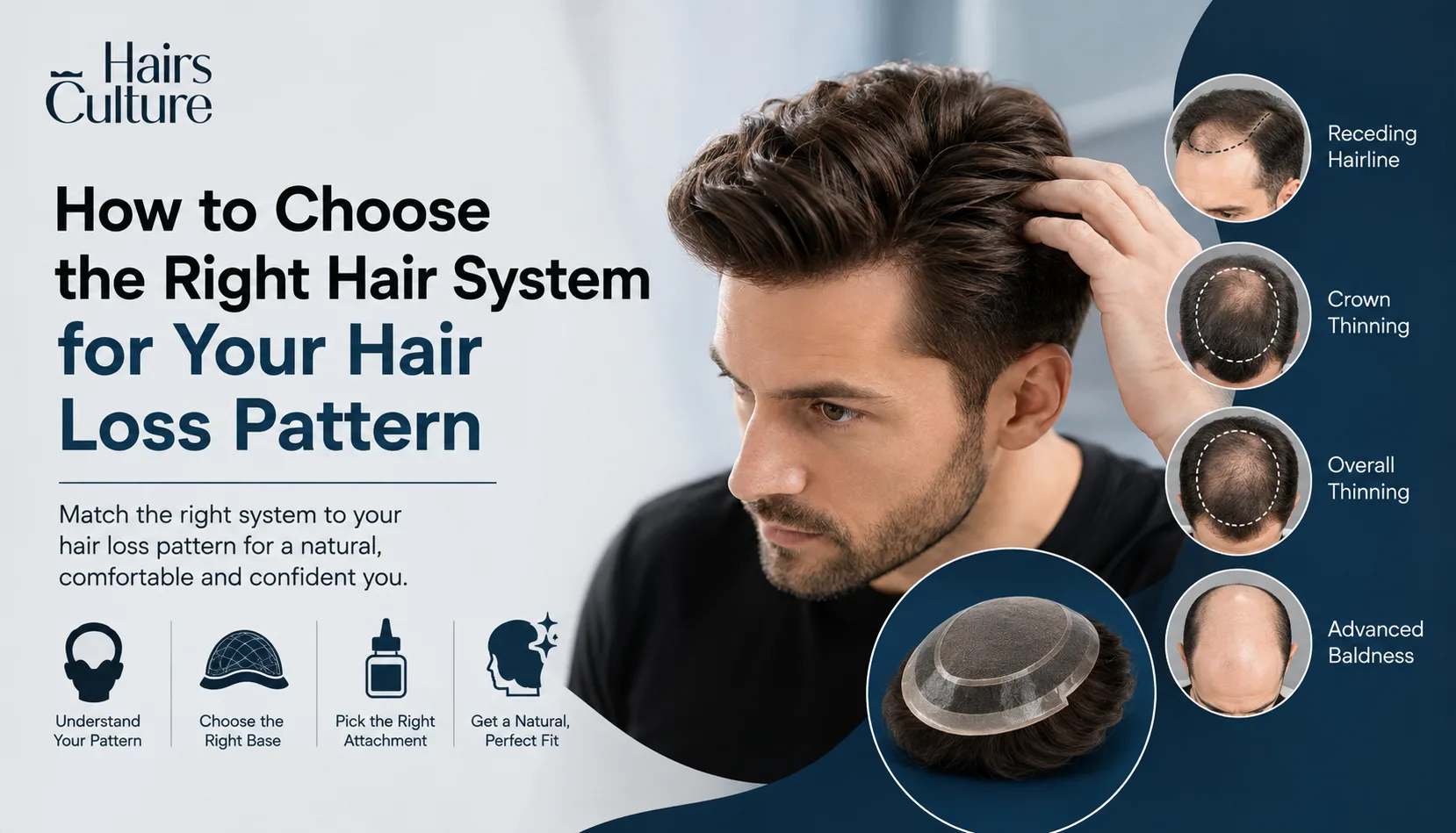
If you've started researching hair systems, you've probably noticed the same problem everyone runs into. Every brand claims theirs is the best fit, but almost none of them ask what your hair loss actually looks like first. A system built for a receding hairline won't sit right on someone with crown thinning, and a system designed for full coverage will look unnatural on someone who still has most of their hair.
Choosing the wrong system isn't just a comfort issue. It affects how natural the hairline looks, how long the system lasts, and how much maintenance you're signing up for. This guide walks through how to match a hair system to your specific pattern of hair loss, so you're not guessing.
Why Hair Loss Pattern Should Decide Your System, Not the Other Way Around
Hair loss doesn't follow one script. Some men lose hair mainly at the temples and hairline. Others thin out at the crown while keeping a full frontal line. Some see gradual thinning across the whole scalp rather than one specific zone. Each of these patterns needs a different base shape, density, and attachment approach.
Picking a system based on price or what a friend used, without matching it to your own pattern, is how people end up with a hairline that looks too dense, too low, or too obviously placed.
Matching Hair Systems to Common Hair Loss Patterns
Receding hairline or temple loss needs a system with a lighter, more natural front edge, usually a lace or poly front, so the hairline doesn't look like a solid block sitting on the head. The base should taper gradually rather than have a hard, straight edge.
Crown thinning is often easier to cover discreetly because it's a smaller, more contained area. A system here can use a slightly denser base since it doesn't need to blend into a visible hairline the way frontal systems do.
Overall thinning across the scalp is the pattern most people get wrong. Instead of one full system, some clients do better with a lighter, more breathable base that blends with existing hair, rather than a full-density system that looks noticeably thicker than the hair around it.
Advanced or full baldness usually calls for a full base system with stronger attachment, since there's no natural hair left to blend with or anchor to. Here, base material and attachment method matter more than density, since the entire system needs to move and sit like natural hair on its own.
How to Choose the Right Type for Your Situation
Base material is the first decision. Lace bases look the most natural and breathe well, but they wear out faster. Poly bases last longer and handle daily wear better, but need more skill to make them look undetectable at the edges. Skin bases sit in between, offering a natural scalp look with more durability than lace.
Attachment method is the second decision, and it depends on your lifestyle. Tape and adhesive-based attachment is common and easy to maintain, but needs regular reapplication. Clip-based systems are removable daily, which suits people who don't want a permanent attachment. Bonded or glued systems last longer between maintenance visits but require more careful removal to avoid damaging your own remaining hair.
Neither of these decisions should be made by looking at a product page. They need to be matched against your scalp, your remaining hair density, and how much upkeep you're actually willing to do.
Why a Professional Fitting Changes the Outcome
A system that looks perfect in a demo photo can look completely different on an actual head, because density, hairline shape, and attachment all need to be customized to the person wearing it. A professional measures your head shape, checks your existing hair growth pattern, and adjusts the system's density and front edge specifically for you, instead of handing you a standard size.
This is also where color matching happens properly. A system that's slightly off in tone is one of the most common giveaways, and it's avoidable with the right consultation.
Why Choose a Professional Hair Clinic
Getting a hair fixing or hair replacement system right depends on more than the product itself. It depends on someone assessing your hair loss pattern accurately and customizing the fit around it, not just selling you a standard system. A professional hair clinic handles that assessment, the base selection, the attachment method, and the ongoing maintenance, so the result actually holds up day to day. And if your consultation shows your hair loss is limited enough that a full system isn't necessary yet, a clinic can also guide you toward lighter alternatives like hair extensions for coverage and volume instead.
If you're still unsure which pattern you fall into or which system would actually work for your scalp, a consultation with a specialist is the most reliable way to find out before committing to one.