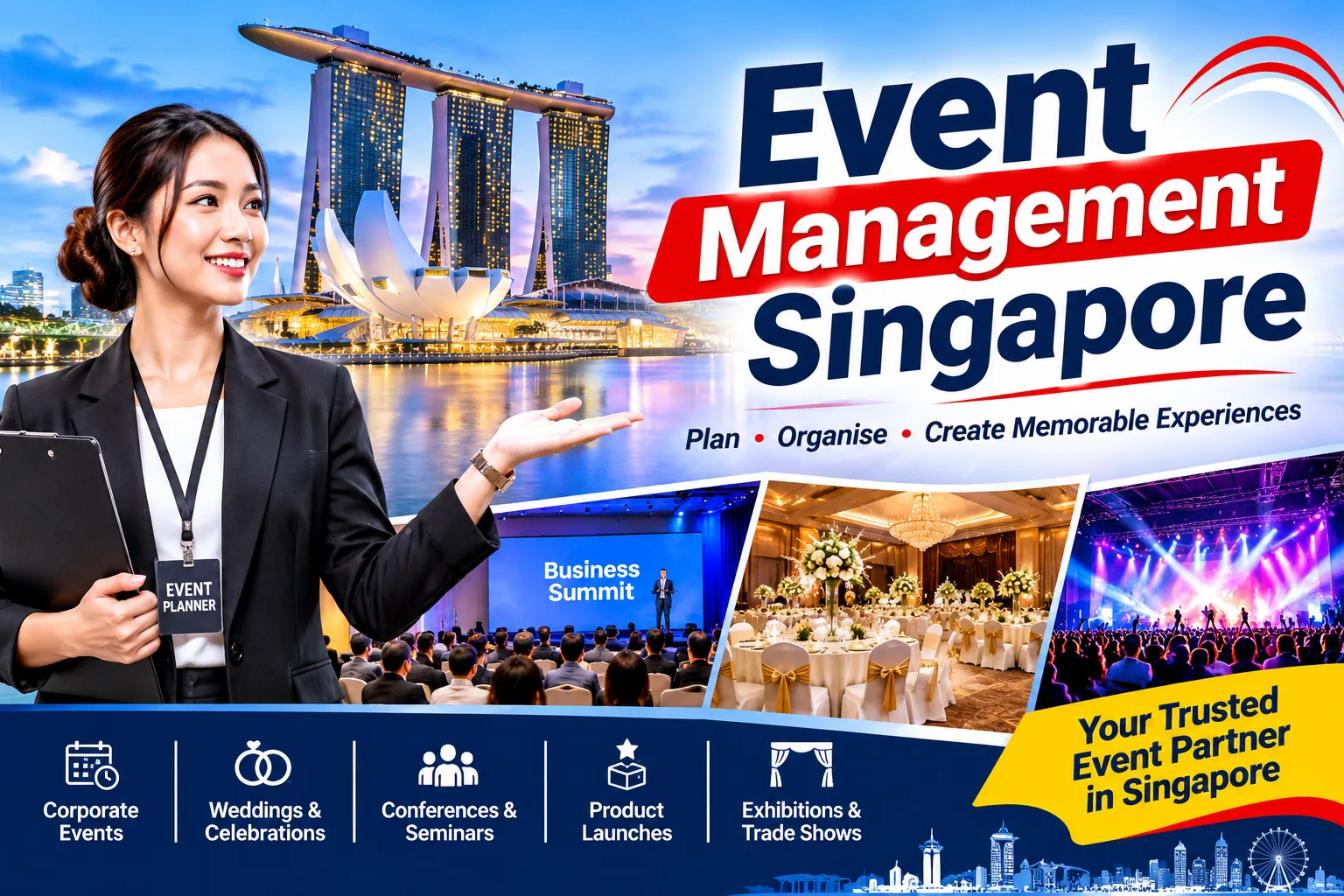
Organising a successful event requires creativity, strategic planning, professional coordination, and attention to detail. Whether a business is preparing for a corporate conference, product launch, exhibition, networking session, or annual dinner, every element must work together to create a memorable experience. This is where a professional event management agency can make a significant difference.
Singapore has become an attractive destination for corporate gatherings, international conferences, exhibitions, and brand experiences. Its modern event venues, international business environment, efficient transport infrastructure, and established hospitality sector provide excellent opportunities for organisations planning professional events.
However, organising an event involves much more than choosing a venue and sending invitations. Businesses must manage budgets, coordinate suppliers, develop creative concepts, arrange technical production, communicate with attendees, and oversee event-day operations. Without proper planning, even a well-funded event can encounter unnecessary complications.
Working with an experienced event management agency helps businesses manage these responsibilities through a structured and professional approach. From initial concept development to final execution, the right agency can transform an idea into an engaging event that supports business objectives.
This guide explores the Singapore event management industry, available services, agency selection criteria, costs, emerging trends, and the benefits of professional event planning.
Understanding the Event Management Industry in Singapore
Singapore has an established reputation as a regional destination for business events and international gatherings. Its strategic location, business-friendly environment, modern infrastructure, and hospitality facilities attract companies, industry associations, and international organisations.
The country's Meetings, Incentives, Conventions and Exhibitions (MICE) sector is an important part of this environment.
Major venues such as Marina Bay Sands Expo and Convention Centre, Suntec Singapore Convention & Exhibition Centre, and Singapore EXPO accommodate a wide range of corporate and commercial events.
Beyond large convention centres, businesses can also organise events at hotels, restaurants, private function spaces, waterfront locations, and other specialised venues.
This diverse environment creates opportunities for event management agencies to support organisations with different requirements.
For example, a multinational company entering the Singapore market might organise a product launch to introduce its services to local customers. A financial institution might host an executive networking dinner, while a technology company could arrange a conference to present industry developments.
Each event requires a different planning strategy, production arrangement, and audience engagement approach.
A professional agency understands these differences and develops solutions based on the client's objectives, budget, and target audience.
What Services Does an Event Management Agency Provide?
An event management agency typically offers a combination of creative, strategic, and operational services. Some agencies specialise in particular event categories, while others provide complete event planning and execution.
Understanding these services helps businesses determine which agency is suitable for their projects.
1. Corporate Event Management
Corporate event management is one of the most common services offered by professional event agencies.
Businesses organise corporate events to strengthen professional relationships, recognise employees, communicate company achievements, and connect with stakeholders.
Typical corporate events include:
- Annual corporate dinners
- Company anniversary celebrations
- Employee appreciation programmes
- Corporate award ceremonies
- Business networking events
- Executive meetings
- Team-building activities
- Shareholder gatherings
A professional agency can coordinate venue selection, catering, event themes, stage design, entertainment, audiovisual equipment, and guest registration.
For instance, a company organising an annual dinner in Singapore may require a hotel ballroom, customised decorations, an event host, entertainment, a presentation screen, and a coordinated programme.
The agency manages these arrangements to ensure that the event reflects the company's professional identity.
2. Conference and Seminar Management
Conferences and seminars provide opportunities for businesses and professionals to exchange knowledge, discuss industry developments, and establish valuable connections.
Conference management services may include:
- Venue research and booking
- Speaker and presenter coordination
- Conference programme development
- Delegate registration
- Stage and backdrop design
- Audiovisual arrangements
- Presentation management
- Live streaming
- On-site event coordination
Larger conferences may also require simultaneous interpretation, hybrid participation facilities, digital networking platforms, and technical support.
An experienced event agency ensures that the different elements work together while keeping the programme organised and professional.
3. Exhibition and Trade Show Management
Exhibitions provide businesses with opportunities to showcase products, introduce services, generate leads, and build relationships with potential customers.
Exhibition management services can include booth design, floor planning, branding, lighting, furniture arrangements, contractor coordination, and installation management.
For example, a company participating in a trade exhibition at Singapore EXPO may require a customised exhibition booth with product displays, interactive screens, promotional materials, and dedicated meeting areas.
An experienced agency helps create a functional and visually attractive exhibition environment that encourages visitor engagement.
4. Product Launch Event Management
A product launch is an important opportunity to introduce a new product, service, or business initiative.
Product launch events in Singapore may involve customers, media representatives, business partners, distributors, investors, and industry professionals.
An event management agency can provide:
- Creative concept development
- Product launch planning
- Stage and lighting production
- Media coordination
- Guest invitations
- Product demonstration arrangements
- Event branding
- Photography and videography
- Entertainment and hospitality
For example, a technology brand introducing a new electronic device might organise an event featuring live product demonstrations, interactive displays, presentations, and networking opportunities.
The objective is to communicate the product's value while creating a memorable experience for attendees.
5. Brand Activation and Experiential Marketing
Brand activation focuses on creating direct interactions between businesses and their target audiences.
These activities may include shopping mall promotions, roadshows, product sampling, interactive installations, promotional campaigns, and experiential marketing events.
Singapore's shopping centres and commercial districts can offer suitable environments for brand activations, subject to venue permissions and applicable regulations.
A professional agency can develop creative concepts, coordinate promotional staff, manage installations, and ensure that brand messaging remains consistent throughout the campaign.
6. Private and Social Event Planning
Many event management agencies also support individuals and families organising private celebrations.
These events may include weddings, birthday parties, anniversary celebrations, private dinners, and themed gatherings.
Services can include venue selection, catering, decorations, invitations, photography, entertainment, and guest coordination.
The agency helps manage practical responsibilities so that clients can enjoy their special occasions without becoming overwhelmed by arrangements.
Why Businesses Should Hire a Professional Event Management Agency
Some businesses prefer to organise events internally to maintain direct control over the process. However, managing an event without dedicated experience can place considerable pressure on employees.
Hiring a professional agency provides several important advantages.
Access to Industry Expertise
Experienced event professionals understand venue requirements, supplier coordination, production schedules, guest management, and event logistics.
Their knowledge helps businesses identify potential problems before they affect the event.
Time and Resource Efficiency
Event planning involves continuous communication with venues, caterers, decorators, technical suppliers, and other service providers.
An agency manages these responsibilities, allowing internal teams to focus on their primary business activities.
Creative Event Concepts
A professional agency can translate business objectives into suitable themes, visual concepts, and engaging experiences.
For example, a product launch might benefit from an interactive presentation environment, while an executive conference may require a more formal setting.
Professional Event Execution
Successful events depend on coordination between multiple teams.
An event management agency oversees suppliers, technical arrangements, programme schedules, registration, and on-site operations to maintain consistency.
Better Guest Experiences
Attendees notice details such as registration efficiency, seating arrangements, sound quality, catering, signage, and programme flow.
Professional planning helps create a smoother experience for guests.
Improved Budget Management
An experienced agency can help businesses prioritise essential expenses, compare supplier quotations, and identify additional costs before finalising the budget.
This makes it easier to allocate resources effectively.
How to Choose the Best Event Management Agency in Singapore
Selecting the right agency is an important decision because the quality of event planning directly influences the final experience.
Businesses should evaluate several factors before signing an agreement.
1. Review the Agency's Portfolio
Start by examining previous projects.
Look for experience with events similar to your requirements, such as corporate conferences, exhibitions, product launches, annual dinners, or brand activations.
Ask the agency to explain its actual responsibilities in previous projects and how it approached planning and execution.
2. Assess Creativity and Strategic Thinking
A good agency should understand the purpose of your event before suggesting creative ideas.
Its proposal should explain how the event concept, programme, branding, and audience experience support your business objectives.
Creativity should be practical and aligned with your budget.
3. Examine the Range of Services
Some agencies provide complete event management, while others specialise in production, branding, entertainment, or exhibition design.
Confirm whether the agency can manage the services you require, including:
- Event concept and planning
- Venue selection
- Event production
- Stage and backdrop design
- Audio and lighting
- Catering and hospitality
- Guest registration
- Entertainment
- Supplier coordination
- On-site management
Clarify which services are handled internally and which are outsourced.
4. Compare Quotations and Pricing Transparency
Request a detailed quotation rather than relying on a general package price.
The proposal should explain venue expenses, equipment rental, production, staffing, transportation, setup, dismantling, and other charges.
Also check whether applicable taxes, service charges, and additional working hours are included.
5. Evaluate Communication and Project Management
A reliable agency should provide a clear planning timeline and regular progress updates.
You should know who your primary contact is, how decisions will be approved, and how unexpected issues will be communicated.
6. Check Risk Management Capabilities
Ask how the agency handles unexpected situations such as technical failures, supplier delays, attendance changes, and weather disruptions.
A professional organiser should have practical contingency arrangements and clearly defined responsibilities.
How Much Does an Event Management Agency Cost in Singapore?
The cost of hiring an event management agency varies depending on the event's format, size, duration, and complexity.
There is no single price that applies to every project because a small seminar and a large international conference require very different resources.
Several factors influence the overall budget.
Venue and location: Hotel ballrooms, exhibition centres, restaurants, and private venues have different rental structures and facilities.
Event production: Stage construction, LED screens, sound systems, lighting, projection equipment, and technical staffing contribute to production expenses.
Catering and hospitality: Food selection, beverage packages, service arrangements, and attendee numbers affect catering costs.
Design and decoration: Custom backdrops, furniture, floral arrangements, signage, exhibition booths, and branded installations require different levels of investment.
Entertainment and presenters: Hosts, performers, musicians, speakers, and special presentations may involve separate fees.
Staffing and logistics: Event coordinators, registration personnel, security, technical operators, transportation, and setup teams must be considered.
Marketing and communication: Invitations, promotional materials, photography, videography, and digital marketing can also affect the budget.
Businesses should request itemised quotations from potential agencies and compare them against identical requirements.
It is also advisable to maintain contingency funds for unexpected expenses.
Event Management Trends Shaping Singapore's Event Industry
The event industry continues to change as businesses seek more engaging, efficient, and measurable experiences.
Several trends are influencing modern event planning.
Hybrid and Technology-Enabled Events
Hybrid events combine physical attendance with online participation.
Live streaming, digital registration, interactive presentations, and virtual networking can help businesses connect with wider audiences.
However, these events require careful technical planning to ensure a consistent experience for both in-person and remote participants.
Immersive Event Experiences
Businesses are increasingly interested in interactive event environments.
Product demonstrations, digital installations, experiential displays, and audience participation activities can make events more engaging.
Sustainable Event Management
Environmental considerations are becoming an important part of event planning.
Agencies can explore digital invitations, reusable decorations, waste reduction, responsible material selection, and locally sourced catering where practical.
Personalised Attendee Engagement
Personalised invitations, customised programmes, targeted networking sessions, and interactive activities can improve the attendee experience.
These approaches are particularly useful for corporate conferences and customer appreciation events.
Data-Driven Event Performance
Digital registration platforms, attendance reports, and post-event surveys help organisations understand how attendees interact with an event.
Businesses can evaluate registration numbers, attendance rates, feedback, engagement, and leads generated.
This information can support better decisions for future events.
Common Mistakes to Avoid When Hiring an Event Management Agency
Choosing an unsuitable agency or overlooking important planning details can create unnecessary complications.
Businesses should avoid these common mistakes:
- Selecting an agency based only on price: A low quotation may exclude important services or additional expenses. Compare the complete scope of work.
- Not defining event objectives: Without clear goals, it becomes difficult to evaluate the agency's proposed concept.
- Ignoring relevant experience: An agency experienced in private parties may not necessarily have the operational capabilities required for a large corporate conference.
- Failing to clarify responsibilities: Confirm who manages venues, suppliers, technical teams, and event-day operations.
- Approving concepts too late: Delayed decisions can affect production schedules and supplier availability.
- Overlooking contingency planning: Discuss backup arrangements for technical, logistical, and weather-related problems.
- Ignoring post-event evaluation: Review attendee feedback and event performance to identify opportunities for improvement.
A detailed project brief and a clearly written service agreement can prevent many misunderstandings.
Regulatory and Safety Requirements for Events in Singapore
Event planning in Singapore also involves understanding applicable regulatory and operational requirements.
Depending on the event format, activities, venue, and audience, organisers may need to consider:
- Venue permissions and operating conditions.
- Applicable event or public entertainment licensing.
- Fire safety and emergency evacuation arrangements.
- Crowd management and security requirements.
- Permissions for outdoor activities and public spaces.
- Food safety requirements for catering.
- Personal data protection obligations.
For example, businesses collecting attendee details through online registration should consider their responsibilities under Singapore's Personal Data Protection Act (PDPA).
Agencies should coordinate with relevant venue operators and authorities to identify applicable requirements early in the planning process.
This helps businesses avoid unnecessary delays and supports safer event execution.
Benefits of Building a Long-Term Relationship with an Event Agency
Businesses that regularly organise events may benefit from working with the same professional agency over time.
A long-term relationship allows the agency to understand the organisation's brand identity, communication preferences, audience expectations, and operational requirements.
This familiarity can make future projects more efficient.
For example, a company that regularly hosts annual dinners, product launches, and networking sessions may benefit from having an event partner familiar with its preferred venues, branding guidelines, and approval processes.
A consistent agency relationship can also support better coordination across multiple projects.
However, businesses should continue reviewing service quality, project outcomes, communication, and pricing to ensure that the partnership remains valuable.
Conclusion: Partner with the Right Event Management Agency for Your Next Event
Choosing the right event management agency is an important step towards organising a successful and memorable event. From corporate conferences and exhibitions to product launches, brand activations, and private celebrations, professional planning can help businesses manage complex arrangements with greater confidence.
Singapore provides an excellent environment for hosting business and social events, but successful execution requires a combination of creative thinking, local knowledge, technical expertise, supplier coordination, and careful budget management.
Before selecting an agency, review its portfolio, assess its service capabilities, compare detailed quotations, and discuss its approach to communication and risk management.
The right partner should understand your objectives and develop an event strategy that reflects your brand, audience, and available resources.
If you are planning an upcoming event in Singapore, start by defining your goals and requirements. Then connect with a professional event management agency that can help transform your vision into a well-organised and engaging experience.
Frequently Asked Questions (FAQs)
1. What does an event management agency do?
An event management agency plans, organises, coordinates, and executes events. Its services may include concept development, venue selection, budgeting, production, catering, entertainment, guest management, supplier coordination, and on-site event supervision.
2. How do I choose an event management agency in Singapore?
Review the agency's portfolio, relevant experience, service offerings, client feedback, pricing transparency, and communication process. Request a detailed proposal and confirm that the agency understands your event objectives.
3. What types of events can an event management agency organise?
Agencies can organise corporate dinners, conferences, exhibitions, product launches, seminars, networking events, award ceremonies, brand activations, weddings, and private celebrations.
4. How much does it cost to hire an event management agency in Singapore?
Costs depend on the venue, event size, duration, production requirements, catering, entertainment, staffing, and other services. Businesses should request customised quotations based on their specific needs.
5. Why should a company outsource event management?
Outsourcing gives businesses access to professional planning expertise, supplier coordination, creative concepts, technical resources, and dedicated event support. It also allows employees to focus on their regular business responsibilities.