
When someone searches for a restaurant, clinic, retail store or service provider nearby, Google Maps often plays an important role in their decision.
Most customers want quick answers. They check business ratings, opening hours, locations and reviews before deciding where to go.
For local businesses, appearing in relevant Google Maps results can create valuable opportunities to attract customers. However, getting noticed requires more than simply creating a Google Business Profile.
As Google's search technology continues to evolve, businesses need to focus on accurate information, relevant content and strong local SEO practices.
How Google Understands "Near Me" Searches
Google uses multiple signals to identify businesses that may be relevant to a local search.
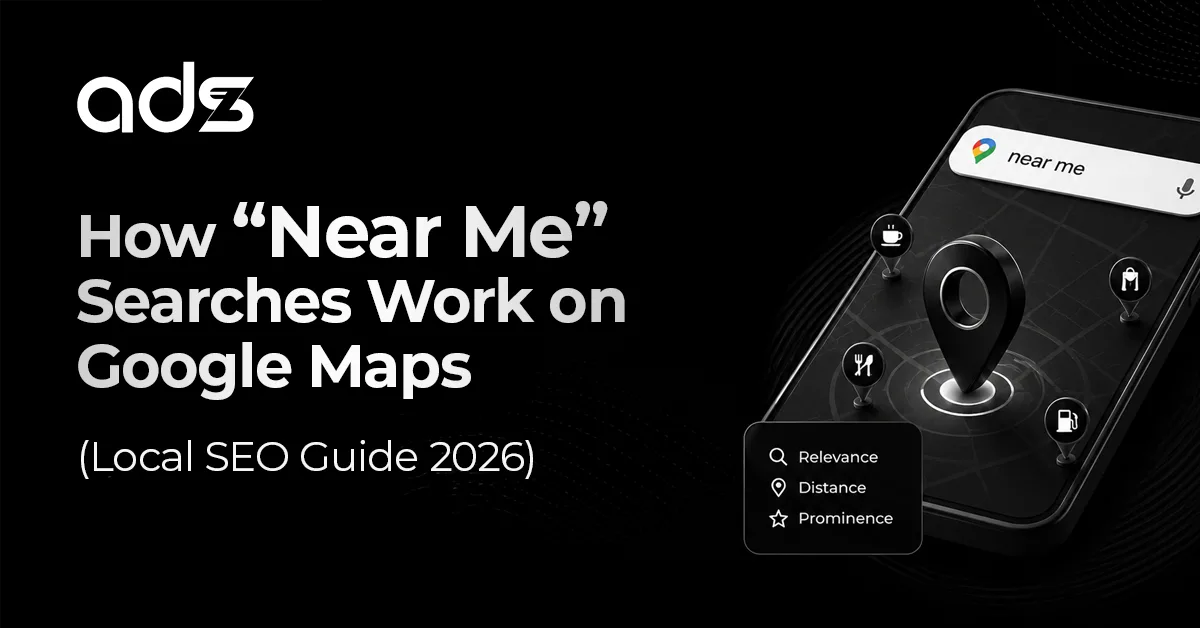
Its local ranking system primarily considers three factors:
Relevance: How closely a business matches the customer's search.
Distance: How far the business is from the location associated with the search.
Prominence: How well-known and established the business appears based on information available online.
For example, someone searching for a physiotherapy clinic nearby may see results influenced by the searcher's location, the services listed by nearby clinics and the businesses' overall online presence.
Understanding these factors helps businesses build a more effective local SEO strategy.
Why AI Matters in Local Search
Artificial intelligence helps search engines interpret customer queries and understand information from different sources.
People do not always search using short keywords. They may type or speak detailed questions such as:
- "Best family restaurant near me"
- "Dental clinic open on Sunday"
- "Laptop repair service near my office"
- "Physiotherapist nearby for sports injuries"
These searches communicate specific needs.
Businesses that clearly describe their services, operating hours and locations make it easier for customers and search engines to understand what they offer.
This is why local SEO is increasingly connected with broader digital marketing activities, including website content, customer communication and online reputation management.
1. Optimise Your Google Business Profile
A complete and accurate Google Business Profile is an important starting point for improving local visibility.
Businesses should ensure that their profile contains the correct category, address, contact details, business hours and service information.
Choosing the right primary category is particularly important because it helps Google understand the nature of the business.
For example, a business specialising in physiotherapy should select the most relevant available category rather than relying on a broad healthcare classification.
Additional relevant categories may also help describe other services offered.
The objective is to represent the business accurately rather than adding unrelated categories to attract more searches.
2. Encourage Genuine Customer Reviews
Reviews help potential customers evaluate a business before making a decision.
They also contribute to a business's online reputation and can support local search prominence.
Instead of focusing only on collecting a large number of reviews, businesses should encourage genuine feedback from customers.
A practical review management process can include:
- Sharing a direct review link after a customer interaction
- Encouraging honest feedback
- Responding professionally to positive reviews
- Addressing negative feedback respectfully
- Monitoring recurring customer concerns
Businesses should avoid fake reviews, paid reviews or requests that pressure customers to leave only positive ratings.
Authentic customer experiences provide more meaningful information to future customers.
3. Keep Business Information Consistent
Customers may discover a business through Google Maps, its website, online directories or social media platforms.
If these sources display different contact details or addresses, customers can become confused.
This is why maintaining consistent Name, Address and Phone Number information, commonly known as NAP consistency, is important.
Businesses should periodically review their information across relevant platforms, including Google Business Profile, Justdial, Sulekha and other industry-specific directories.
Correcting outdated details helps maintain a reliable online presence.
Working with an SEO company in Bangalore can support businesses in coordinating local listing management with their wider SEO and website optimisation activities.
4. Use Relevant Photos and Business Updates
Photos help customers understand what to expect before visiting a business.
For example, a restaurant may showcase its dining area and food, while a clinic may display its reception, facilities and service environment.
Businesses should use clear, authentic and relevant images that accurately represent their operations.
Keeping information updated is equally important.
Changes in working hours, new services, temporary closures or other relevant developments should be reflected on the business profile.
This helps customers make informed decisions and reduces the chances of visiting or contacting a business based on outdated information.
5. Create Location-Specific Website Content
A business website can strengthen its local SEO strategy by providing detailed and useful information about its services and locations.
For businesses operating across multiple areas, dedicated location pages can help customers find information relevant to each branch.
These pages should include genuine location-specific details rather than repeating the same content with different city names.
Useful information may include:
- Services available at the location
- Accurate address and contact information
- Nearby landmarks
- Business hours
- Relevant customer questions
- Directions and accessibility information
For businesses operating in competitive cities, a structured local content strategy can help improve website relevance.
An SEO company in Chennai can assist businesses in identifying appropriate local search terms, developing useful website content and addressing technical SEO requirements.
6. Make Content More Conversational
Search behaviour is becoming increasingly conversational, particularly when people use voice search or enter detailed questions.
Instead of searching only for "doctor Bangalore," someone might ask, "Where can I find a doctor near me who is available on Saturday?"
Businesses can respond to these changing search patterns by writing content that clearly answers customer questions.
Frequently asked questions, service descriptions and location pages should use natural language.
For example, a clinic could clearly explain whether it accepts walk-in appointments, offers weekend consultations or provides specific treatments.
The goal is not to repeat search phrases unnecessarily. It is to make relevant information easy to find and understand.
7. Build a Credible Online Presence
Local SEO extends beyond Google Business Profile optimisation.
A business's website, online mentions, directory listings and relevant backlinks can contribute to its overall online presence.
Useful opportunities include mentions in local publications, industry directories, business associations and community websites.
Businesses should focus on building relevant connections instead of pursuing large numbers of unrelated backlinks.
For companies looking to strengthen their regional visibility, an SEO company in Hyderabad can help develop an approach that combines technical optimisation, local content and relevant off-page SEO activities.
These efforts should support genuine business visibility rather than simply increasing backlink counts.
8. Track Local SEO Performance
Improving local visibility requires consistent monitoring.
Businesses should review their Google Business Profile performance alongside website analytics and relevant search data.
Important metrics may include:
- Website clicks from business listings
- Calls and direction requests
- Organic search traffic
- Local keyword visibility
- Customer enquiries
- Website conversions
Reviewing these metrics over time helps identify opportunities for improvement.
For example, a business receiving website visits but very few enquiries may need to examine its landing-page content, contact options or overall website experience.
Connecting these insights with broader digital marketing activities can help businesses make more informed decisions.
How Adze Studio Supports Local SEO and Digital Marketing
Improving online visibility often requires a combination of technical SEO, useful content, local search optimisation and consistent brand communication.
Adze Studio works across digital marketing, SEO, content, branding and website-related services, helping businesses approach their online presence through connected marketing activities.
Rather than treating Google Maps, website optimisation and content marketing as separate initiatives, businesses can align these efforts around their customer acquisition and visibility goals.
A coordinated approach helps create a more consistent experience for customers discovering a business through different digital channels.
Conclusion
AI is influencing how search engines understand customer questions and interpret online information.
For local businesses, the fundamentals remain important: maintain accurate business information, choose relevant categories, encourage authentic reviews, publish helpful content and keep websites updated.
Businesses that consistently improve these areas can strengthen their local search presence and make it easier for potential customers to discover their services.
A well-planned local SEO strategy, supported by effective digital marketing practices, provides a stronger foundation for sustainable online visibility.