Blouse stitching is one of those tailoring jobs where small details make a big difference.
A neatly stitched blouse should fit comfortably, hold its shape, and have clean finishing around the neckline, sleeves, and seams. Even a beautiful design can lose its appeal if the stitching is uneven or the fitting isn't right.
That's why choosing a suitable sewing machine matters, especially if you're planning to take regular blouse orders or start a boutique from home.
But do you really need an industrial sewing machine for blouse stitching? Can a domestic electric machine handle boutique work? And which features should you look for before buying?
The answer depends on the designs you create, the fabrics you work with, and how many orders you expect to complete.
Let's explore the options.
1. What Type of Sewing Machine Is Best for Blouse Stitching?
There's no single sewing machine that's perfect for every blouse design.
A beginner learning basic blouse stitching may need different equipment from an experienced tailor handling bridal blouses and customized boutique orders.
For regular blouse construction, a machine that produces consistent straight stitches is essential.
Additional features may be useful depending on the work.
For example, some tailors need zigzag stitching, buttonhole functions, or specialized seam finishing.
The best machine is one that performs your required stitching operations reliably and works well with your commonly used fabrics.
2. Domestic Sewing Machines for Blouse Stitching
Domestic sewing machines can be a practical option for beginners and home-based tailors.
Many models offer straight stitching and additional stitch functions that can support different garment-making tasks.
Advantages
Suitable for learning
A domestic machine with simple controls can help beginners practice blouse construction, seam allowances, and garment alterations.
Compact design
Most domestic machines fit comfortably into a small home workspace.
Multiple stitch options
Depending on the model, a domestic sewing machine may provide straight stitches, zigzag stitches, and buttonhole functions.
Useful for small orders
Some domestic machines are suitable for occasional blouse stitching and small-scale tailoring work.
Things to Consider
Not every domestic machine is designed for prolonged commercial workloads.
Some models may struggle with certain thick or layered materials.
Before purchasing, check the manufacturer's specifications and test the machine with fabrics similar to those you intend to stitch.
3. Industrial Sewing Machines for Boutique Work
Industrial sewing machines are commonly used in professional tailoring workshops and garment production environments.
They are often designed for specific stitching operations and demanding workloads.
For a boutique handling frequent orders, a suitable industrial straight-stitch machine may be worth considering.
Advantages
- Designed for particular professional stitching operations
- Suitable models can support intensive use
- Often provide higher operating speeds
- Useful for repetitive garment construction tasks
- Specialized configurations are available for different fabrics
Limitations
Industrial machines may require additional workspace, a dedicated table, and suitable installation.
Some models are designed only for straight stitching and do not provide the multiple stitch patterns found on domestic machines.
They may also require more operator training.
For these reasons, buying an industrial machine should be based on actual workload rather than assuming that every boutique needs one.
4. Important Features to Look for in a Blouse Stitching Machine
Before selecting a machine, consider the following features.
Adjustable Stitch Length
Blouse stitching involves different seams and finishing requirements.
Adjustable stitch length helps you select suitable settings for particular fabrics and operations.
Consistent Stitch Formation
Even stitching is important for neat garment construction.
Test the machine on the materials you commonly use.
Speed Control
Controlled stitching is particularly useful when working around curved necklines, sleeves, and detailed garment sections.
Presser Foot Compatibility
Different presser feet may help with tasks such as zipper installation, edge stitching, and other garment operations.
Check which accessories are compatible with the machine.
Fabric Handling
Blouse fabrics can range from lightweight cotton to silk, satin, and other delicate or layered materials.
The machine should be compatible with your intended fabrics and suitable needles.
Spare Parts and Service Availability
Ask about warranty terms, maintenance requirements, and replacement parts.
These considerations become increasingly important when stitching is part of your daily business.
5. Which Sewing Machine Is Better for Bridal Blouse Stitching?
Bridal blouses often involve more complicated construction than simple everyday blouses.
Designs may include decorative fabrics, lining, structured fitting, embellishments, or additional finishing requirements.
However, it's important to distinguish garment construction from embroidery and embellishment work.
A standard sewing machine may be suitable for assembling blouse components, but specialized embroidery or decorative work can require separate equipment or manual techniques.
For example, Aari work and certain embroidery methods aren't automatically supported by a regular straight-stitch machine.
If you plan to offer bridal blouse services, identify the specific operations involved before purchasing equipment.
6. How to Choose a Sewing Machine for Different Blouse Fabrics
Fabric selection affects needle choice, thread, machine settings, and stitching techniques.
Cotton Blouses
Cotton is commonly used for everyday blouses.
A suitable domestic or industrial machine may handle many cotton blouse stitching tasks.
Silk and Delicate Fabrics
Delicate fabrics may require finer needles, suitable thread, and careful tension adjustment.
Always test stitching on spare fabric before working on the actual garment.
Stretch Fabrics
Stretch materials may require specialized needles and stitch types.
Not every straight-stitch machine is suitable for every stretch-fabric application.
Layered and Embellished Fabrics
Multiple fabric layers and decorative elements can make stitching more demanding.
Avoid forcing material through a machine that isn't designed for the task.
7. Domestic vs Industrial Machines for Blouse Stitching
FeatureDomestic Sewing MachineIndustrial Sewing MachineBeginner suitabilityOften beginner-friendlyMay require additional trainingHome workspaceUsually compactMay need dedicated spaceStitch patternsOften multiple optionsFrequently task-specificWorkloadDepends on modelOften suited to intensive workSpeedGenerally moderateOften higherBlouse constructionSuitable models availableSuitable models availableBoutique productionMay suit small workloadsMay suit higher-volume workInvestmentVaries by featuresVaries by machine and setupThe choice should depend on the type of blouse work you perform, not simply the size of your business.
8. Can You Start a Blouse Stitching Business with One Machine?
Yes. Many basic blouse stitching and alteration services can begin with one suitable sewing machine.
However, the services you can offer will depend on your equipment and skills.
If you're starting from home, focus on developing reliable stitching and fitting techniques.
Begin with designs you're comfortable handling.
As your customer base grows, you can consider adding equipment for specialized operations.
You may also need tools such as measuring tape, fabric scissors, marking tools, an iron, and suitable cutting surfaces.
Keeping your initial setup practical can help you manage costs.
9. Where to Explore Sewing Machines in Guntur
If you're planning to start blouse stitching or upgrade your tailoring equipment, comparing machines before buying can help you make a more informed decision.
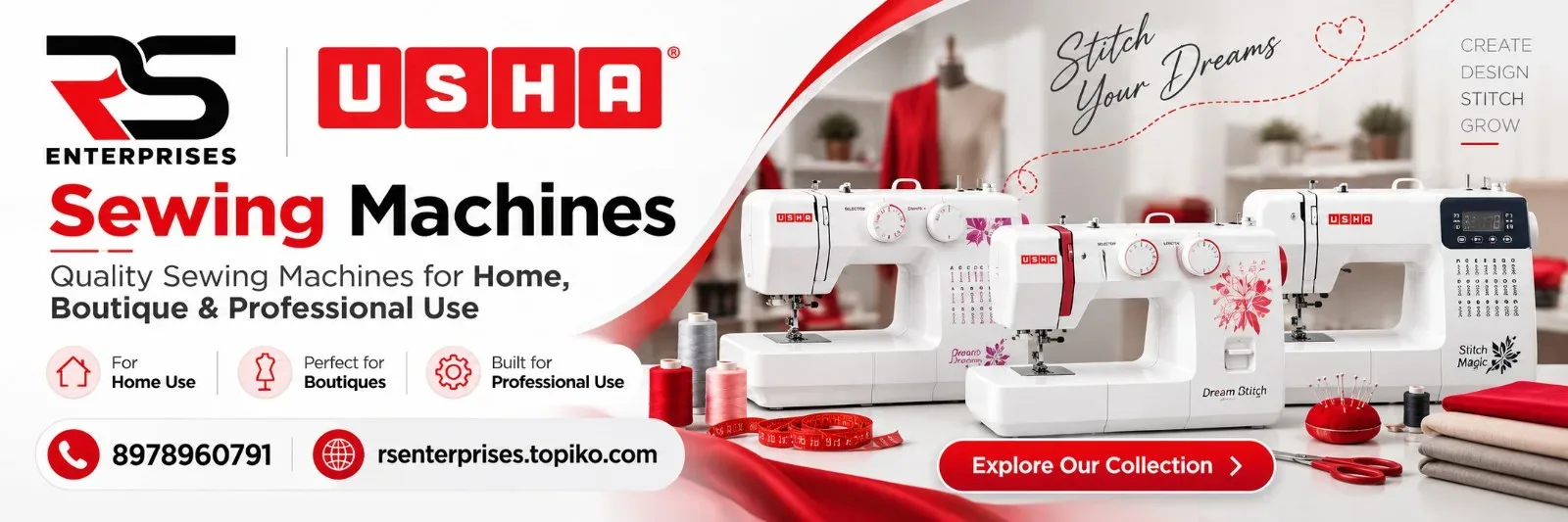
People searching for sewing machines in Guntur can visit RS Enterprises – Sewing Machines in Guntur to explore the sewing machine products listed on its website.
Before purchasing, confirm the availability of the machine type you need.
It's also worth asking about specifications, warranty coverage, compatible accessories, and suitability for your stitching work.
Whether you're learning tailoring or managing a boutique, choosing equipment that matches your requirements is an important part of planning your business.
10. Common Mistakes to Avoid When Buying a Blouse Stitching Machine
Choosing Based Only on Price
A low purchase price doesn't necessarily mean a machine is suitable for your intended workload.
Ignoring Fabric Compatibility
Different fabrics may require specific needles, settings, and machine capabilities.
Assuming One Machine Can Do Everything
Blouse construction, embroidery, overlocking, and decorative finishing may require different equipment.
Buying Advanced Equipment Too Early
If you're still learning, focus on developing skills and understanding your actual requirements.
Not Checking Service Support
Before purchasing, confirm how maintenance, spare parts, and warranty support are handled.
Frequently Asked Questions
Which sewing machine is best for blouse stitching at home?
A suitable domestic sewing machine with reliable straight stitching and appropriate fabric-handling capabilities can be a practical choice for many home tailors.
Is an industrial sewing machine necessary for blouse stitching?
Not always. Industrial machines may be useful for demanding workloads, but domestic machines can handle many blouse stitching tasks.
Can an electric sewing machine stitch silk blouses?
Some electric sewing machines can stitch silk and other delicate fabrics when used with suitable needles, thread, and settings. Always check the model's capabilities.
Can I start a boutique with a domestic sewing machine?
Yes, depending on the services you offer and your expected workload. Additional equipment may become necessary as your business grows.
Do I need an embroidery machine for bridal blouses?
Only if your services require machine embroidery. Standard garment construction and specialized decorative embroidery are different operations.
Conclusion
Choosing the best sewing machine for blouse stitching isn't about finding the most expensive model.
It's about understanding the garments you want to make, the fabrics you'll work with, and how frequently you'll use the machine.
For beginners and home tailors, a suitable domestic machine may provide the functions needed for basic blouse construction.
For boutiques handling larger workloads, specialized industrial equipment may be worth considering.
Before investing, compare specifications, test the machine where possible, and confirm the availability of suitable support.
If you're looking for sewing machine options, explore RS Enterprises and review the available products before making your decision.