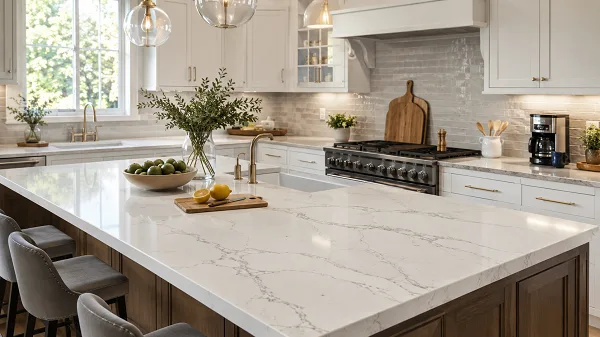
A kitchen countertop needs to support cooking, cleaning, serving, storage, and everyday family life. Therefore, choosing a surface should involve more than finding a color that looks attractive in a showroom. Homeowners in Milwaukee should also think about cabinet colors, natural light, flooring, backsplash materials, sink style, appliance finishes, and maintenance expectations. When all of these details work together, the countertop can become a practical part of the kitchen rather than simply a decorative surface. Quartz gives homeowners many design choices because it is available in a wide range of colors and patterns. However, more choices can also make the decision harder. A countertop that looks perfect by itself may not work as well once it sits beside the cabinets and flooring. Therefore, we recommend planning the entire kitchen palette before making the final countertop selection.
Start With the Overall Kitchen Style
When comparing quartz kitchen countertops, we should first decide what kind of feeling the kitchen should create. A bright transitional kitchen may work well with soft white quartz and gentle gray movement. Meanwhile, a warmer kitchen may benefit from cream, beige, or quartz with subtle gold tones. Modern kitchens can also support cleaner patterns, stronger contrast, or dramatic veining. The cabinet style often provides the best starting point. Cabinets cover a large part of the room, so they create the background for the countertop. Therefore, we should compare countertop samples directly against the cabinet finish rather than selecting each material separately.
Key Takeaways
- Choose quartz based on the complete kitchen palette, including cabinets, flooring, backsplash, and lighting.
- Think about everyday cleaning, sink placement, and counter space before focusing only on color.
- Use strong quartz patterns carefully so the kitchen feels balanced rather than visually crowded.
Decide Whether the Countertop Should Stand Out
Some homeowners want the countertop to become the main visual feature. Others prefer a quieter surface that supports cabinets, flooring, or a decorative backsplash. Therefore, we should decide what role the quartz will play before choosing the pattern. For example, strong veining can become a focal point on a large island. However, if the cabinet doors already contain strong detail and the backsplash has a busy pattern, bold quartz may make the room feel overloaded. On the other hand, a simple white or lightly patterned quartz can create visual calm. As a result, other features have more room to stand out.
Match Quartz With White Cabinets
White cabinets create many design possibilities. Therefore, homeowners can choose quartz based on whether they want contrast or continuity. White quartz with light movement can create a soft, seamless appearance. Meanwhile, darker gray veins can add definition without making the kitchen feel heavy. Warm white cabinets may look better with quartz that contains cream, beige, or gold undertones. In contrast, cool white cabinetry may pair more naturally with gray or blue-gray movement. Therefore, undertones matter just as much as the main color.
Pair Quartz With Wood Cabinets
Natural wood brings warmth and texture into the kitchen. Therefore, quartz should complement that character rather than compete with it. Light oak can work beautifully with warm white, cream, and soft gray surfaces. Meanwhile, darker wood may pair well with lighter quartz to create contrast. However, homeowners should compare the wood grain with the quartz pattern. If both materials contain strong movement, the kitchen may feel too busy. Instead, one surface can lead while the other supports it.
Use Dark Cabinets With Lighter Quartz
Dark blue, charcoal, black, and deep green cabinets can create a dramatic kitchen. However, darker cabinetry absorbs more light. Therefore, a lighter quartz countertop can help balance the room. This contrast can also highlight the island or perimeter cabinets. In addition, a lighter surface may make the countertop easier to see during food preparation. Therefore, the combination can improve both appearance and everyday function.
Consider the Size of the Kitchen
Kitchen size affects how a countertop pattern appears. A large kitchen can display long veins and broad movement across islands and extended counter runs. However, a small kitchen may show only short sections of the same pattern. Therefore, homeowners should think about how much of the slab will actually remain visible. In compact kitchens, a calmer quartz pattern can sometimes create a more open appearance. Meanwhile, larger kitchens can often support stronger movement without feeling crowded.
Think About Natural and Artificial Light
Lighting changes the appearance of countertop colors. Therefore, samples should be viewed under several lighting conditions. Warm bulbs can strengthen cream or gold undertones. Meanwhile, cooler lighting may make gray movement more noticeable. Natural daylight also changes throughout the day. In Milwaukee, winter and summer light can create noticeably different indoor conditions. Therefore, countertop samples should look comfortable under both natural daylight and evening lighting.
Coordinate the Backsplash
The backsplash sits directly above the countertop. Therefore, these materials should be selected together. A quartz surface with bold veining may pair best with a simple tile backsplash. Meanwhile, quieter quartz may allow homeowners to introduce more texture or pattern on the wall. Some homeowners also continue the countertop material up the backsplash. This can create a smooth and coordinated design. However, the choice should support the overall kitchen rather than follow a trend without considering the other finishes.
Think About Flooring
Flooring often covers more visible area than the countertop. Therefore, floor color and countertop color should work together. Warm wood flooring may pair naturally with quartz that includes cream, beige, or warm gray tones. Meanwhile, cooler flooring may work better with cleaner whites and cool gray movement. However, exact matching is unnecessary. Instead, we should look for compatible undertones that help the kitchen feel connected.
Choose the Sink Before Fabrication
The sink creates a major opening in the countertop. Therefore, it should be selected before final fabrication. An undermount sink can create a smooth visual transition because the countertop edge remains visible around the bowl. Meanwhile, the size of the sink affects available counter space. A very large sink may be useful for big cookware. However, it can reduce working space in a smaller kitchen. Therefore, sink size should match the household’s real needs.
Plan Faucet and Accessory Holes
Faucets, soap dispensers, filtered-water taps, and other accessories require countertop openings. Therefore, these items should be chosen early. A large sink may leave limited space behind the bowl. Likewise, a tall faucet may need enough clearance from a window or backsplash. Planning these details before fabrication helps prevent awkward changes later.
Consider the Edge Profile
The edge profile runs around the entire countertop. Therefore, even a small detail can influence the finished appearance. Simple edges often work well with modern and transitional kitchens. Meanwhile, more decorative profiles may fit traditional cabinetry. However, a strong quartz pattern usually needs less edge detail. Keeping the edge simple can allow the surface itself to remain the focal point.
Think About Everyday Cleaning
A countertop should fit the homeowner’s cleaning routine. Therefore, we should consider how easy the surface will be to wipe around the sink, appliances, and backsplash. Clear countertops generally look larger and are easier to maintain. As a result, cabinet storage should also be planned carefully. Appliance garages, deep drawers, pantry pullouts, and dedicated storage can help keep small appliances and supplies off the main work surface.
Compare Large Samples Whenever Possible
Small countertop samples can be useful for identifying color. However, they may not show the full pattern. Therefore, larger samples or full displays provide a better idea of vein spacing and movement. This becomes especially important for islands because a large surface reveals much more of the design. When comparing countertop stores, homeowners should take cabinet, flooring, backsplash, or paint samples whenever possible. Seeing the materials together can reveal undertone differences that are difficult to notice online.
Avoid Too Many Competing Features
A kitchen may contain cabinet detail, countertop movement, backsplash pattern, floor grain, decorative lighting, and hardware. Therefore, every feature should not compete for attention. If the quartz is dramatic, other materials can remain quieter. Likewise, a simple countertop can create room for a more decorative backsplash. Balance often creates a more polished look than using several bold surfaces together.
Use Hardware to Connect the Design
Cabinet hardware repeats across the kitchen. Therefore, it can help connect quartz with cabinets and other materials. Black hardware may highlight darker veins. Meanwhile, brass can bring out warmer movement. Brushed nickel may create a quieter, more neutral transition. However, hardware should also remain comfortable to use. Good design should support daily life as well as appearance.
Think About Long-Term Flexibility
Countertops often remain in place longer than paint, lighting, or decorative accessories. Therefore, homeowners should consider how the quartz will work with future updates. A balanced surface may allow cabinet hardware, wall colors, and lighting to change without requiring countertop replacement. However, long-term flexibility should not mean choosing a surface that feels boring. Subtle movement and carefully selected contrast can create character while still supporting future changes.
Final Thoughts
Choosing quartz involves more than picking a favorite sample. Cabinet color, lighting, flooring, backsplash, sink size, hardware, and kitchen layout all influence the final result. Therefore, we recommend building the design as one complete palette rather than choosing each material separately. For homeowners in Milwaukee, thoughtful quartz selection can create a kitchen that feels coordinated, practical, and comfortable for everyday use. Ultimately, the strongest countertop is not always the boldest or most expensive option. Instead, it is the surface that supports both the design of the room and the way the household actually uses the kitchen.