
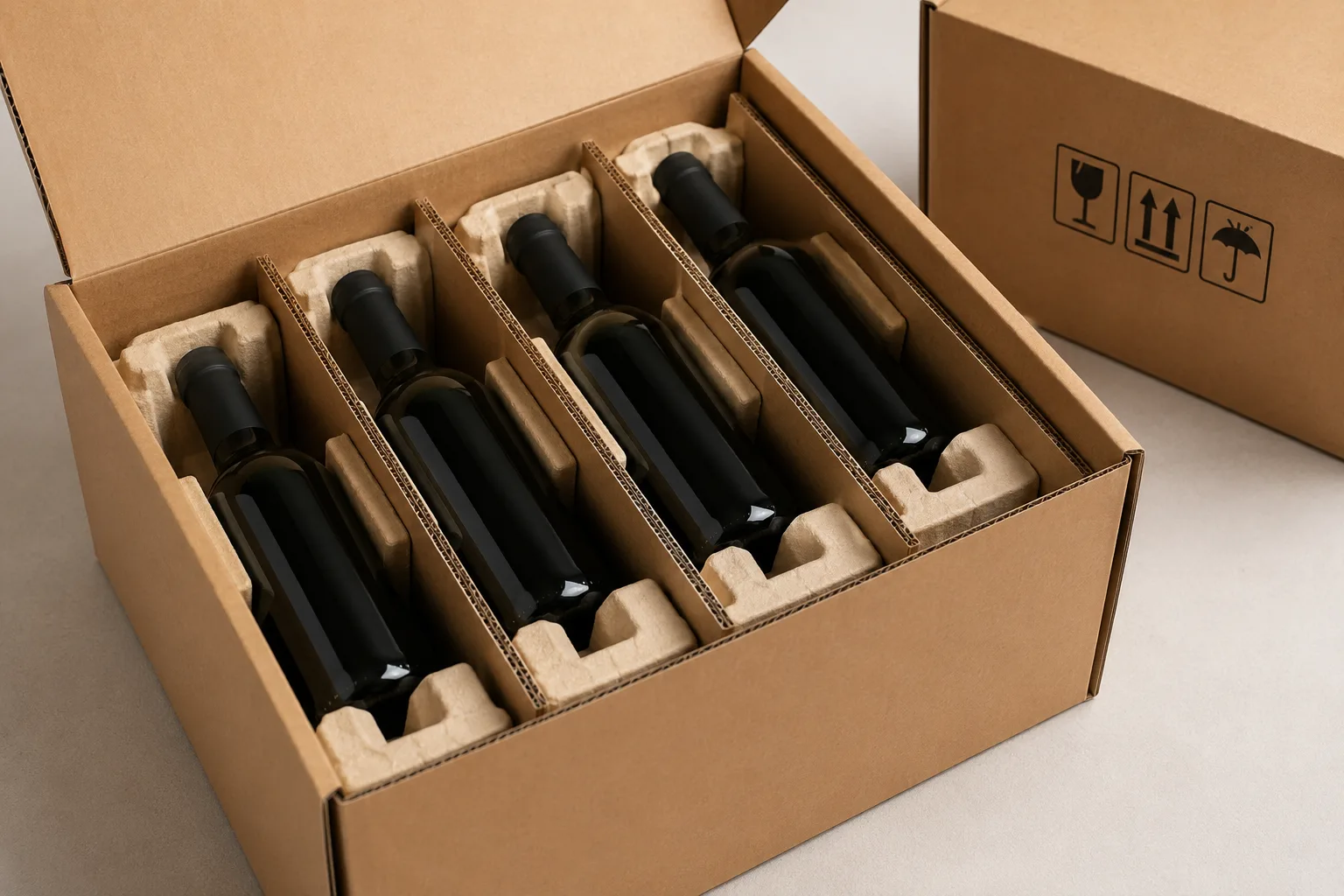
A cracked bottle rarely fails because of one obvious mistake. It usually fails from a chain of small decisions that each seemed fine on their own: a box slightly too large, cushioning that looked adequate in the warehouse but not on a delivery truck, a shipping route that included more handling than anyone planned for.
Why Glass Actually Breaks in Shipping
Most people assume glass breaks from a single hard drop. In practice, a large share of breakage comes from repeated smaller impacts as a bottle shifts and knocks against the box walls or other bottles throughout a multi-stop shipping journey.
Movement Is the Real Culprit, Not Just Impact
A box that survives one drop test can still fail after days of smaller vibrations and collisions during actual transit. This is why sizing matters more than most brands assume when picking custom bottle boxes for a fragile product. A box with even a small amount of extra space gives a bottle room to move, and that movement compounds with every handoff between warehouse, truck, and final delivery.
Where the Damage Actually Starts
- A gap of even half an inch around a bottle is enough room for repeated micro-collisions over a multi-day shipping route
- Necks and shoulders take the most damage since they're the narrowest, weakest points on most bottle shapes
- Multi-bottle shipments fail more often from bottles hitting each other than from the outer box failing
What Actually Prevents the Damage
A few structural decisions carry more weight than most of the generic advice on this topic.
Fit and Sizing
- A snug fit over a roomy one. The bottle should have almost no room to shift once it's packed. Excess space is the single biggest predictor of in-transit damage, more than the strength of the box material itself.
- Bottle box inserts sized to the exact product. A generic insert built for an average bottle size often leaves just enough gap to cause the problem it was meant to solve.
Structural Protection
- Dividers or individual compartments for multi-bottle shipments. When more than one bottle ships in the same box, each needs its own defined space. Bottles packed loosely together become each other's biggest threat.
- Cushioning at the vulnerable points, not just around the whole bottle. Necks, shoulders, and any narrow points on a bottle are typically the weakest structural areas and need targeted protection rather than generic padding throughout.
- Corrugated bottle boxes with double-wall strength for long-distance shipping. A single-wall box may hold up fine for local delivery but often isn't built for a multi-leg shipping route with more handling and stacking involved.
Where Brands Usually Cut the Wrong Corner
The most common mistake isn't skipping protection entirely. It's using a slightly-too-generic bottle packaging boxes option because it was cheaper or already in stock, assuming the difference wouldn't matter.
The Real Cost of the Wrong Box
For fragile glass specifically, the gap between a properly fitted box and an approximately-right one shows up directly in damage rates. The cost of replacing damaged product and handling customer complaints usually outweighs whatever was saved on the box itself.
Seasonal and Weather Factors
Weather and season add another layer worth planning around. A box built for standard handling doesn't automatically account for temperature swings during peak shipping months, which can affect both the product inside and how packaging materials perform under stress.
Matching the Box to the Actual Shipping Journey
The right approach starts with the roughest leg of the journey, not the easiest one. A glass bottle shipping box only has to survive its worst moment, whether that's a fully loaded delivery van, a multi-stop courier route, or a warehouse where boxes get stacked higher than intended.
Brands comparing structural options built specifically for glass can look at beverage packaging formats more broadly to see how sizing and wall strength typically get matched to different bottle types.
Getting the Fit Right Before the First Order
Bottle breakage in transit is rarely a single mistake. It's an accumulation of small gaps between the box and the product it's supposed to protect. Getting the fit, the cushioning at vulnerable points, and the wall strength right for the actual shipping journey, not just a best-case scenario, is what separates real bottle box protection from a box that just looks like it should work.
Frequently Asked Questions
What size box should I use for shipping a single glass bottle? The box should leave only enough room for a thin layer of cushioning material around the bottle, not open space. A box sized closely to the bottle's dimensions, with dividers or inserts filling any remaining gap, performs far better than a larger box padded with loose filler.
Do I need dividers if I'm only shipping one bottle per box? Dividers matter most for multi-bottle shipments, but a single bottle still benefits from a fitted insert that holds it centered and prevents it from shifting toward any one wall of the box.
Is single-wall or double-wall corrugated better for bottle boxes? Single-wall works for short, local deliveries with minimal handling. Double-wall corrugated bottle boxes are the safer choice for longer shipping routes, multi-stop carriers, or anything being palletized and stacked.
Does the type of glass affect what packaging I need? Thinner, more decorative glass and unusually shaped bottles need more targeted cushioning at their weak points than standard, thicker glass bottles. Bottle shape should factor into insert design, not just overall box size.