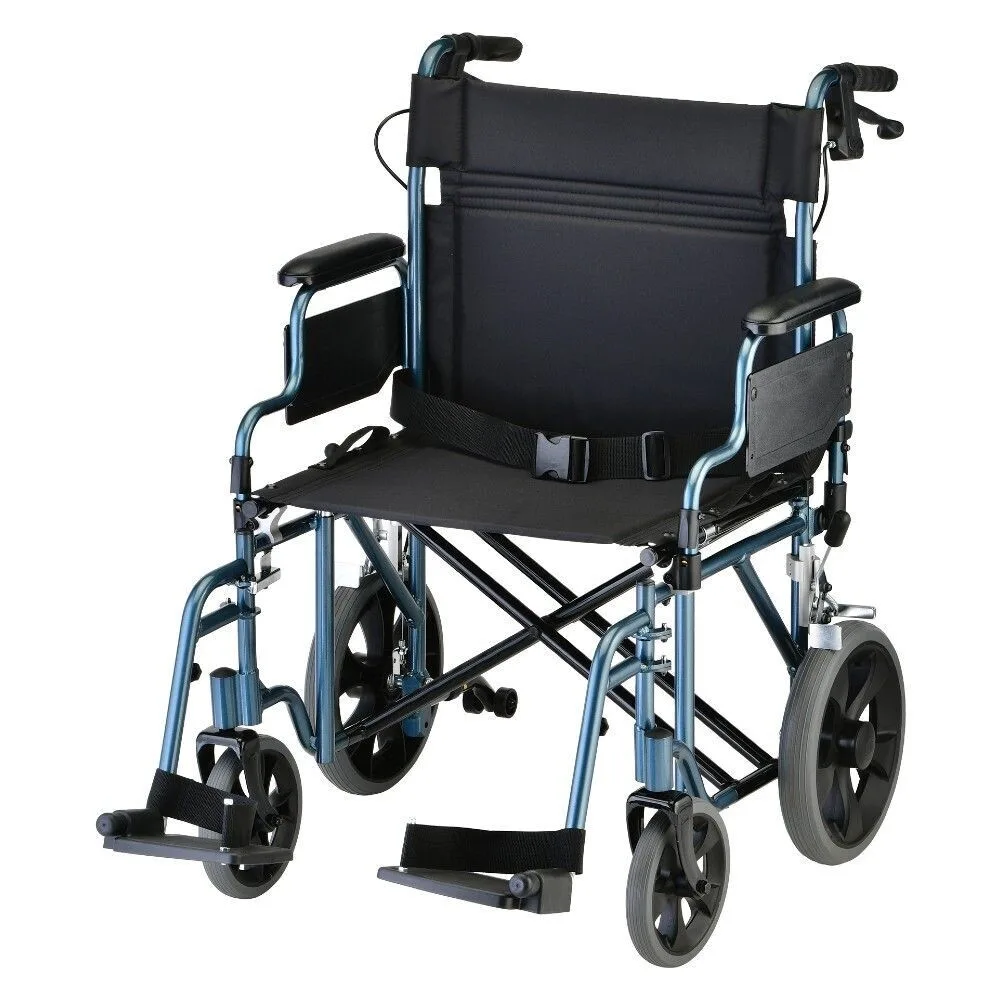
Mobility challenges can make ordinary activities, including attending appointments, visiting family and navigating public spaces, more demanding. For individuals who have difficulty walking long distances, an appropriately selected transport chair can make these activities more manageable. Choosing a medical chair with wheels requires careful consideration of seating dimensions, wheel configuration, braking mechanisms and caregiver requirements. A suitable hospital chair with wheels should also accommodate the intended user's physical needs while offering practical handling and transportation features.
Understanding Transport Chairs and Their Intended Purpose
Transport chairs are designed primarily for caregiver-assisted mobility. Unlike conventional manual wheelchairs, which typically have large rear wheels that allow users to propel themselves, transport chairs generally have smaller rear wheels and are pushed by a companion.
This distinction matters when selecting equipment. An individual who needs assistance navigating medical facilities, shopping areas or outdoor pathways may benefit from a transport chair that prioritizes portability and caregiver control. However, someone who wants to propel a wheelchair independently may require a different design.
The intended environment, frequency of use and user's physical capabilities should guide the decision.
Why Wheel Size and Braking Systems Matter
Wheel configuration influences how a chair handles different surfaces. Larger rear wheels can offer practical advantages when navigating certain outdoor pathways, uneven transitions and minor surface irregularities. However, performance depends on the complete chair design and the conditions in which it is used.
Caregiver-controlled braking is another important consideration. Locking hand brakes allow the companion to regulate movement and secure the chair when stationary. Secondary wheel locks provide an additional parking function.
For example, the NOVA 352 Lightweight Transport Chair features 12-inch rear wheels and locking hand brakes. Its design allows a companion to control movement while providing a practical option for transportation and everyday outings.
Brakes should always be engaged according to the manufacturer's instructions before transfers. Caregivers should also avoid assuming that larger wheels make a chair suitable for every incline or outdoor surface.
Seat Dimensions and Transfer Convenience
Comfort involves more than padded upholstery. Seat width, depth and height influence how appropriately a chair accommodates its intended user.
An incorrectly sized seat may create discomfort or make positioning difficult. Before purchasing a medical chair with wheels, caregivers should compare the manufacturer's seat measurements with the user's physical dimensions and consider clothing, positioning requirements and any additional cushioning.
Armrest design also deserves attention. Removable or flip-up armrests can make certain transfers more convenient by allowing easier positioning beside another seat or surface. Desk-length armrests can also help a user approach a dining table or workstation.
The NOVA 352 includes padded, removable and reversible desk arms, providing flexibility for different positioning situations.
Footrests and Portability for Everyday Use
Foot support is another important selection factor. Adjustable, removable footrests can accommodate different leg positions and make transfers more manageable when used appropriately.
The NOVA 352 features adjustable swing-away footrests with heel loops, allowing the user's feet to remain supported during transport.
Portability matters as well, particularly for families who regularly travel by car. A folding frame, manageable product weight and compact storage dimensions can influence how easily equipment fits into a vehicle.
The NOVA 352 uses an aluminum frame, weighs approximately 27.1 pounds and folds to approximately 13 inches in overall width. Its specifications also include a 300-pound weight capacity and an 18.5-inch-wide seat.
These measurements provide useful reference points, although individual suitability should always be established before purchase.
Choosing Equipment That Matches Individual Requirements
A hospital chair with wheels or transport chair should never be selected based on appearance or price alone. The user's mobility requirements, ability to maintain a seated position, transfer needs and intended environment all deserve consideration.
Caregivers should review product dimensions, weight limits, brake functionality, footrest adjustments and manufacturer instructions. Where additional support is needed, guidance from an appropriate healthcare or rehabilitation professional can help clarify the equipment requirements.
Medical equipment retailers such as Monroe Medical Supplies provide access to transport wheelchairs and other mobility products, helping customers explore available options and product specifications.
Making an Informed Mobility Equipment Decision
The right transport chair can make everyday journeys more manageable when its design matches the user's requirements and the caregiver's ability to operate it. Careful attention to wheel size, braking systems, seating dimensions, removable armrests and adjustable footrests helps families make more informed purchasing decisions.
Selecting a suitable medical chair with wheels involves understanding how its features work together rather than focusing on a single specification. By comparing individual needs with manufacturer information, caregivers can identify a practical hospital chair with wheels that supports comfortable seating, convenient transfers and everyday mobility.