
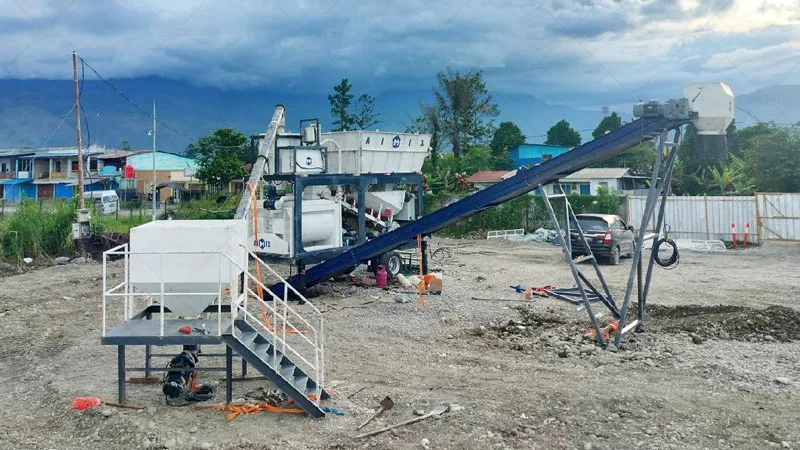
Accurately estimating the volume of structural material required for a build is one of the most critical steps in construction planning, directly dictating whether a project stays on schedule and within budget. Underestimating daily material needs creates severe bottlenecks, while over-specifying equipment leads to wasted capital. Whether you are sizing a permanent concrete batching plant for a large commercial foundation or evaluating the throughput of a portable concrete batching plant for a linear highway expansion, calculating precise concrete output ensures seamless job site execution. This calculation process goes beyond simple geometric multiplication, requiring a careful balance of structural dimensions, pouring speeds, and logistical realities.
Decoding Structural Volume and Pouring Timelines
Before selecting any production equipment, project managers must translate architectural blueprints into exact cubic meter measurements. Precise volume calculation eliminates surprise material shortages during active pours.
Geometric Measurements and Void Deductions
Calculating the basic volume of a slab, wall, or column requires multiplying length, width, and height. However, real-world construction projects feature complex geometries and embedded elements that alter final requirements.
- Void Deductions: Always subtract the volume occupied by steel reinforcement cages, utility pipes, anchor bolts, and window or door block-outs.
- Waste and Over-Excavation Factors: Subgrade settlement and uneven excavation trenches often mean forms require 3 to 5 percent more material than theoretical calculations suggest.
Factoring Pour Speeds and Structural Phasing
Concrete cannot sit indefinitely in transit mixers or pump hoppers without losing its structural integrity. Calculating required hourly output depends heavily on how fast placement crews can spread, vibrate, and finish the material. Large continuous monolithic pours demand high-capacity equipment to prevent cold joints between successive layers.
Integrating Equipment Capacity with Daily Output Targets
Once the total volume and required pour window are established, the next step is matching those figures to appropriate batching technology. Choosing the right production setup keeps the placement crew working without disruptive idle periods.
Selecting a Standard Concrete Batching Plant for High-Volume Infrastructure
For mega-projects, dams, and major commercial hubs, a high-output concrete batching plant(planta concretera) provides the continuous volumetric flow necessary to sustain heavy daily consumption. Planners calculate output by dividing total structural volume by the allowable construction days, factoring in a safety margin for peak demand spikes.
The Agility of a Portable Concrete Batching Plant for Distributed Sites
Linear infrastructure projects, such as rural highways and bridge networks, require a different approach to output calculations. Instead of a single massive volume delivered from afar, utilizing a portable concrete batching plant(planta dosificadora de concreto portátil) allows contractors to produce exact quantities on demand directly at various staging points along the right-of-way, drastically cutting transit times and slump loss.
Factoring Environmental and Logistical Contingencies
Raw output calculations must account for real-world environmental variables that influence setting times, placement efficiency, and equipment utilization rates.
Weather Delays and Slump Adjustments
Ambient temperature and humidity drastically alter concrete hydration rates. During hot summer conditions, rapid moisture evaporation forces crews to accelerate placement speeds, requiring a higher hourly batching rate. Conversely, cold weather slows setting times, allowing for more flexible placement schedules but demanding heated water or aggregate additives.
Transport Bottlenecks and Safety Margins
Even the most accurate calculations can fail if site traffic or pump blockages stall the workflow. To safeguard against unexpected delays, project managers should apply a 10 to 15 percent buffer when determining the target hourly output of their concrete batching plant configuration. This safety margin ensures that minor operational hiccups do not compromise structural continuity.
Optimizing Resource Allocation for Long-Term Project Success
Mastering the art of concrete output calculation transforms construction management from a reactive exercise into a precise science. By rigorously analyzing structural geometries, pouring windows, and environmental factors, contractors can avoid costly material deficits and equipment mismatches. Integrating these calculated metrics with the right production assets empowers project teams to maintain total control over production schedules, optimize material workflows, and deliver durable structural concrete safely and efficiently on every job site.