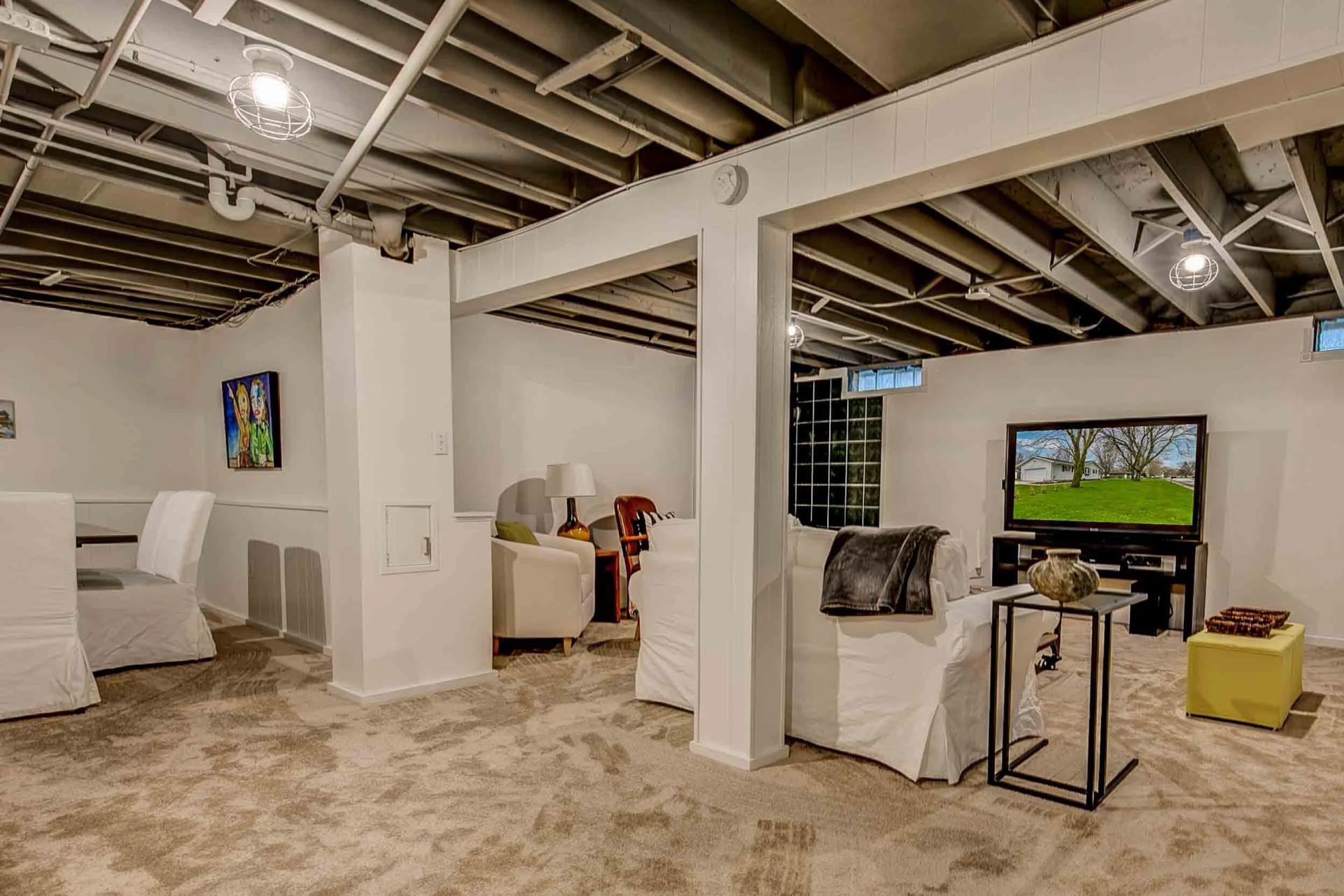
Determining the cost of building a basement is one of the most commonly asked questions when considering the construction of a new home or when renovating an old one. Since it is another living space and can increase the value of the property, building a basement is one of the most lucrative investments an individual can make. It also enhances storage space. It may be hard to determine the appropriate budget in the absence of direction. It is clear that the basement waterproofing process can be separated into manageable steps, factors influencing the costs, and simple ways to create a flawless basement waterproofing budget.
The Reason Why Basement Construction Costs Vary
There are always two different basements. The expenses of constructing or completing a basement vary with location, the materials used, design, and labor. The average cost of basement construction in 2025 is between 25000- 80,000 dollars, depending on the kind of basement being worked on: an existing or a new one. High-end luxury basements with special customizations such as home theaters, bars, or fitness areas can easily exceed the mark of one hundred thousand dollars.
It is essential, before you get into the calculation process, to realize that a construction cost estimator services provider can assist you in identifying the hidden costs, hence your budget remains realistic and avoids such adverse surprises.
Important influences on the costs of basement construction
1. Synopsis and Design
Square footage is the most evident. A bigger basement will demand more materials, more workforce, and a longer period. A typical 1,000 sq. ft. basement is, of course, cheaper than a 2,000 sq. ft. basement with equal finishing materials.
2. Dep and Excavation
In case your building needs to be dug to establish a new basement, the excavation cost will be one of the most expensive ones. Land conditions, slope, and accessibility of heavy equipment can also add to or reduce the cost.
Filling shallow excavation in basement: $10,000- 15,000
Lowered basement: 20,00050,000
3. Foundation And Waterproofing
At that, the quality of the foundation determines the strength of a basement. It must also be waterproofed because basements have a tendency to be moisture-proof. Failing to do this might prove costly in the long term as it can result in mold, leaks, and building damage.
4. Contractor Fees and Labor
The price of skilled labor is 40-60 percent of the cost of the basement. Although DIY may appear to be less expensive, using licensed professionals is a safer idea to guarantee no mistakes are made as a result of ignorance.
5. Finishes - Features
The choice of material has a significant influence on the costs. For example:
Basic drywall and flooring: The cheap alternative is between 20 and 35 dollars per square foot.
Mid-range features: Wood with tile, recessed lights, 40-75 dollars a square foot.
Luxury Elements: Home theatre, sauna, wet bar, $80 - $150/SQ.
Step-by-Step Guide to Estimating Basement Construction Costs
The following is the step-by-step guide to estimating basement construction costs that helps homeowners plan budgets, reduce risks, and ensure cost efficiency:
Step 1: Plain and Simple Measure the Square Footage
To measure the total area of the whole basement of the house, calculate how many square feet of your basement an additional square foot will be added to. Measure the whole floor of the basement. Add more square feet to the measurement. The length and the width are multiplied to obtain the square footage. This number is influential in the determination of the quantity of material and the number of laborers involved.
Step 2: Determine the Basement Type Project
New basement use (exposing, excavating, foundation, and waterproofing)
Basement finishing (converting an existing unfinished basement into an area to inhabit)
The cost ranges are different in each project type
Step 3: Estimating Excavation and Foundation Cost
In case you design everything, add the excavation, pouring of the concrete, and reinforcement. Generally, the cost of foundations falls within 10 to 25 dollars per square foot.
Step 4: Waterproof and Insulate
Plan drainage systems, sump pump, and insulation to limit moisture buildup. Prices to expect on these services vary between 5000 and 15000 dollars, depending on the size of the basement.
Step 5: input Labor
A big share of the cost is labor. At the very least, you should get 3 quotes that you can compare rates using local contractors. Be sure to include permits, time frame, and a list of materials on each.
Step 6: Finish Material Buy
Make decisions on the flooring, wall finishes, ceilings, and lights. The simplest complete basement should cost between $20,000 and 30,000, and the custom features can increase it to 60,000 dollars and more.
Step 7: Incorporate Mechanical Systems
Do not overlook HVAC extensions, electric cabling, and plumbing. A bathroom or kitchenette will add considerably to the costs and also to the property value
Some Mistakes to Avoid in Cost Calculation
Disregarding permits and regulations- Specific building codes will have their own permission issued, and going against the law would attract a cost of 500-2000 dollars.
Budgeting under the waterproofing: This is one of the riskiest jobs where corners should never be cut.
Cutting contingency budgets: It is always a good idea to budget 10–15 percent more than you think you will spend.
Over-personalization: Although luxury fitments are desirable, they will not yield a high payout in case you intend to sell in the near future.
Clever Budgeting Advice: Basements Make up
Find more than one bid and go with the contractor of your choice.
Install in stages in case you have a tight budget; you can complete various parts of the basement as time goes by.
Pay attention to resale value, and pay attention to factors that will be attractive to most purchasers, like an additional bedroom or family room.
Why It Is Important to Be Accurate in Calculating Cost
The goal, then, is to maximize your investment. When it comes to calculating basement construction cost, you don't just want to know how much it actually costs; you want to feel like the cost is worth the investment. Designing a basement will give you another 25-30 percent of living space, and an increase in market value to your property. On the contrary, bad planning could be seen as a means to use money in vain and leave the projects incomplete.
You can make your basement project a successful and affordable choice by calculating estimates carefully and employing professional services.
Conclusion
Knowledge on how to determine the cost of basement construction is the starting point towards bringing your dream into reality. In assessing size, excavation requirements, finishes, and labor, you may arrive at a sound budget and not expose yourself to unseen dangers. Always seek expert advice, develop a backup plan, and waterproof your home so that you are not negatively affected in the future. Through intelligent initial planning, your basement can become one of the most precious spaces in your property.
FAQs
1. How much would a basement build down cost in 2025?
The cost of creating the basement usually ranges between 25,000 and 80,000 dollars at the end of the year 2025 because of several factors, like magnitude, fixtures, and location. Advanced forms of luxurious basements may cost over 100,000 dollars.
2. Is it worthwhile to transform a basement?
Yes. Completing a basement will offer your family more living space and may even add 20-30 percent to the resale value of your home, making it one of the best home improvement investments with regard to ROI.
3. How long will it take to complete a basement?
Basement finishing typically takes 6-12 weeks to finish, depending on the complexity, available time of contractors, and/or design decisions. Basements under construction can be lengthier as a result of excavation and foundation procedures.
4. How should I cheaply complete my basement?
The most economical will be to put in plain drywall, plain carpet or laminate flooring, and basic lighting. You should also not upgrade luxury items, as they are only suitable when they are essential to your lifestyle.