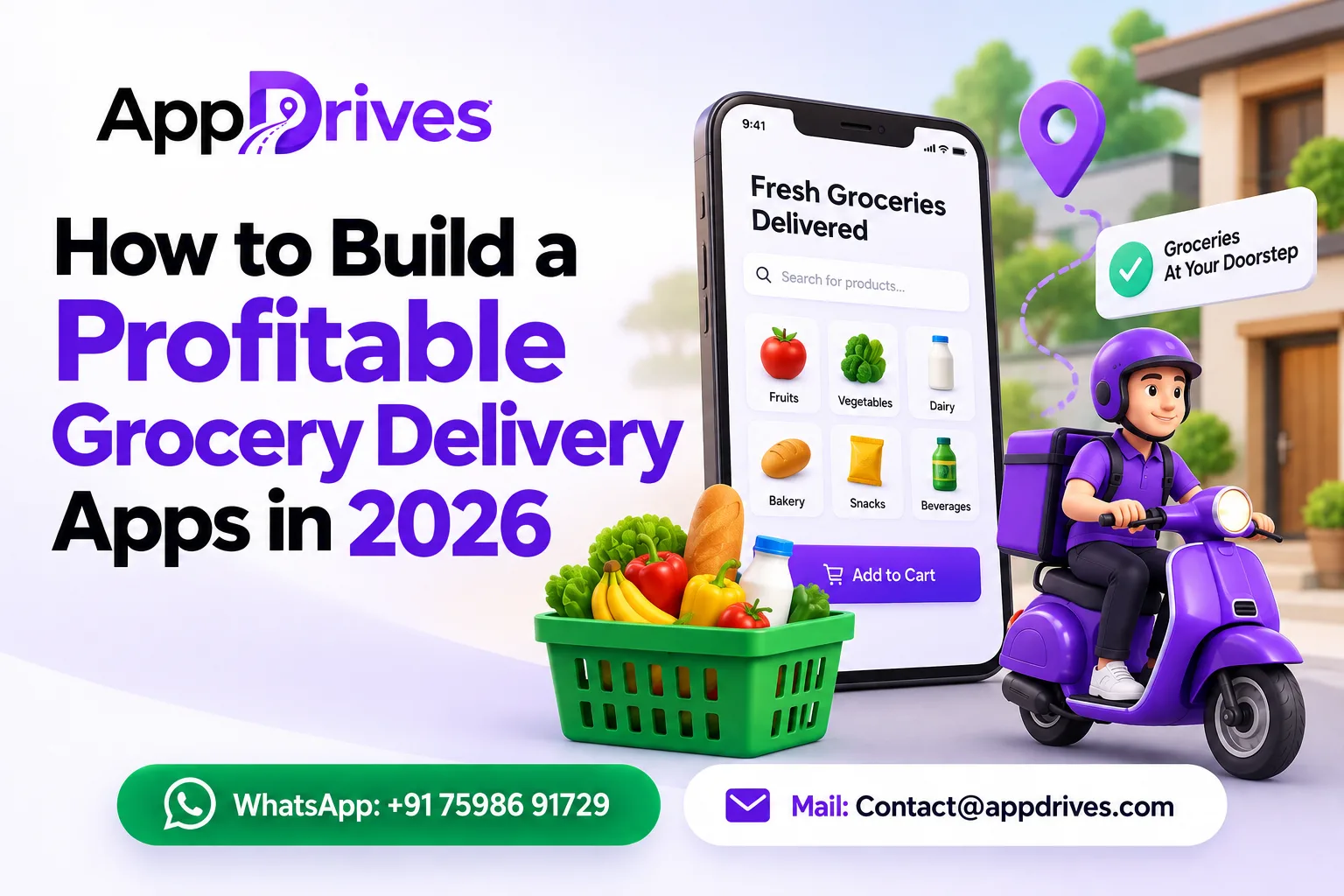
The grocery industry has moved far beyond traditional store visits. Customers now expect to browse products, compare prices, place orders, choose delivery slots, and track their purchases from their smartphones. For entrepreneurs, this shift creates an opportunity to build a grocery delivery business that combines convenience with a scalable digital model.
However, profitability does not come simply from launching an app. A successful grocery delivery business requires the right market, business model, technology, delivery strategy, and customer experience. Here is a practical look at the key steps involved.
Choose the Right Grocery Delivery Business Model
The first step is deciding how your business will operate. You can build a platform for your own grocery store, partner with multiple local stores, or create a marketplace that connects customers with several grocery retailers.
A single-store model gives you greater control over pricing, inventory, and customer service. A multi-vendor model can provide a wider product selection and allow you to generate revenue through commissions, vendor subscriptions, delivery charges, or promotional listings.
Your choice should depend on your target market, available resources, partnerships, and long-term expansion plans.
Understand Your Target Customers
Before investing in technology, identify who you want to serve. Customers may have different expectations based on their location, lifestyle, and shopping habits.
For example, working professionals may prioritize scheduled delivery and quick reordering, while families may look for bulk purchases, discounts, and a wider product catalog. Understanding these requirements helps you design a service that solves an actual customer problem instead of simply replicating existing grocery apps.
Research competitors, delivery gaps, pricing, popular products, and customer preferences before launching.
Build a Convenient Digital Shopping Experience
Convenience should be at the center of your grocery delivery platform. Customers should be able to find products quickly, add items to their cart, select a delivery slot, make a secure payment, and receive order updates without unnecessary steps.
If you are planning the technology side of the business, understanding how to build a grocery delivery app can help you evaluate important components such as customer functionality, admin management, delivery operations, and the overall development process.
The goal is not to overload the application with features. Instead, focus on features that make ordering faster and the overall experience more reliable.
Invest in the Right Grocery Delivery App Development
Technology becomes the operational backbone of an online grocery business. A well-designed platform should connect customers, administrators, stores, and delivery partners within a coordinated ecosystem.
Important capabilities can include product and inventory management, customer accounts, search and filtering, shopping carts, secure payments, order management, delivery scheduling, GPS tracking, push notifications, and business analytics.
Businesses that require customized functionality can explore grocery delivery app development to create a platform aligned with their operational requirements and future growth plans.
A scalable architecture is equally important. Your platform should be capable of handling increasing users, orders, products, vendors, and delivery operations as the business expands.
Create an Efficient Delivery Strategy
Last-mile delivery can have a major impact on profitability. Even if your app generates a large number of orders, inefficient delivery operations can increase costs and reduce customer satisfaction.
Define delivery zones, optimize routes, assign orders efficiently, and provide customers with accurate delivery updates. You can also offer scheduled delivery windows alongside faster delivery options where operationally practical.
Monitoring delivery time, failed deliveries, cancellation rates, and delivery costs can help you identify areas for improvement.
Select Revenue Streams That Support Growth
A profitable grocery delivery business can use multiple revenue channels. Depending on the business model, these may include product margins, delivery fees, vendor commissions, subscriptions, featured product placements, and membership programs.
Avoid relying heavily on discounts to attract customers. Promotions can help acquire users, but long-term profitability depends on repeat purchases, healthy order values, efficient fulfillment, and customer retention.
Focus on Customer Retention
Acquiring a customer is only the beginning. Repeat orders are essential for building sustainable grocery delivery revenue.
Personalized recommendations, loyalty rewards, reorder options, relevant offers, reliable delivery, responsive customer support, and accurate product information can encourage customers to return.
Analytics can also reveal which products customers purchase frequently, where users abandon orders, and which promotions generate meaningful results. These insights can help refine your pricing, product selection, and marketing strategy.
Conclusion
Building a profitable grocery delivery business in 2026 requires more than launching an ordering platform. Entrepreneurs need to combine a suitable business model, clear customer understanding, efficient delivery operations, reliable technology, and sustainable revenue strategies.
Start with a focused market, validate the business model, build an intuitive digital experience, and gradually expand based on customer demand. With the right strategy and scalable technology, a grocery delivery business can create lasting value for customers while developing a sustainable path to growth.