If you're drawn to a hands-on healthcare career that treats the whole person rather than just symptoms, osteopathy may be exactly what you're looking for. But if you've spent any time researching how to get trained, you've probably run into a wall of confusing terminology — "doctor of osteopathy," "DO degree," "manual osteopathy," "diploma," "online programs," and more.
This guide cuts through the confusion. We'll explain what osteopathy training in Canada actually involves, clarify the terms that trip most people up, and walk through the practical steps to become an osteopath here at home.
What Is Manual Osteopathy?
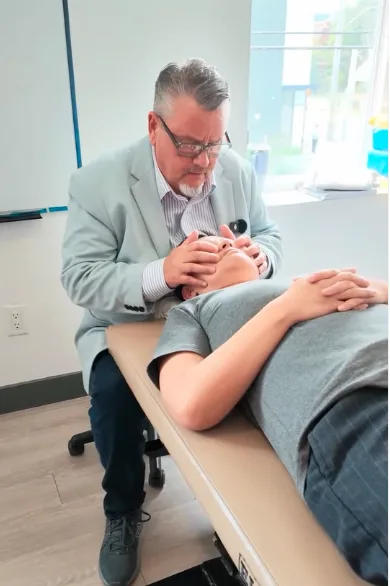
Manual osteopathy is a hands-on approach to healthcare that focuses on the body's structure — muscles, joints, connective tissue, and the way they all move together — to support the body's natural ability to heal. A practitioner who is trained in this discipline is known as an Osteopathic Manual Practitioner.
Rather than prescribing medication or performing surgery, manual osteopaths use their hands to assess and treat structural dysfunction. It's a career that rewards curiosity, precision, and a genuine desire to help people — and demand for preventative, non-invasive care continues to grow across Canada.
Manual Osteopathy vs. Doctor of Osteopathic Medicine (DO): Understanding the Difference
This is the single most important distinction to understand before you start comparing programs — and it's where most online searches go wrong.
If you've been searching for a doctor of osteopathy online program, the best osteopathic medical schools, or a doctor of osteopathic medicine degree, here's what you need to know:
- Doctor of Osteopathic Medicine (DO) is a medical degree offered primarily in the United States. DOs are fully licensed physicians who can prescribe medication and perform surgery, just like MDs. Becoming a DO means attending a U.S. osteopathic medical school — a completely different path, in a different country, with different licensing.
- Manual osteopathy, as practiced in Canada, is a manual therapy profession. Practitioners earn a diploma (not a medical degree) and work as Osteopathic Manual Practitioners. This is the path most people in Canada are actually looking for when they say they want to "become an osteopath."
A couple of practical takeaways:
- There is no legitimate shortcut to becoming a competent manual osteopath through a fully online, hands-off program. Osteopathy is a manual discipline — real training requires supervised, in-person, hands-on clinical practice. Be cautious of any offer that promises otherwise.
- If your goal is to become a practicing manual osteopath in Canada, you want a Manual Osteopathic Therapy Program that leads to a recognized diploma — not a U.S. DO medical degree.
For a fuller breakdown, this overview of the difference between osteopathy and other professions is a helpful reference.
What Qualification Do You Need? The Diploma in Osteopathic Manual Practice
In Canada, the standard entry-to-practice credential is a Diploma in Osteopathic Manual Practice — sometimes referred to as a Diploma in Manual Osteopathy (DMO). Programs vary between schools, but a comprehensive, graduate-level diploma is what prepares you to practice competently and to qualify for professional certification and insurance recognition.
When comparing a Manual Osteopathic Therapy Program, look closely at:
- Total curriculum hours and how many are genuinely hands-on
- Supervised clinical experience in a real teaching clinic (not just classroom theory)
- Accreditation and whether graduates are eligible for professional certification
- Whether graduates qualify for insurance billing once certified
What to Look for in an Osteopathy College or School
Choosing the right osteopathy college matters just as much as choosing the profession. Whether you're comparing an osteopathy school in Ontario, searching for osteopathy courses near me, or weighing programs across the country, use these criteria to separate serious institutions from the rest:
- Accreditation and certification pathway — Does the school prepare you for a recognized certification exam that leads to insurance recognition? For example, programs accredited by Osteopathy Canada (OSTCAN) prepare graduates to write the OSTCAN Certification Examination (OCE), which is required to practice and bill insurance in Canada.
- Substantial hands-on clinical training — The best programs put you in a supervised teaching clinic with real patients, not just a lab.
- A principles-based curriculum — Look for training that teaches you why techniques work (clinical reasoning and biomechanics), not just a memorized list of protocols.
- Experienced faculty — Working osteopaths, plus instructors with advanced academic and clinical credentials.
- Realistic entry pathways — Good schools offer routes for both health-background applicants and career changers.
- Campus location and format — In-person, hands-on delivery is essential; convenient campus locations make it achievable.
As one established example, the Canadian Academy of Osteopathy has been teaching osteopathy for over 22 years, with campuses in Hamilton, Ontario and Calgary, Alberta, an OSTCAN-accredited program, and a principles-based teaching approach known as Collective Mechanics™.
Osteopathy Courses and Training in Canada: What the Program Involves
So what do osteopathy courses in Canada actually look like? Quality osteopathy training in Canada is demanding and thorough — because the work itself carries real clinical responsibility.
Using the Canadian Academy of Osteopathy's 4,200-hour osteopathy program curriculum as a representative example of a comprehensive program, you can expect:
- 4,200+ total curriculum hours, covering osteopathic principles, functional anatomy and physiology, and manual techniques
- 1,500+ hours of hands-on training, including 1,000 hours of supervised clinical experience
- Program-length options — a 4-year graduate-level path, with a 3-year option available at some campuses
- Multiple entry pathways — direct entry for those with a Kinesiology, RMT, Health Science, or health-care background, plus preparatory pathways for university/college graduates and adult learners changing careers
- Financial aid and payment plans at many schools to make training accessible
These osteopathic manual therapy courses blend deep theory with the practical, supervised experience you need to treat complex patient issues confidently after graduation.
A quick note on terminology: completing a manual osteopathy diploma program qualifies you to practice as an Osteopathic Manual Practitioner. It does not confer a "doctor" title or a medical degree — those belong to the separate DO physician pathway described earlier.
Steps to Become an Osteopath in Canada
Ready to map out the path? Here's how to become an osteopath in Canada, step by step:
- Understand the profession — Confirm that manual osteopathy (Osteopathic Manual Practitioner), not the U.S. DO medical route, is the path you want.
- Check the prerequisites — Review what background you need. Many programs offer direct entry for health-related fields and preparatory pathways for everyone else.
- Choose an accredited school — Prioritize accreditation, supervised clinical hours, and a strong certification pathway.
- Complete your diploma program — Work through the theory, hands-on labs, and supervised clinical training.
- Pass your certification exam — For example, OSTCAN-accredited graduates write the OSTCAN Certification Examination (OCE).
- Get certified and start practicing — Certification leads to insurance recognition and qualifies you to practice.
Is Osteopathy the Right Career for You?
A career in osteopathy is well suited to people who:
- Want hands-on, one-on-one patient care rather than a desk job
- Are interested in anatomy, movement, and how the body works as a whole
- Value preventative, non-invasive approaches to health
- Enjoy problem-solving and clinical reasoning
- Want the flexibility of building their own practice
If that sounds like you, the next step is simply to research accredited programs and reach out for a conversation about admissions and prerequisites.
Frequently Asked Questions
Is there a "doctor of osteopathy" online program in Canada?
Not in the way most people imagine. In Canada, osteopathy is practiced as a manual therapy, and competent training requires in-person, hands-on clinical experience — it can't be completed entirely online. The "Doctor of Osteopathic Medicine (DO)" is a separate U.S. physician degree, not a Canadian manual-osteopathy credential. If your goal is to practice manual osteopathy in Canada, look for an in-person diploma program rather than an online "doctor of osteopathy" course.
What's the difference between a DO and a manual osteopath?
A DO (Doctor of Osteopathic Medicine) is a fully licensed physician trained primarily in the United States, able to prescribe and perform surgery. A manual osteopath in Canada is a hands-on therapist who earns a diploma and treats structural dysfunction manually. They are different professions, with different training, credentials, and scopes of practice.
How long does it take to become an osteopath in Canada?
It depends on the program. A comprehensive graduate-level diploma typically takes about four years, though some schools offer a three-year option at certain campuses. The most important factor isn't just length — it's the number of supervised, hands-on clinical hours included.
Do I need a health background to enroll?
Not necessarily. Many programs offer direct entry for applicants from Kinesiology, massage therapy (RMT), health science, or health-care backgrounds, along with preparatory pathways for university and college graduates and adult learners changing careers.
Where can I find osteopathy courses near me?
Start by identifying accredited osteopathy schools in Ontario and across Canada, then compare their accreditation, clinical hours, and campus locations. Because hands-on training is essential, factor in campus access when you evaluate "osteopathy courses near me" — an in-person program you can realistically attend is worth more than a distant or online-only option.