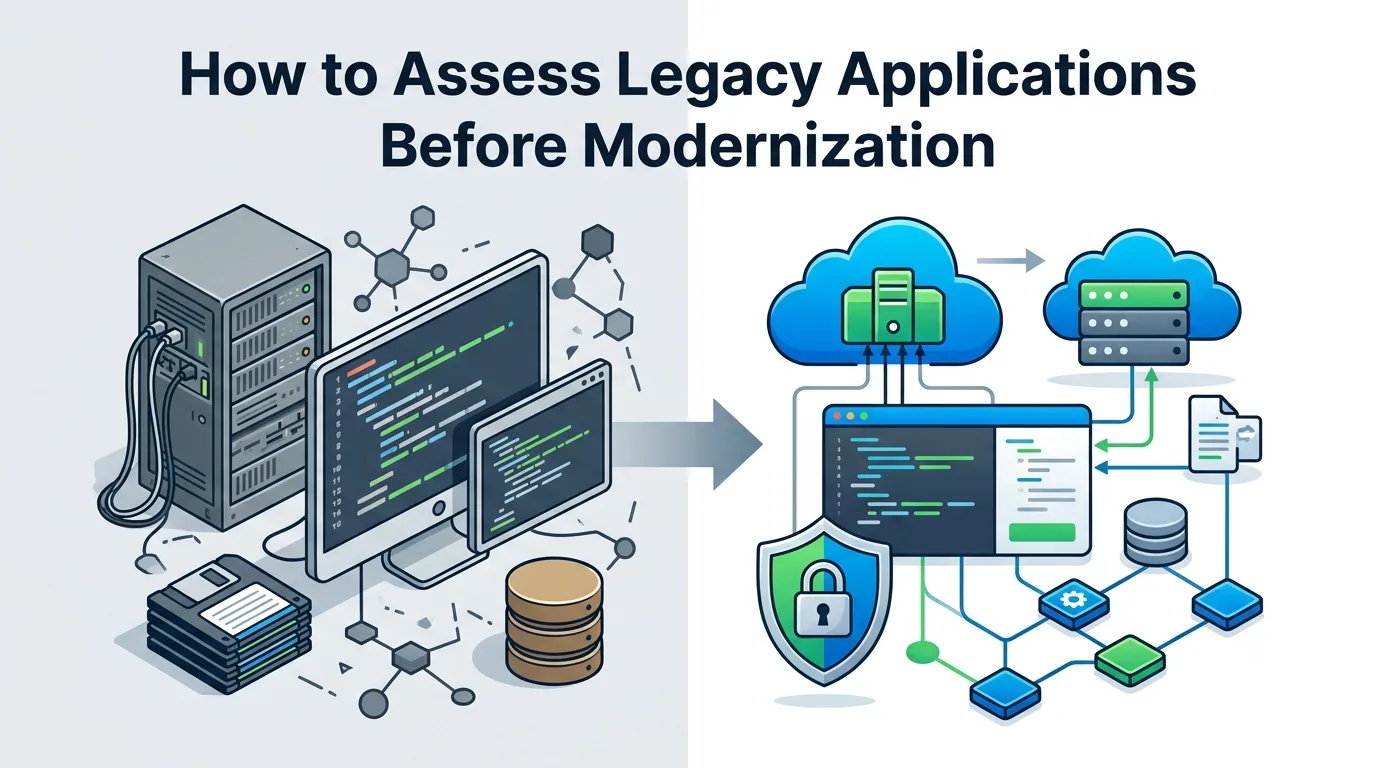
Legacy applications often support some of the most important business processes. They may handle customer data. They may manage transactions or connect different systems across the organization. The problem starts when these applications become difficult to maintain or change. Old technology can slow development and make security updates harder. It can also increase the effort needed to introduce new features.
Modernization can help solve these problems. But replacing or changing an old application without proper assessment can create new risks. Teams need to understand how the application works before deciding what should happen next. A proper assessment helps businesses identify risks and choose the right modernization approach.
Understand the Application’s Business Role
The first step is to understand why the application still matters. An application may look outdated from a technical point of view but still support an important business process. Start by identifying the teams that use it and the processes that depend on it. Check how often it is used and what business functions would be affected if it stopped working.
This step also helps identify applications that may no longer provide enough value. Some systems remain active simply because nobody has taken the time to retire them. Others may be deeply connected to important operations. Understanding this difference helps teams avoid spending money on modernization work that delivers little value.
Review the Technology Stack
The next step is to examine the technology behind the application. Review the programming languages and frameworks that it uses. Look at the database and operating system. Check the hosting environment and supporting tools. You should also identify components that are no longer supported by their vendors.
Technical debt can make this process more important. McKinsey research found that CIOs estimate technical debt can represent 20 to 40 percent of the value of their technology estate. The research also found that companies with higher technical debt were more likely to have incomplete or canceled modernization programs.
Examine Dependencies and Integrations
Legacy applications rarely work alone. They often exchange information with databases and other internal systems. Some may also connect with external services through APIs or older integration methods. These connections need to be documented before modernization begins.
Create a clear view of incoming and outgoing data. Identify which systems depend on the application and which systems the application depends on. Pay attention to hidden integrations that may not appear in standard documentation. Missing one critical dependency can cause serious problems during migration.
Evaluate Code Quality and Maintainability
Code quality can reveal how difficult an application will be to modernize. Review the code structure and identify outdated components. Look for duplicated code and unused functions. Check how easy it is for developers to understand and modify the system.
Documentation is another important factor. Some legacy applications have limited technical documentation because the original developers are no longer available. This creates knowledge gaps for current teams. A code assessment should therefore consider both the technical condition of the application and the knowledge required to maintain it.
Check Security and Compliance Risks
Security should be part of the assessment from the beginning. Older applications may use outdated libraries or unsupported operating systems. They may also have weak authentication methods or limited logging capabilities. These issues can create security and compliance risks.
Review access controls and data protection practices. Identify sensitive information handled by the application. Check how data is stored and transferred. Businesses should also review industry and regulatory requirements that apply to the system. This information can influence the modernization priority.
Measure Performance and Operating Costs
An application can be technically old without being a modernization priority. Performance and cost data can help determine its actual business impact. Review response times and system availability. Look at infrastructure costs and maintenance effort. Also consider how much developer time is spent fixing recurring issues.
IBM has reported that 41 percent of surveyed respondents selected reducing technical debt and upgrading legacy systems as their top priority. This shows how technical debt and aging systems remain a major concern for technology teams.
Choose the Right Modernization Strategy
After the assessment the organization can decide what should happen to the application. Not every legacy system needs to be completely rebuilt. Some applications may only need selected components to be updated. Others may benefit from migration to a new environment.
Common approaches include rehosting and refactoring. Some organizations may choose to rebuild or replace the application. Others may decide to retire it if the business no longer needs it. The right choice depends on business value and technical condition. It should also consider cost and future requirements.
Build a Practical Modernization Roadmap
The final step is to turn the assessment into a clear roadmap. Rank applications based on business importance and technical risk. Identify quick improvements and larger modernization projects. Define dependencies between projects before setting timelines.
A strong roadmap also includes measurable goals. These can include lower maintenance costs and better application performance. They can also include improved security and faster development. Working with an experienced partner for Legacy Modernization Services can help businesses assess these factors and create a practical path forward.
Conclusion
Legacy modernization should begin with understanding rather than immediate replacement. A detailed assessment shows how an application supports the business and where its biggest risks exist. It also helps teams avoid unnecessary costs and reduce surprises during modernization. By reviewing business value and technology dependencies and security and performance organizations can make better decisions. Tech.us helps businesses approach modernization with a clear focus on long-term value and practical technology outcomes.